
Ghia
Founded in Turin in 1916, Carrozzeria Ghia became a major Italian design and coachbuilding house, creating bespoke automobiles, prototypes and international collaborations across the twentieth century.
Explore record ↗
1972Coachwork by Ghia
THE VEHICLE AT A GLANCE
THE PEOPLE BEHIND THE CAR
Founded in Turin in 1916, Carrozzeria Ghia became a major Italian design and coachbuilding house, creating bespoke automobiles, prototypes and international collaborations across the twentieth century.
Explore record ↗Tom Tjaarda \(1934–2017\) was an American-born designer who built his career in Turin. At Pininfarina he designed the Ferrari 330 GT 2+2 and Fiat 124 Spider\; his later work at Ghia included the De Tomaso Pantera. He also created the Chevrolet Corvette Rondine concept.
Explore record ↗01 / THE STORY
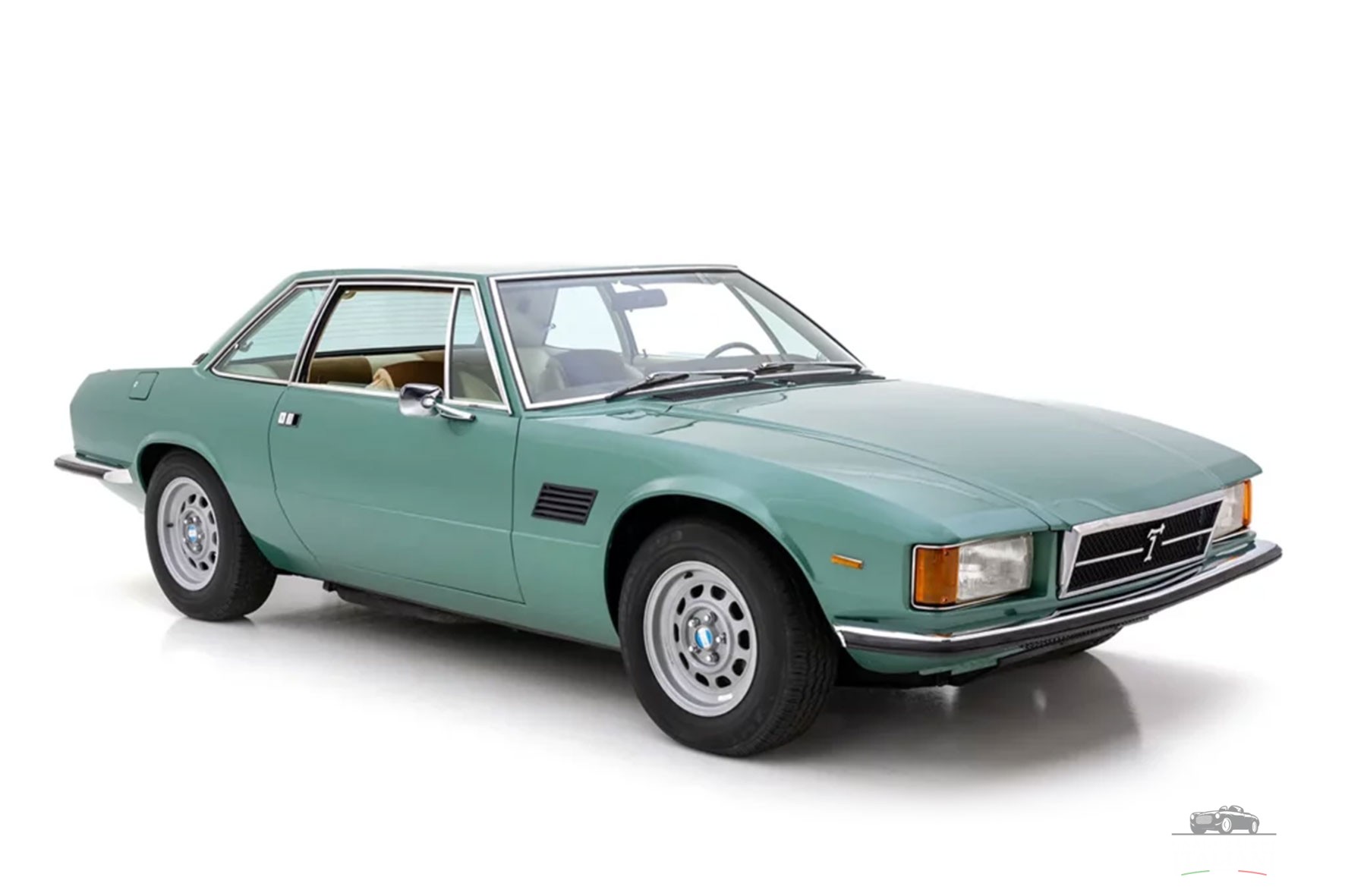
The De Tomaso Longchamp, first unveiled at the 1972 Turin Motor Show, is a distinctive grand tourer derived from the Deauville four-door saloon. This transformation involved using a shorter wheelbase chassis while retaining the same suspension, engine, and transmission setup. The platform that underpinned the Longchamp was also utilized for the Maserati Kyalami grand tourer and the Maserati Quattroporte III saloon, reflecting the ownership of Maserati by De Tomaso during that period. As front-engine production cars, the Deauville and the Longchamp hold a unique place in De Tomaso’s history, which predominantly featured mid-engine sports cars. Initially offered exclusively as a 2-door 2+2 coupé, the Longchamp’s design was the work of Tom Tjaarda at Ghia. Its styling bore influences from Tjaarda’s earlier Lancia Marica prototype, lending the Longchamp a sleek and contemporary look for its time. Several components of the Longchamp were sourced from other vehicles, showcasing a blend of Italian design and practical parts utilization. The taillights were borrowed from the Alfa Romeo 1750/2000 saloon, while the headlights and front indicators came from the Ford Consul/Granada. These choices not only streamlined production but also ensured the car’s distinctive yet recognizable appearance. The name “Longchamp” is believed to reference either the Longchamp Racecourse in Paris or Longchamps in Buenos Aires, the latter being near the birthplace of De Tomaso’s founder, Alejandro de Tomaso. In addition to the coupé, a rare convertible version of the Longchamp was produced. Carrozzeria Pavesi, a respected coachbuilder, officially converted 14 Longchamps into Spiders. These Spiders added an open-top elegance to the Longchamp’s robust grand touring capabilities, further cementing its status as a versatile and desirable classic car.
02 / TECHNICAL IDENTITY
Become a Pro member to see the full details in this section.
Membership is not available yet.
View membership options03 / DESIGN, BODY & SUPPLIERS
Coachbuilder / Design studio
Founded in Turin in 1916, Carrozzeria Ghia became a major Italian design and coachbuilding house, creating bespoke automobiles, prototypes and international collaborations across the twentieth century.
Explore record ↗Designer
Tom Tjaarda \(1934–2017\) was an American-born designer who built his career in Turin. At Pininfarina he designed the Ferrari 330 GT 2+2 and Fiat 124 Spider\; his later work at Ghia included the De Tomaso Pantera. He also created the Chevrolet Corvette Rondine concept.
Explore record ↗04 / CHRONOLOGY
07 / GALLERY
THE CONVERSATION
Comments 0