

Ghia
Founded in Turin in 1916, Carrozzeria Ghia became a major Italian design and coachbuilding house, creating bespoke automobiles, prototypes and international collaborations across the twentieth century.
Explore record ↗
1961Coachwork by Ghia
THE VEHICLE AT A GLANCE
THE PEOPLE BEHIND THE CAR
Founded in Turin in 1916, Carrozzeria Ghia became a major Italian design and coachbuilding house, creating bespoke automobiles, prototypes and international collaborations across the twentieth century.
Explore record ↗01 / THE STORY
The 1961 Dodge Flite-Wing was a full-size experimental concept car developed by Chrysler Corporation for its Dodge division and bodied by Carrozzeria Ghia in Turin. The running vehicle combined a modified Dodge chassis and production-derived V8 powertrain with specially constructed glazing and door mechanisms. Its styling originated within Chrysler’s advanced design organisation under Virgil Exner; a separate individual designer has not been firmly established. The car was a single experimental example rather than a production Dodge model.
The Flite-Wing was officially introduced in New York City’s Central Park on 5 December 1961. The timing placed it at the end of Exner’s tenure as head of Chrysler styling: Elwood Engel had replaced him during the preceding month. Its design belonged to the period in which Chrysler was reconsidering the exterior treatment of its full-size Dodge and Plymouth lines for 1962. Chrysler stylist John Samsen later associated the broader design direction with the proposed S-series programme and the styling theme Exner called Forward Flair. A subsequent decision to reduce the dimensions of the production cars substantially altered those plans. The Flite-Wing’s appearance therefore documents a direction explored by Chrysler rather than a preview reproduced unchanged in series manufacture.
Ghia constructed the distinctive body with a large framed grille, sculpted front wings, a long bonnet and low rear deck with restrained fins and a circular spare-wheel motif. The most unusual component was the upper portion of the side glazing. Instead of descending into the doors like ordinary windows, curved glass panels extended into the roof and lifted upward when the corresponding doors opened. Electric motors located at the rear operated the mechanism through flexible cables. The panels could also be actuated by separate controls. This arrangement was intended to improve access to the low cabin and create an uninterrupted appearance along the side glass.
The cabin carried four separate seats on raised supports, with a speedometer formed from thirteen illuminated elliptical apertures rather than a conventional circular dial. These details were specific experimental features, not equipment offered on a production Dodge. Contemporary promotional descriptions also emphasized the absence of a conventional central window pillar. The feasibility of the elaborate power-operated glazing for mass production was not established by the show car.
Unlike the non-running Chrysler TurboFlite display concept of the same period, the Dodge Flite-Wing was described as a functioning, roadworthy car. The coachbuilt body used a modified Dodge chassis with a wheelbase of 118 inches (2,997 mm). Its engine was a 383-cubic-inch (approximately 6.3-litre) wedge-head V8 equipped with Chrysler’s ram-induction system, with a contemporary quoted output of 330 horsepower. A TorqueFlite automatic transmission was fitted. These are period specification figures; they do not establish independently measured performance for the individual concept car. No reliable individual chassis serial, engine serial or tested kerb weight has been identified.
Photographic and specialist historical accounts trace the Flite-Wing on the American exhibition circuit after its New York debut, with appearances reported into 1964 and changes of paint during its exhibition life. An authoritative, continuous ownership history and the car’s eventual fate remain unestablished. Its recorded features are best understood within the wider Chrysler–Ghia collaboration, in which American design offices supplied the concepts and Italian craftsmen executed the specialised coachwork. The Flite-Wing illustrates both the advanced styling studies of Exner’s final Chrysler years and the technical complexity of proposals that were not adopted for the production range. The wider styling context is documented in The Forward Look.
02 / TECHNICAL IDENTITY
Become a Pro member to see the full details in this section.
Membership is not available yet.
View membership options03 / DESIGN, BODY & SUPPLIERS
Coachbuilder / Design studio
Founded in Turin in 1916, Carrozzeria Ghia became a major Italian design and coachbuilding house, creating bespoke automobiles, prototypes and international collaborations across the twentieth century.
Explore record ↗07 / GALLERY
CONTINUE EXPLORING
CONTINUE READING
There are in the history of companies, just as in the history of nations, certain fateful episodes, which have an influence on the course of events well in excess of their actual…
Read storyWhen Italian craftsmanship met Detroit ambition, Chrysler found its soul. The Ghia–Exner partnership sparked the Forward Look—an era of fins, flair, and fearless design that changed American cars forever.
Read storyVirgil Exner transformed American car design with bold artistry, aerodynamic vision, and Italian collaboration that redefined Detroit’s style.
Read story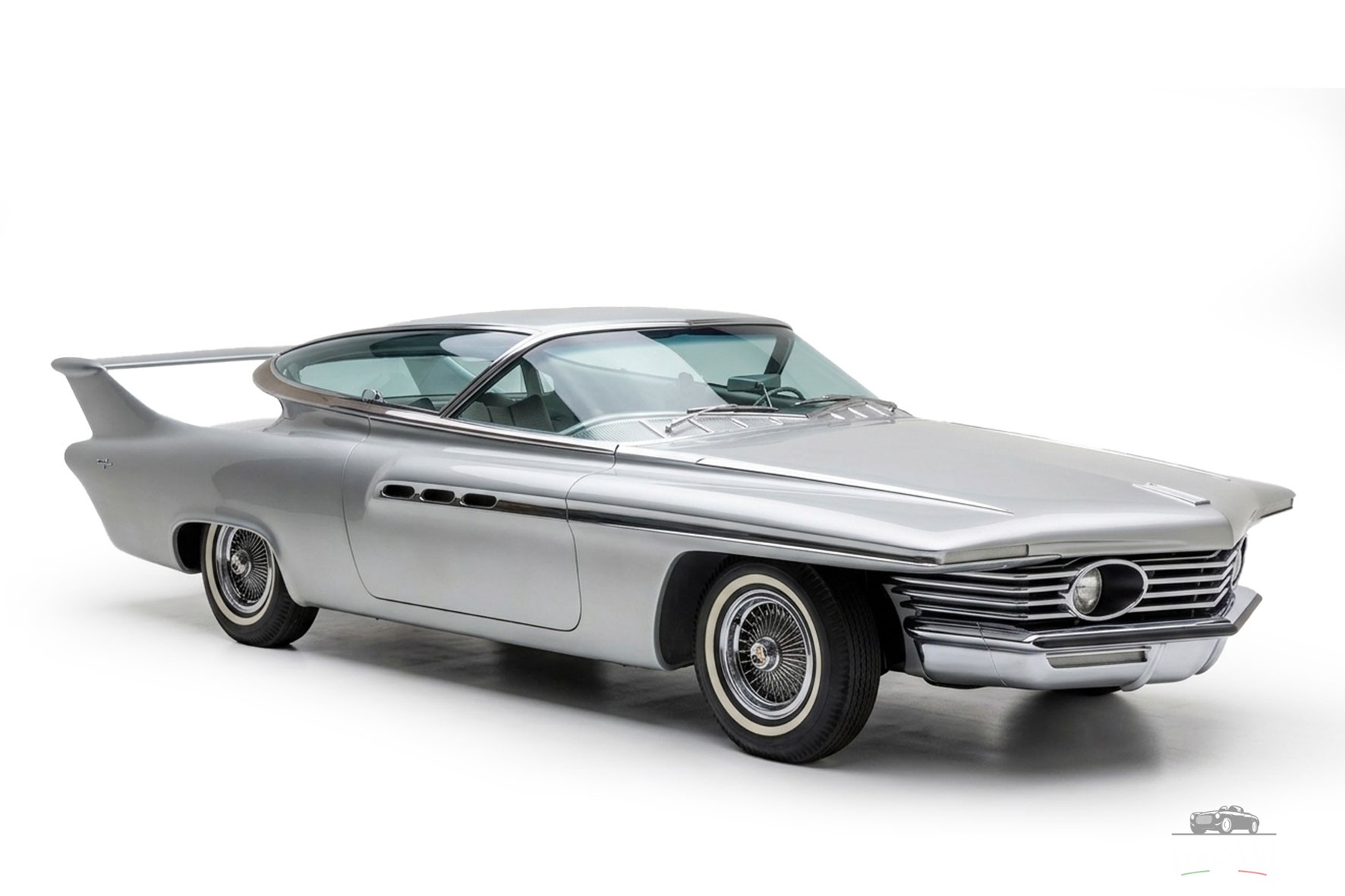



THE CONVERSATION
Comments 0