Autodromo
Founded in Modena in 1949 as a cooperative, Autodromo developed from vehicle repairs into specialist bus bodywork, later focusing on urban and suburban passenger transport.
Explore record ↗
1953Coachwork by Autodromo
THE VEHICLE AT A GLANCE
THE PEOPLE BEHIND THE CAR
Founded in Modena in 1949 as a cooperative, Autodromo developed from vehicle repairs into specialist bus bodywork, later focusing on urban and suburban passenger transport.
Explore record ↗Aurelio Lampredi (1917–1989) was an Italian engine designer and automotive engineer at Ferrari, Fiat and Abarth who also influenced Ferrari racing-car aerodynamics in 1953.
Explore record ↗01 / THE STORY
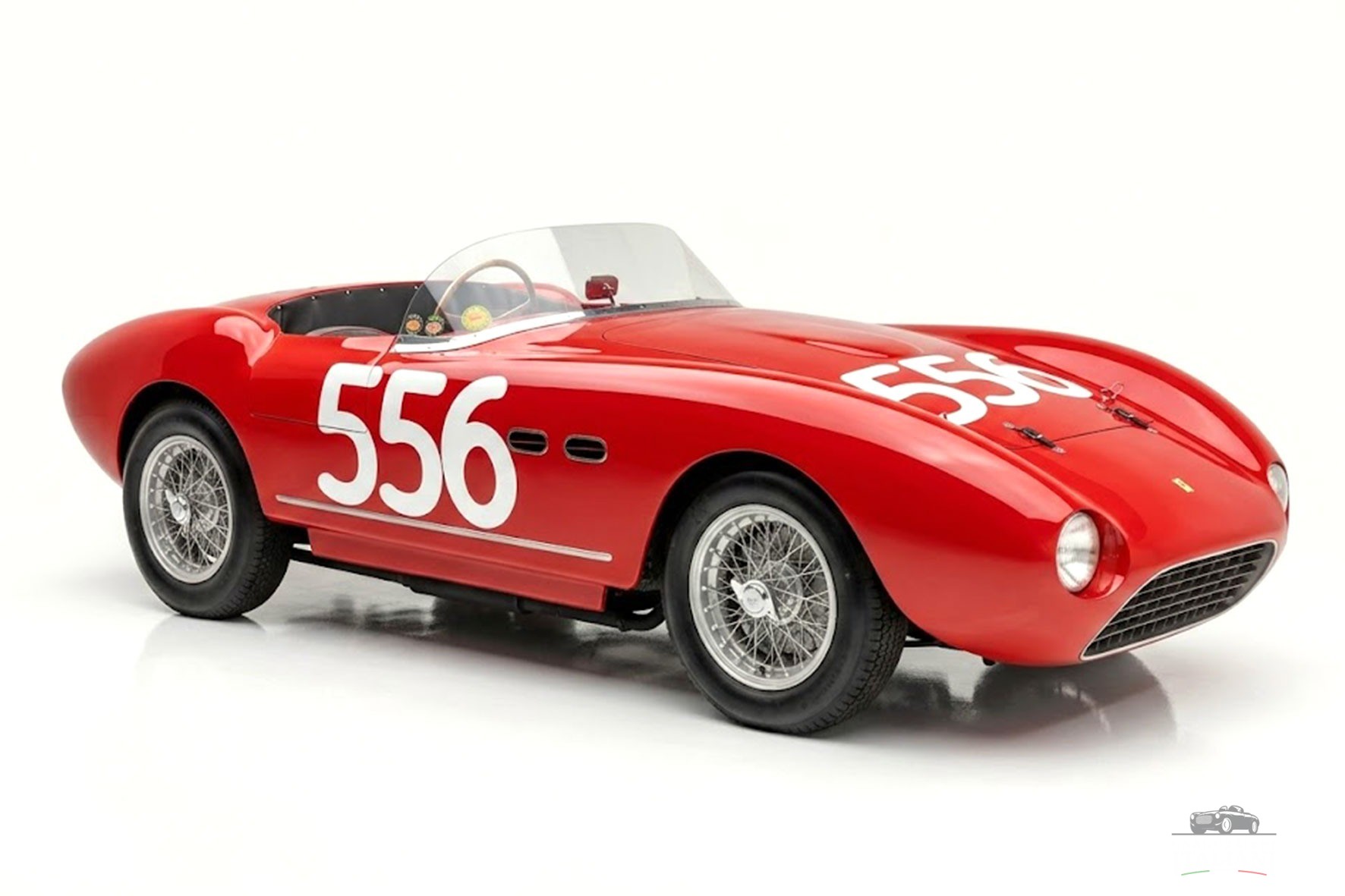
The Ferrari 166 MM Spider Autodromo is one of the most enigmatic and celebrated racing cars in Ferrari’s storied history, distinguished by its unique design and fascinating origins. Built in 1953 and bearing chassis number 0272M, this car stands as a one-off creation whose precise origins remain shrouded in mystery, fueling intrigue among Ferrari historians and enthusiasts. The bodywork of the 166 MM Spider Autodromo has sparked considerable debate. While some suggest it was a collaborative effort, many Ferrari historians attribute its design to the legendary Ferrari engineer Aurelio Lampredi. According to this view, the body’s fundamental structure was crafted in Ferrari’s own factory, marking it as one of the few Ferrari vehicles to feature in-house body construction. Autodromo is believed to have played a role in refining or detailing this structure, lending the car its distinctive aesthetic. However, there are alternative theories that question Autodromo’s involvement entirely, adding another layer to the car’s mystique. This remarkable vehicle made its competitive debut in the prestigious Mille Miglia, participating in both the 1953 and 1954 editions. Its racing pedigree was further immortalized in popular culture when it was featured as a prop in the 1955 film The Racers, starring Kirk Douglas. The movie, which dramatized the life of legendary driver Rudolf Caracciola, elevated the car’s profile and cemented its place in automotive history. The 166 MM Spider Autodromo, known for its elegant and purposeful design, continues to captivate the classic car community. Despite its historical significance and cinematic legacy, the car has had a quiet existence in recent years. In 2018, it was offered for sale at an auction in Paris but, surprisingly, did not find a buyer, underscoring the unique and niche appeal of this one-of-a-kind Ferrari. Today, the Ferrari 166 MM Spider Autodromo remains a fascinating piece of Ferrari’s racing heritage and an enduring symbol of the marque’s innovative spirit and design excellence. Its mystique, combined with its historical and cultural importance, ensures its place as a treasured artifact in the annals of motoring history.
02 / TECHNICAL IDENTITY
Become a Pro member to see the full details in this section.
Membership is not available yet.
View membership options03 / DESIGN, BODY & SUPPLIERS
Coachbuilder / Design studio
Founded in Modena in 1949 as a cooperative, Autodromo developed from vehicle repairs into specialist bus bodywork, later focusing on urban and suburban passenger transport.
Explore record ↗Designer
Aurelio Lampredi (1917–1989) was an Italian engine designer and automotive engineer at Ferrari, Fiat and Abarth who also influenced Ferrari racing-car aerodynamics in 1953.
Explore record ↗04 / CHRONOLOGY
06 / CHASSIS REGISTER
07 / GALLERY
THE CONVERSATION
Comments 0