
Pininfarina
Founded by Battista Pinin Farina in Turin in 1930, Pininfarina became one of the most influential Italian styling and coachbuilding houses, particularly through its work for Ferrari and other international manufacturers.
Explore record ↗
1968Coachwork by Pininfarina
THE VEHICLE AT A GLANCE
THE PEOPLE BEHIND THE CAR
Founded by Battista Pinin Farina in Turin in 1930, Pininfarina became one of the most influential Italian styling and coachbuilding houses, particularly through its work for Ferrari and other international manufacturers.
Explore record ↗Leonardo Fioravanti is an Italian automotive designer renowned for his work at Pininfarina, where he contributed to the styling of landmark Ferrari road cars.
Explore record ↗01 / THE STORY
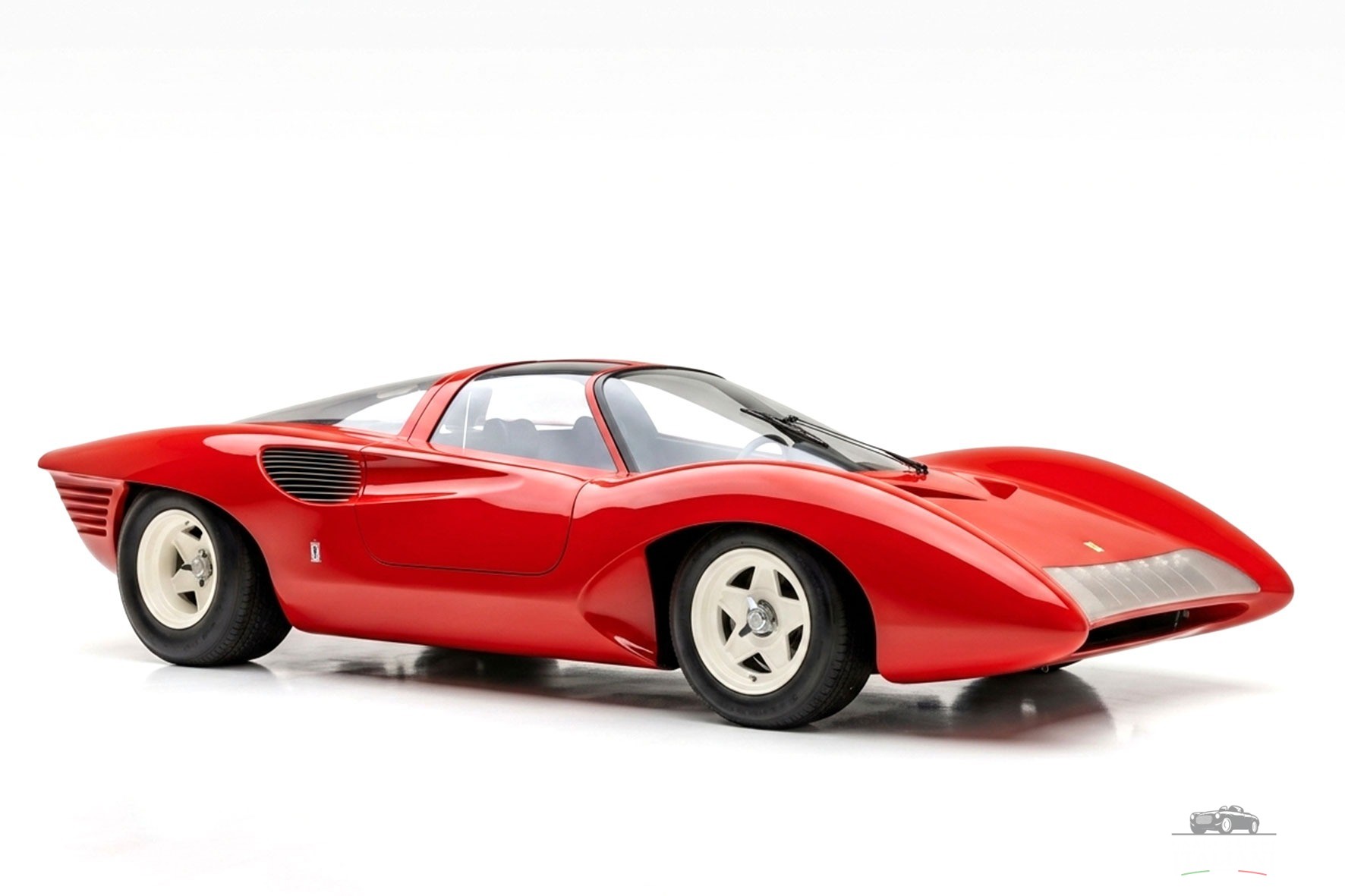
The Ferrari 250 P5, unveiled at the 1968 Geneva Motor Show, is a notable example of collaboration between Ferrari and the renowned Italian design house Pininfarina. Built on a P4 chassis, this concept car features a mid-mounted V-12 engine with a displacement of three liters. The Ferrari 250 P5 Berlinetta Speciale was more than just a show car; it was an advanced study in aerodynamics, form, and the potential future designs of Ferrari vehicles. Pininfarina’s radical design for the 250 P5 was met with mixed reactions. Its striking appearance, characterized by sleek lines and innovative features, pushed the boundaries of traditional car design. One of the most significant elements introduced by the 250 P5 was the clear rear glass over the engine. This feature not only showcased the powerful V-12 engine but also enhanced the car’s aerodynamic profile. Today, this design element is a hallmark of many modern Ferraris, underscoring the 250 P5’s lasting influence. The 250 P5 was not merely an exercise in aesthetics; it was a forward-thinking exploration of automotive engineering and design. While some enthusiasts were initially skeptical of its unconventional looks, the 250 P5 incorporated features that would inspire future production models. Its innovative approach to integrating form and function demonstrated Pininfarina’s vision and Ferrari’s commitment to pushing the envelope of car design. Following the debut of the 250 P5, Pininfarina created another similar prototype, this time badged as an Alfa Romeo. The Alfa Romeo 33 Coupe Prototipo Speciale, painted in a striking bright yellow, was introduced at the 1969 Paris Motor Show. This prototype shared many design cues with the 250 P5, highlighting Pininfarina’s consistent exploration of advanced automotive concepts across different marques.
02 / TECHNICAL IDENTITY
03 / DESIGN, BODY & SUPPLIERS
Coachbuilder / Design studio
Founded by Battista Pinin Farina in Turin in 1930, Pininfarina became one of the most influential Italian styling and coachbuilding houses, particularly through its work for Ferrari and other international manufacturers.
Explore record ↗Designer
Leonardo Fioravanti is an Italian automotive designer renowned for his work at Pininfarina, where he contributed to the styling of landmark Ferrari road cars.
Explore record ↗04 / CHRONOLOGY
07 / GALLERY
THE CONVERSATION
Comments 0