
Pininfarina
Founded by Battista Pinin Farina in Turin in 1930, Pininfarina became one of the most influential Italian styling and coachbuilding houses, particularly through its work for Ferrari and other international manufacturers.
Explore record ↗
1992
THE VEHICLE AT A GLANCE
THE PEOPLE BEHIND THE CAR
Founded by Battista Pinin Farina in Turin in 1930, Pininfarina became one of the most influential Italian styling and coachbuilding houses, particularly through its work for Ferrari and other international manufacturers.
Explore record ↗Pietro Camardella is an Italian automotive designer known for his work at Pininfarina, including his contribution to the Ferrari F40.
Explore record ↗PRICE & SALES RECORD
01 / THE STORY
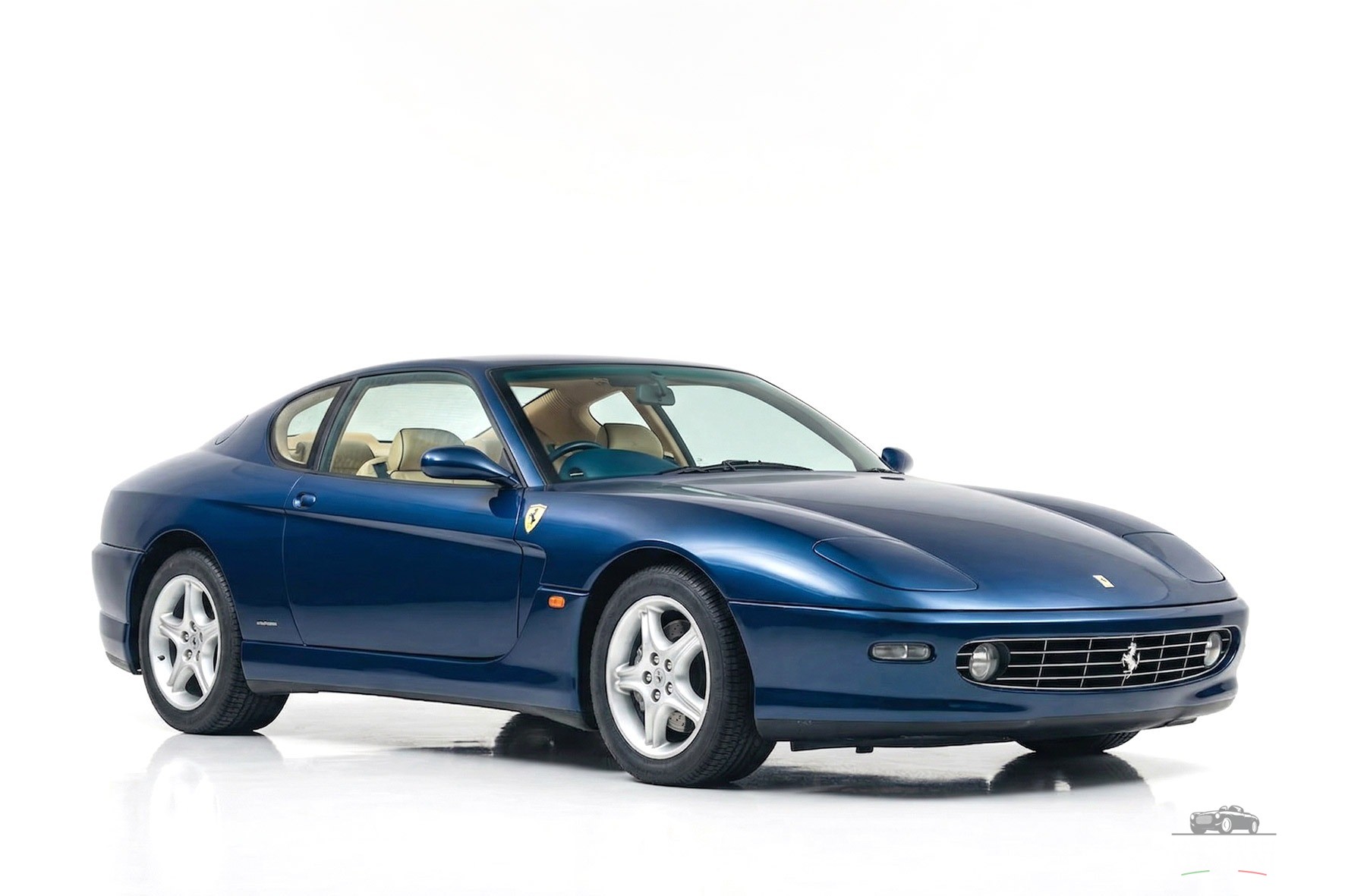
The Ferrari 456 GT was introduced in 1992 as a 2+2 grand tourer designed by Pietro Camardella at Pininfarina. It combined a traditional front-engine layout with modern aerodynamics and aluminum construction. The car featured smooth proportions with a long hood, short rear deck, and integrated lighting elements that followed Ferrari’s understated grand touring design language. The 456 GT was powered by a 5.5-liter (5,473.91 cc) 65° V12 engine, internally designated F116B. The engine was derived from the Dino V6 architecture rather than Ferrari’s earlier 60° V12s. It produced 442 PS (325 kW; 436 hp) at 6,250 rpm and 550 Nm of torque at 4,500 rpm, managed by Bosch Motronic M2.7 fuel injection. The car’s name referenced the individual cylinder displacement of 456 cc. Power was delivered through a rear transaxle and a six-speed manual gearbox, giving the 1,690 kg vehicle a top speed of 309 km/h and 0–100 km/h acceleration in 4.8 seconds. In 1996, Ferrari introduced the 456 GTA, equipped with a four-speed automatic transmission co-developed with FF Developments in Michigan. It was Ferrari’s second and final use of a traditional hydraulic automatic transmission with a torque converter, following the earlier 400/412 series. The same year, the engine was updated to Bosch Motronic M5.2 management and designated F116C. The chassis was a tubular steel space-frame with aluminum body panels and a composite one-piece bonnet. Ferrari used a “Feran” sandwich material that allowed welding between the aluminum panels and the steel frame. Suspension consisted of independent double wishbones with electronically controlled damping, and braking was handled by ventilated discs with ABS. Production continued until 1998, with a total of 1,435 Ferrari 456 GT units built. Early examples carried full Pininfarina badging, while later Modificata models featured only the disegno Pininfarina script following the transfer of bodywork production in-house to Ferrari. Watch our video special about the Ferrari 456GT here.
02 / TECHNICAL IDENTITY
Become a Pro member to see the full details in this section.
Membership is not available yet.
View membership options03 / DESIGN, BODY & SUPPLIERS
Coachbuilder / Design studio
Founded by Battista Pinin Farina in Turin in 1930, Pininfarina became one of the most influential Italian styling and coachbuilding houses, particularly through its work for Ferrari and other international manufacturers.
Explore record ↗Attributed designer
Pietro Camardella is an Italian automotive designer known for his work at Pininfarina, including his contribution to the Ferrari F40.
Explore record ↗Become a Pro member to see the full details in this section.
Membership is not available yet.
View membership options04 / CHRONOLOGY
05 / PEOPLE, COLLECTIONS & MUSEUMS
06 / MARKET & PRICE HISTORY
USD · 11 recorded sales
Includes recorded sales pending source verification.
RECORDED SALES
USD
Each point is a completed sale with its own date, in chronological order. Dates are positioned by calendar time, with approximate placement when only a year or month is documented. The connecting line shows observed sales prices in this currency, not an appreciation index: transactions may concern different chassis and specifications. Factory prices and unsold estimates are excluded.
EUR · 2 recorded sales
Includes recorded sales pending source verification.
RECORDED SALES
EUR
Each point is a completed sale with its own date, in chronological order. Dates are positioned by calendar time, with approximate placement when only a year or month is documented. The connecting line shows observed sales prices in this currency, not an appreciation index: transactions may concern different chassis and specifications. Factory prices and unsold estimates are excluded.
Sign in to see the details of each sale on the chart.
Become a Pro member to explore the full price and sale history.
Membership is not available yet.
View membership optionsMarket observations describe documented transactions, estimates or offers. They are not themselves a current valuation of the vehicle.
07 / CHASSIS REGISTER
9 chassis numbers in the register
1 recorded sale · 2026
1 recorded sale · 2025
1 recorded sale · 2025
1 recorded sale · 2025
View full chassis register · Pro membership
08 / GALLERY
THE CONVERSATION
Comments 0