
Zagato
Founded in Milan in 1919 by Ugo Zagato, the coachbuilding house developed lightweight aerodynamic bodies inspired by aircraft construction, creating distinctive racing and grand touring automobiles.
Explore record ↗
1959Coachwork by Zagato
THE VEHICLE AT A GLANCE
THE PEOPLE BEHIND THE CAR
Founded in Milan in 1919 by Ugo Zagato, the coachbuilding house developed lightweight aerodynamic bodies inspired by aircraft construction, creating distinctive racing and grand touring automobiles.
Explore record ↗01 / THE STORY
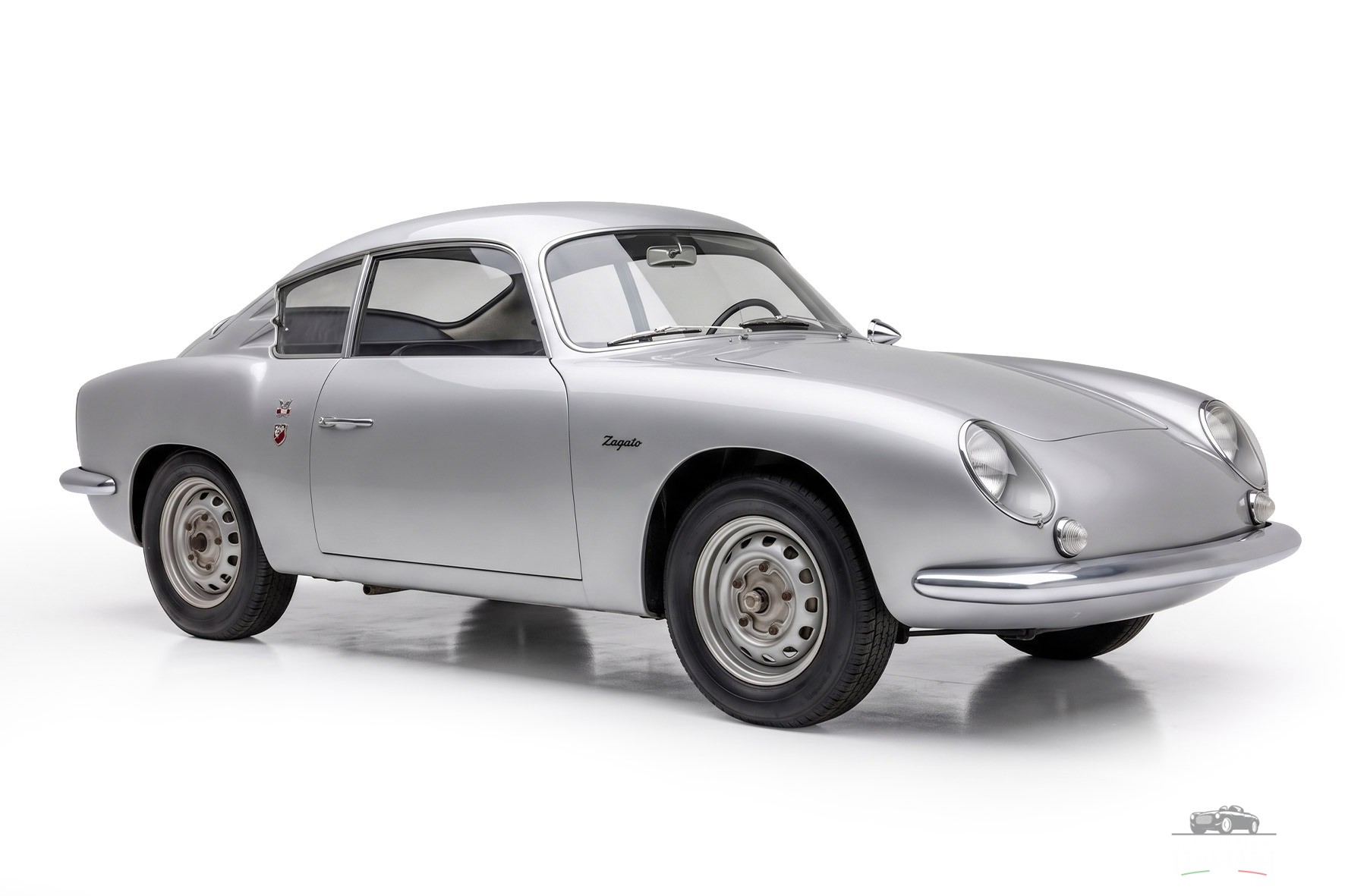
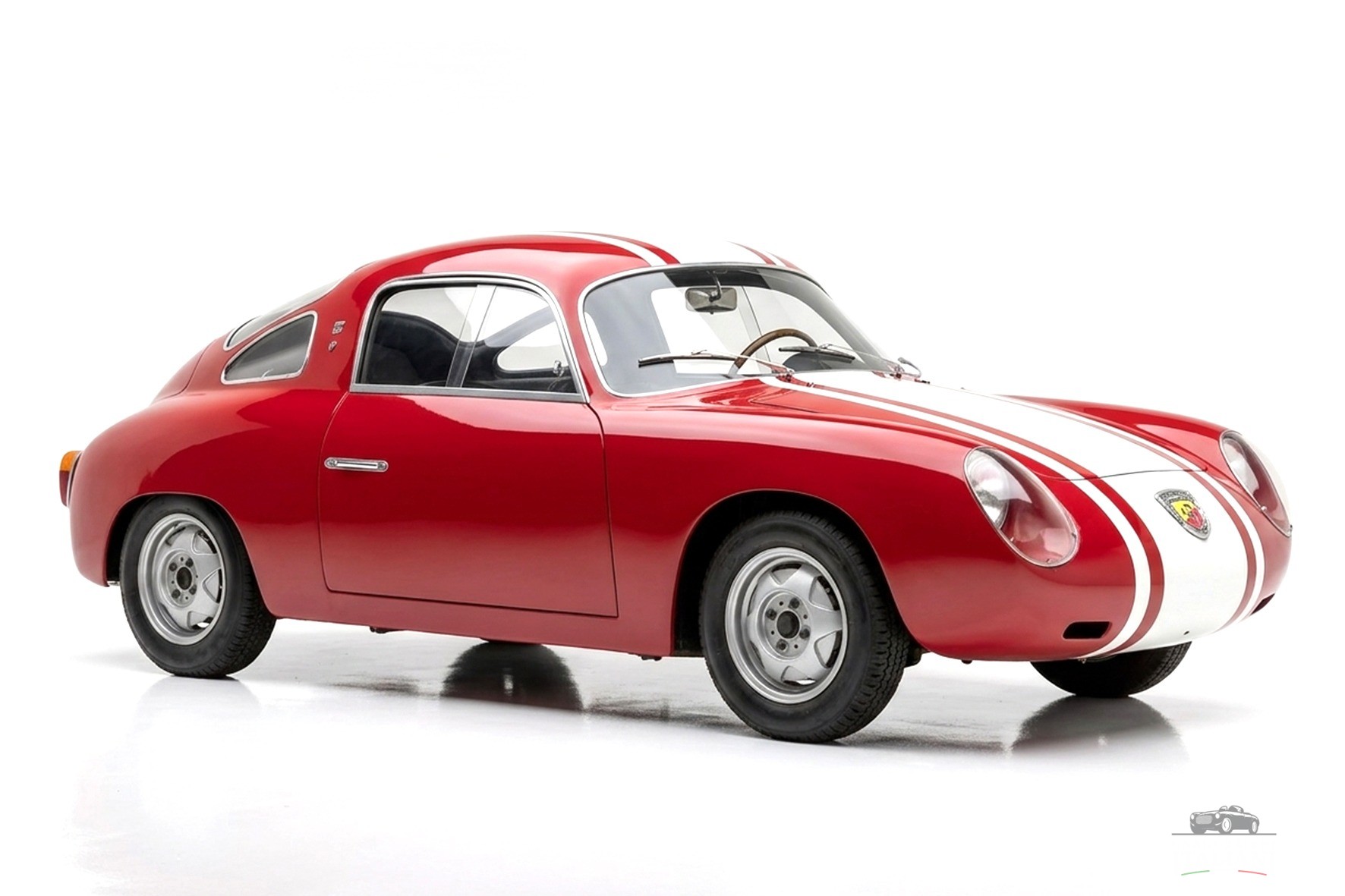
The Abarth 750 Sestriere Zagato was a limited-series two-seat coupé developed from the Fiat 600-based Abarth 750 programme and bodied by Carrozzeria Zagato in approximately 1959–1960. Unlike the earlier Abarth 750 GT Zagato, its roof was comparatively flat rather than double-bubbled, with exposed forward-positioned headlamps and two prominent cooling intakes over the rear-mounted engine. Zagato was the coachbuilder and body builder, while Abarth supplied the mechanical preparation of the Fiat-derived platform; the individual stylist has not been established.
The Sestriere followed the Fiat-Abarth 750 GT introduced in the mid-1950s. The earlier cars used Zagato’s characteristic twin-domed roof and achieved substantial success in small-displacement competition, including the 750 cc class at the 1957 Mille Miglia. Those results concern the earlier GT programme rather than an identified Sestriere-bodied chassis. The later variant was intended to combine the compact rear-engined chassis with a distinct, more conventional roof profile. Its name referred to the Alpine Rallye del Sestriere, but the name alone is not evidence of an individual car’s participation in that event.
Auction descriptions identify steel coachwork with aluminium opening panels, particularly the doors, for some Sestriere cars. Other specialist accounts discuss all-aluminium examples. Production totals remain unresolved: Aguttes describes twenty-five cars made during 1959–1960, whereas another reconstruction divides the production into ten steel-bodied and ten aluminium-bodied examples. Neither estimate has been reconciled against a complete factory chassis ledger. These construction details distinguish the Sestriere from the Abarth 750 Bialbero Record Monza, a separate competition-oriented development. The broader context of Zagato’s roof and lightweight construction methods is documented in the history of Carrozzeria Zagato and its double-bubble roof development.
The Fiat 600 platform supplied a rear-mounted four-cylinder engine, four-speed manual transmission and rear-wheel drive, modified by Abarth for the 750 family. Specialist research identifies Sestriere engine configurations described as Tipo 215 of approximately 748 cc and Tipo 213A of approximately 785 cc. Published output, dimensions and weight vary between accounts and between body constructions. Figures quoted for the preceding aluminium-bodied Double Bubble or the more specialised Bialbero cannot be treated as uniform Sestriere specifications. In particular, the exact engine displacement and power of a surviving car require its own technical documentation.
Chassis 756808, engine 825490, is documented in several Aguttes catalogues. The auction house traces its reported early life to the United States, its rediscovery in California in the early 2000s, subsequent restoration in Europe and certification through Abarth Classiche. The car appeared in the 2021, 2023 and 2025 sale records; a catalogue estimate does not itself establish a completed transaction.
A second Sestriere, chassis 100758169, has a separate Aguttes record and a reported historic-racing history under Escuderia Barcelona, including appearances in 2017 at Algarve, Jarama and Pau. Its reported performance-index award at Pau remains a claim for that specific chassis pending independent confirmation. Chassis 757464 is a third separately documented example with a later American provenance and a Bonhams Scottsdale auction record. None of these chassis numbers identifies the entire model series, and their sale results, owners and competition histories must not be combined.
Zagato’s own archive also records a 1959 Abarth 850 GT Sestiere, a related but differently designated derivative. The 750 Sestriere and that 850 entry must therefore be documented as distinct identities unless chassis-specific primary evidence demonstrates an individual car’s later reconfiguration.
02 / TECHNICAL IDENTITY
Become a Pro member to see the full details in this section.
Membership is not available yet.
View membership options03 / DESIGN, BODY & SUPPLIERS
Coachbuilder / Design studio
Founded in Milan in 1919 by Ugo Zagato, the coachbuilding house developed lightweight aerodynamic bodies inspired by aircraft construction, creating distinctive racing and grand touring automobiles.
Explore record ↗07 / GALLERY
CONTINUE EXPLORING
CONTINUE READING
Few names in Italian coachbuilding describe a philosophy as clearly as Zagato. Founded in Milan in 1919 by Ugo Zagato—an engineer steeped in aeronautical construction rather than coachwork convention—the atelier did not…
Read storyIf you mention a “double bubble” in casual conversation, most people think of chewing gum or bathtubs – but car enthusiasts will instantly picture two curious bulges atop a sleek roofline. And…
Read story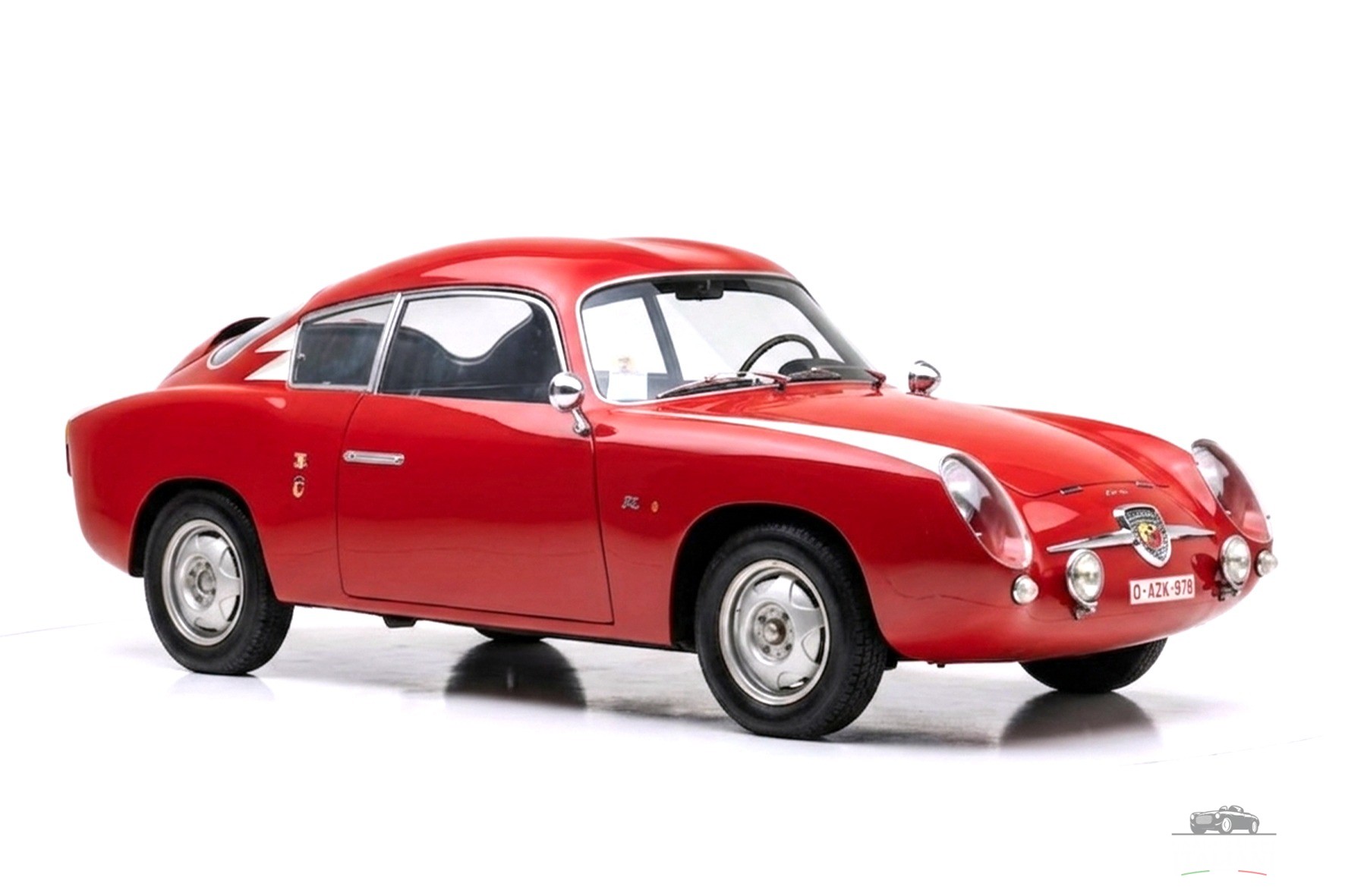


THE CONVERSATION
Comments 0