Leonardo Fioravanti
Leonardo Fioravanti is an Italian automotive designer renowned for his work at Pininfarina, where he contributed to the styling of landmark Ferrari road cars.
Explore record ↗
1996
THE VEHICLE AT A GLANCE
THE PEOPLE BEHIND THE CAR
Leonardo Fioravanti is an Italian automotive designer renowned for his work at Pininfarina, where he contributed to the styling of landmark Ferrari road cars.
Explore record ↗Fioravanti is an Italian automotive design and engineering studio that expanded from architectural work into transport and industrial design in the early 1990s.
Explore record ↗01 / THE STORY
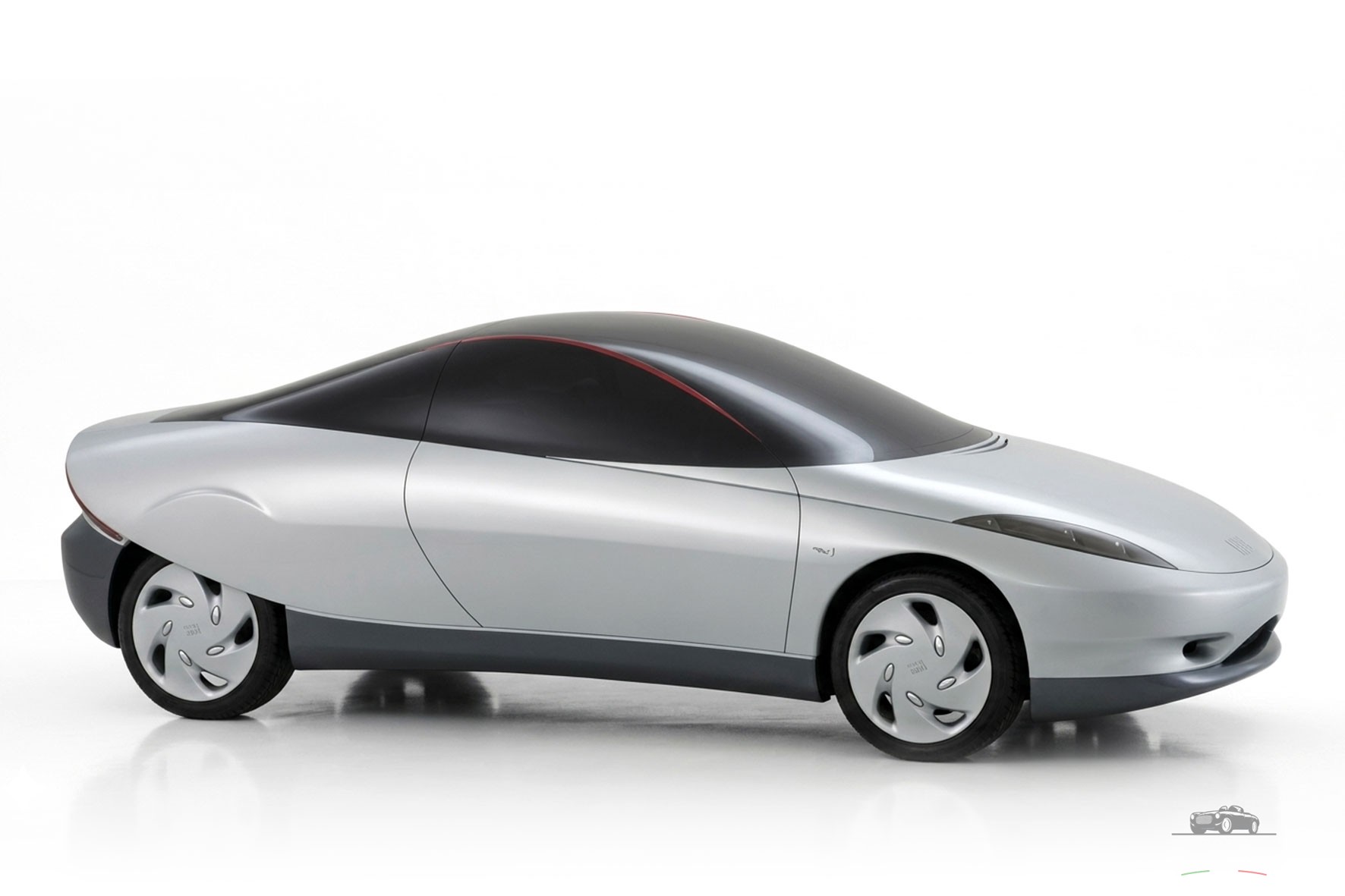
The Fiat Bravo Flair, presented at the 1996 Turin Auto Salon, represented Fioravanti’s innovative response to Fiat’s design competition for the Fiat Bravo concept. The name “Flair,” an acronym for “fluid air,” underscores the vehicle’s focus on using aerodynamic principles to enhance driving dynamics and efficiency. Building on previous aerodynamic studies such as the Sensiva 1994, which explored turbine-assisted forces, the Flair delves deeper into aerodynamic optimization, particularly targeting the vehicle’s lower and rear sections. This meticulous analysis achieved both a commendable drag coefficient (Cx) and effective braking performance, facilitated by advanced aerodynamic brakes. The Flair concept envisioned a classic Italian 2+2 coupe, characterized by sleek, flowing lines that minimize fuel consumption while leveraging air flow for braking. The design integrates aerodynamic elements to ensure high efficiency and performance. The engine hood features long transparent surfaces protecting the lighting elements, with a retractable windshield wiper system neatly integrated at the base of the windshield. At the front, a central air intake, optimized for aerodynamic efficiency, is framed by a deployable spoiler, while lateral brake air intakes provide a dynamic graphical element to the bumper area. The concept of aerodynamic brakes, traditionally used in aviation, is rarely applied in automotive design. In the Flair, electronics and sensors manage these devices to enhance braking performance. When the vehicle exceeds a certain speed and the brakes are engaged, both the upper and lower aerodynamic brakes deploy automatically before the traditional braking system intervenes. This system aims to deliver a more “natural” braking experience and reduce strain on the conventional braking components. The upper aerodynamic brake features a surface that remains flush in its resting position but rises to an almost vertical angle when braking. The lower aerodynamic brake consists of a wing-shaped profile that adjusts between minimum and maximum resistance during braking. At the rear of the Fiat Bravo Flair, a high-intensity LED strip encircles the “stern” of the vehicle, incorporating various functions, while dual rear-facing cameras replace traditional side mirrors, enhancing aerodynamics and reducing the vehicle’s visual aggressiveness.
02 / TECHNICAL IDENTITY
03 / DESIGN, BODY & SUPPLIERS
Coachbuilder / Design studio
Fioravanti is an Italian automotive design and engineering studio that expanded from architectural work into transport and industrial design in the early 1990s.
Explore record ↗Designer
Leonardo Fioravanti is an Italian automotive designer renowned for his work at Pininfarina, where he contributed to the styling of landmark Ferrari road cars.
Explore record ↗04 / CHRONOLOGY
07 / GALLERY

THE CONVERSATION
Comments 0