
Pininfarina
Founded by Battista Pinin Farina in Turin in 1930, Pininfarina became one of the most influential Italian styling and coachbuilding houses, particularly through its work for Ferrari and other international manufacturers.
Explore record ↗
2001Coachwork by Pininfarina
THE VEHICLE AT A GLANCE
THE PEOPLE BEHIND THE CAR
Founded by Battista Pinin Farina in Turin in 1930, Pininfarina became one of the most influential Italian styling and coachbuilding houses, particularly through its work for Ferrari and other international manufacturers.
Explore record ↗Maurizio Corbi joined Pininfarina in 1989 after working at Aviointeriors and Bertone. He contributed to Ferrari programmes including the F355, F50, 550 Maranello and California, working within Pininfarina's design teams. Alongside automotive styling, he developed a practice in hyperrealist car illustration and taught automotive design.
Explore record ↗01 / THE STORY
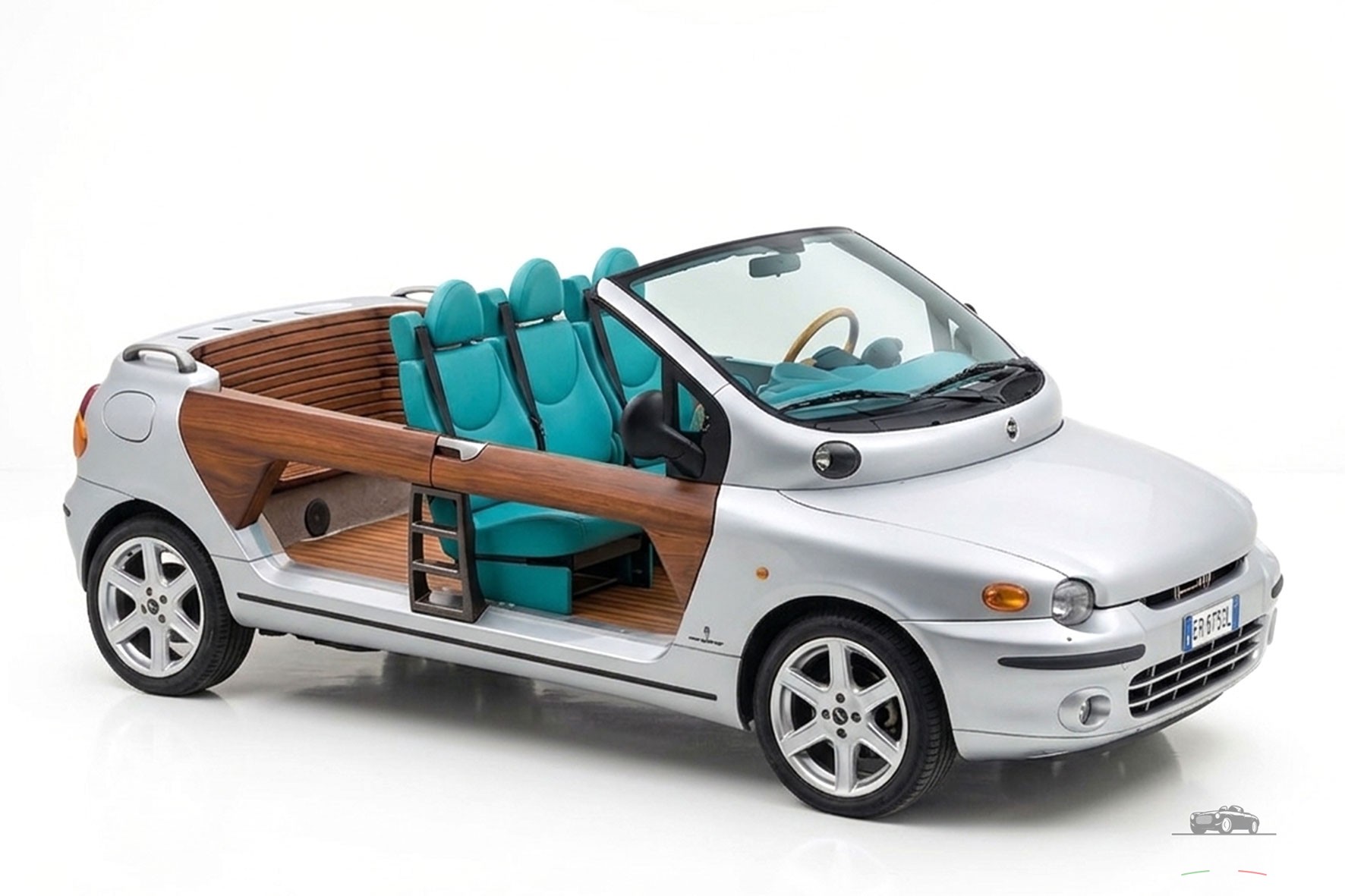
The Fiat Multipla Eden Roc II built by Pininfarina was inspired by the 50s Spiaggina cars. Materials such as wood and leather were much loved by the Avvocato and were adapted to metals such as aluminum and steel to give a feeling of freedom and contact with nature. This Fiat Multipla Spider remained a one off and was fitted with a 1,970 cc Alfa Romeo Quadrifoglio engine with 150 hp. It is part of the Fiat collection. It is based on the standard Multipla which is is an automotive design product that has received some international visibility; in 1999, the Museum of Modern Art in New York included the car in its Different Roads exhibition as one of the examples of new trends in mass motoring. Anticipated in 1996 by the concept car of the same name, the first series of Multipla (project 186) was shown in its final version in 1997 at the Frankfurt International Motor Show and marketed in January 1998. The car is based on a sheet steel Space Frame chassis designed by Fiat for models with low to medium production volumes. From its debut, the Multipla changed the classic MPV structure by adopting six individual and equal seats, arranged in two rows. It also has a capacious boot (430 litres, expandable to 1300 with the rear seats reclined), in a length contained to less than 4 metres.
02 / TECHNICAL IDENTITY
03 / DESIGN, BODY & SUPPLIERS
Coachbuilder / Design studio
Founded by Battista Pinin Farina in Turin in 1930, Pininfarina became one of the most influential Italian styling and coachbuilding houses, particularly through its work for Ferrari and other international manufacturers.
Explore record ↗Attributed designer
Maurizio Corbi joined Pininfarina in 1989 after working at Aviointeriors and Bertone. He contributed to Ferrari programmes including the F355, F50, 550 Maranello and California, working within Pininfarina's design teams. Alongside automotive styling, he developed a practice in hyperrealist car illustration and taught automotive design.
Explore record ↗Become a Pro member to see the full details in this section.
Membership is not available yet.
View membership options05 / PEOPLE, COLLECTIONS & MUSEUMS
08 / GALLERY
THE CONVERSATION
Comments 0