
Ghia
Founded in Turin in 1916, Carrozzeria Ghia became a major Italian design and coachbuilding house, creating bespoke automobiles, prototypes and international collaborations across the twentieth century.
Explore record ↗
1983Coachwork by Ghia
THE VEHICLE AT A GLANCE
THE PEOPLE BEHIND THE CAR
Founded in Turin in 1916, Carrozzeria Ghia became a major Italian design and coachbuilding house, creating bespoke automobiles, prototypes and international collaborations across the twentieth century.
Explore record ↗01 / THE STORY
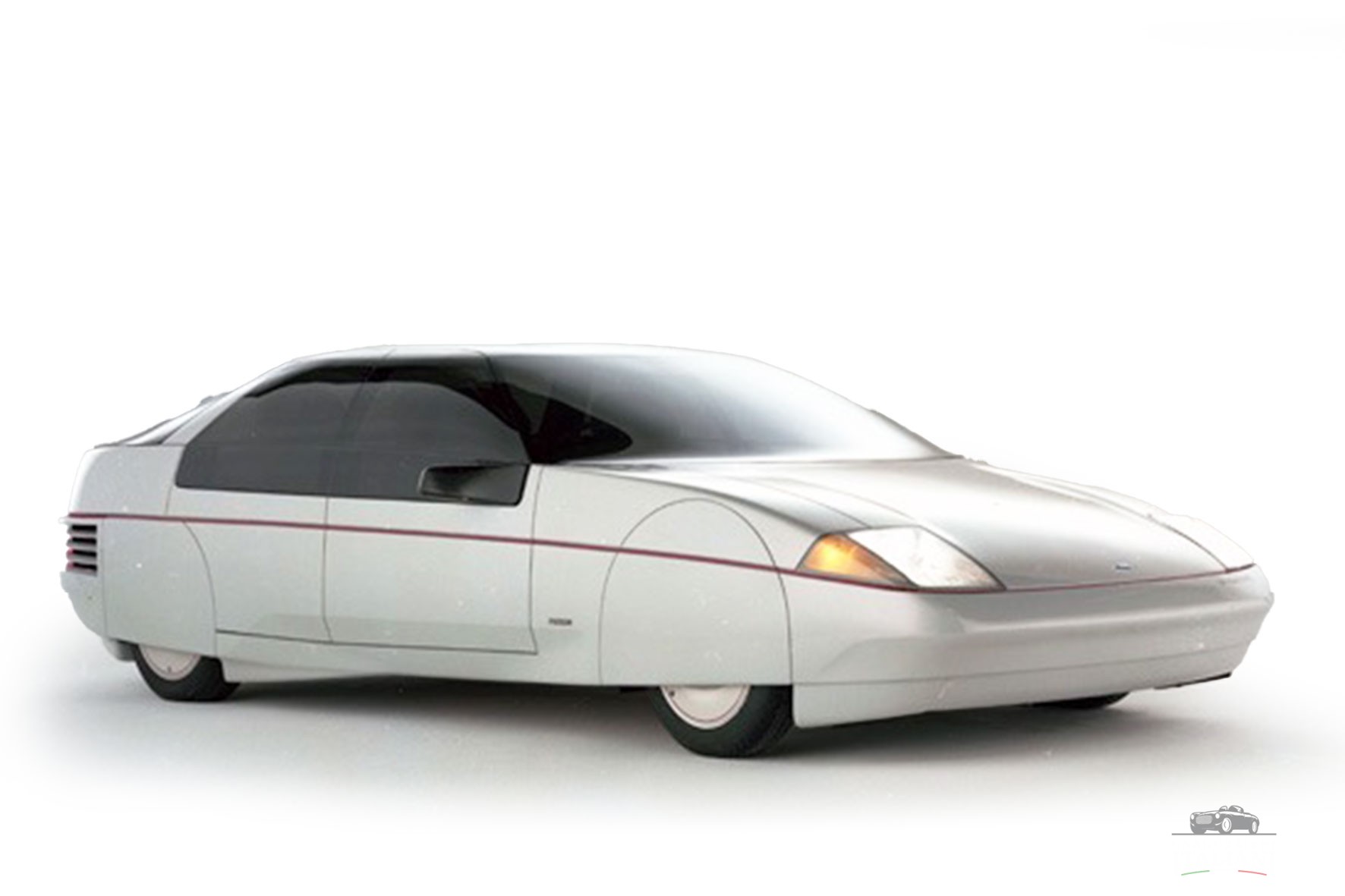
The Ford Probe IV advanced the state of aerodynamic art at Ford to a new level, going to great lengths to make its surfaces as smooth as possible and present the minimum frontal area. A low ride height minimized undercar airflow and the Probe IV went to the extent of creating a speed sensitive ride height and attitude system. Ford Probe IV could assume a pronounced nose-down attitude at speed. In fact, the back of Ford Probe IV could rise six inches while at the same time the nose dropped four inches at high speed, improving its stability and air penetration. The front air dam was also electrically controlled, compensating for attitude changes and driver controllable to compensate for rough surfaces. Headlights were under plastic covers. Side windows were flush in their frames with small power operated panels at the bottom for ventilation and paying tolls. The radiator and air conditioning compressor were located at the rear in order to eliminate a high drag radiator opening in the front (or nose). A full belly pan smoothed the limited undercar airflow that the air dam and attitude control let through and the tires were specially-developed for Ford Probe IV, skinny P155/75R-16 LDC Goodyear tires that even had a low drag tread pattern. Even the identification and emblems were flush with the Probe IV surface. The only interruption to exterior air flow were the outside mirrors, which were in faired-in and sharply swept back enclosures. Mechanical innovations were required to meet Ford Probe IV requirements including a highly sophisticated short MacPherson strut front suspension. Its front engine, rear drive chassis was powered by a 1.6 liter 4-cylinder turbocharged engine which was canted 70 degrees to the side to lower the hood. One of Probe IV’s most distinctive features are its fully-skirted wheels and tires which utilize membranes between the outer covers and the body. The membranes flex when the front wheels are turned and allow Ford Probe IV to be driven normally, but drastically reduce wheel well turbulence and resulting aero drag. The occupants of Probe IV sit in specially designed grey velour ‘sling’ style seats designed to provide lumbar and thigh support in a semi-reclining position which saves 1½ inches in roof height. Instruments are placed directly in front of the driver with other controls in elaborate black panels with white legends on each side of the wheel. The top of the single-spoke steering wheel is transparent. The transmission shifter and additional controls are placed on the center console. The Ford Probe IV designed by Ghia studios in Turin Italy, achieved a drag coefficient of 0.152, the same as the F-16 fighter, an extraordinary accomplishment particularly in view of its comfortable internal accommodations for four.
02 / TECHNICAL IDENTITY
03 / DESIGN, BODY & SUPPLIERS
Coachbuilder / Design studio
Founded in Turin in 1916, Carrozzeria Ghia became a major Italian design and coachbuilding house, creating bespoke automobiles, prototypes and international collaborations across the twentieth century.
Explore record ↗Become a Pro member to see the full details in this section.
Membership is not available yet.
View membership options07 / GALLERY
THE CONVERSATION
Comments 0