
Zagato
Founded in Milan in 1919 by Ugo Zagato, the coachbuilding house developed lightweight aerodynamic bodies inspired by aircraft construction, creating distinctive racing and grand touring automobiles.
Explore record ↗
1947Coachwork by Zagato
THE VEHICLE AT A GLANCE
THE PEOPLE BEHIND THE CAR
Founded in Milan in 1919 by Ugo Zagato, the coachbuilding house developed lightweight aerodynamic bodies inspired by aircraft construction, creating distinctive racing and grand touring automobiles.
Explore record ↗Luigi Fabio Rapi \(1902–1977\) was an Italian engineer, automotive stylist and illustrator. He worked with Isotta Fraschini and Zagato, designed the body of the Bertone-built Stanguellini 1100 Berlinetta, and later worked at Fiat, Simca and Autobianchi. His automotive illustrations also appeared in Italian motoring publications and books.
Explore record ↗01 / THE STORY
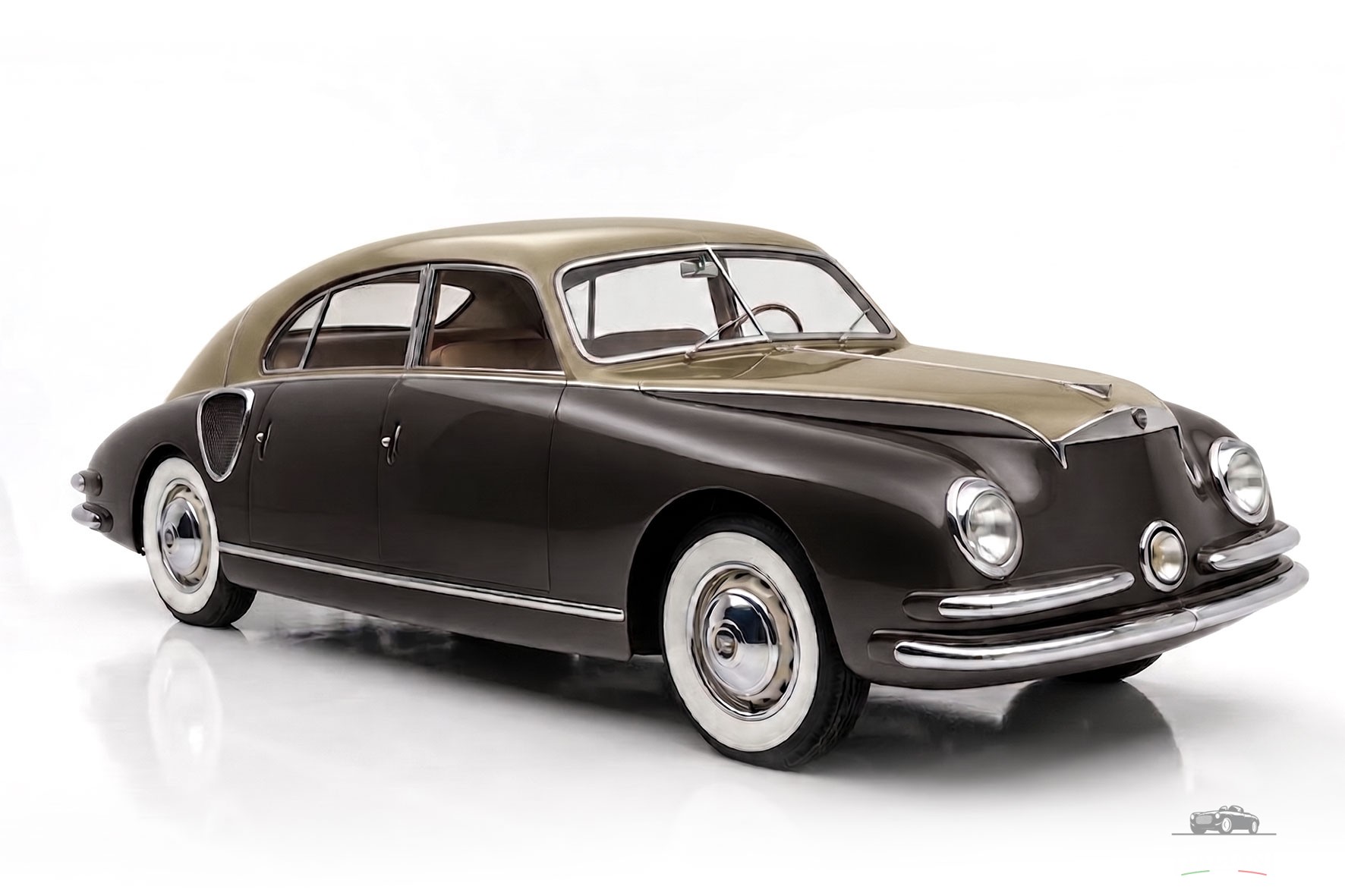
The Isotta Fraschini 8C Monterosa Zagato made its official debut on 1947 Mille Miglia. This model marked the final endeavor of the prestigious Milanese automaker to reclaim its former glory. Unfortunately, the Monterosa did not advance to production. The pre-production series included a variety of chassis setups: two 4-door sedans (one by Touring and another by Zagato), a two-door sedan by Touring, and convertibles by Boneschi. Notably, all versions were designed to accommodate six passengers. Despite these ambitious plans, the Monterosa project ended in failure. This ambitious attempt to revive the brand’s legacy did not succeed, leaving only a small number of prototypes as a testament to this chapter of automotive history. Isotta Fraschini, once renowned for its luxury and engineering prowess, faced significant challenges in the post-war era. The Monterosa represented a final, valiant effort to reestablish itself as a leader in automotive excellence. The chassis of these prototypes showcased innovative design and engineering, but the financial and logistical hurdles proved insurmountable. Repeated restructuring of Isotta Fraschini’s holding company allowed the Italian plants to remain operational and preserved two Monterosa prototypes to this day. These include a black coupe with a sunroof and a two-tone white and dark blue convertible. These remaining examples serve as historical artifacts, reflecting the brand’s high aspirations and the ultimate futility of the Monterosa project. The Isotta Fraschini 8C Monterosa Zagato’s failure is a poignant chapter in Italian automotive history. It highlights the struggles of a prestigious brand attempting to adapt and survive in a rapidly changing post-war industry. Despite its lack of commercial success, the Monterosa remains a significant milestone. It embodies the resilience and ambition of Isotta Fraschini and serves as a reminder of the brand’s once-dominant position in the luxury car market. The 8C Monterosa Zagato stands as a symbol of an era where craftsmanship and innovation were paramount, even in the face of overwhelming adversity.
02 / TECHNICAL IDENTITY
03 / DESIGN, BODY & SUPPLIERS
Coachbuilder / Design studio
Founded in Milan in 1919 by Ugo Zagato, the coachbuilding house developed lightweight aerodynamic bodies inspired by aircraft construction, creating distinctive racing and grand touring automobiles.
Explore record ↗Designer
Luigi Fabio Rapi \(1902–1977\) was an Italian engineer, automotive stylist and illustrator. He worked with Isotta Fraschini and Zagato, designed the body of the Bertone-built Stanguellini 1100 Berlinetta, and later worked at Fiat, Simca and Autobianchi. His automotive illustrations also appeared in Italian motoring publications and books.
Explore record ↗Become a Pro member to see the full details in this section.
Membership is not available yet.
View membership options04 / CHRONOLOGY
06 / CHASSIS REGISTER
07 / GALLERY
THE CONVERSATION
Comments 0