Vignale
Founded by Alfredo Vignale in Turin in 1948, Carrozzeria Vignale produced bespoke sports and grand touring bodies for Ferrari, Fiat, Maserati and other manufacturers.
Explore record ↗
1966Coachwork by Vignale
THE VEHICLE AT A GLANCE
THE PEOPLE BEHIND THE CAR
Founded by Alfredo Vignale in Turin in 1948, Carrozzeria Vignale produced bespoke sports and grand touring bodies for Ferrari, Fiat, Maserati and other manufacturers.
Explore record ↗Federico Formenti was an Italian automotive stylist at Touring and Alfa Romeo, noted for his contributions to post-war coachbuilt grand tourers.
Explore record ↗01 / THE STORY
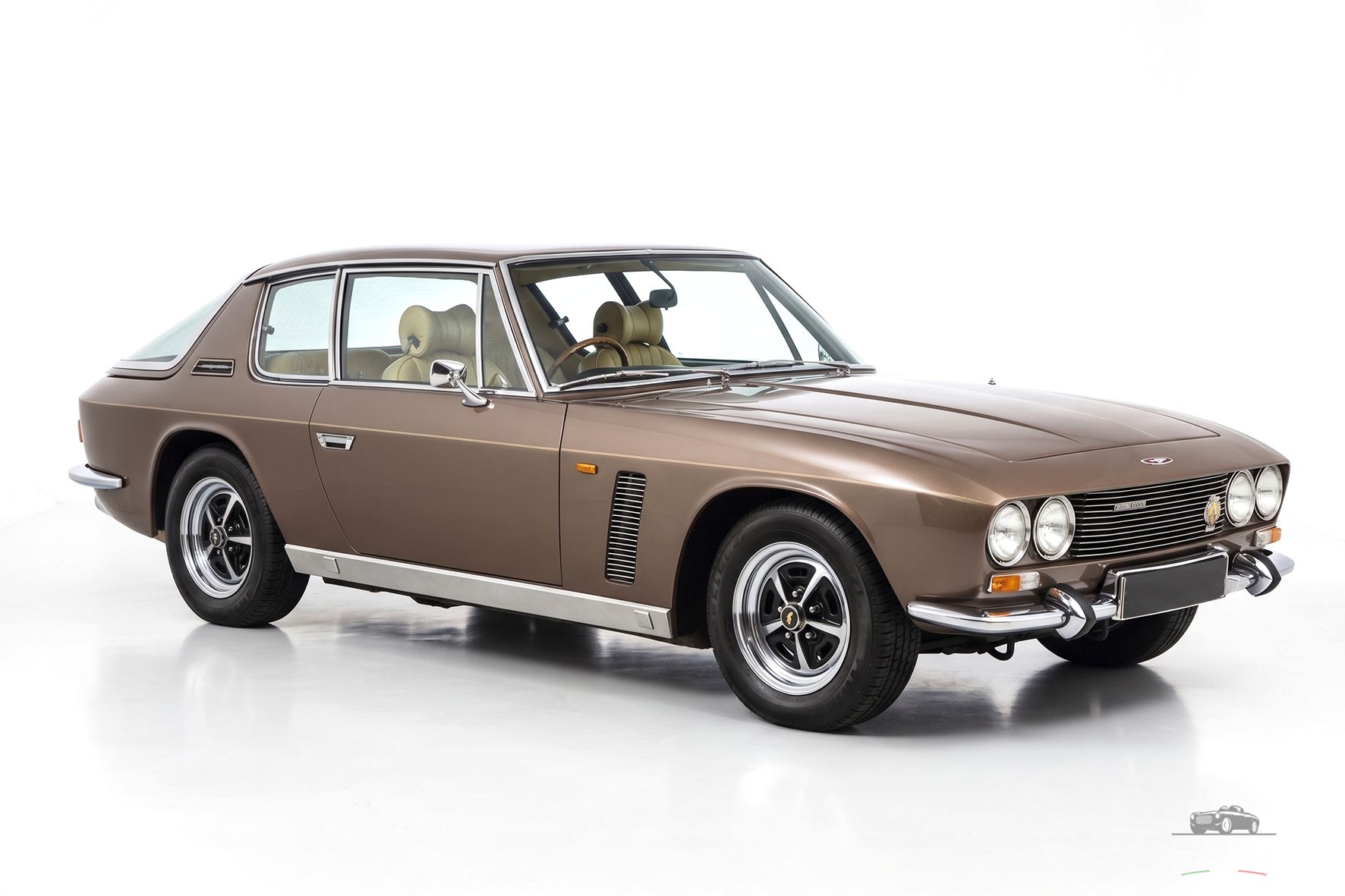
The Jensen Interceptor made its debut in 1965, marking a significant chapter in British automotive history. That year, Vignale, the Italian coachbuilder, established a crucial connection with Jensen Motors. The management at Jensen was divided on how to replace their C-V8 model, but it was eventually agreed that the new car would be both designed and built in Italy. Kevin Beattie, Jensen’s design and development manager, visited several renowned Italian design houses, including Ghia, Touring, and Vignale, asking each to submit designs for the new model. Carrozzeria Ghia was initially involved, but their close ties with Chrysler meant they demanded a hefty fee to focus on Jensen’s project. Carrozzeria Vignale proposed a design that was somewhat conventional, resembling the Maserati Mexico, which had been showcased at the 1965 Turin Motor Show. However, Jensen sought a more dramatic and eye-catching design, which they found in a submission from Touring, crafted by designer Federico Formenti. Although Jensen appreciated the design, Touring’s precarious financial situation cast doubt on their ability to deliver. To resolve this, Jensen purchased Touring’s design outright, removed any Superleggera Touring markings, rebranded the drawings with Jensen’s name, and presented them to Carrozzeria Vignale as the concept they wanted to pursue. Whether Alfredo Vignale recognized the design’s origins or not, he remained silent, eager to secure the contract for final styling and production. With the agreement in place and the necessary tooling arranged, Carrozzeria Vignale quickly produced a prototype that combined the proven C-V8 chassis and running gear with the new body in just four months. Within another six months, the first Italian-bodied, American-engined, British-built Jensen Interceptor rolled off the assembly line in West Bromwich, marking one of the fastest international model developments of its time. Despite this rapid progress, Carrozzeria Vignale’s involvement with the Jensen Interceptor was short-lived. By October 1966, when two or three completed Interceptor bodies were arriving weekly from Turin, Jensen concluded that the quality of the finish did not meet their expectations. Moreover, the financial arrangement with Vignale was deemed unsustainable and overly complex. As a result, Vignale was bought out, and the production jigs and press tools were relocated to Britain. Jensen later acknowledged that it took their own craftsmen considerable time to match the flexibility and craftsmanship of the Italian artisans.
02 / TECHNICAL IDENTITY
03 / DESIGN, BODY & SUPPLIERS
Coachbuilder / Design studio
Founded by Alfredo Vignale in Turin in 1948, Carrozzeria Vignale produced bespoke sports and grand touring bodies for Ferrari, Fiat, Maserati and other manufacturers.
Explore record ↗Attributed designer
Federico Formenti was an Italian automotive stylist at Touring and Alfa Romeo, noted for his contributions to post-war coachbuilt grand tourers.
Explore record ↗Become a Pro member to see the full details in this section.
Membership is not available yet.
View membership options04 / CHRONOLOGY
07 / GALLERY
08 / PERIOD ARCHIVE
Become a Pro member to see the full details in this section.
Membership is not available yet.
View membership options
THE CONVERSATION
Comments 0