Origins and presentation
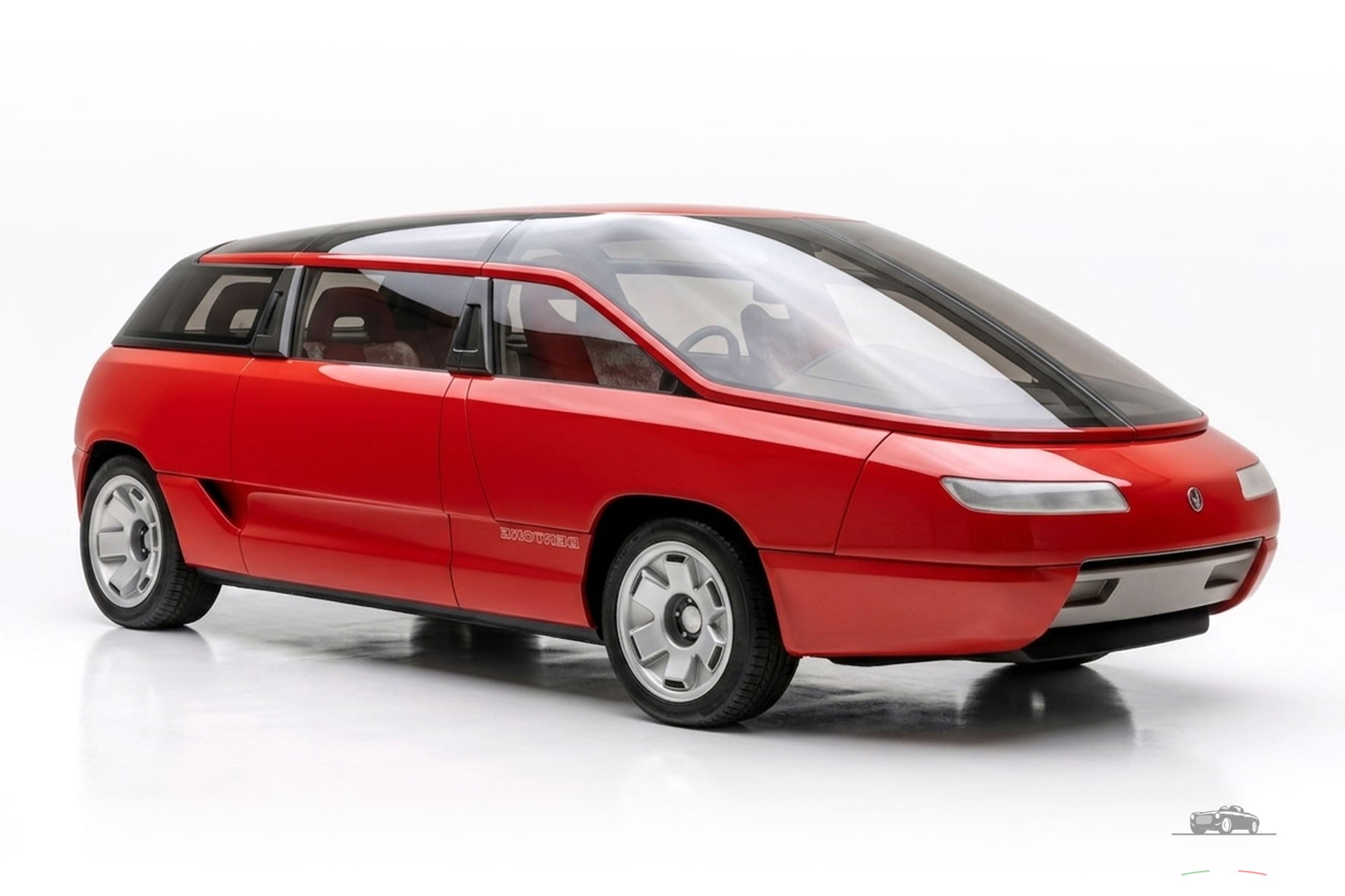
The Bertone Genesis, also known as the Lamborghini Genesis, was a one-off high-performance multi-purpose concept unveiled at the 1988 Turin Motor Show. Developed at Bertone’s Caprie styling centre, its design is attributed to Marc Deschamps. Rather than a series-production Lamborghini, the Genesis investigated how a flexible passenger compartment could be combined with the mechanical character of a twelve-cylinder grand tourer. It was conceived as an experimental vehicle, not as a documented production programme.
Engineering and passenger architecture
Bertone’s contemporary press material describes a specially prepared raised-floor chassis carrying a Lamborghini twelve-cylinder engine and an automatic transmission. Subsequent technical accounts identify the power unit as the 5,167 cc V12 from the Lamborghini Countach Quattrovalvole, rated at 455 metric horsepower, coupled to a three-speed Chrysler TorqueFlite automatic gearbox. Unlike the mid-engined Countach, the Genesis placed its engine at the front and drove the rear wheels. The frequently repeated suggestion of an Espada-derived chassis has not been substantiated by a factory chassis number or a construction record, and should be distinguished from the documented use of Lamborghini mechanical components.
The large glazed cabin was reached through unusual front doors hinged near the centre of the roof and sliding rear doors. Specialist descriptions identify a five-seat interior with adaptable seating arrangements, designed to make the vehicle useful as a mobile living space as well as a design statement. The broad, low body and generous glass area gave the passenger compartment unusual visual prominence. Published figures put the car at approximately 1,800 kg, but this is a reported estimate rather than an independently verified weighing. The conflicting overall lengths found in secondary technical records are not treated here as settled dimensions.
Design context and preservation
In its launch material, Bertone referred to Medusa, Delfino and Stratos as conceptual points of reference. These comparisons concerned experimental design themes, not common chassis or a single line of manufacture. The earlier Alfa Romeo Delfino represented a different grand-touring interpretation, whereas the Genesis shifted the discussion towards a spacious, reconfigurable interior. The prototype remained unique and subsequently formed part of the Bertone collection, which the Automotoclub Storico Italiano acquired as an indivisible group in 2015. ASI displayed the Genesis at Auto e Moto d’Epoca in 2024. A published insolvency inventory assigned it a valuation of €40,000 in 2015; this was an accounting appraisal within the collection, not a separately completed sale.


THE CONVERSATION
Comments 0