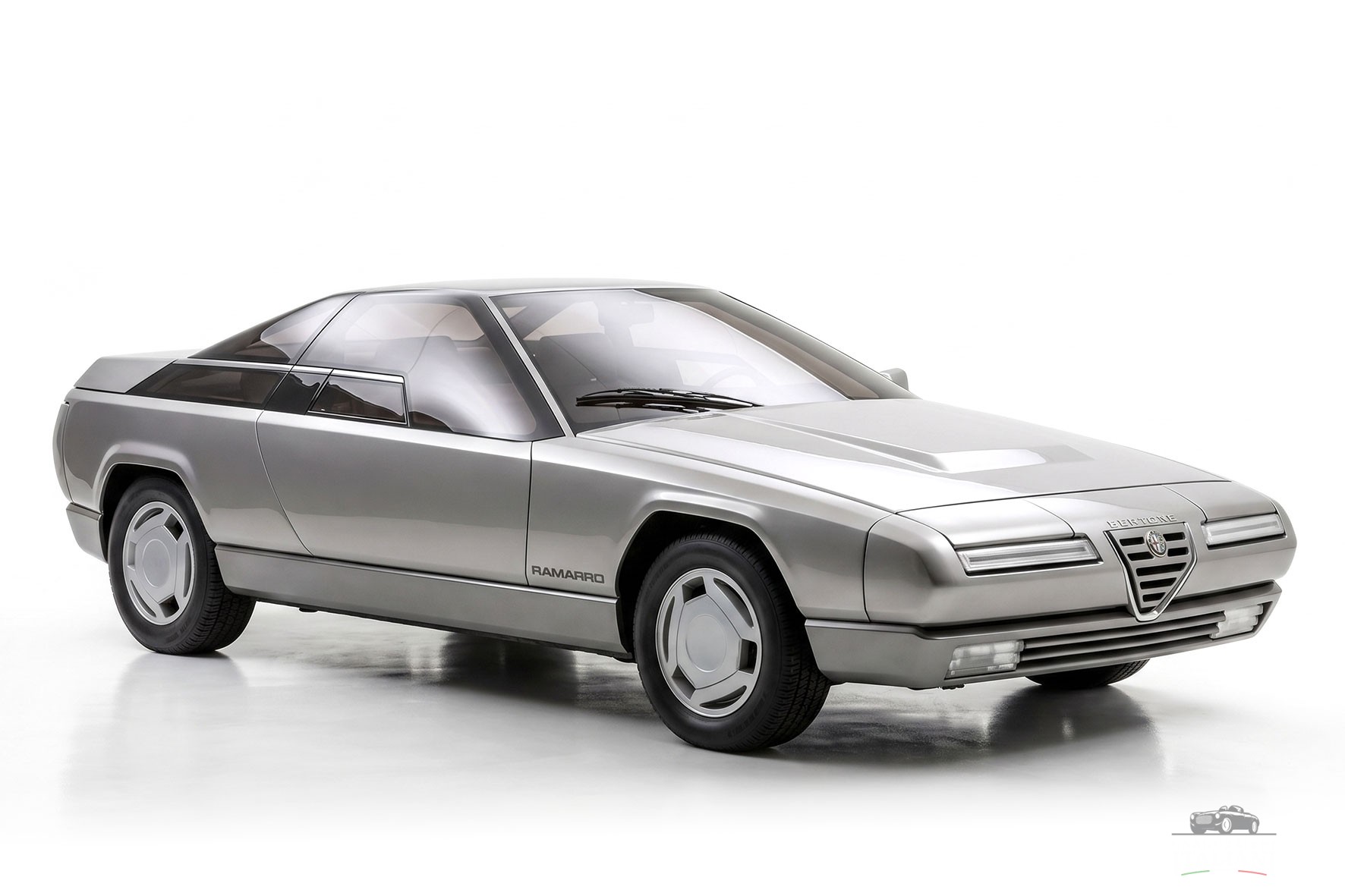
The Alfa Romeo Delfino (1983) was a two-seat grand touring coupé concept developed by Carrozzeria Bertone and presented at the Geneva International Motor Show in March 1983. Its design is attributed to Marc Deschamps, then working as Bertone’s chief stylist. Although identified as an Alfa Romeo concept, the Delfino was a separate Bertone project rather than a series-production model. It combined traditional front-engine, rear-wheel-drive grand touring proportions with an exceptionally low, angular body and a large glazed cabin.
Development and historical context
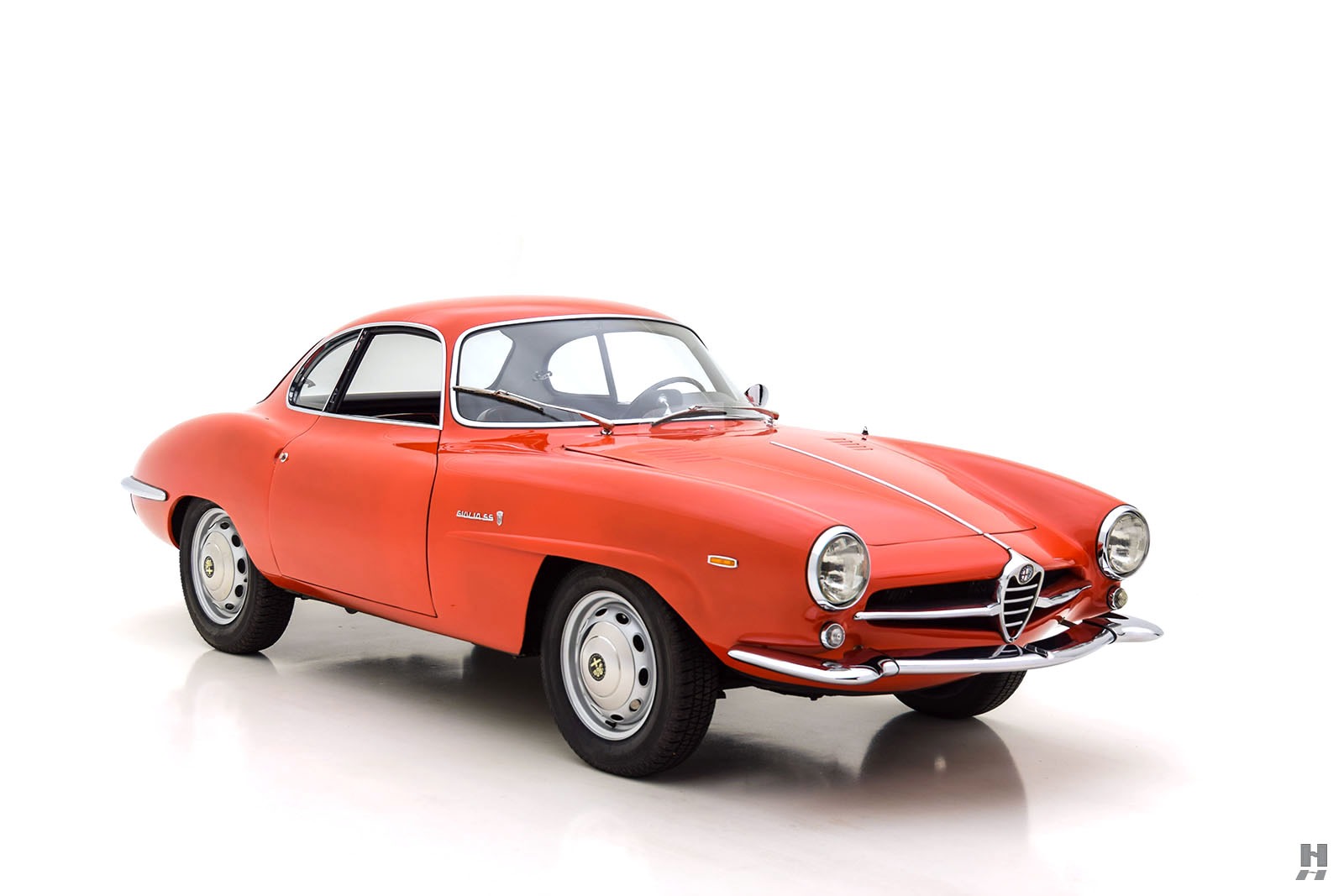
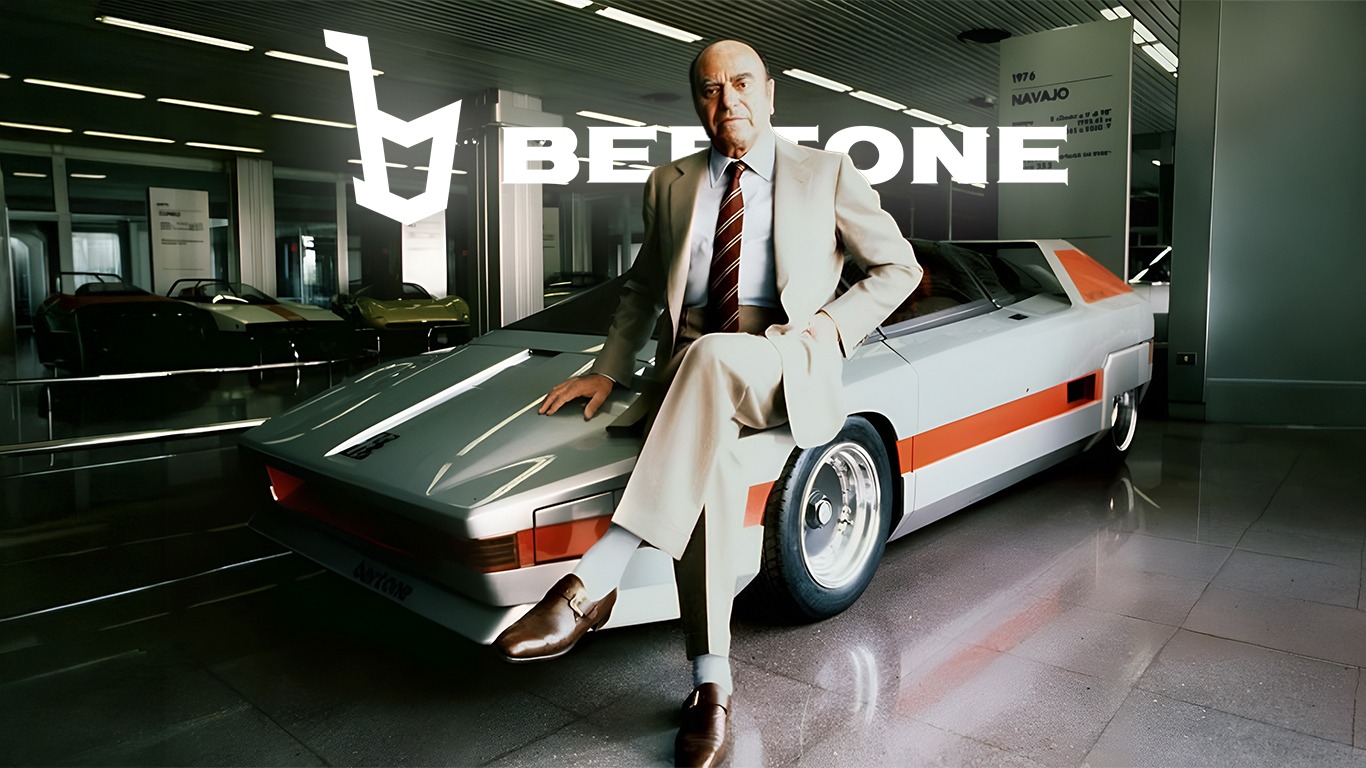
Bertone conceived the Delfino at a time when the Italian grand touring coupé had become a comparatively specialised product. The company regarded the project as a contemporary interpretation of an established partnership with Alfa Romeo, which had produced the Giulietta Sprint, Giulietta Sprint Speciale and the 2000 and 2600 Sprint. The proposal deliberately differed from the spectacular mid-engined studies of the previous two decades. Bertone contrasted its more restrained GT programme with cars such as the Alfa Romeo Navajo, conceived around very different technical and aesthetic priorities.
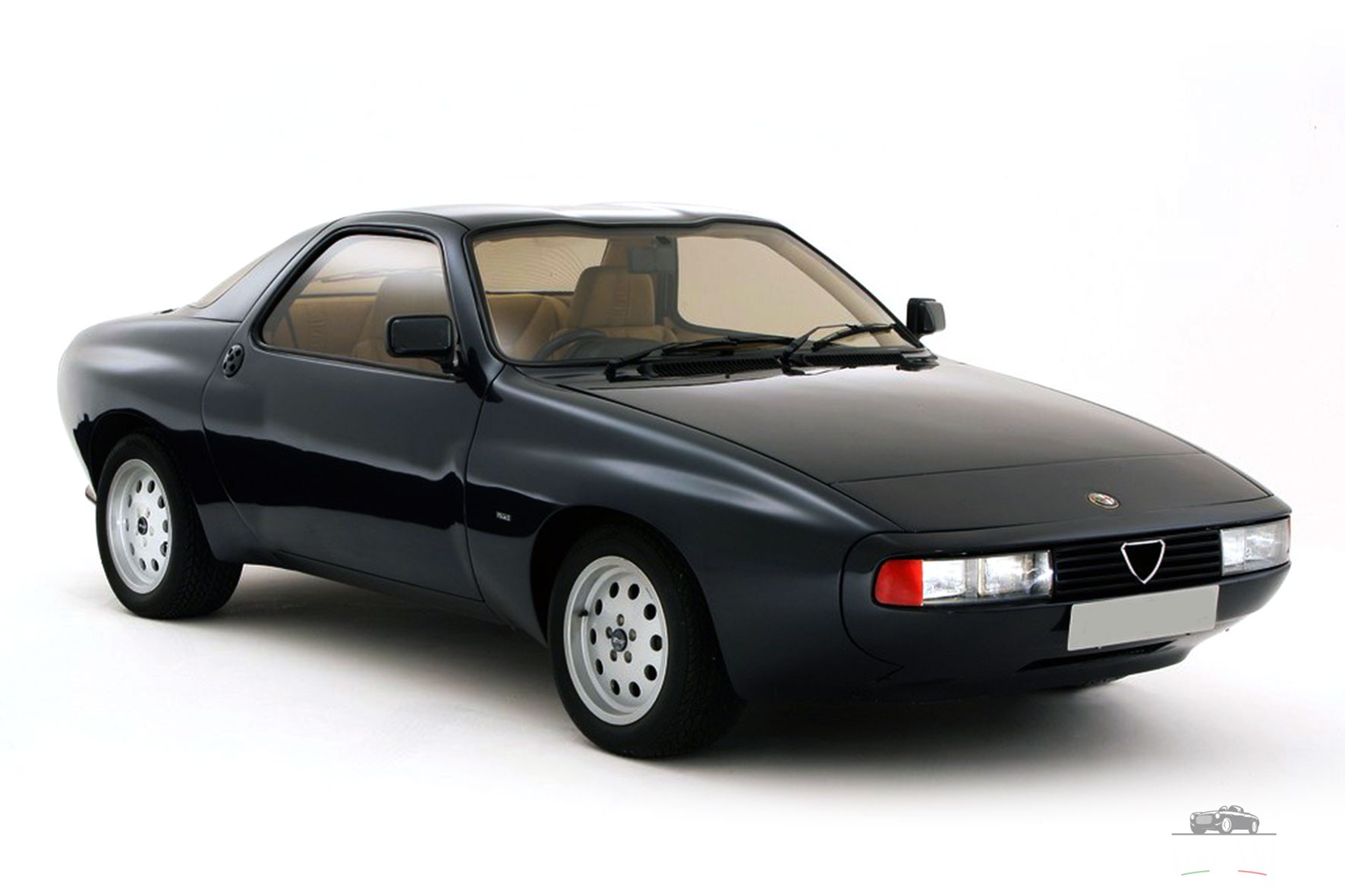
Geneva also hosted the Alfa Romeo Zeta 6, a separate Zagato interpretation of a future Alfa Romeo grand tourer. The two cars presented alternative coachbuilding approaches to the same general market, but they were not variants of a common coachwork design. The Delfino remained a one-off concept and did not proceed to series manufacture.
Body design and interior
The Delfino’s profile combined a long, nearly horizontal bonnet, a strongly raked windscreen, a trapezoidal glasshouse and a short rear overhang. The markedly low roof was balanced by broad side glazing and large wheels. Retractable front lamps sat above a distinctive interpretation of the Alfa Romeo shield, which was integrated into the lower front panel. Narrow horizontal rear lamps reinforced the width of the tail. The relationship between steel body surfaces and the surrounding glass was a particular feature of Bertone’s styling treatment.
The passenger compartment was planned for two occupants rather than as a four-seat coupé. Its geometric dashboard and compact, horizontally arranged controls followed the form language of the exterior. Attention was also given to luggage capacity, an important distinction from Bertone’s earlier experimental sports cars. The restrained exterior and more technical-looking cabin expressed two complementary aspects of the same grand touring brief.
Mechanical specification
The concept used mechanical components from the Alfa Romeo Alfa 6, including a front-mounted 2,492 cc overhead-camshaft V6 and rear-wheel drive. Bertone’s period figures quoted 160 hp at 5,800 rpm and a maximum torque of 220 Nm at 4,000 rpm. The Delfino retained the Alfa 6’s 2,600 mm wheelbase but had a wider track and more compact exterior body. Published dimensions were 4,140 mm in length, 1,830 mm in width and 1,180 mm in height. These specifications refer to the Delfino study and should not be treated as proof of the identity of an individual Alfa 6 donor chassis.
Preservation and historical significance
After its exhibition career the Delfino became part of the historic Bertone collection. On 28 September 2015 the Automotoclub Storico Italiano acquired the collection as a single protected group of 79 vehicles, chassis and styling models. The Delfino is among the exhibits associated with this collection, now housed at the Stellantis Heritage Hub in Turin. The collective acquisition does not establish an individual sale price for the Delfino. Its exact chassis stamping, engine serial and registration history have not been securely identified. The car survives as an example of Bertone’s early-1980s work under Deschamps, situated between the firm’s radical show-car tradition and its continuing interest in practical grand touring body design.




THE CONVERSATION
Comments 0