
Zagato
Founded in Milan in 1919 by Ugo Zagato, the coachbuilding house developed lightweight aerodynamic bodies inspired by aircraft construction, creating distinctive racing and grand touring automobiles.
Explore record ↗
1997Coachwork by Zagato
THE VEHICLE AT A GLANCE
THE PEOPLE BEHIND THE CAR
Founded in Milan in 1919 by Ugo Zagato, the coachbuilding house developed lightweight aerodynamic bodies inspired by aircraft construction, creating distinctive racing and grand touring automobiles.
Explore record ↗01 / THE STORY
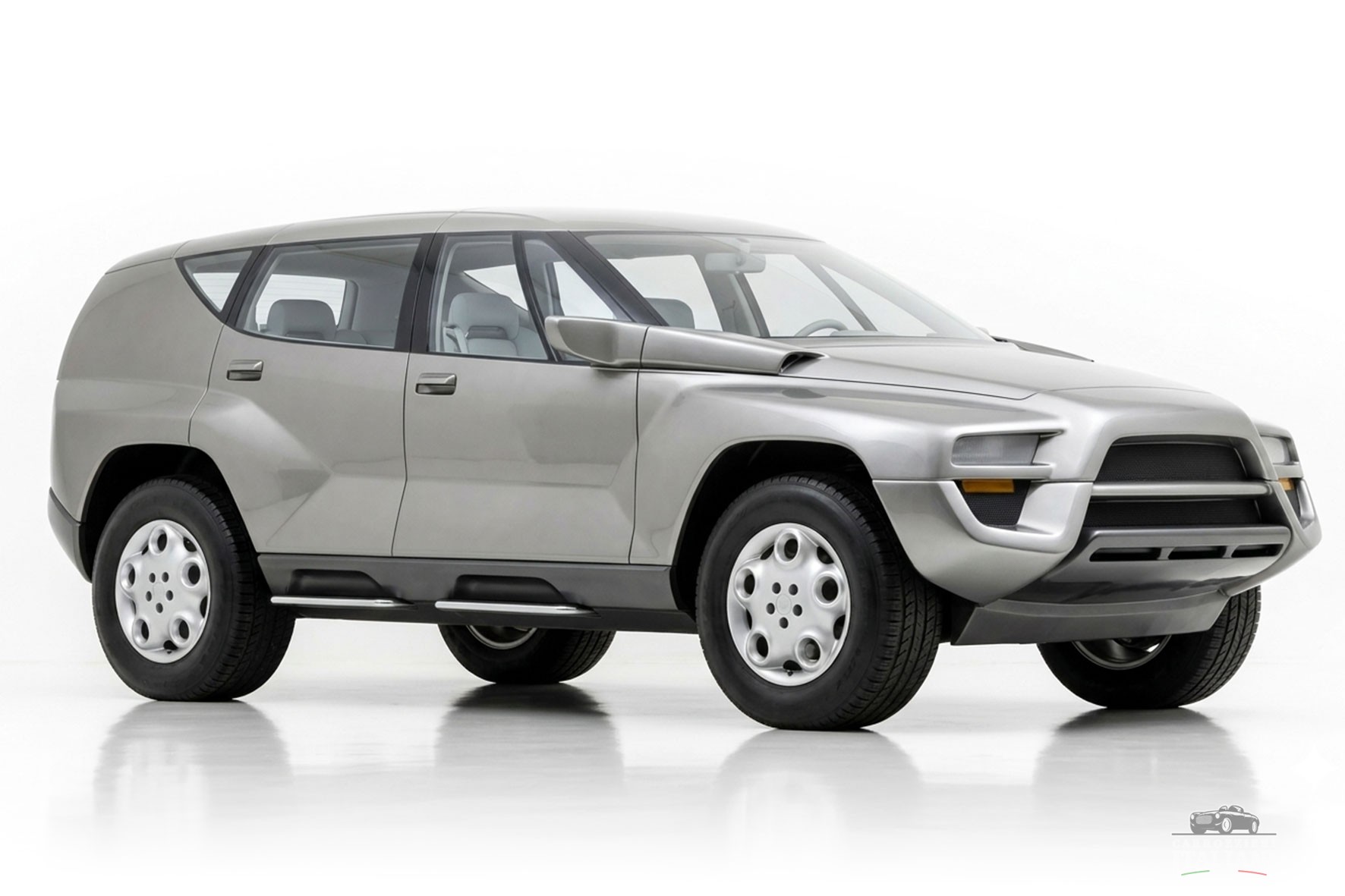
The Lamborghini LM003 Borneo is a fascinating yet largely forgotten chapter in Lamborghini’s history. During the period when Automobili Lamborghini SpA was under the ownership of the Indonesian group, there was a proposal to revive the iconic but flawed LM002 off-road vehicle. The LM002 had proven to be a steady, low-volume seller despite its imperfections, prompting the idea of creating a successor. Initially, a UK-based company was tasked with designing the new model. However, this responsibility was later handed over to SZ Design, which emerged from the remnants of the Zagato Design Studio. The new vehicle was designated as the LM003, known as the Borneo or Galileo depending on the market. This naming choice was somewhat confusing, as an LM003 already existeda prototype of the LM002 equipped with a turbocharged diesel engine. This earlier LM003, however, proved underpowered and never went beyond the prototype stage. The proposed LM003 Borneo was envisioned as a modernized successor to the LM002, retaining its rugged off-road appeal but incorporating contemporary design elements. Preliminary sketches of the LM003 revealed a shape reminiscent of the Range Rover, the premier luxury off-road vehicle of the time. The Range Rover was essentially the only high-end off-road vehicle available, as competitors like the Mercedes M-series, Lincoln Navigator, and Hummer had yet to appear on the market. Interestingly, the LM003 was intended to offer three distinct body configurations. One was similar to the original drawinga more conventional SUV layout. The second was a standard four-door version akin to the LM002, while the third proposed configuration resembled an open-top design similar to the later Hummer. Despite its intriguing concept, the LM003 Borneo never progressed beyond the design phase. Market research indicated that Lamborghini’s customers showed limited interest in a new off-road vehicle, favoring a successor to models like the Espada or Diablo instead. Although a full-scale mock-up was created, the LM003 project was eventually shelved. Had it materialized, the LM003 Borneo would have been produced in collaboration with Timor, an Indonesian automaker, with bodywork manufactured in the Far East rather than Italy, much like the LM002’s body, which was produced in Spain.
02 / TECHNICAL IDENTITY
03 / DESIGN, BODY & SUPPLIERS
Coachbuilder / Design studio
Founded in Milan in 1919 by Ugo Zagato, the coachbuilding house developed lightweight aerodynamic bodies inspired by aircraft construction, creating distinctive racing and grand touring automobiles.
Explore record ↗07 / GALLERY
THE CONVERSATION
Comments 0