
Pininfarina
Founded by Battista Pinin Farina in Turin in 1930, Pininfarina became one of the most influential Italian styling and coachbuilding houses, particularly through its work for Ferrari and other international manufacturers.
Explore record ↗
1930Coachwork by Pininfarina
THE VEHICLE AT A GLANCE
THE PEOPLE BEHIND THE CAR
Founded by Battista Pinin Farina in Turin in 1930, Pininfarina became one of the most influential Italian styling and coachbuilding houses, particularly through its work for Ferrari and other international manufacturers.
Explore record ↗Italian coachbuilder and design director (1893–1966) who founded Carrozzeria Pinin Farina in Turin in 1930 and guided its early aerodynamic and industrial development.
Explore record ↗01 / THE STORY
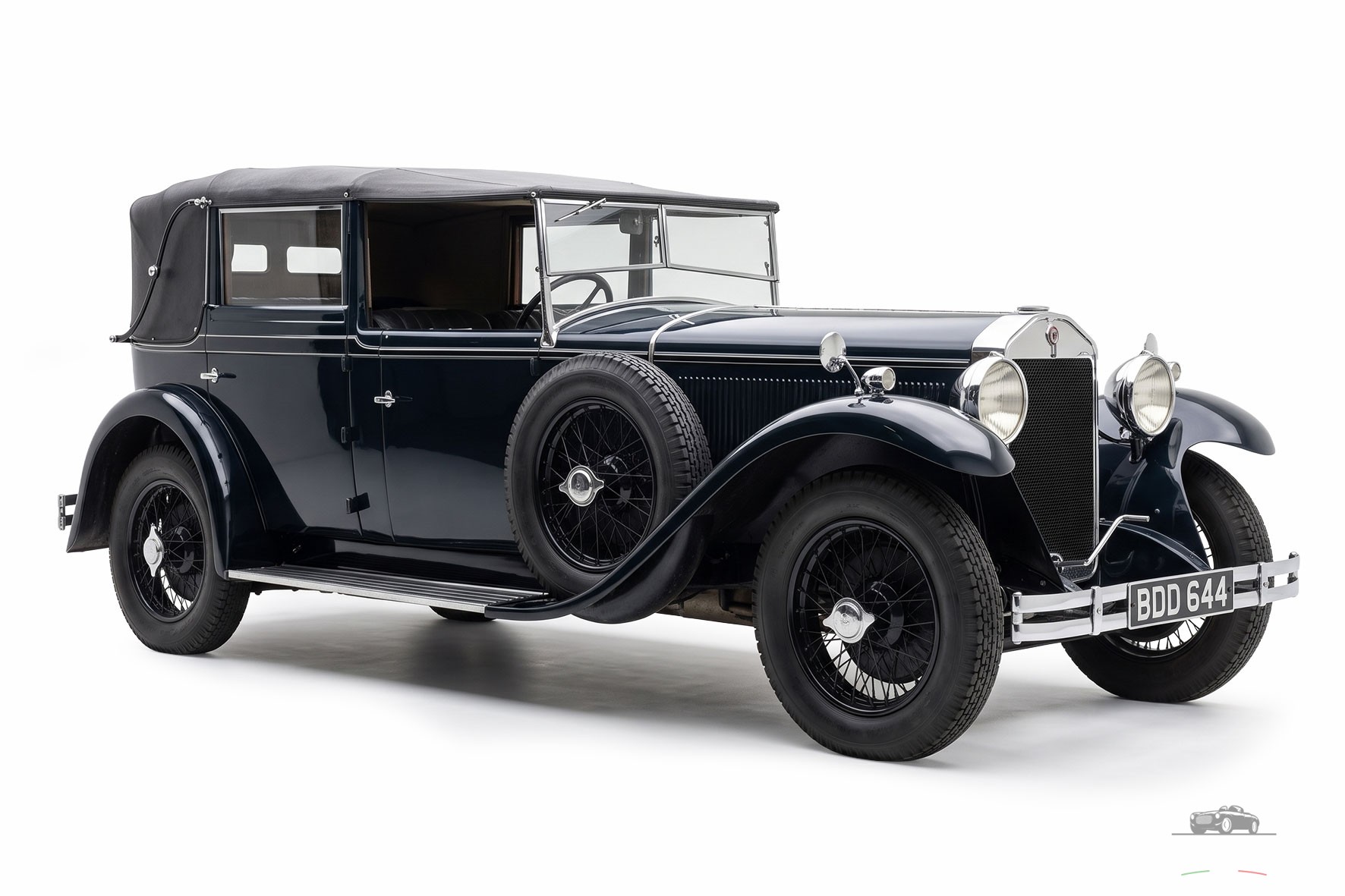
The Lancia Dilambda Cabriolet Dorsay holds a special place in automotive history as the first-ever “fuoriserie” designed by Pininfarina, marking a pivotal moment for the legendary coachbuilder in 1930. This bespoke creation, officially launched in May of that year, was the first car to bear the signature of Battista “Pinin” Farina, who founded his Torino-based carrozzeria. Now, nearly a century later, Pininfarina has evolved into a global brand, synonymous with elegance and innovation. The Lancia Dilambda was notable for being the last of the Lancia models named after Greek letters, a tradition that began with the Alfa in 1907. The prefix “Di” indicated an advanced or sporty version within the Lancia lineup. Launched in 1928, the Dilambda represented a leap forward in automotive technology and design. Under the leadership of Vincenzo Lancia, the company shifted from merely producing high-quality cars to creating innovative vehicles that redefined the market. The Dilambda featured a compact structure with a narrow V4 engine at a 13-degree angle, allowing for improved weight distribution and performance. It also introduced revolutionary innovations like independent front suspension and a unitary body structure, which combined the chassis and body for reduced weight and increased strength. However, the Cabriolet variant marked a return to a traditional chassis design, offering coachbuilders the freedom to craft unique bodies while adhering to Lancia’s recognizable front-end aesthetics. In the 1920s, automotive design favored larger vehicles, and the Dilambda faced competition from giants like the Isotta Fraschini Tipo 8. While it enjoyed initial success at the New York Auto Show, the project to export the model to the United States ultimately faltered, hampered by the looming Wall Street crash of 1929. An exclusive assembly factory was even established across the Atlantic, but the economic climate proved unfavorable. Despite its limited production and export challenges, the Lancia Dilambda Cabriolet Dorsay remains a timeless emblem of Pininfarina’s artistry and innovation, celebrating a rich legacy of design that continues to influence the automotive world today.
02 / TECHNICAL IDENTITY
03 / DESIGN, BODY & SUPPLIERS
Coachbuilder / Design studio
Founded by Battista Pinin Farina in Turin in 1930, Pininfarina became one of the most influential Italian styling and coachbuilding houses, particularly through its work for Ferrari and other international manufacturers.
Explore record ↗Attributed designer
Italian coachbuilder and design director (1893–1966) who founded Carrozzeria Pinin Farina in Turin in 1930 and guided its early aerodynamic and industrial development.
Explore record ↗07 / GALLERY
THE CONVERSATION
Comments 0