
Zagato
Founded in Milan in 1919 by Ugo Zagato, the coachbuilding house developed lightweight aerodynamic bodies inspired by aircraft construction, creating distinctive racing and grand touring automobiles.
Explore record ↗
1955Coachwork by Zagato
THE VEHICLE AT A GLANCE
THE PEOPLE BEHIND THE CAR
Founded in Milan in 1919 by Ugo Zagato, the coachbuilding house developed lightweight aerodynamic bodies inspired by aircraft construction, creating distinctive racing and grand touring automobiles.
Explore record ↗01 / THE STORY
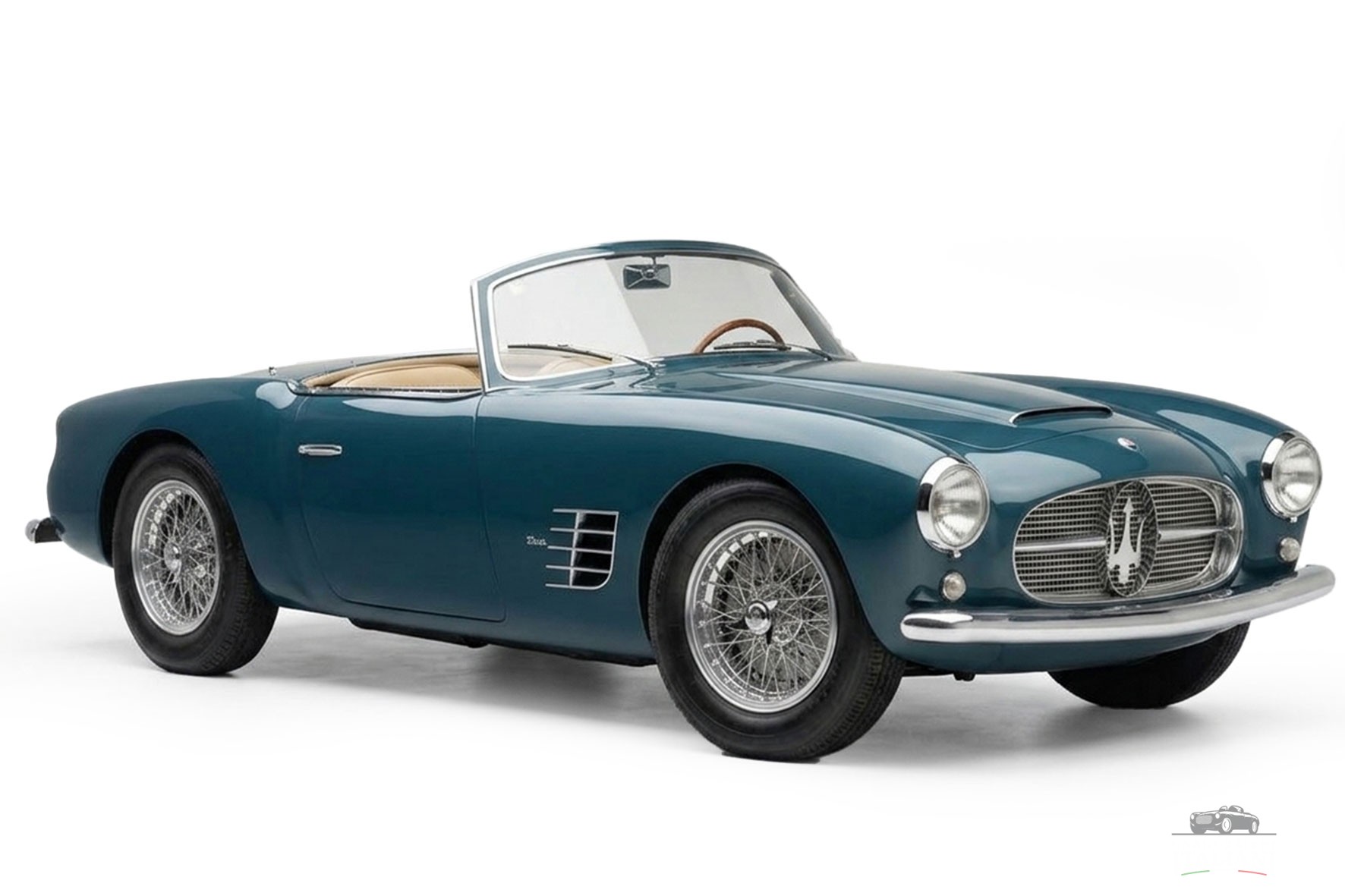
The Maserati A6G 2000 Spyder Zagato: Typical of the firm’s greatest designs was the short run of A6G/54 chassis it bodied for Maserati. In 1950, Modena had introduced a 2-liter version of its A6G-based sports-racing model, featuring a twin-cam single-plug ignition variant of the long-running inline-six engine. In 1954, twin-plug ignition was added to complement an advanced chassis with large-finned aluminum drum brakes. This final iteration of the Maserati A6 road car was internally dubbed the A6G/54. Of the approximately 60 examples of the new model that were built through 1957, 21 chassis were dispatched to Zagato for the carrozzeria’s characteristically striking interpretation. Twenty of these cars were completed as racing berlinettas that were built in four series, though they featured such varying details that no two were exactly alike. These Maseratis became legendary in Italian racing circles, winning the Under 2-Liter GT class in the Italian Sports Car Championship in 1956 and 1959. However, the very first A6G/54 chassis to be bodied by Zagato was not completed as a racing berlinetta. The Maserati A6G 2000 Spyder Zagato, chassis number 2101, was built instead as a luxuriously trimmed spyder, and it was presented at the 1955 Geneva Salon posed next to a spartan A6GCS racer. According to research by marque expert Walter Bäumer that is supported by factory paperwork on file, this chassis was dispatched to Zagato for coachwork in early November 1954 and completed two weeks later. This A6G/54’s original exterior design was somewhat different than as configured today. The Geneva show car was finished in Grigio Piombo (lead grey), and it was equipped with a standard flat hood, unadorned fenders, and a front end characterized by a huge, unconventional chrome trident that stretched across most of the grille, complemented by two inset foglamps. Despite being completed as a roofless spyder, the car featured an ornate interior with suede upholstery throughout that unusually extended to the top edges of the doors. While being shown at the Geneva Salon the Maserati caught the eye of Juan Perón, the polarizing Argentine strongman who was known for being an unabashed sports car enthusiast. Peron offered to buy the Maserati A6G 2000 Spyder Zagato, but he requested a few cosmetic changes, so 2101 was returned to Zagato for coachwork modifications. The original grille was changed with the removal of the foglamps and an exchange of the outsized trident for a more standardized version of the Maserati logo. A prominent hood scoop was added, as were straked fender vents; the windshield was changed, and the exterior was refinished in Blu Algisto Scuro (Cold Dark Blue), a beautiful shade of blue-grey.
02 / TECHNICAL IDENTITY
03 / DESIGN, BODY & SUPPLIERS
Coachbuilder / Design studio
Founded in Milan in 1919 by Ugo Zagato, the coachbuilding house developed lightweight aerodynamic bodies inspired by aircraft construction, creating distinctive racing and grand touring automobiles.
Explore record ↗04 / CHRONOLOGY
05 / PEOPLE, COLLECTIONS & MUSEUMS
07 / CHASSIS REGISTER
4 provenance records · 1959–2013
View full chassis history · Pro membership
08 / GALLERY
THE CONVERSATION
Comments 0