
Castagna
The Castagna coachbuilding tradition dates to nineteenth-century Milan, when Carlo Castagna took over an established carriage business. Carrozzeria Castagna later became renowned for luxury bespoke automotive bodies.
Explore record ↗
2010Coachwork by Castagna
THE VEHICLE AT A GLANCE
THE PEOPLE BEHIND THE CAR
The Castagna coachbuilding tradition dates to nineteenth-century Milan, when Carlo Castagna took over an established carriage business. Carrozzeria Castagna later became renowned for luxury bespoke automotive bodies.
Explore record ↗01 / THE STORY
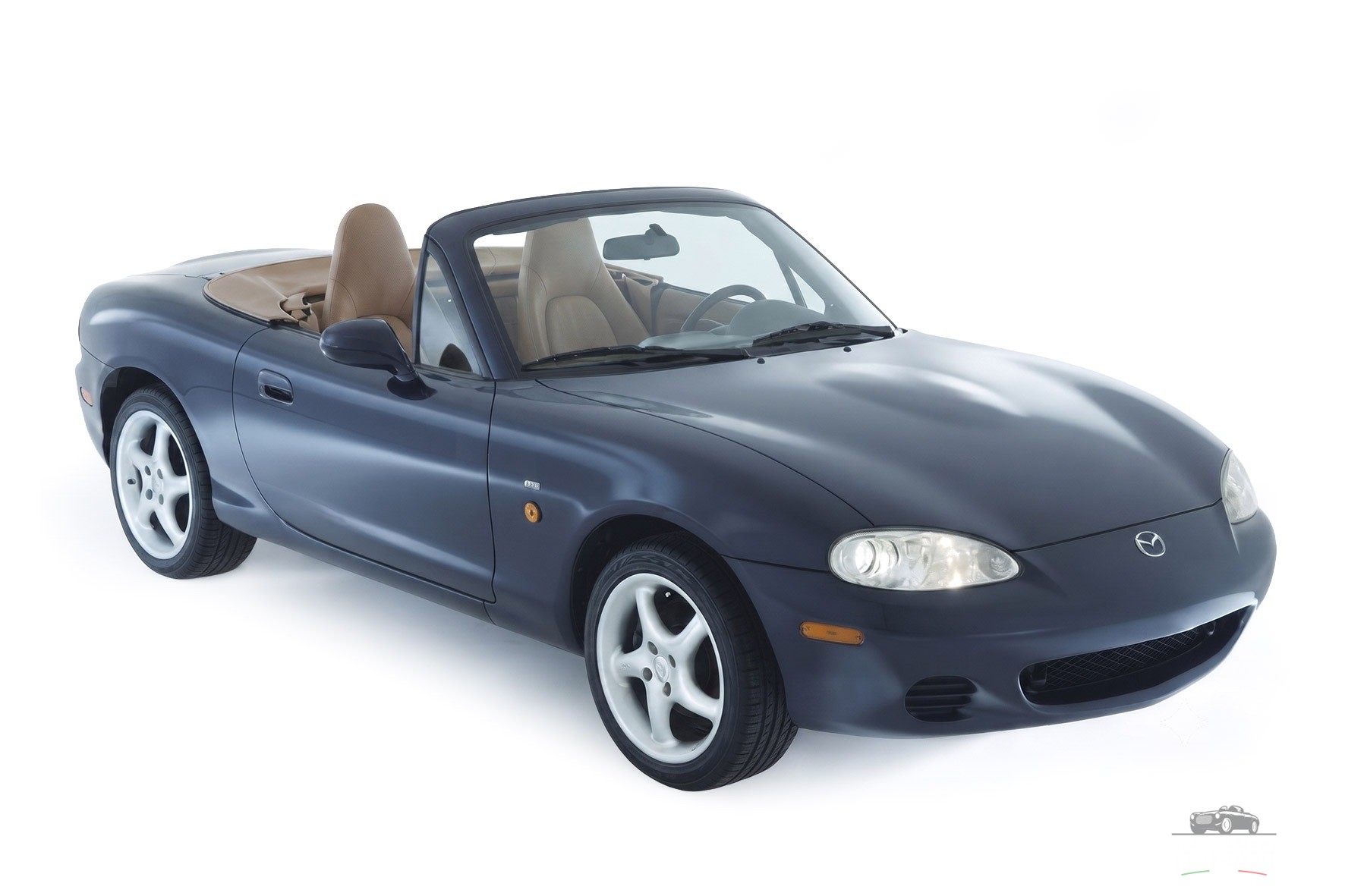
The Mazda MX5 Missoni is a one-off design study created in 2010 through a collaboration between Carrozzeria Castagna of Milan and the Italian fashion house Missoni. Based on the third-generation Mazda MX5 (NC), the project was conceived as an exploration of the intersection between automotive engineering and haute couture design. Castagna, whose history as a custom coachbuilder dates to the mid-nineteenth century, has long been associated with bespoke craftsmanship and stylistic experimentation. In this instance, the firm’s approach to automotive personalization was employed to reinterpret the universally recognized roadster within the aesthetic vocabulary of Missoni. The MX5 Missoni retained the mechanical underpinnings of the standard Mazda platform, including the front-mid-mounted inline-four engine and rear-wheel-drive layout. No alterations to the powertrain were reported, indicating that the intent of the project resided not in performance innovation but in visual and tactile transformation. The vehicle’s exterior likely featured revised materials, surface treatments, and possibly color schemes informed by Missoni’s signature use of complex knit patterns and vivid chromatic palettes. Likewise, the interior was expected to include bespoke upholstery and design cues reflective of Missoni’s textile heritage, integrating fabric, texture, and color in a manner not typically encountered in production vehicles. This singular model was never intended for mass production or commercial release. Instead, it functioned as a statement piece, demonstrating the potential of collaborative design across distinct creative industries. The resulting object, neither fully automotive nor purely sartorial, occupies a liminal space wherein functional transportation merges with artistic interpretation. The Mazda MX5 Missoni stands as a contemporary artifact within the lineage of coachbuilt vehicles, recalling a tradition wherein luxury and individuality were pursued through manual craftsmanship and stylistic risk. Though the collaboration was ephemeral and the vehicle unique, it contributes to the broader narrative of design dialogues in the early twenty-first century, wherein fashion and industrial design increasingly sought shared expression. Its significance rests not in its utility but in its capacity to provoke reconsideration of familiar forms through the lens of artistic collaboration.
02 / TECHNICAL IDENTITY
03 / DESIGN, BODY & SUPPLIERS
Coachbuilder / Design studio
The Castagna coachbuilding tradition dates to nineteenth-century Milan, when Carlo Castagna took over an established carriage business. Carrozzeria Castagna later became renowned for luxury bespoke automotive bodies.
Explore record ↗07 / GALLERY
THE CONVERSATION
Comments 0