
Pininfarina
Founded by Battista Pinin Farina in Turin in 1930, Pininfarina became one of the most influential Italian styling and coachbuilding houses, particularly through its work for Ferrari and other international manufacturers.
Explore record ↗
1955Coachwork by Pininfarina
THE VEHICLE AT A GLANCE
THE PEOPLE BEHIND THE CAR
Founded by Battista Pinin Farina in Turin in 1930, Pininfarina became one of the most influential Italian styling and coachbuilding houses, particularly through its work for Ferrari and other international manufacturers.
Explore record ↗01 / THE STORY
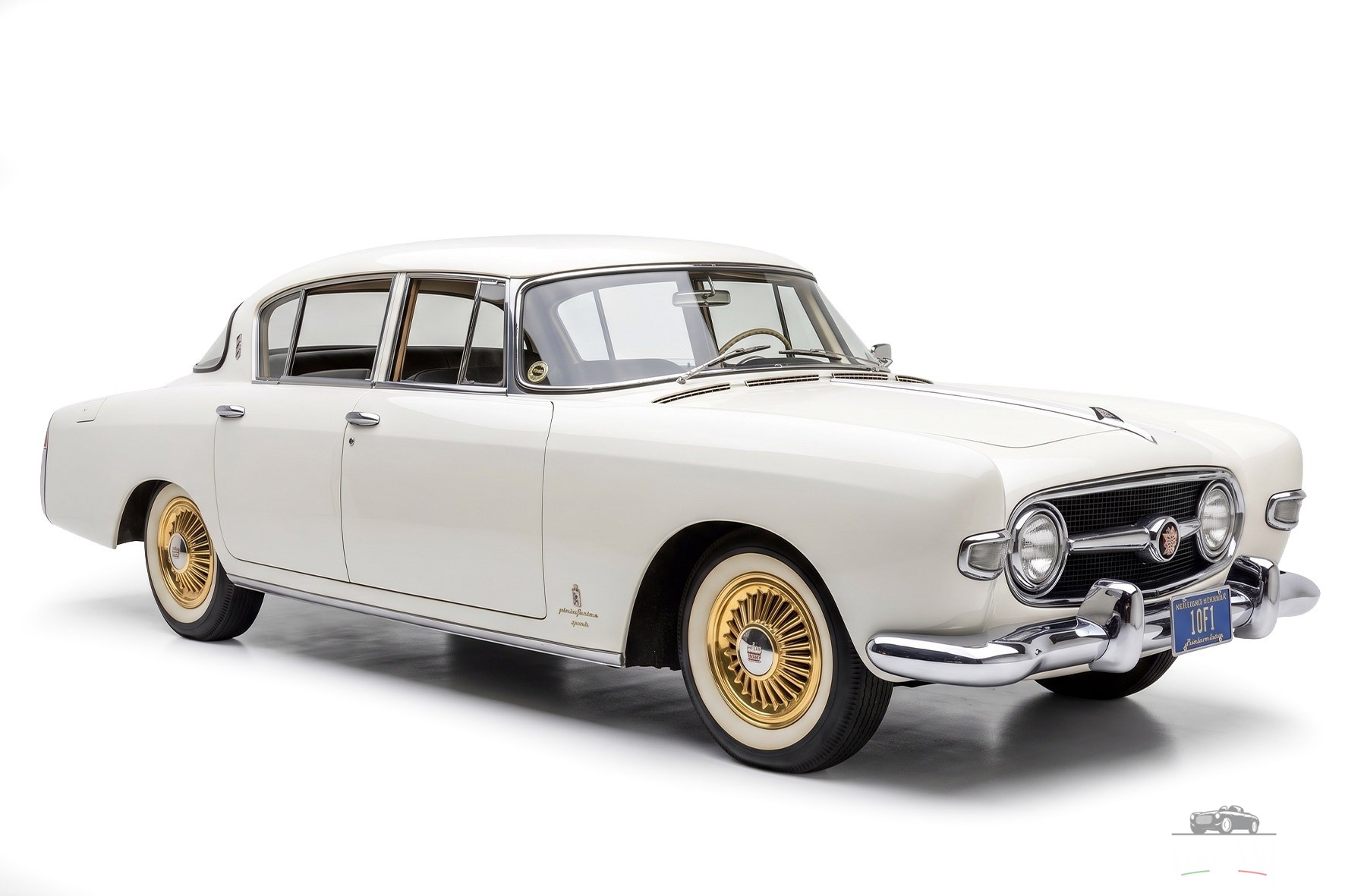
The Nash Special Ambassador by Pininfarina emerged as a pivotal contender in the race to replace the iconic “bathtub” Nash, a legacy that had defined an era. In the quest for innovation, Nash’s in-house team labored over the 1952 design, birthing a stately sedan characterized by enclosed wheels and distinctive design elements. Notably, the front doors boasted a unique notch, injecting flair into the vehicle’s otherwise smooth profile. The oval grille, adorned with heavy vertical bars and fine horizontal strips proudly displayed the Nash badge, while the cathedral-style headlamps added a touch of elegance, reminiscent of the iconic 1955 Packard but with a delicate finesse. Chrome accents, including three vents on the body sides and a spear wrapping beneath the headlamps, lent the car a refined allure. The formal front end, complete with a U-shaped bumper and robust bumper guards, exuded sophistication. Meanwhile, across the Atlantic, the esteemed designer Pinin Farina embarked on his own design odyssey in Italy. His creation, meticulously crafted and shipped to America as a full-scale prototype, promised to rival Nash’s endeavors. Yet, when unveiled to Nash executives, it garnered a lukewarm reception. Criticized for its “soft” design and failure to meet U.S. standards, Farina’s model faced skepticism from those who deemed its European influence a hindrance to success in America. Undeterred, Nash’s in-house team pressed forward with their vision, incorporating elements of Farina’s design while staying true to their American roots. Despite disappointment over management’s decision to leverage Farina’s name for marketing, the team remained steadfast in their commitment to crafting a compelling design. The resulting composite design, featuring reverse-slanted C-pillars and an enlarged oval grille, captured the essence of Nash’s heritage while embracing Farina’s touch. Ultimately, George Mason’s approval paved the way for production, marking a triumph of collaboration and perseverance. As George Romney aptly observed, attributing Farina’s name to the project was a strategic decision aimed at bolstering sales. In the ever-evolving landscape of automotive design, the Nash Special Ambassador stood as a testament to the ingenuity and adaptability of those who dared to push the boundaries of innovation.
02 / TECHNICAL IDENTITY
03 / DESIGN, BODY & SUPPLIERS
Coachbuilder / Design studio
Founded by Battista Pinin Farina in Turin in 1930, Pininfarina became one of the most influential Italian styling and coachbuilding houses, particularly through its work for Ferrari and other international manufacturers.
Explore record ↗04 / CHRONOLOGY
07 / GALLERY
08 / PERIOD ARCHIVE
Become a Pro member to see the full details in this section.
Membership is not available yet.
View membership options
THE CONVERSATION
Comments 0