Coggiola
Founded in Turin in 1966 by Sergio Coggiola after his work at Ghia, Carrozzeria Coggiola built specialist automotive bodies and design prototypes, including projects for Saab.
Explore record ↗
2004Coachwork by Coggiola
THE VEHICLE AT A GLANCE
THE PEOPLE BEHIND THE CAR
Founded in Turin in 1966 by Sergio Coggiola after his work at Ghia, Carrozzeria Coggiola built specialist automotive bodies and design prototypes, including projects for Saab.
Explore record ↗Martin Smith is a British car designer whose career began at Porsche before he joined Audi and later Opel, where his work included the Opel Calibra. He became executive design director for Ford of Europe and helped establish the brand kinetic design language, seen on the S-MAX and Mondeo.
Explore record ↗01 / THE STORY
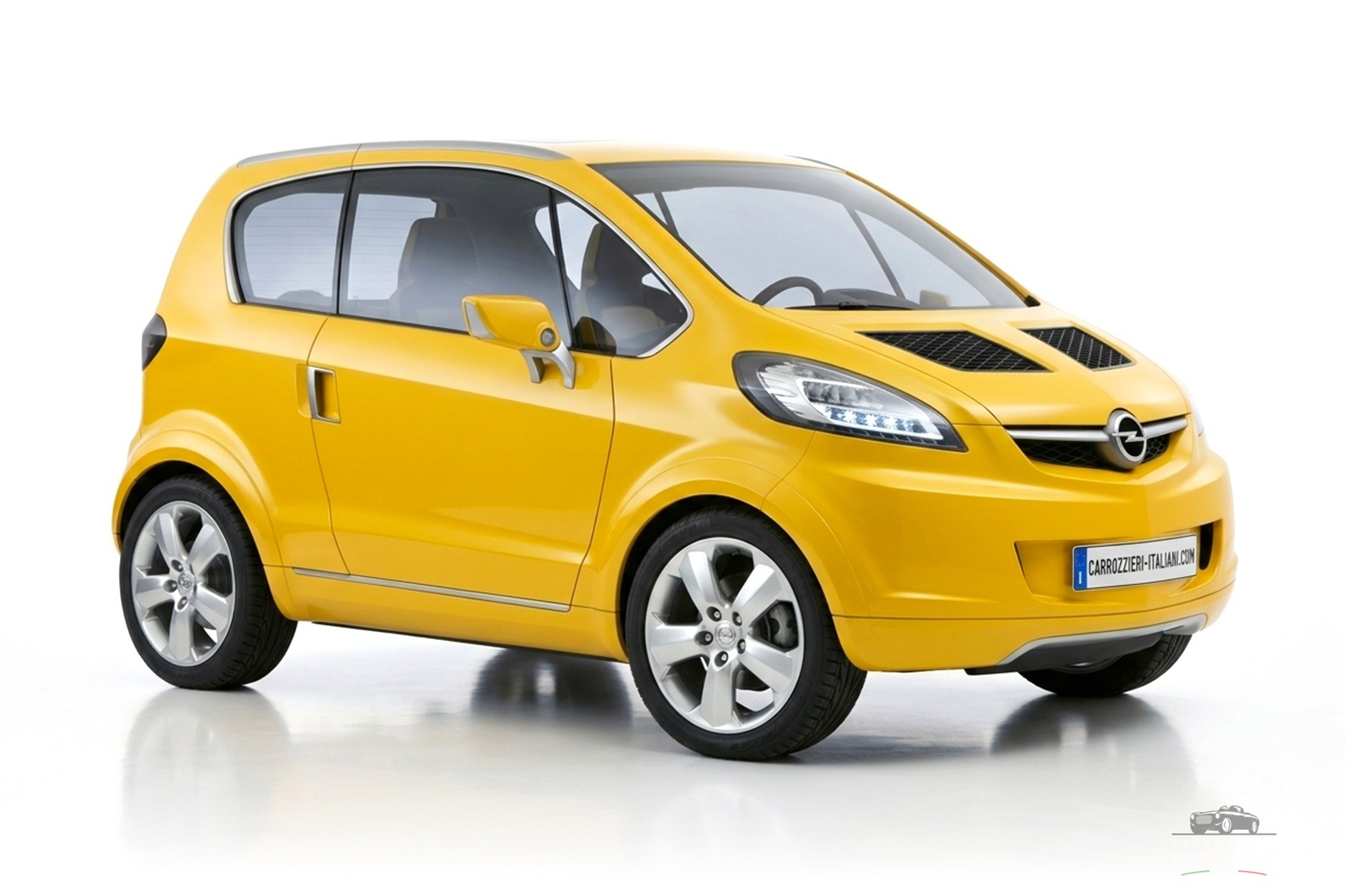
The Opel Trixx, unveiled at the 2004 Geneva Motor Show, was an innovative ultra-compact concept car built and assembled by Italian coachbuilder Coggiola. However, it was designed in-house by Opel. The Trixx was Opel’s response to the growing demand for city-friendly vehicles, aimed at demonstrating how much versatility and practicality could be packed into a car just 3 meters long. Its design showcased Opel’s focus on maximizing space and functionality for urban mobility. This small car was remarkably versatile and spacious for its size. It could accommodate up to three adults and one child or be configured for just the driver, with ample room for cargo. One of the Trixx’s standout features was its three electric pantograph doors—two on the passenger side and one on the driver’s side—designed for easy access to both the cabin and the trunk, simplifying the loading of passengers and large items. Opel also incorporated several clever space-saving solutions, such as an inflatable rear seat, a removable front passenger seat, and a roof hatch that opened at the touch of a button, allowing the transport of tall objects vertically. Additionally, the trunk was mounted on rails and could slide backward like a drawer, making it easier to load heavy or bulky items. The Trixx was powered by a 1.3-liter turbodiesel common-rail engine with 70 horsepower, the same engine used in the Opel Corsa and Agila. According to Martin Smith, Opel’s executive director of design at the time, the Trixx illustrated the company’s vision of a compact car with maximum functionality. Measuring 3.04 meters in length, 1.66 meters in width, and 1.57 meters in height, the Trixx’s flexible interior allowed it to offer 890 liters of cargo space, enough to transport large items like bicycles or scooters without disassembly. Additional features included foldable seats that could create more space, an onboard compressor to inflate or deflate the rear seat, and pantograph doors that opened parallel to the car, facilitating the loading of bulky items. The Trixx’s straight lines, flared wheel arches, and elevated hood reflected Opel’s design language of the era, making it a forward-thinking, functional city car concept.
02 / TECHNICAL IDENTITY
Become a Pro member to see the full details in this section.
Membership is not available yet.
View membership options03 / DESIGN, BODY & SUPPLIERS
Coachbuilder / Design studio
Founded in Turin in 1966 by Sergio Coggiola after his work at Ghia, Carrozzeria Coggiola built specialist automotive bodies and design prototypes, including projects for Saab.
Explore record ↗Attributed designer
Martin Smith is a British car designer whose career began at Porsche before he joined Audi and later Opel, where his work included the Opel Calibra. He became executive design director for Ford of Europe and helped establish the brand kinetic design language, seen on the S-MAX and Mondeo.
Explore record ↗Become a Pro member to see the full details in this section.
Membership is not available yet.
View membership options04 / CHRONOLOGY
07 / GALLERY
THE CONVERSATION
Comments 0