
Pininfarina
Founded by Battista Pinin Farina in Turin in 1930, Pininfarina became one of the most influential Italian styling and coachbuilding houses, particularly through its work for Ferrari and other international manufacturers.
Explore record ↗
1978Coachwork by Pininfarina
THE VEHICLE AT A GLANCE
THE PEOPLE BEHIND THE CAR
Founded by Battista Pinin Farina in Turin in 1930, Pininfarina became one of the most influential Italian styling and coachbuilding houses, particularly through its work for Ferrari and other international manufacturers.
Explore record ↗01 / THE STORY
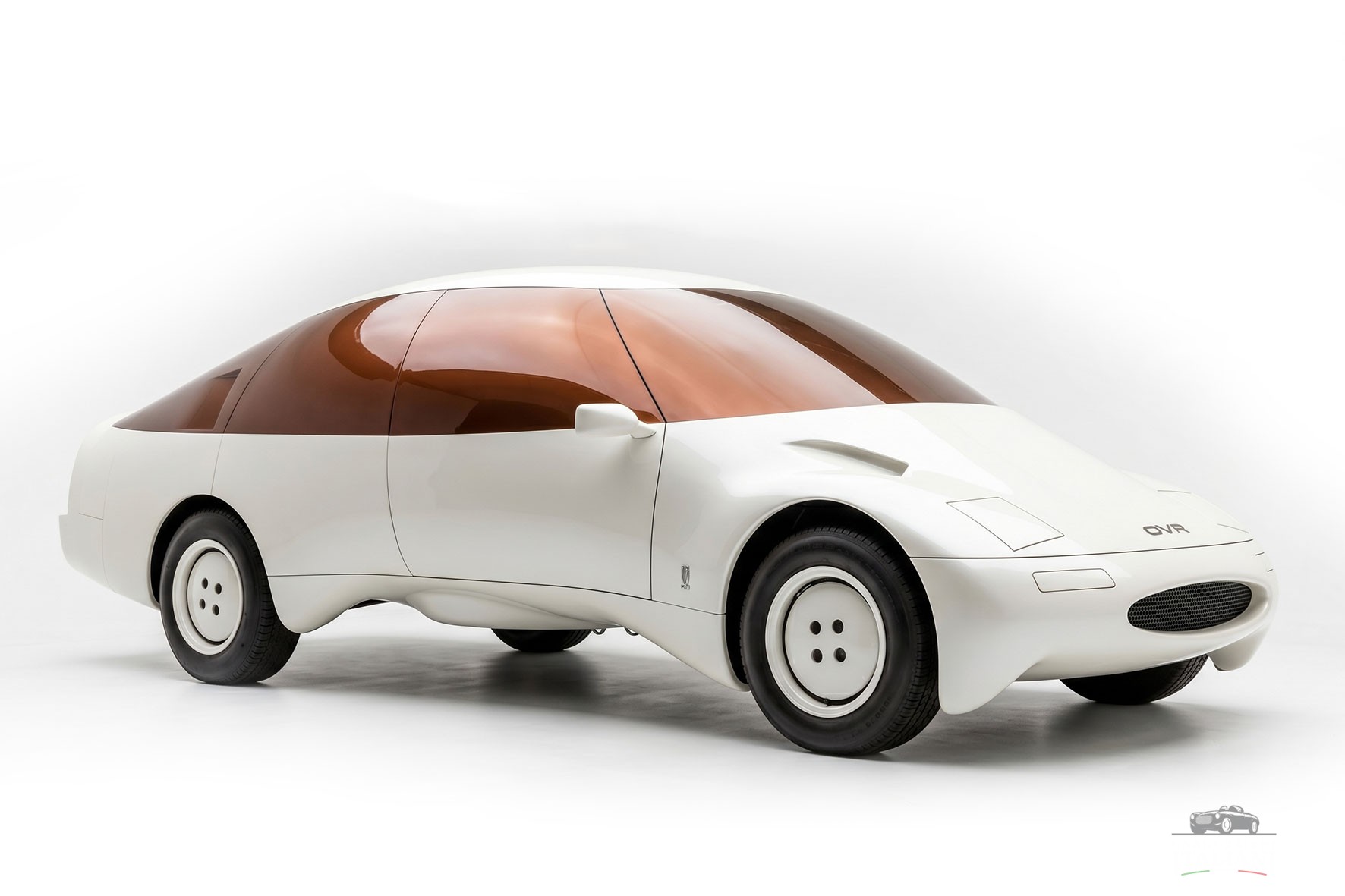
The Pininfarina CNR’s recognition with the Compasso d’Oro Award in 1979 highlights the exceptional achievement in automotive design and engineering. This award was given specifically for its “Ideal Aerodynamic Shape,” which was the result of a theoretical and experimental research project promoted by the National Research Council of Italy (Consiglio Nazionale delle Ricerche, or CNR). The Pininfarina CNR’s aerodynamic shape achieved a drag coefficient (CD) of just 0.20, which was remarkably low for its time. The drag coefficient is a dimensionless number that quantifies the resistance of an object in a fluid environment, such as air. A lower CD indicates less aerodynamic drag, which translates to improved fuel efficiency and better overall performance. The project’s success demonstrated the importance of aerodynamics in automotive design. By reducing the drag coefficient, the Pininfarina CNR could significantly lower fuel consumption, which was particularly relevant during the late 1970s, a period marked by rising fuel prices and increased environmental awareness. The innovative design not only contributed to the vehicle’s performance but also set a benchmark for future automotive designs.
Here are some key points about the Pininfarina CNR’s achievement:
1. **Innovative Design**: The car’s design was focused on achieving the lowest possible aerodynamic drag. This was accomplished through extensive research and experimentation, guided by principles of fluid dynamics.
2. **Collaboration with CNR**: The project was a collaboration between Pininfarina and the National Research Council of Italy, showcasing a successful partnership between industry and scientific research.
3. **Impact on Fuel Consumption**: With a CD of 0.20, the Pininfarina CNR set new standards for fuel efficiency, which was crucial during an era of fuel shortages and economic challenges.
4. **Legacy and Influence**: The achievements of the Pininfarina CNR influenced future automotive designs, emphasizing the importance of aerodynamics in reducing fuel consumption and enhancing vehicle performance.
5. **Compasso d’Oro Award**: Winning this prestigious award underscored the design’s excellence and its contribution to innovation in the automotive industry.
The Pininfarina CNR remains a significant milestone in automotive history, illustrating how scientific research and innovative design can lead to practical and impactful advancements in technology.
02 / TECHNICAL IDENTITY
03 / DESIGN, BODY & SUPPLIERS
Coachbuilder / Design studio
Founded by Battista Pinin Farina in Turin in 1930, Pininfarina became one of the most influential Italian styling and coachbuilding houses, particularly through its work for Ferrari and other international manufacturers.
Explore record ↗04 / CHRONOLOGY
07 / GALLERY
THE CONVERSATION
Comments 0