
Pininfarina
Founded by Battista Pinin Farina in Turin in 1930, Pininfarina became one of the most influential Italian styling and coachbuilding houses, particularly through its work for Ferrari and other international manufacturers.
Explore record ↗
1999Coachwork by Pininfarina
THE VEHICLE AT A GLANCE
THE PEOPLE BEHIND THE CAR
Founded by Battista Pinin Farina in Turin in 1930, Pininfarina became one of the most influential Italian styling and coachbuilding houses, particularly through its work for Ferrari and other international manufacturers.
Explore record ↗01 / THE STORY
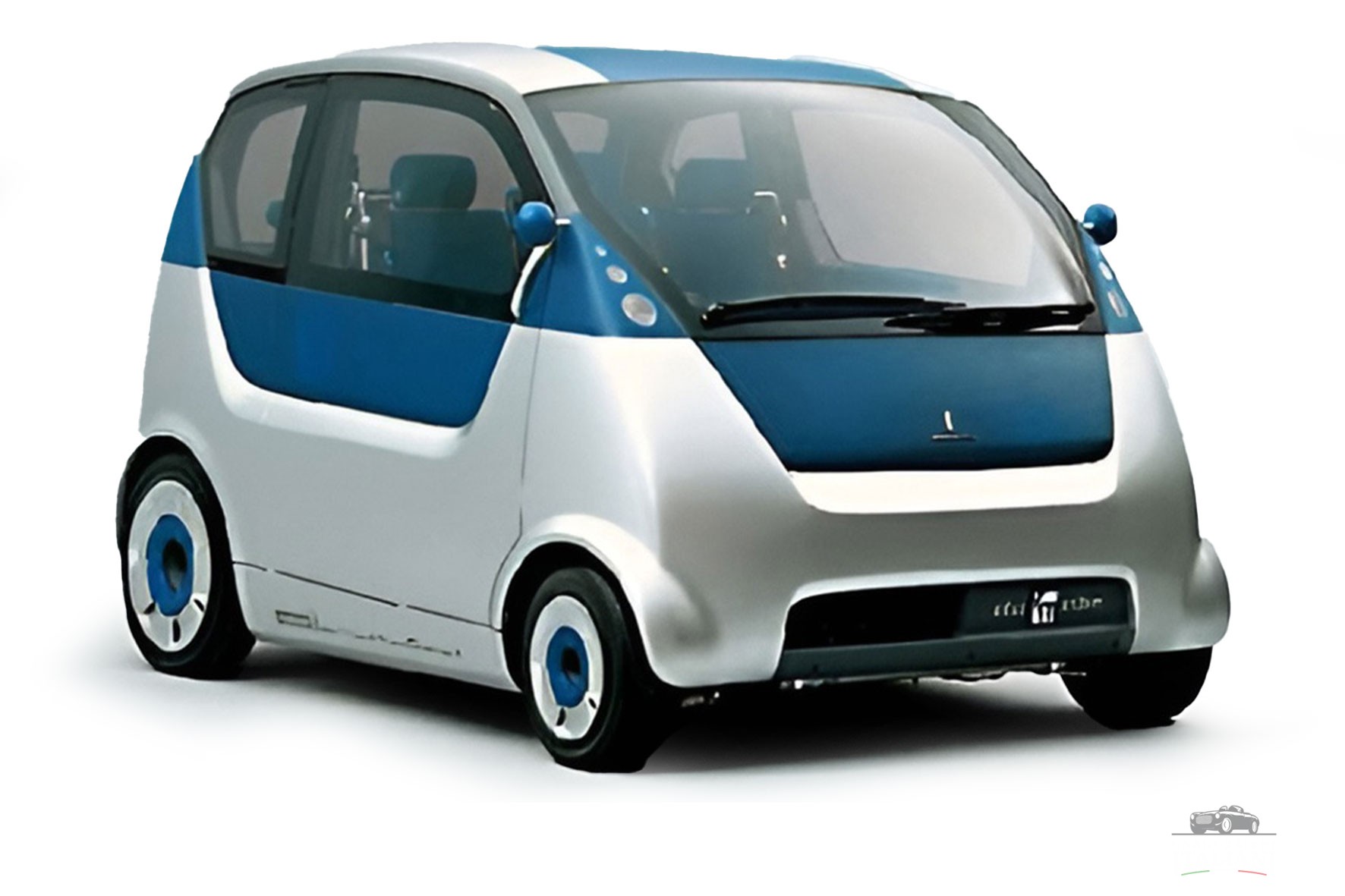
The Pininfarina Metrocubo, introduced at the 1999 Frankfurt Motor Show, is a groundbreaking concept for urban mobility, merging a compact footprint with impressive interior space. At just 2.5 meters in length, the Metrocubo takes compact design to an extreme, yet it offers an unexpectedly roomy cabin, capable of accommodating up to five passengers. This hybrid city car showcases Pininfarina’s innovative approach to designing functional yet stylish vehicles specifically for dense urban environments. One of the Metrocubo’s standout features is its hybrid powertrain, which combines a “light” Lombardini twin-cylinder engine with electric generators at the rear. Instead of directly driving the wheels, the engine charges the batteries, enabling a theoretical range of 400 kilometers—a substantial distance for a city car designed primarily for short trips. This range makes the Metrocubo not only practical for daily city commutes but also capable of light suburban travel. Its hybrid design allows for minimal fuel consumption and significantly reduced emissions, emphasizing an environmentally conscious approach to urban transport. The Metrocubo also integrates unique design elements to enhance maneuverability and stability, both key to navigating busy city streets. The car’s wheels come in different sizes: smaller front wheels improve low-speed handling and make parking easier, while larger rear wheels offer better traction and stability. This innovative setup allows for greater flexibility in movement, tailored to the stop-and-go demands of urban driving. Aesthetically, the Metrocubo prioritizes function and minimalism. Its cube-like structure maximizes usable space and showcases Pininfarina’s talent for making small spaces feel open and accessible. Despite its minimalist design, the Metrocubo doesn’t compromise on comfort, offering an ergonomic and spacious interior tailored to city life. With the Metrocubo, Pininfarina anticipated trends in compact electric and hybrid vehicles, emphasizing a balance between environmental consciousness and practical urban functionality. The car is efficient, spacious, and versatile, embodying a vision of sustainable, space-saving design ideal for modern city life. In its integration of advanced hybrid technology and thoughtful design for everyday practicality, the Metrocubo stands as a forward-thinking approach to eco-friendly urban mobility.
02 / TECHNICAL IDENTITY
03 / DESIGN, BODY & SUPPLIERS
Coachbuilder / Design studio
Founded by Battista Pinin Farina in Turin in 1930, Pininfarina became one of the most influential Italian styling and coachbuilding houses, particularly through its work for Ferrari and other international manufacturers.
Explore record ↗Attributed designer
Become a Pro member to see the full details in this section.
Membership is not available yet.
View membership options04 / CHRONOLOGY
07 / GALLERY
THE CONVERSATION
Comments 0