
Ghia
Founded in Turin in 1916, Carrozzeria Ghia became a major Italian design and coachbuilding house, creating bespoke automobiles, prototypes and international collaborations across the twentieth century.
Explore record ↗
1959Coachwork by Ghia
THE VEHICLE AT A GLANCE
THE PEOPLE BEHIND THE CAR
Founded in Turin in 1916, Carrozzeria Ghia became a major Italian design and coachbuilding house, creating bespoke automobiles, prototypes and international collaborations across the twentieth century.
Explore record ↗01 / THE STORY
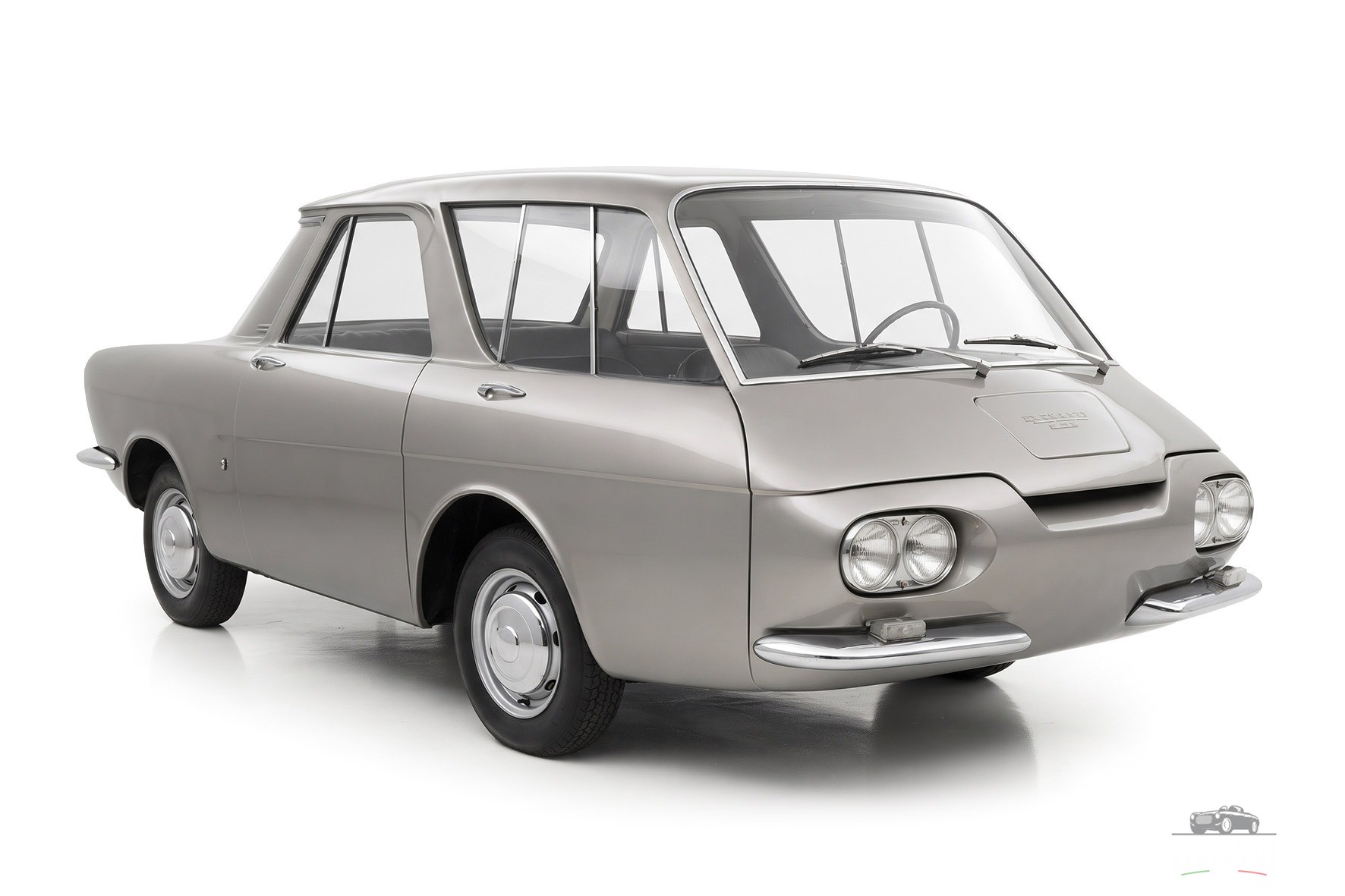
The Renault T900, also referred to internally as Project 900, was a design and engineering study developed in 1959 under the auspices of Régie Nationale des Usines Renault, with external bodywork executed by Carrozzeria Ghia of Turin. Conceived as an experimental reconfiguration of vehicle architecture, the T900 was intended to examine spatial distribution, interior volume optimization, and unconventional mechanical layouts. The project yielded two distinct prototypes, each differing in engine placement and cabin configuration. The chassis was a purpose-built platform configured to support a cab-forward layout. In the initial prototype, the vehicle was powered by a mid-mounted V8 engine developed in-house by Renault. This engine was constructed by combining elements of two four-cylinder units derived from the Dauphine series. The result was a 1.7-litre powerplant capable of producing approximately 80 horsepower. Positioned longitudinally behind the passenger compartment and ahead of the rear axle, the engine contributed to a forward-shifted cabin and a low hood line. Power was delivered to the rear wheels through a conventional manual transmission. Suspension was by means of air-operated units, an unusual application for Renault at the time, intended to improve ride quality and maintain level stance under varying loads. The aluminium body, designed by Ghia, featured a sharply raked windscreen, a truncated rear deck, and an unusually short front overhang. Access to the interior was provided via conventional front-hinged doors, with visibility enhanced by thin pillars and a panoramic greenhouse. Interior configuration prioritized front occupant space, with a full-width bench and minimal rear seating. Luggage capacity was compromised in the rear-engine variant, leading to the development of a second prototype with a front-mounted engine, distinguished by revised proportions and improved storage arrangements. Neither prototype was submitted for homologation or production engineering assessment. Concerns related to occupant safety in the forward control layout, as well as cost and market compatibility, contributed to the project’s termination. Surviving documentation is held within Renault archives. The vehicles were retained by the manufacturer and are not known to have been sold or privately owned. The Renault T900 exemplifies the mid-century experimental design ethos, in which radical reconfigurations of form and function were briefly pursued within the context of state-supported industrial research.
02 / TECHNICAL IDENTITY
03 / DESIGN, BODY & SUPPLIERS
Coachbuilder / Design studio
Founded in Turin in 1916, Carrozzeria Ghia became a major Italian design and coachbuilding house, creating bespoke automobiles, prototypes and international collaborations across the twentieth century.
Explore record ↗07 / GALLERY
THE CONVERSATION
Comments 0