
Pininfarina
Founded by Battista Pinin Farina in Turin in 1930, Pininfarina became one of the most influential Italian styling and coachbuilding houses, particularly through its work for Ferrari and other international manufacturers.
Explore record ↗
2015
THE VEHICLE AT A GLANCE
THE PEOPLE BEHIND THE CAR
Founded by Battista Pinin Farina in Turin in 1930, Pininfarina became one of the most influential Italian styling and coachbuilding houses, particularly through its work for Ferrari and other international manufacturers.
Explore record ↗01 / THE STORY
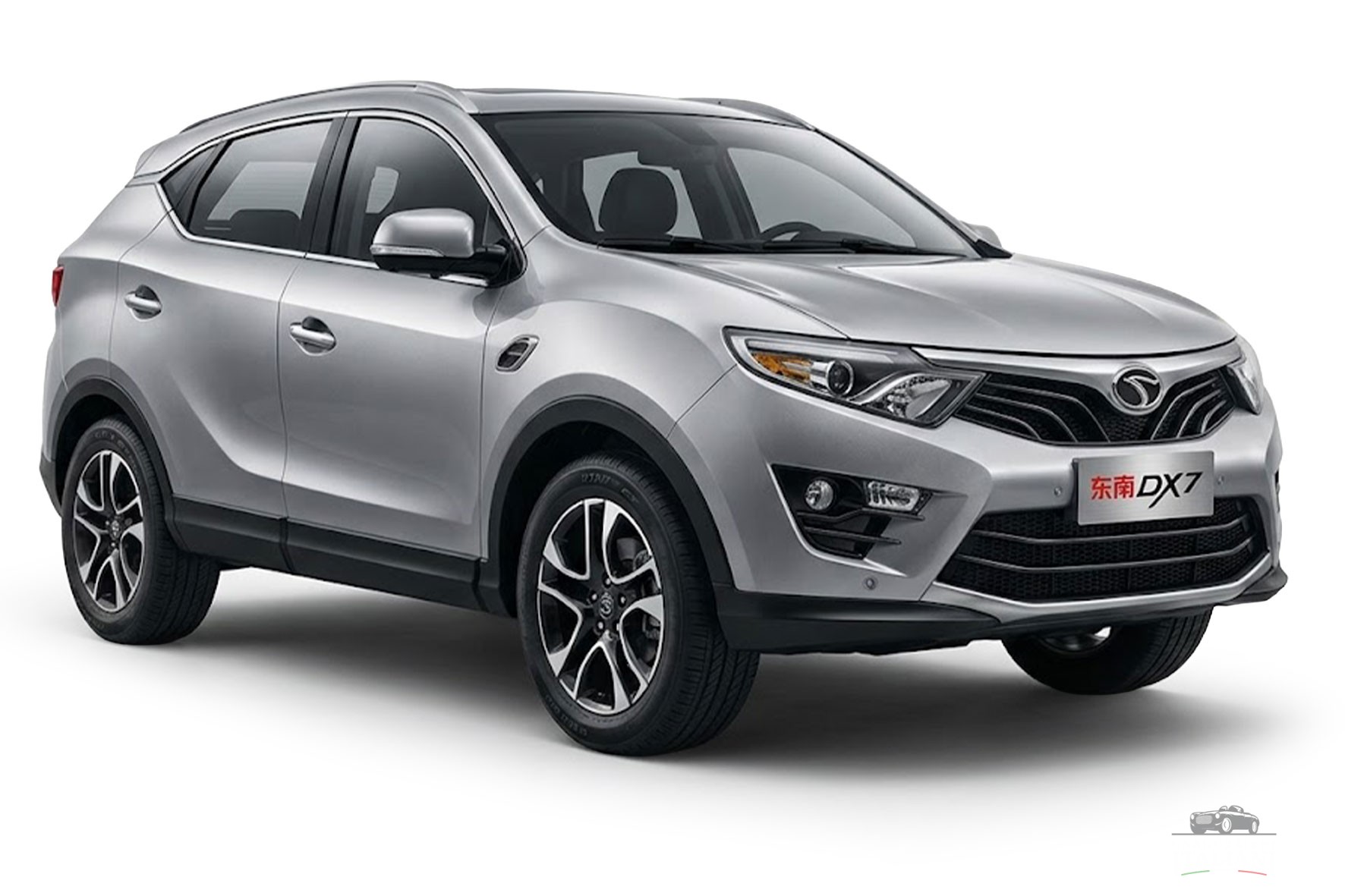
The SEM DX7 is a mid-size sport utility vehicle developed by South East Motor, a Chinese automotive manufacturer operating under the Fujian Motor Industry Group. The model was unveiled in 2015, marking the brand’s inaugural venture into the competitive SUV segment. Notable for its design collaboration with the Italian firm Pininfarina, the DX7 integrates European stylistic influences with domestic engineering practices. The DX7 was introduced following the presentation of the Soueast R7 concept at the Beijing Auto Show in 2014. The production version maintained much of the conceptual design language, characterized by angular lines, a pronounced front fascia, and a streamlined profile. These visual elements reflect an effort to align the vehicle’s appearance with international trends in crossover aesthetics, as interpreted by Pininfarina. Constructed upon a unibody platform, the DX7 features front-engine, front-wheel-drive architecture. Early variants were equipped with Mitsubishi-sourced turbocharged inline-four petrol engines. These included a 1.5-liter unit producing 154 horsepower and a 2.0-liter version rated at 190 horsepower. Transmission options comprised a six-speed manual or a six-speed automatic. Later iterations, notably the DX7 Prime and DX7 Xingyue, introduced enhanced mechanical and electronic systems, including a dual-clutch transmission and semi-autonomous driving capabilities classified as Level 2. Interior appointments prioritized contemporary consumer expectations within the Chinese market. The layout incorporated digital instrumentation, central infotainment displays, and a variety of soft-touch materials. Noteworthy features included electronic stability control, autonomous parking assistance, and a panoramic sunroof. Revisions to the interior and exterior were introduced with subsequent facelifts, reflecting an incremental approach to product development and lifecycle extension. The SEM DX7 serves as a representative artifact within the broader context of China’s automotive industrial maturation during the early twenty-first century. It illustrates the strategic partnerships between domestic manufacturers and international design firms, employed to elevate brand perception and market competitiveness. Furthermore, the DX7 underscores the integration of advanced driver-assistance systems into mass-market vehicles, signifying a shift in consumer expectations and regulatory standards across global markets.
02 / TECHNICAL IDENTITY
03 / DESIGN, BODY & SUPPLIERS
Coachbuilder / Design studio
Founded by Battista Pinin Farina in Turin in 1930, Pininfarina became one of the most influential Italian styling and coachbuilding houses, particularly through its work for Ferrari and other international manufacturers.
Explore record ↗04 / CHRONOLOGY
07 / GALLERY
THE CONVERSATION
Comments 0