
Fantuzzi
Carrozzeria Fantuzzi was a Modena workshop associated with Medardo and Gino Fantuzzi, renowned for lightweight racing bodies for Maserati and Ferrari, alongside bespoke sporting commissions.
Explore record ↗
1965Coachwork by Fantuzzi
THE VEHICLE AT A GLANCE
THE PEOPLE BEHIND THE CAR
Carrozzeria Fantuzzi was a Modena workshop associated with Medardo and Gino Fantuzzi, renowned for lightweight racing bodies for Maserati and Ferrari, alongside bespoke sporting commissions.
Explore record ↗01 / THE STORY
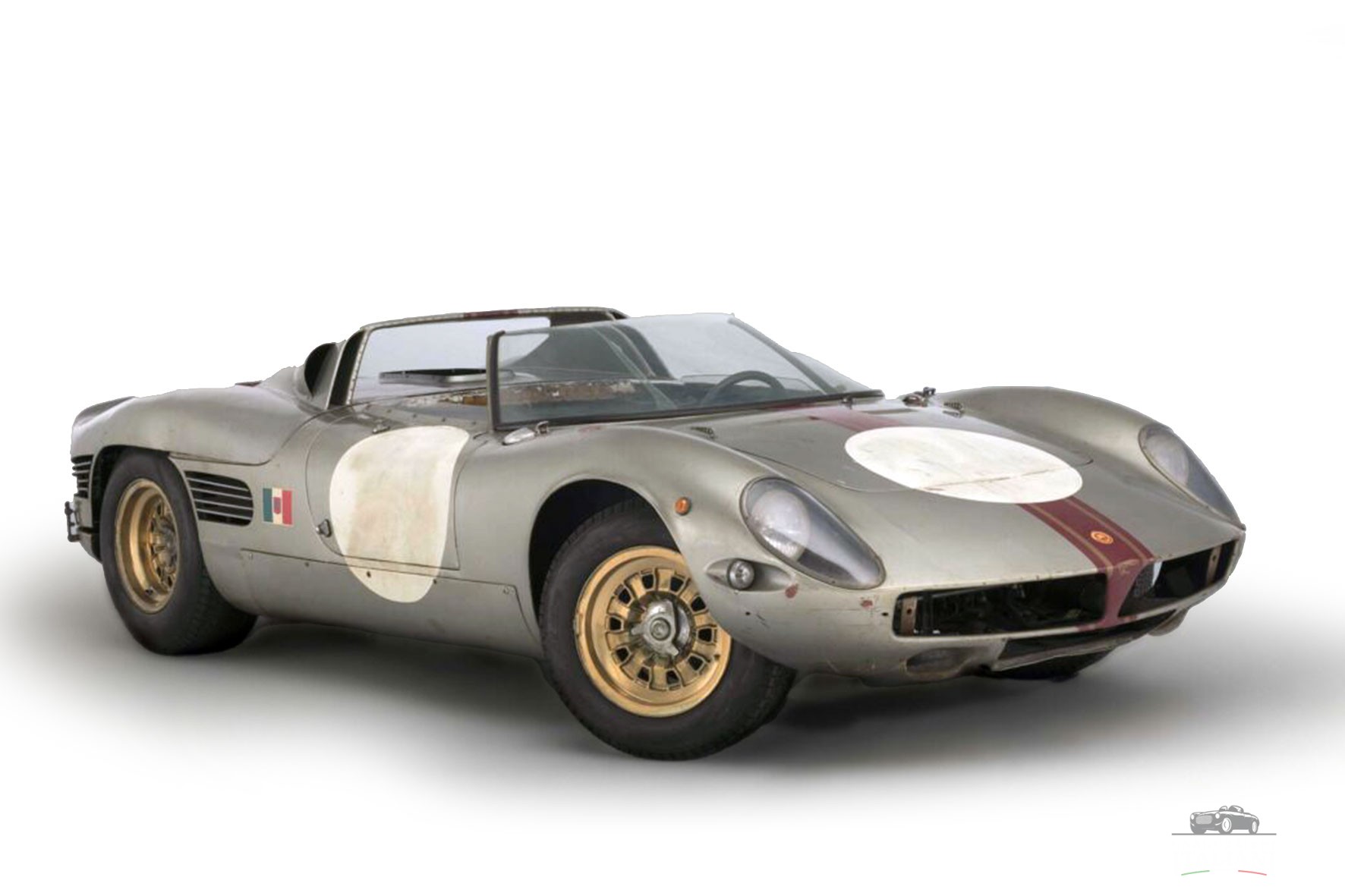
The Serenissima 308V Fantuzzi Spyder has a fascinating history rooted in motorsport and the passion of its creator. In 1964, Venetian aristocrat Giovanni Volpi officially entered the world of car construction with the creation of the first road-going Serenissima, the 308 V. This car was a testament to both innovation and Italian craftsmanship, featuring a 3.5-liter V8 engine mounted centrally within a tubular frame and an aluminum body. This design later served as the foundation for the Serenissima Spyder, which made its mark in motorsport at the 1966 24 Hours of Le Mans. Two specimens of the Spyder were built from the original 308 V berlinetta, but only one has survived the test of time. The Spyder was engineered with a tubular frame chassis and featured a powertrain developed by renowned designer Alberto Massimino. It boasted a 3.5-liter twin overhead-cam V8 engine with a 90° angle, twin-spark ignition, four twin-choke Weber 40 DCOE carburetors, and a dry sump lubrication system. Paired with a uniquely designed gearbox, the car featured Girling disc brakes and rolled on 15-inch Campagnolo wheels. Its aluminum body, crafted by Fantuzzi, echoed the aesthetics of the Ferrari 250 LM, further enhancing its sleek racing profile. In its initial “road-going” form, the Spyder appeared with bumpers and wire wheels, though only two were produced. One version saw action in 1965 under the command of Belgian driver Willy Mairesse, while the second took the grid at the 1966 24 Hours of Le Mans, driven by Frenchmen Jean de Mortemart and Jean-Claude Sauer. While the car attracted little attention amidst the famous Ford-Ferrari rivalry, it proudly carried the coveted number 24. Unfortunately, a gearbox failure after a spin in the fifth hour forced its early retirement. Despite the setback, the legacy of the Serenissima Spyder lived on. Giovanni Volpi carefully preserved the surviving model in its original state. In 2019, this automotive rarity was auctioned by Artcurial, fetching a remarkable 4,218,800 €. In 2024, it was exhibited at the prestigious Pebble Beach Concours d’Elegance, showcasing its enduring allure.
02 / TECHNICAL IDENTITY
03 / DESIGN, BODY & SUPPLIERS
Coachbuilder / Design studio
Carrozzeria Fantuzzi was a Modena workshop associated with Medardo and Gino Fantuzzi, renowned for lightweight racing bodies for Maserati and Ferrari, alongside bespoke sporting commissions.
Explore record ↗Designer
04 / CHRONOLOGY
07 / GALLERY
THE CONVERSATION
Comments 0