Skip to content
THE ITALIAN COACHBUILDER SITE

Simca Sport 8 Cabriolet

1950Coachwork by Stabilimenti Farina

THE VEHICLE AT A GLANCE

Model dossier

Manufacturer
Simca
Base model
Sport 8 Cabriolet
Coachbuilt version
Stabilimenti Farina
Production period
1950
Body style
Cabriolet
Attributed designer
Mario Revelli di Beaumont

THE PEOPLE BEHIND THE CAR

Coachbuilding, design & conversions

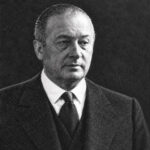
Mario Revelli di Beaumont

Mario Revelli di Beaumont was an Italian automotive designer, active from the interwar period to the postwar era. He collaborated with Stabilimenti Farina, Ghia, Viotti and Bertone, and worked on projects for Fiat and Simca.

Explore record ↗

Stabilimenti Farina

Stabilimenti Farina was a leading Turin coachbuilder established by Giovanni Carlo Farina, training generations of craftsmen while creating bespoke bodies for major Italian marques.

Explore record ↗

01 / THE STORY

History & context

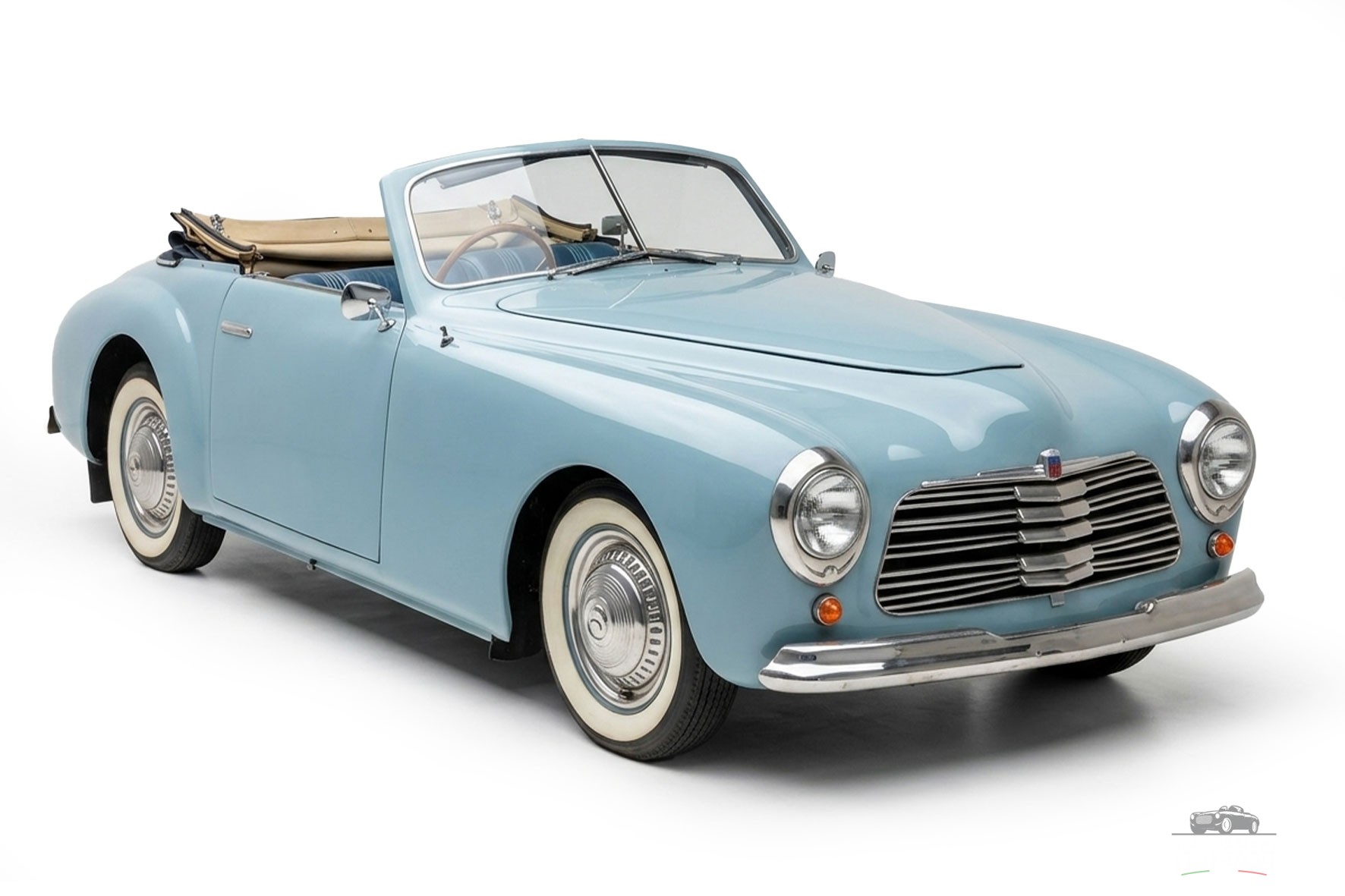
The Simca 8 Sport Cabriolet, introduced in 1949, emerged as a captivating blend of style and performance. Its allure was immediately evident, draped in the exquisite coupé or cabriolet coachwork designed by Stabilimenti Farina. Crafted with finesse, its aluminum bodywork by Facel Metallon spoke of meticulous attention to detail. At its heart resided an engine initially tuned to deliver 50bhp, a figure that in itself promised spirited drives and thrilling adventures on the road. As automotive evolution progressed, so did the Simca 8 Sport, gaining an additional 2bhp when its engine capacity was gracefully expanded from 1,100cc to 1,200cc in 1950. This augmentation in power not only enhanced its performance but also solidified its status as a formidable contender in the automotive realm. Unsurprisingly, the Simca 8 Sport Cabriolet found itself in the spotlight of competition. Amédée Gordini’s team, in particular, wielded it with mastery, dominating the 1,100cc class in revered long-distance events of the era. Their achievements not only adorned the annals of racing history but also left an indelible mark on aspiring talents like the young Jean-Pierre Beltoise. For Beltoise, the Simca Sport 8 Cabriolet held a place of reverence among his aspirations, forming one-third of his trinity of ‘dream cars.’ Alongside icons like the MG TF and Triumph TR2, the Simca stood as a symbol of automotive excellence, embodying the perfect fusion of elegance and performance. The allure of the 8 Sport Cabriolet extended beyond its own brand, with its design by Mario Revelli di Beaumont finding a home on the Fiat 1100 chassis under the keen eye of Stabilimenti Farina. This collaboration not only underscored the timeless appeal of its design but also cemented its legacy as an automotive masterpiece that transcended boundaries. In the annals of automotive history, the Simca 8 Sport Cabriolet stands as a testament to innovation, craftsmanship, and the pursuit of automotive perfection. Its legacy endures, a timeless symbol of a bygone era where every drive was an adventure and every curve of the road a canvas for exhilarating performance.

02 / TECHNICAL IDENTITY

Specifications & construction

Show Car

Production & construction

Production type
Limited

Engine & performance

Engine configuration
Inline-4
Displacement
1,221 cc
Power (hp)
50 hp
Power (kW)
37 kW
Engine speed
4,800 rpm
Torque
98 Nm
Transmission
4-speed manual
Drive
Rear-wheel drive
Top speed
135 km/h

Dimensions & configuration

Wheelbase
2420 mm
Length
4100 mm
Width
1550 mm
Height
1300 mm
Weight
920 kg

03 / DESIGN, BODY & SUPPLIERS

Design, body & suppliers

Coachbuilder / Design studio

Stabilimenti Farina

Stabilimenti Farina was a leading Turin coachbuilder established by Giovanni Carlo Farina, training generations of craftsmen while creating bespoke bodies for major Italian marques.

Explore record ↗

Attributed designer

Mario Revelli di Beaumont

Mario Revelli di Beaumont was an Italian automotive designer, active from the interwar period to the postwar era. He collaborated with Stabilimenti Farina, Ghia, Viotti and Bertone, and worked on projects for Fiat and Simca.

Explore record ↗

Body form & construction

Body style
Cabriolet

04 / CHRONOLOGY

Chronology

20e Salon international Automobile Moto-Cycle – Genève Model-level
Date
1950
Scope
Model-level
Salon de l’Automobile – Paris Model-level
Date
1951
Scope
Model-level

THE CONVERSATION

Comments 0

Add to Garage