
Zagato
Founded in Milan in 1919 by Ugo Zagato, the coachbuilding house developed lightweight aerodynamic bodies inspired by aircraft construction, creating distinctive racing and grand touring automobiles.
Explore record ↗
2007Coachwork by Zagato
THE VEHICLE AT A GLANCE
THE PEOPLE BEHIND THE CAR
Founded in Milan in 1919 by Ugo Zagato, the coachbuilding house developed lightweight aerodynamic bodies inspired by aircraft construction, creating distinctive racing and grand touring automobiles.
Explore record ↗Norihiko Harada is a Japanese automotive designer who worked at I.DE.A Institute under Ercole Spada before joining Zagato in 1994 as design director. His Zagato portfolio includes the Lamborghini Raptor, Aston Martin DB7 Zagato, Ferrari 575 GTZ and Alfa Romeo TZ3 Corsa, connecting Italian coachbuilding with international sports-car manufacturers.
Explore record ↗01 / THE STORY
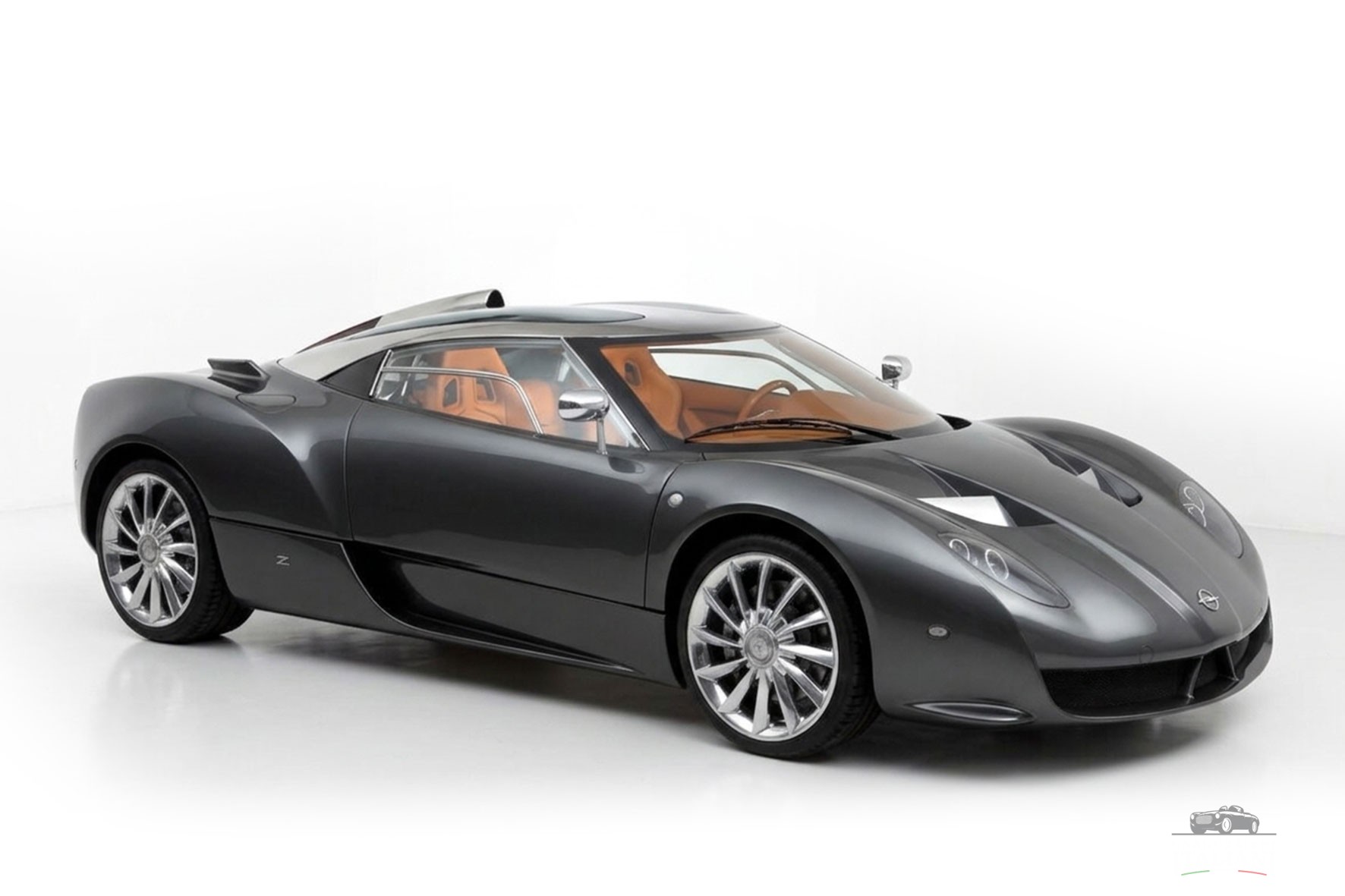
The Spyker C12 Zagato, unveiled in 2007, represents a unique collaboration between the Dutch boutique automaker Spyker and the legendary Italian design house Zagato. This exclusive model introduced bold, Formula 1-inspired design elements that set it apart from Spyker’s earlier offerings, while still retaining key brand hallmarks such as scissor doors, aviation-inspired interiors, and a meticulous attention to detail. The exterior of the C12 Zagato departs significantly from the design language of the C8, Spyker’s well-known supercar. It boasts a more aggressive, aerodynamic profile characterized by sharper angles and a commanding presence. Notable Zagato influences include its double-bubble roof and a refined integration of design and performance. Yet, despite these innovations, the car remains unmistakably a Spyker, with its signature exposed rivets and mesh grille reinforcing the aviation theme. Under the hood, the C12 Zagato is powered by a 6.0-liter W12 engine sourced from Volkswagen Group, the same unit featured in high-end models like the Audi A8 and Volkswagen Phaeton. For this collaboration, Spyker tuned the engine to produce an impressive 500 horsepower, ensuring exhilarating performance. The powertrain is paired with a five-speed automatic gearbox equipped with paddle shifters, blending ease of use with sporty responsiveness. This setup allows the car to deliver thrilling acceleration and dynamic driving experiences befitting a supercar of its stature. Despite the similarity in nomenclature, the C12 Zagato is not based on Spyker’s earlier prototype, the C12 LaTurbie. Instead, it stands as a completely distinct model, blending Spyker’s engineering expertise with Zagato’s iconic design philosophy. The interior continues Spyker’s tradition of craftsmanship, featuring bespoke materials, quilted leather, and an intricate dashboard inspired by vintage aircraft. With its limited production run and high price point, the Spyker C12 Zagato is an ultra-exclusive vehicle designed for connoisseurs of both performance and artful design. It stands as a testament to the innovation that emerges when two automotive pioneers collaborate, creating a supercar that is as bold as it is beautiful.
02 / TECHNICAL IDENTITY
03 / DESIGN, BODY & SUPPLIERS
Coachbuilder / Design studio
Founded in Milan in 1919 by Ugo Zagato, the coachbuilding house developed lightweight aerodynamic bodies inspired by aircraft construction, creating distinctive racing and grand touring automobiles.
Explore record ↗Designer
Norihiko Harada is a Japanese automotive designer who worked at I.DE.A Institute under Ercole Spada before joining Zagato in 1994 as design director. His Zagato portfolio includes the Lamborghini Raptor, Aston Martin DB7 Zagato, Ferrari 575 GTZ and Alfa Romeo TZ3 Corsa, connecting Italian coachbuilding with international sports-car manufacturers.
Explore record ↗04 / CHRONOLOGY
07 / GALLERY
THE CONVERSATION
Comments 0