

Zagato
Founded in Milan in 1919 by Ugo Zagato, the coachbuilding house developed lightweight aerodynamic bodies inspired by aircraft construction, creating distinctive racing and grand touring automobiles.
Explore record ↗
1970Coachwork by Zagato
THE VEHICLE AT A GLANCE
THE PEOPLE BEHIND THE CAR
Founded in Milan in 1919 by Ugo Zagato, the coachbuilding house developed lightweight aerodynamic bodies inspired by aircraft construction, creating distinctive racing and grand touring automobiles.
Explore record ↗Giuseppe Mittino was an Italian automotive designer associated with Zagato and its specialist lightweight sports-car projects.
Explore record ↗01 / THE STORY
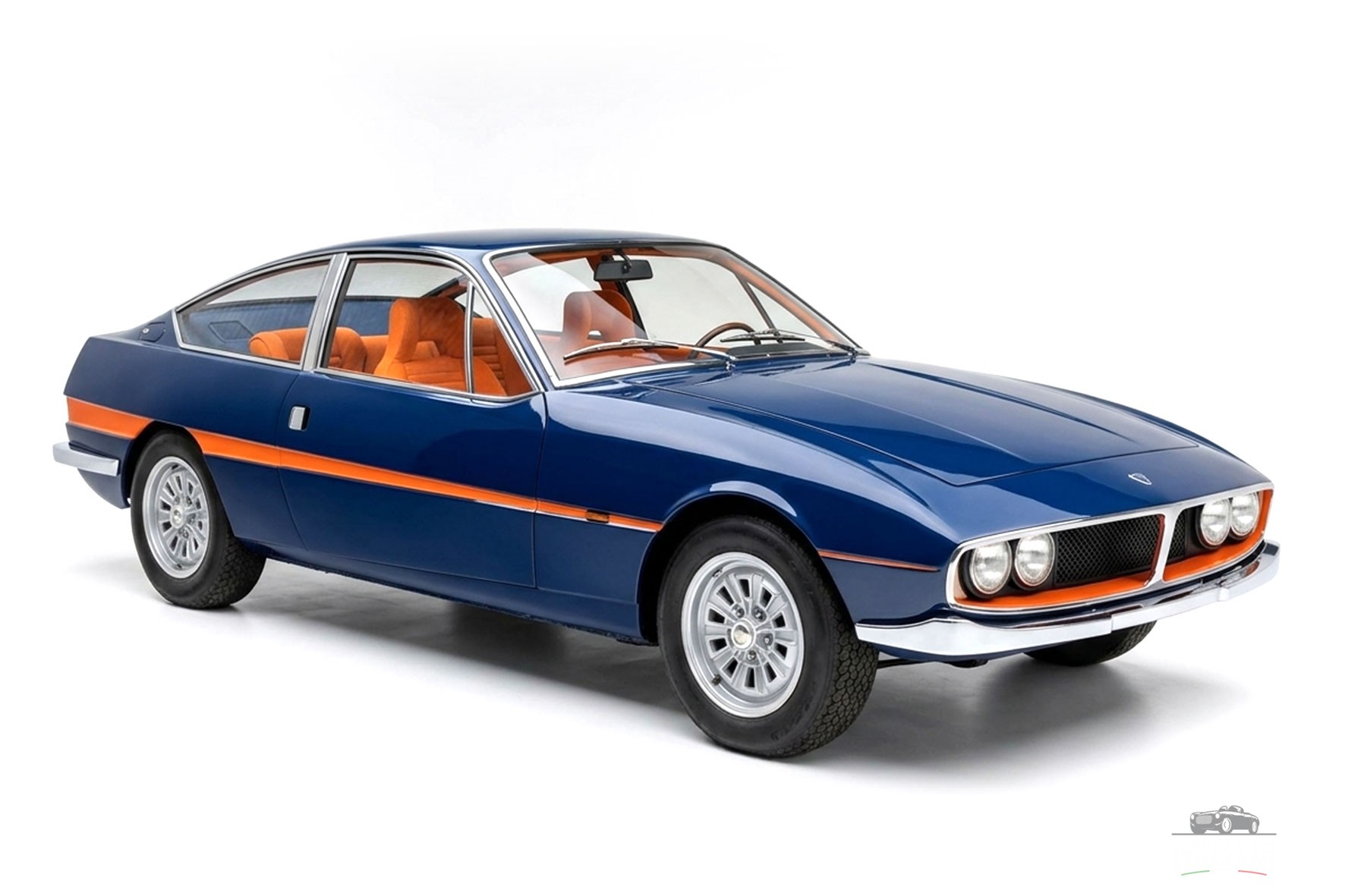
Volvo 3000 GTZ (1970) was a four-seat prototype coupé built by Carrozzeria Zagato on the mechanical basis of the Volvo 164. Commissioned through Motauto, Volvo’s Italian importer, it was presented at the 1970 Geneva Motor Show. Only one prototype was constructed, and the proposed model did not enter series production.
The project formed part of Motauto’s attempts to develop a more distinctive Italian-bodied coupé for Volvo. An earlier experiment had involved a P1800-based car by Fissore in the mid-1960s. Motauto subsequently commissioned the Volvo 2000 GTZ, which Zagato displayed at Turin in 1969. The 3000 GTZ was a separate, more powerful successor, rather than a later body configuration of that earlier prototype.
For the second Zagato project, Motauto obtained Volvo 164 mechanical components, including a six-cylinder power unit. Zagato then developed a new body with different proportions from the production saloon. The programme was intended to demonstrate that Volvo mechanical engineering could support a limited-production sporting grand tourer, but it remained an independently commissioned proposal rather than a factory-approved model.
The coupé combined a steel supporting structure with light-metal coachwork. Its low front incorporated a broad rectangular grille carrying Volvo’s diagonal emblem, a long bonnet and headlamps concealed behind movable covers. The side profile used a continuous roofline and an extensive glazed rear section. Accounts of its aerodynamic development describe wind-tunnel testing and proportions shorter, wider and lower than those of the Volvo 164; exact measurements of the finished prototype are less securely documented.
Accommodation was planned for four occupants. The rear seats had restricted legroom, while head restraints and an adaptable seating arrangement were discussed in contemporary descriptions of the project. The luggage space was comparatively modest. These provisions indicate that the GTZ 3000 was conceived as a usable four-seat coupé, rather than a purely two-seat exhibition exercise.
The mechanical foundation was Volvo’s 164 series, with its B30 three-litre inline-six engine. A higher-output Volvo Penta-based unit was described as a possible option for a production derivative; the published projected figure is not evidence that this engine was fitted to the sole prototype. Likewise, specifications of a standard Volvo 164 should not be assigned automatically to the special-bodied car.
Zagato’s role as design studio and body constructor is documented. An associated drawing has been attributed to Giuseppe Mittino, but the individual authorship of the final body is not established conclusively in the available records.
The GTZ 3000 appeared on Zagato’s stand at Geneva in March 1970. Volvo declined to authorise series production, bringing Motauto’s successive proposals to an end. The sole car subsequently passed to a private owner in Italy and was later seriously damaged in a road accident. Historical reporting describes its eventual transfer to a Swedish collector, while a specialist register associates an incomplete car found in Denmark in 2005 with this prototype. Photographs circulating in 2008 showed the vehicle dismantled. Later accounts have disagreed about whether restoration was completed. A Swedish Volvo historical website subsequently documented the car on display at Gothenburg Classic Car Weekend in May 2025, with the interior still under restoration. The report establishes a later public sighting, but not a completed mechanical restoration.
02 / TECHNICAL IDENTITY
03 / DESIGN, BODY & SUPPLIERS
Coachbuilder / Design studio
Founded in Milan in 1919 by Ugo Zagato, the coachbuilding house developed lightweight aerodynamic bodies inspired by aircraft construction, creating distinctive racing and grand touring automobiles.
Explore record ↗Designer
Giuseppe Mittino was an Italian automotive designer associated with Zagato and its specialist lightweight sports-car projects.
Explore record ↗Become a Pro member to see the full details in this section.
Membership is not available yet.
View membership options04 / CHRONOLOGY
07 / GALLERY
CONTINUE EXPLORING
THE CONVERSATION
Comments 0