
Zagato
Founded in Milan in 1919 by Ugo Zagato, the coachbuilding house developed lightweight aerodynamic bodies inspired by aircraft construction, creating distinctive racing and grand touring automobiles.
Explore record ↗
1982Coachwork by Zagato
THE VEHICLE AT A GLANCE
THE PEOPLE BEHIND THE CAR
Founded in Milan in 1919 by Ugo Zagato, the coachbuilding house developed lightweight aerodynamic bodies inspired by aircraft construction, creating distinctive racing and grand touring automobiles.
Explore record ↗01 / THE STORY
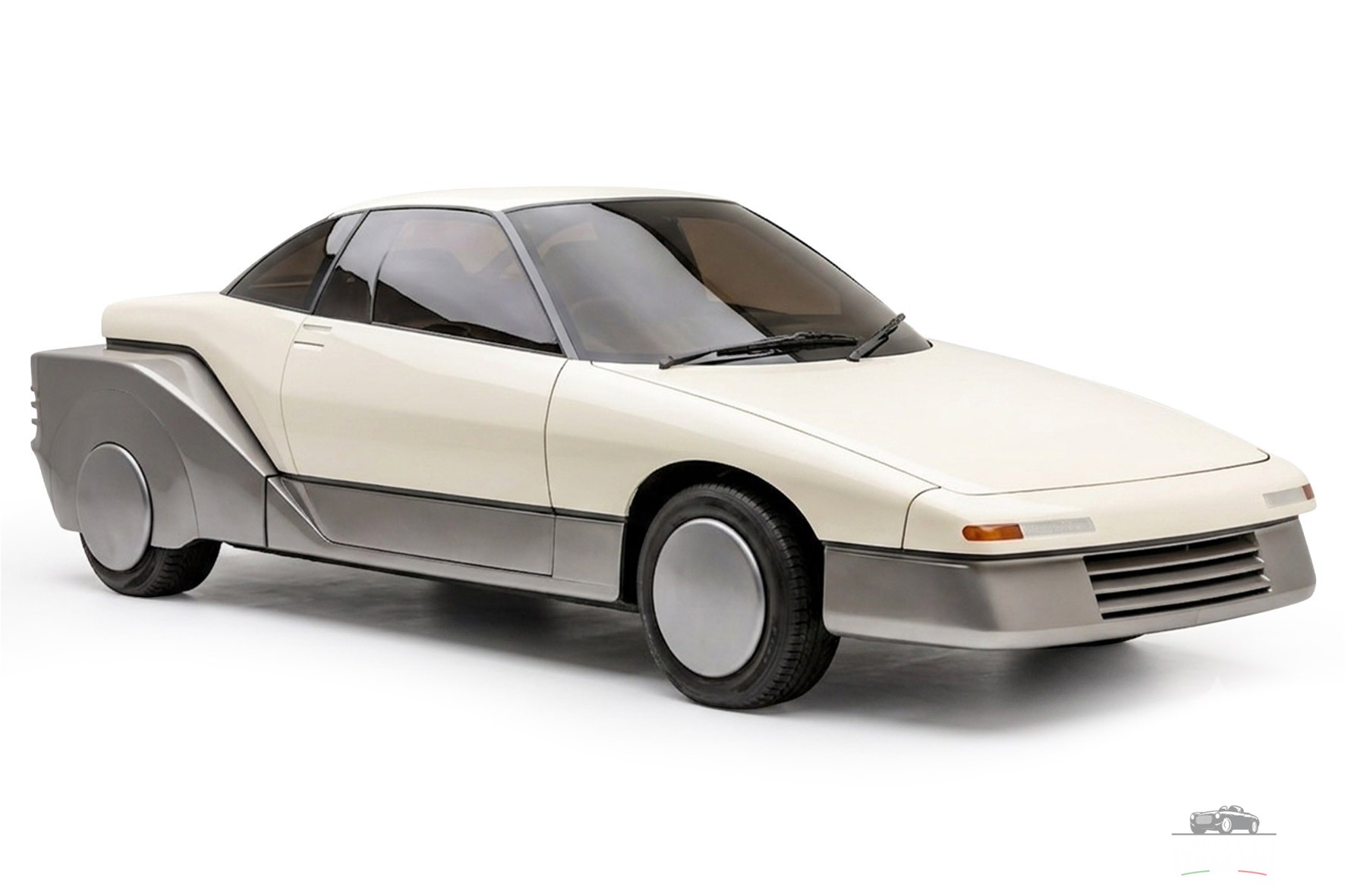
The Fiat Ritmo Chicane (1982) was a compact-car styling study by Zagato associated with the Fiat Ritmo hatchback. Zagato’s historical archive identifies the project as the 1982 Fiat Ritmo Chicane Zagato. The Chicane proposed a substantially revised exterior for the compact-car format rather than a trim level or series-production variant of the Ritmo.
The Chicane was distinguished by its angular, wedge-like profile and markedly inclined windscreen. The front treatment incorporated concealed headlamps and a restrained grille opening. Its covered rear wheels were among the most recognizable features: the fairings formed a continuous section of the side panels and changed the outline of the rear wings. At the back, the body ended in a short, abrupt tail, in contrast with the more conventional treatment of the standard Ritmo.
The emphasis on smooth side surfaces, reduced openings and sharply defined volumes gave the study an aerodynamic appearance. These visible design elements should not, however, be confused with verified wind-tunnel results or a published drag coefficient. No such Chicane-specific measurements have been established.
Fiat introduced the production Ritmo in 1978 as a compact hatchback. The Chicane used the Ritmo programme as its point of reference but explored a different visual identity. Its altered proportions and covered wheel openings separate it from ordinary factory body and equipment variations. The named Fiat connection does not establish which individual chassis, mechanical components or powertrain, if any, were used to construct the design study.
Within Zagato’s work of the early 1980s, the Chicane belongs to a period of experimental styling projects extending beyond traditional sports cars. The later Lancia Thema Plus was another distinct Zagato proposal, rather than a variant or continuation of the Chicane.
The official Zagato archive places the Fiat Ritmo Chicane in 1982. An incomplete retrospective inventory instead lists a Chicane styling model under 1981. The differing dates have not been shown to represent two separate vehicles. Earlier accounts also associate a 1981 unveiling with the Turin Motor Show, but there was no regular Turin Motor Show edition in that year. Participation in the 1982 exhibition remains unconfirmed and should not be treated as an established event.
The currently documented history does not identify an individual chassis or engine number, detailed powertrain specification, wheelbase, exterior dimensions or measured performance for the Chicane. The legacy record describes a single concept, but the quantity has not been independently established from a Zagato production or prototype register. It is also not securely documented whether the completed object was a running prototype or a static styling model. The vehicle therefore remains classified as a Zagato design study rather than a mechanically specified production Fiat Ritmo.
02 / TECHNICAL IDENTITY
03 / DESIGN, BODY & SUPPLIERS
Coachbuilder / Design studio
Founded in Milan in 1919 by Ugo Zagato, the coachbuilding house developed lightweight aerodynamic bodies inspired by aircraft construction, creating distinctive racing and grand touring automobiles.
Explore record ↗Become a Pro member to see the full details in this section.
Membership is not available yet.
View membership options04 / CHRONOLOGY
07 / GALLERY
THE CONVERSATION
Comments 0