
The Italian Battle for the Jaguar XJ40
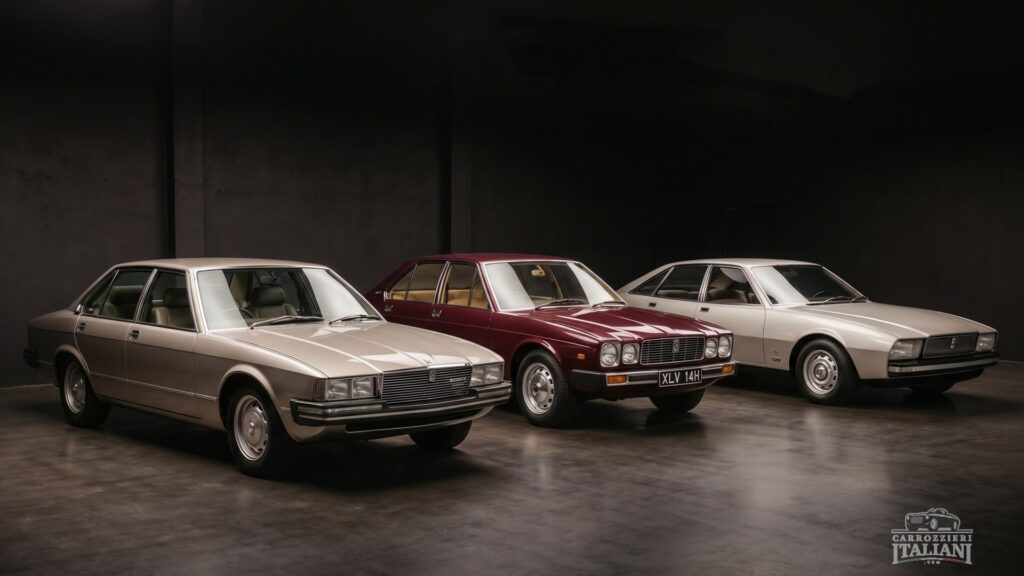
One of the most consequential styling competitions in British automotive history did not produce a winning Italian car. It produced a succession of rejected propositions, an unexpected alliance with Pininfarina, and years of argument over what a new Jaguar ought to look like. When the XJ40 finally appeared in 1986, with its disciplined surfaces, squared lamps on some versions and carefully retained family proportions, the saloon seemed to have arrived fully formed. In reality, its body was the result of a struggle that had begun while the original XJ still looked comparatively new. The sketches and presentation models made by Bertone and Italdesign, together with a Pininfarina line of enquiry, reveal a much less inevitable story.
The word “carrozzata” can be misleading in this case. These were not necessarily completed road cars with their own chassis numbers, registration histories and coachbuilt production bodies. Much of the competition took place in drawings, models and full-size styling buck forms. The precise physical status of each individual proposal needs to be treated separately. A styled plaster or clay model tells us how an idea was presented to decision-makers; it does not demonstrate that a complete functional prototype existed underneath its surfaces. That distinction makes the Italian XJ40 chapter more interesting, rather than less. Jaguar was purchasing alternatives, perspective and sometimes provocation, while its engineering people still had to create a manufacturable replacement for the XJ saloon.
Three Turin-area design organisations came into Jaguar’s orbit during this period: Bertone, where Marcello Gandini led the studio; Italdesign, founded by Giorgetto Giugiaro and Aldo Mantovani; and Pininfarina, which had already presented an XJ12-based show car in 1973. They were connected by the same unsettled programme, but they were not entrusted with identical commissions at identical moments. Their work must be read alongside the changing roles of Jaguar styling manager Doug Thorpe, engineering leaders Bob Knight and Jim Randle, managing director Geoffrey Robinson, and British Leyland executives who frequently disagreed about the marque’s future.
The problem Lyons left behind
The original Jaguar XJ6, introduced in 1968, established a difficult standard. Its exceptionally low bonnet, restrained ornament and strong wheel-to-body relationship had been refined under the eye of Sir William Lyons, whose ability to judge proportion was central to Jaguar’s identity. A replacement began to be discussed in the early 1970s, and the internal designation XJ40 would eventually carry an unusually prolonged development programme. At first, the new saloon could be imagined as a major revision of the existing long-wheelbase platform. Requirements for crash protection, weight, manufacturing methods and new engines gradually made that proposition inadequate. A fresh body and substantially new engineering were becoming necessary.
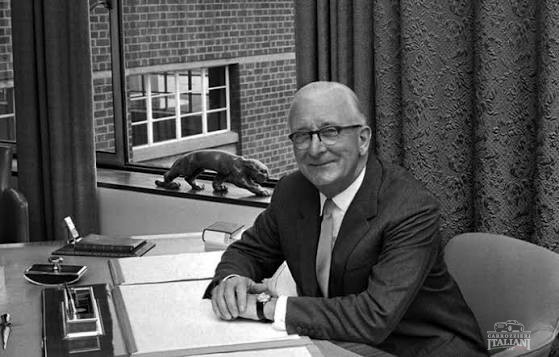
Lyons retired from the chairmanship in 1972. Jaguar had formed a small in-house styling operation at Radford under Doug Thorpe, but there was no established organisation equivalent to the independent Italian houses, with their experience in presenting complete alternative body shapes to clients. The issue was not simply finding someone who could draw a handsome four-door saloon. Jaguar had to decide whether the next car should extend the recognisable language of the XJ or announce a more dramatic departure. Those choices were made against the background of British Leyland’s complex management structure, recurring financial pressure and changing expectations in the United States, a crucial market for the marque.
Bob Knight, responsible for engineering leadership during a decisive part of the programme, approached the successor as a total vehicle. He had to reconcile crash performance, aerodynamics, refinement, serviceability and a production budget with the look of a Jaguar. To the designers, a line across the bonnet was an aesthetic decision. To engineering, it also meant headlamp location, panel tooling, pedestrian protection, cooling and the airflow entering the engine compartment. Jim Randle, whose subsequent work would help bring the XJ40 to production, represented this continuing engineering programme rather than a rival Italian styling studio. The same car had to satisfy both disciplines, and neither side enjoyed complete freedom.
Cambiano sends a warning, 1973
The earliest Italian intervention most easily confused with the XJ40 is the Jaguar XJ12 PF, a Pininfarina interpretation of the existing V12 saloon publicly shown in 1973. It was a real show car rather than an XJ40-series production prototype. Its straighter, more architectural body departed markedly from Lyons’ voluptuous XJ, demonstrating how far the familiar mechanical package might be moved toward a contemporary Italian visual idiom. It also gave Jaguar and British Leyland management something tangible to examine while the next saloon was still being debated.
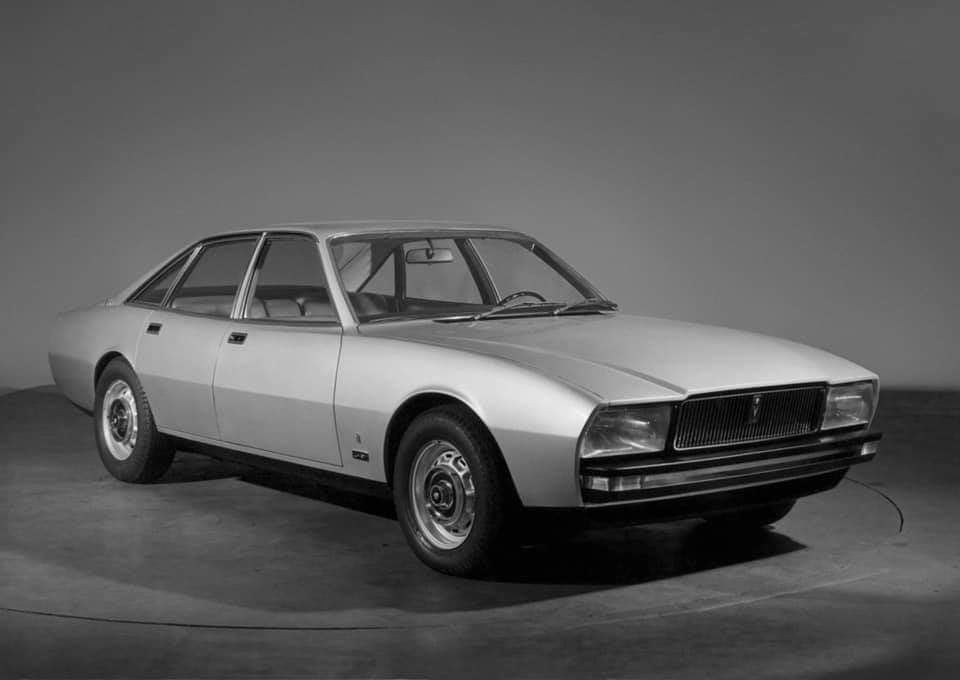
The XJ12 PF should therefore appear at the beginning of the story, not in a catalogue of XJ40-bodied examples. It belonged to the earlier XJ generation, with a separate purpose and public identity. Its importance lies partly in the timing: at the moment Jaguar was considering the successor’s proportions, Pininfarina had shown a different answer to the question of what a Jaguar four-door could be. Contemporary programme accounts describe the car reaching Browns Lane for consideration. The reaction was not unanimous. That disagreement helps explain why a third Italian voice entered the subsequent selection process, even though the 1973 show car itself did not become Jaguar’s next production saloon.
The Pininfarina case also illustrates a recurring authorship problem. The badge on a show car establishes the house responsible for the project, not necessarily which individual stylist originated every visible element. Historical writing has associated Paolo Martin with Pininfarina’s XJ proposition. That attribution deserves to be recorded as such rather than silently converting all Pininfarina activity between 1973 and 1979 into one person’s work. A design house works through sketching, modelling, technical liaison and managerial approval. The final public product, where one exists, represents more than the hand that drew the first convincing line.
Robinson looks to Turin
Jaguar managing director Geoffrey Robinson had previously worked in the Italian motor industry at Innocenti, and he was receptive to the idea that established Italian design studios could sharpen the British company’s thinking. During 1974, Bertone and Italdesign supplied approaches to the future XJ40. Pininfarina’s work was also part of the comparison. The exercise was not a glamorous invitation to build a small run of exclusive Jaguars. It was a test of alternative visual strategies for a high-volume luxury saloon whose engineering package was still being defined.
At a design review in 1974, senior British Leyland figures inspected Italian proposals alongside in-house work. Cyril Crouch, a senior Jaguar body engineer, later recalled the occasion to historian Philip Porter, describing Lord Stokes as relatively favourable to the Pininfarina entry while others remained unimpressed. This is an important piece of oral historical evidence, but it is an individual recollection, not a formal record of a unanimous engineering verdict. The recollection captures the source of tension: a design could please a corporate chairman precisely because it moved away from familiar Jaguar themes, and displease those who would have to protect the marque’s identity and manufacture the car.
The language of competition can make this episode sound more orderly than it was. There was no simple public jury and single dated award. Designs returned for revision, management changed its mind, targets moved and the entire company faced mounting financial uncertainty. The alternatives were judged not only for attractiveness but for whether they looked like a Jaguar, whether customers would accept them, and whether the proportions could coexist with a practical saloon architecture. Pininfarina’s earlier XJ12 experiment, Gandini’s Bertone proposals and Giugiaro’s Italdesign studies entered this debate from different stylistic directions.
Gandini’s difficult cat
Marcello Gandini’s name is inseparable from the Bertone contribution, although the contractual party was the coachbuilding and design business led by Nuccio Bertone. During the early 1970s Gandini had become associated with some of Europe’s boldest wedge-shaped and architecturally composed cars. The temptation is to imagine that Jaguar asked him to turn the XJ into an elongated exotic. The surviving proposals instead suggest the difficulty of making a formal luxury saloon carry a recognisably modern Bertone language without surrendering its British character.
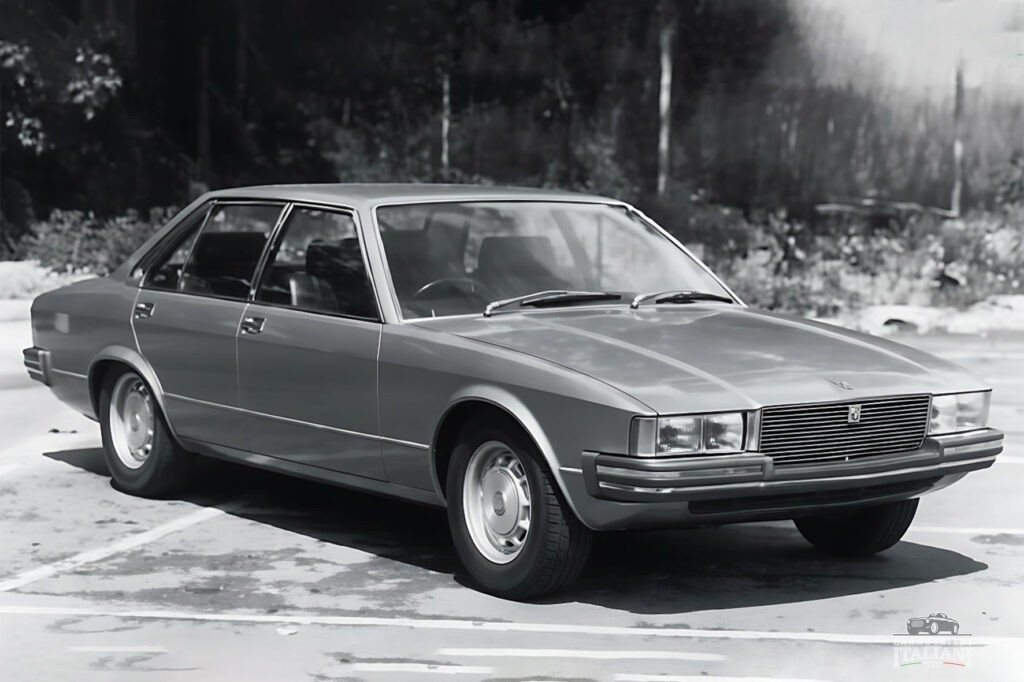
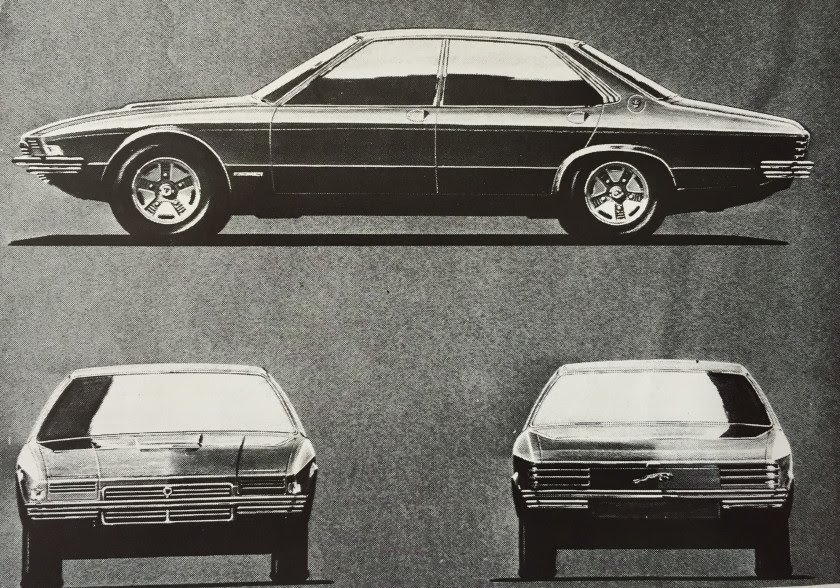
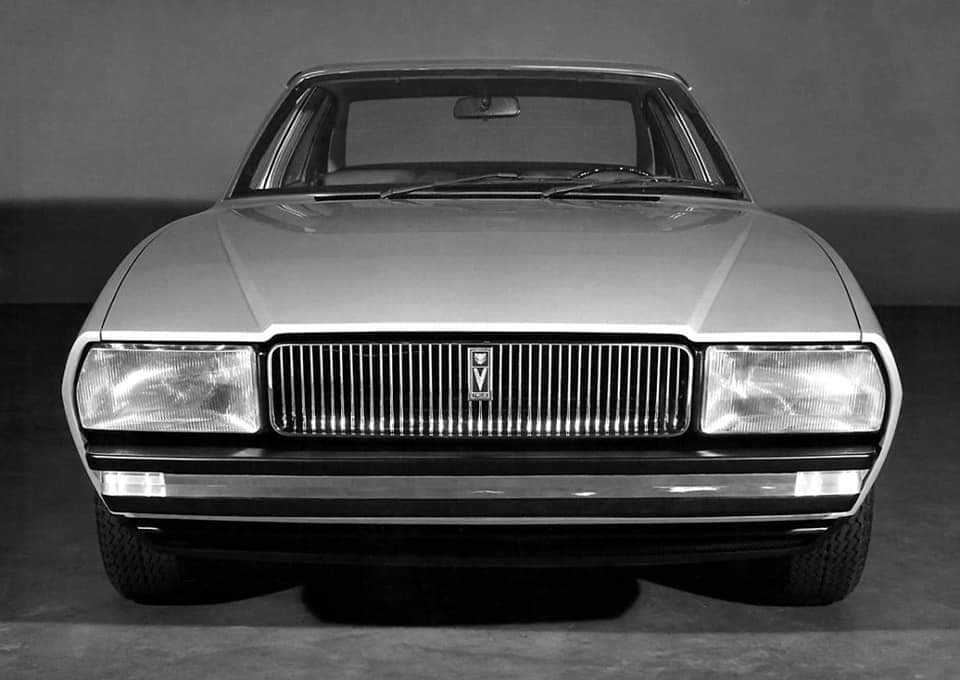
Bertone submitted a 1974 proposal that survives through period illustrations and later photographic reproductions of a presentation model. The car’s relatively straight and controlled surfaces appear almost deliberately ordinary beside Gandini’s better-known sports-car work. Its bonnet and passenger cell offer a geometric answer to the curves of the production XJ, but the treatment of the grille, the rear quarter and the falling tail raised questions about coherence. Period Motor drawings reproduced in subsequent historical studies allow comparison with a different phase of the idea; drawings and models should not automatically be assumed to depict one finished object.
An especially valuable witness is former Jaguar stylist Cliff Ruddell, who remembered a large Bertone plaster presentation model. His recollection provides evidence for a physical object being inspected, while leaving open its exact construction specification and subsequent whereabouts. It does not establish an independently driveable, chassis-numbered Bertone XJ40. The same caution applies to the word ‘prototype’ in captions: a styling prototype can be complete as a visual proposition while remaining mechanically inert.
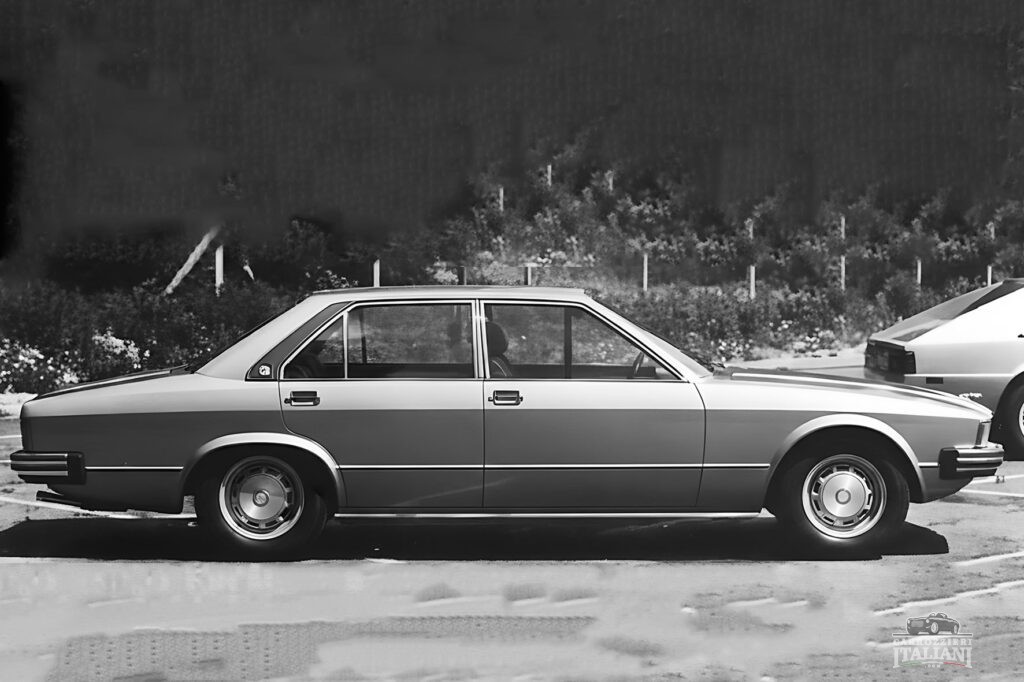
Bertone produced revised work in 1976. That sequence is essential, because judging Gandini solely from a 1974 picture risks confusing the original submission with the attempt to satisfy Jaguar’s criticism. Some historical accounts consider the later car an improvement. Others question whether either version adequately conveyed Jaguar’s character. Bob Knight was later reported to have found the Bertone submission the least objectionable among certain rejected alternatives, a qualified remark that should never be inflated into formal design approval. No Bertone proposal was selected as the series-production XJ40 body.
Giugiaro’s other executive saloon
Italdesign offered a second Turin view of the Jaguar problem. Giorgetto Giugiaro had already demonstrated how spare modern surfaces could give a recognisable identity to cars in very different categories, while the firm he co-founded with Aldo Mantovani was far more than a signature sketching atelier. Its work embraced package studies, engineering and the preparation of prototypes for client manufacturers. None of that, however, proves that a running Jaguar XJ40 was built at Italdesign. The evidence available for the Jaguar programme is strongest at the level of styling proposals and presentation models.
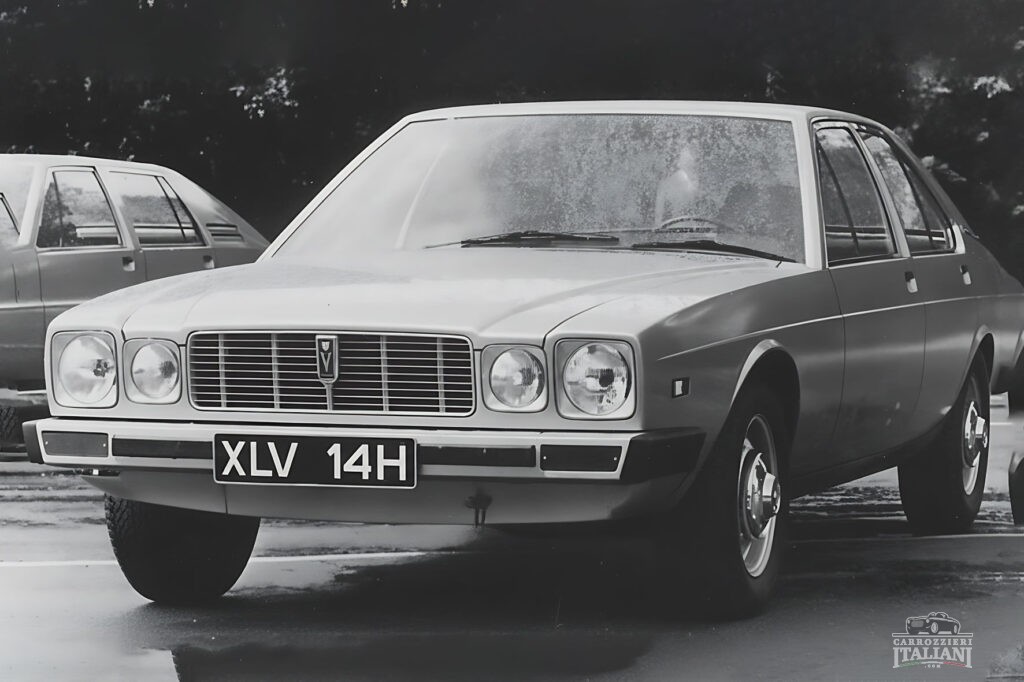
Photographs of the June 1974 Jaguar review reproduced in marque histories show a group of competing mock-ups. Accounts identify an Italdesign interpretation nearest the camera, another more speculative Giugiaro study, and a Bertone proposal. This matters: ‘the Italdesign XJ40’ need not describe one unchanging design. At least two distinct configurations were considered during the review, and a further revised proposal was made in 1976. Until each surviving image is tied to a documented design date or archive caption, those variants should not be assigned an invented production count or treated as separate completed cars.
Giugiaro was capable of making an upright, practical saloon appear deliberate rather than conservative. The risk for Jaguar was that the geometric discipline could erase too many of the visual clues inherited from Lyons. A generic executive-car silhouette might have been an appealing design exercise in Turin but a difficult prospect in Coventry. In-house stylists had to think about the market’s memory of the existing XJ: its broad shoulders, long bonnet, compact roof and unhurried stance. A new model could not look like a modestly rebranded product from a different manufacturer simply because the current decade favoured straight edges.
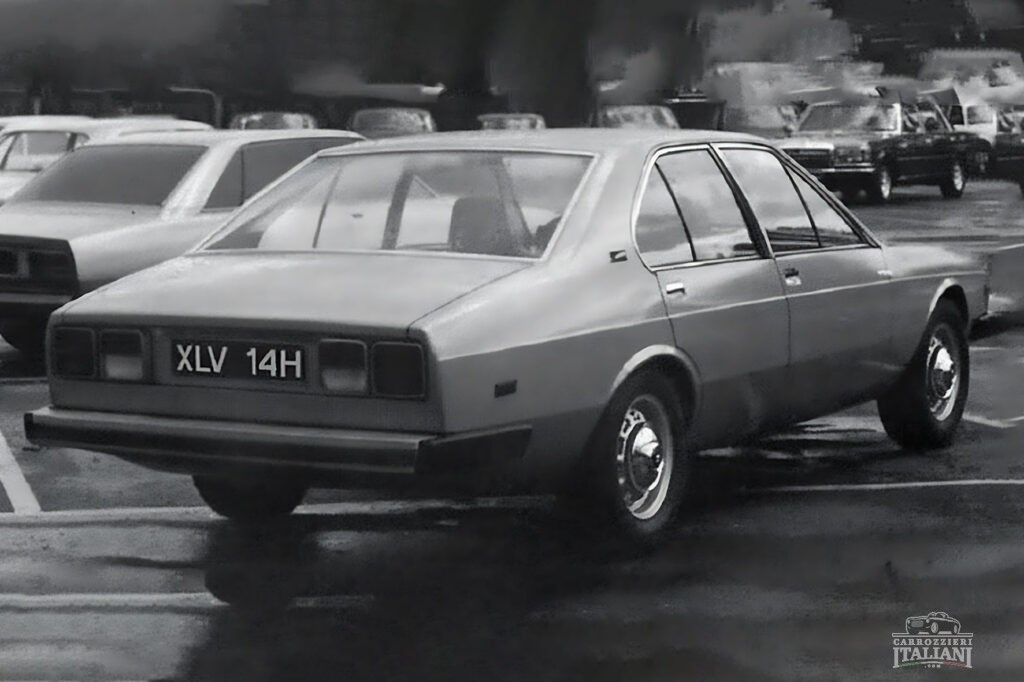
The result was a revised submission, not a production contract. Italdesign’s role belongs in the history of the design competition; it should not be substituted for engineering leadership or assembly of the eventual production Jaguar. The master record of the Italdesign proposal should identify Giugiaro as a documented stylistic attribution while keeping the number, type and fate of individual physical models under source review.
Pininfarina’s two answers
Pininfarina was in an unusual position. It had already demonstrated a radical alternative through the 1973 XJ12 PF, but Jaguar also turned to the Italian house for a more immediate job: refreshing the existing XJ saloon while the replacement programme slipped. The two assignments must be separated, even though they shared a manufacturer, overlapping personnel and the same pressure to make a traditional Jaguar appear contemporary. There is also a distinct Pininfarina XJ40 styling proposal in the records of the 1974 comparison, which should not simply be identified as the 1973 car without documentary support.
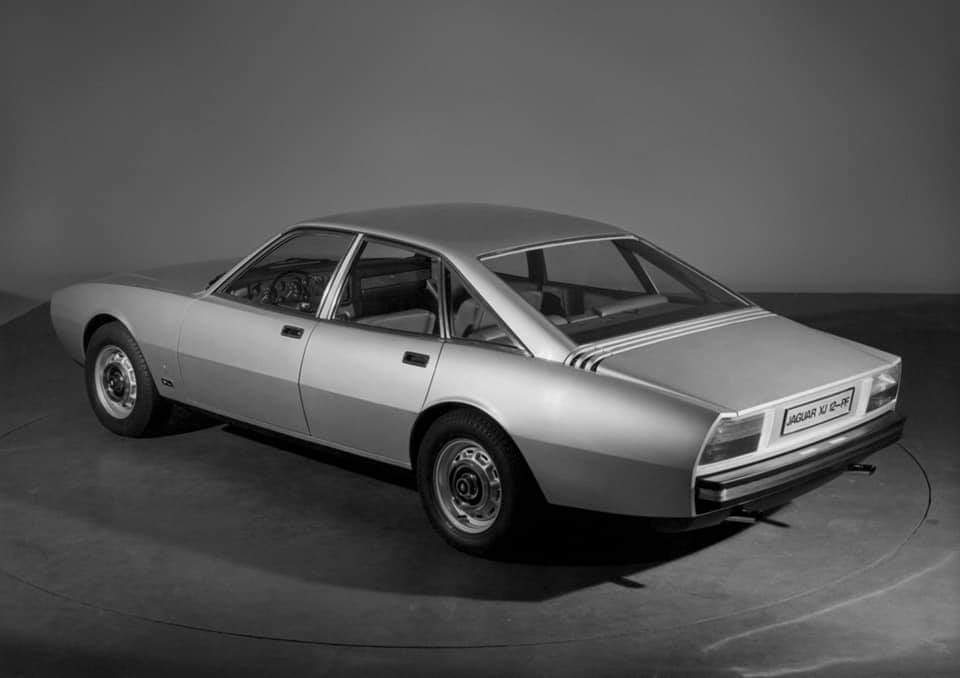
The distinction changes how the project is interpreted. An XJ40 proposal might be free to explore a future platform and altered proportions; a production restyling had to respect much of the existing car’s structure, tooling and manufacturing economics. For the latter commission Pininfarina could work on the roof and glazed cabin, bonnet and exterior details, while major structural commitments of the ageing XJ were retained. Jaguar’s Roger Zrimec acted as a liaison in the development account, reminding us that a successful commissioned restyling could require daily collaboration between a British manufacturer and an Italian consultancy.
The eventual XJ Series III, introduced in 1979, provided the proof that this second relationship could bear fruit. Its altered roofline and enlarged glass area, new lamp and bumper treatments and more unified profile gave a car from the previous decade renewed credibility. Yet this was not a Pininfarina-bodied XJ40. It was the substantially revised predecessor, and its continued production later helped Jaguar manage the delayed launch of its successor. Conflating the Series III with the 1974 XJ40 proposal would conceal Pininfarina’s actual achievement and obscure the technical limitations it successfully negotiated.
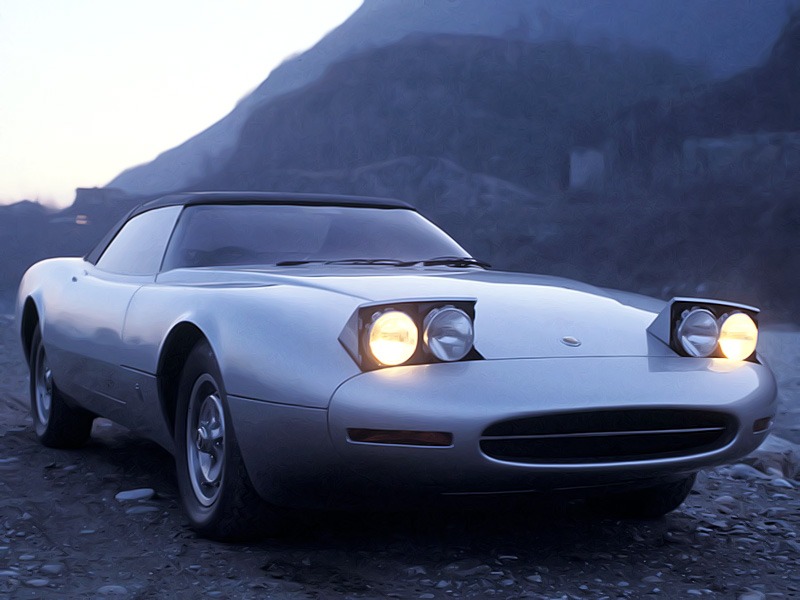
Another Pininfarina Jaguar, the 1978 XJ Spider, belongs to a different branch of the family tree. Its open sports-car concept drew on the XJ-S rather than on the new four-door XJ40 architecture. It is relevant only to demonstrate the breadth of the continuing relationship. Likewise Bertone’s later Ascot was based on a Jaguar XJ-S and belongs in a related, but separate, story. Names, dates and body types are not interchangeable simply because the cars were made by Italian studios for Jaguar.
The model room and the boardroom
The strongest way to reconstruct the XJ40 competition is to follow the models rather than count the badges. Presentation drawings document an intention; model photographs document a shape brought into three dimensions; a workshop build record can document who made it; a Jaguar review note can document who saw it and when. Without that chain of evidence, the labels ‘1974’, ‘1976’, ‘Gandini’ and ‘Giugiaro’ are useful guides but not final answers to every question of authorship, quantity or production state.
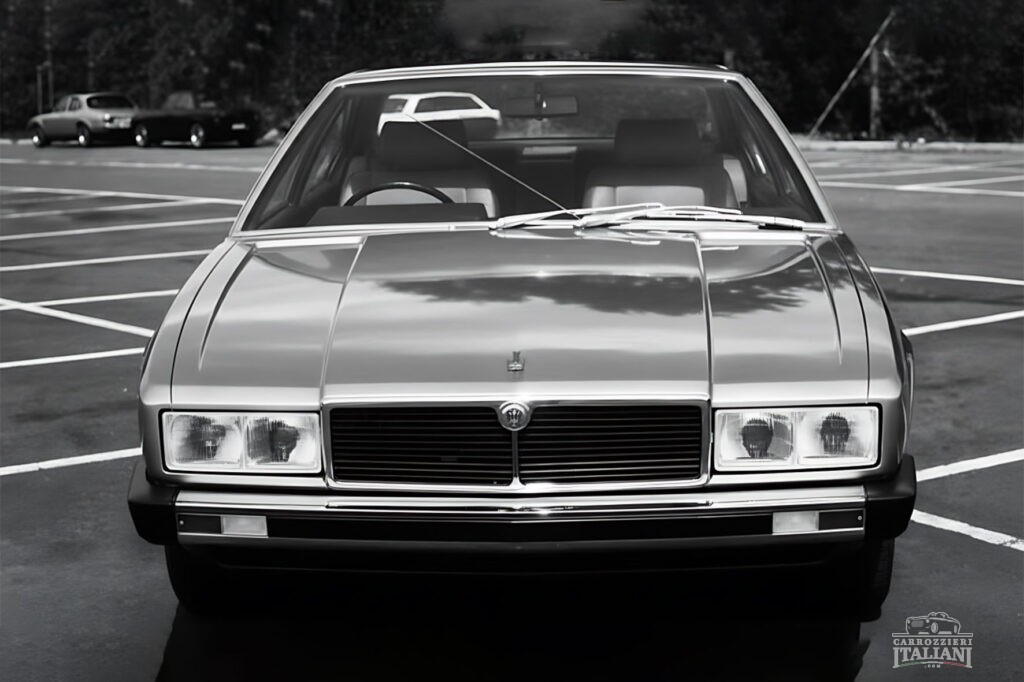
This was a period in which decisions about Jaguar’s appearance were repeatedly made or unmade above the heads of its internal stylists. British Leyland executives pushed for a modern corporate identity while the Coventry team feared dilution of the marque. A dramatic concept might be persuasive on a boardroom floor yet troublesome when translated into production tooling and customer expectations. Equally, insisting on established shapes could look like failure of imagination to management eager to challenge Mercedes-Benz and BMW. The internal studio was not merely conservative out of sentiment: its task was to produce a car that customers would still identify as a Jaguar at first glance, and that the company could build economically.
The presentation-model records suggest the Italians were asked more than once to reconsider their answers. That does not justify declaring one coachbuilder the winner of a contest later reversed. The evidence instead points to a sequence of evaluations in which no external submission received final production approval. This was a moving target, made less stable by shortages of money, uncertain future product planning and technical requirements changing across the 1970s.
Two carefully maintained lists are necessary for any eventual chassis register: one of styling objects with documented dates, media and provenance; another of mechanically functioning engineering prototypes with build identifiers. Only the latter should receive a chassis-level narrative. A modern catalogue that treats every photograph of a plaster Jaguar as a distinct complete automobile would multiply the historical record without creating a single new fact.
At Browns Lane, a decision
By 1976 the Italian proposals had not delivered a production-approved shape. The Jaguar styling team continued to revise its own work while engineers dealt with the practical consequences of designing a successor in an age of fuel economy and increasingly demanding crash and aerodynamic standards. Flush glazing, headlamp form and the balance between a low roof and comfortable cabin all came under examination. Aerodynamic work was particularly unforgiving of the visual features that had made Lyons’ earlier Jaguars distinctive. The rounded lamp fairings, for example, were understood to contribute to drag.
As the decade advanced, customer research and management opinion began to support retaining a clearer Jaguar identity. The Pininfarina-restyled Series III demonstrated that a traditional XJ silhouette could be made to appear cleaner without being stripped of character. During 1978 and 1979, the in-house XJ40 models moved toward a more coherent, formal interpretation of that family resemblance. At this point the story becomes predominantly Coventry’s. Italian design houses had supplied alternatives, but Jaguar’s own organisation had to bring together the selected styling theme, vehicle proportions and production engineering.
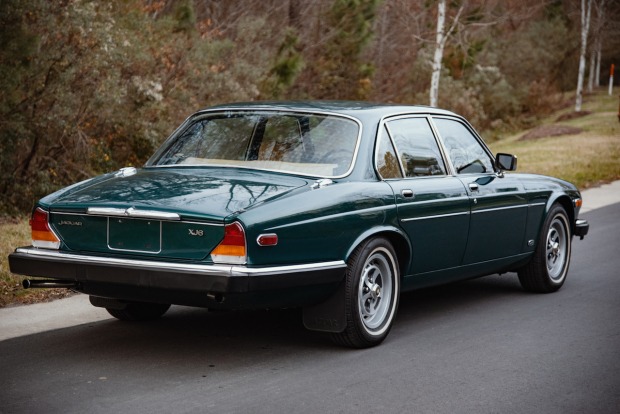
Styling acceptance was not the same as programme approval. Financial restrictions continued to threaten the entire enterprise. Investment in the new AJ6 engine family and the body programme arrived in stages, while senior managers investigated cheaper alternatives, including another revision of the existing XJ. The new managing director, John Egan, argued for a genuinely new saloon. Jaguar’s leadership eventually secured backing to proceed, and the selected design was developed into a package compatible with the new body structure, electronics, drivetrain and production processes.
These details explain why a single designer’s signature cannot serve as the history of XJ40. Knight and Randle belonged to engineering and programme execution. Thorpe and his colleagues represented Jaguar’s internal styling department. Robinson brought the Italians into the process, while the British Leyland board influenced which proposals would be considered. Gandini, Giugiaro and Pininfarina’s team proposed aesthetic alternatives. The finished car was neither a cancelled Bertone nor an accepted Giugiaro design with a different badge.
A new Jaguar, not an Italian Jaguar
The XJ40 reached customers in 1986 after a programme of exceptional duration. The completed saloon used the AJ6 six-cylinder engine family, a new body and extensive electronics. Jaguar Heritage records the programme beginning in 1972 and notes that the final styling proposal had been adopted by 1980. Its account also describes some 250 prototypes and development cars covering over five million miles. Those figures belong to Jaguar’s eventual engineering validation programme. They must not be assigned to the separate Italian styling submissions or interpreted as 250 Italian-bodied Jaguars.
The production car’s angular lines and six-light cabin were a departure from the original XJ yet still preserved an identifiable long-bonnet, rearward-cabin arrangement. Some versions carried rectangular headlamps, a detail often cited in discussions of Italian influence. Similar forms, however, had appeared in competing Pininfarina and Jaguar studies. A shared solution to the same design problem is not proof of copying. Claims that the production headlamps or any other single feature directly descended from a particular Gandini drawing need a documented design decision, not merely a visual resemblance.
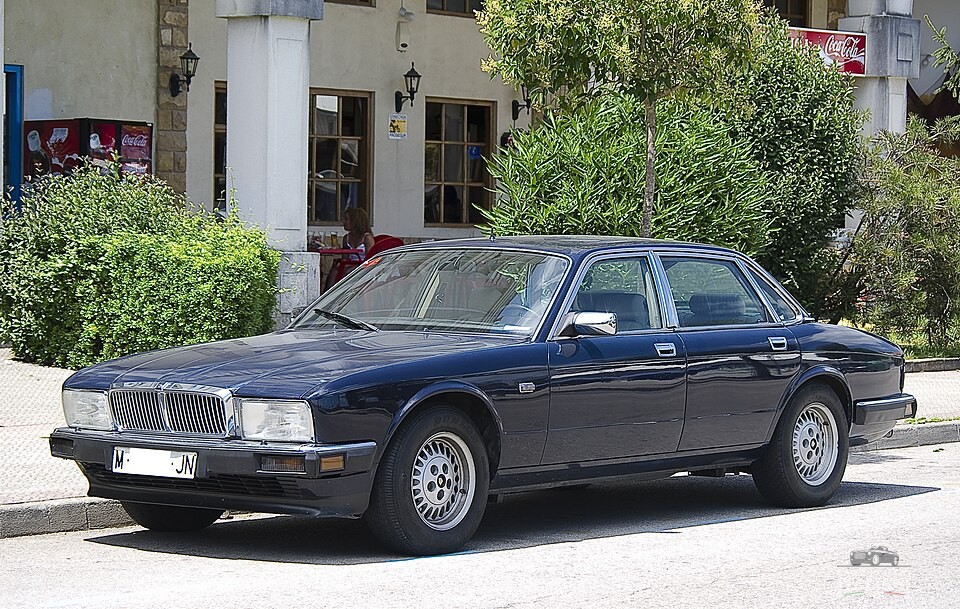
The engineering differences between the original XJ and XJ40 were substantial, and the long programme also changed the conditions under which the car entered production. Jaguar had spent the later 1970s keeping the earlier saloon viable, with Pininfarina’s Series III restyling playing an important commercial role, while the successor acquired an entirely new technical basis. The decision to retain recognisable Jaguar features was therefore partly aesthetic, partly commercial and partly dictated by the real cost of establishing the new car in production.
The XJ12 name creates one further trap. The 1973 XJ12 PF was an early Pininfarina show car, while the production XJ40 generation initially used six-cylinder power. A V12-engined XJ40 variant arrived only in 1993. Linking the three vehicles solely because their titles contain XJ or XJ12 would distort their chronology. Their proper relationship is through successive design and model programmes, not shared coachbuilt bodies.
What the surviving objects can still tell us
A particularly productive next stage of the historical investigation would be to locate original Jaguar review sheets from June 1974 and 1976, together with corresponding Bertone, Italdesign and Pininfarina drawing registers. The original 1986 Motor illustrations of the Gandini proposals, the photographs of the mock-up line-up and the first-hand recollections of engineers should be compared against the physical descriptions on surviving photographic prints. Such evidence could establish which sketches correspond to which full-size models, whether the two Italdesign proposals were evaluated simultaneously, and what became of the plaster and clay objects after rejection.
The 1973 XJ12 PF presents a different research opportunity. Contemporary motor-show material, including the Pininfarina brochure prepared for London in 1973, can help determine exactly how the firm described its project and whether it was presented as a replacement proposal, a show-car exploration or both. A contemporary catalogue of historic Jaguar memorabilia records a copy of that brochure and accompanying photographs. Until the brochure text itself is inspected, later descriptions of the car as a definitive XJ40 prototype should be resisted. The year and the association are established; the precise contractual brief deserves more care.
For the 1979 Series III, production documentation and Jaguar’s own history give a much firmer basis. This is the Italian intervention that reached the showroom, but on the earlier XJ. It belongs beside the unselected studies because it changed the conditions in which the replacement could be completed. Consumers could continue to buy a car recognisably descended from the 1968 saloon while Jaguar’s engineers and stylists tried to finish a new one. In this sense, the successful Pininfarina work and the rejected XJ40 proposal were different responses to the same difficult predicament, not two labels for a single car.
The names on the Italian submissions remain important: Bertone and Marcello Gandini, Italdesign and Giorgetto Giugiaro, Pininfarina and the stylists and model-makers whose work merits further identification. So do the less celebrated Jaguar people who judged the shapes, objected to them, modified them or made the final car possible. The project survives in photographs, memoirs, drawings and Jaguar’s production story. Properly separated, those objects preserve the arguments that preceded the XJ40 more faithfully than a neat tale of three losing designers.

ABOUT THE AUTHOR
Andreas Scheidl
Italian classic car enthusiast with German roots. Renowned as a respected figure in the classic car community, he serves as a jury member at various international concours d'elegance, including the Classic Gala Schwetzingen and Mantova. As a content creator, Andreas passionately shares his profound knowledge and appreciation for vintage automobiles. His heart beats for cars designed by Giovanni Michelotti, showcasing his discerning taste and dedication to preserving the timeless elegance of automotive history.
More stories by Andreas Scheidl ↗CONTINUE READING
Posts You Might Like
French Engines, Italian Bodies: The Panhards That Went to Turin
Gastone Crepaldi, Carrozzeria Allemano and the small French sports cars that raced through Italy in the 1950s. At the 1952 Mille Miglia, six Panhards associated with Gastone Crepaldi's Scuderia Ital-France appeared among…
Read story
Alfa Romeo Giulietta Spider: The Bertone–Pininfarina Contest That Changed an Italian Icon
Before the familiar Pininfarina roadster, Alfa Romeo tested two very different ideas for its American future. The surviving prototypes tell a more complicated story than a simple victory and defeat.
Read story
The Strangest Ferraris Ever Built
Eight Extraordinary Creations by Italian Coachbuilders From a racing Ferrari transformed into a bread van to a futuristic concept resembling a spacecraft, the history of the Prancing Horse includes some remarkable interpretations…
Read story
Rome’s Forgotten Concours d’Elegance
Before the Pincio became a tradition On the terraces above Piazza del Popolo, Rome offered automobile elegance a setting unlike any exhibition…
Read story
THE CONVERSATION
Comments 0
Share a memory, a period photograph or a documented detail about this story.