
Rome’s Forgotten Concours d’Elegance

On the terraces above Piazza del Popolo, Rome offered automobile elegance a setting unlike any exhibition hall. The Pincio was a place for an afternoon walk, for looking out across the city and, occasionally, for looking at the newest and most beautiful motorcars. Its broad avenues could accommodate a procession of machines while the gardens and balustrades provided a backdrop that was recognisably Roman. Photographs of the early competitions show automobiles parked outdoors, with spectators able to approach them at close quarters. Nothing separated the cars from the life of the city in quite the way that a conventional motor show stand would have done.
Rome’s association with automobile beauty predated the competition founded after the Second World War. The Automobile Club of Rome had organised a concours at the Pincio in 1926 and returned in 1929. For the latter event, the cars were divided into four broad groups: enclosed four-seaters, open four-seaters, convertible bodies and two-seaters. The categories belonged to an age when the body was often chosen separately from the mechanical chassis, and the owner’s taste could be expressed through an individual commission. In the first three classes, the winning cars were owned by women, an intriguing detail preserved in the Automobile Club’s later account of the event.
Those pre-war gatherings were predecessors rather than the first editions of the later concours. War interrupted the social and commercial world that had sustained bespoke motoring. When an international elegance competition returned to the Pincio in 1947, the circumstances were entirely different. Italy was emerging from devastation and shortages. Its automotive workshops had to find new customers, revive old relationships and make use of industrial resources that had been redirected during the conflict. The automobile, once again, could be a declaration of optimism. At Rome it could also be seen in public, outside the guarded atmosphere of a private club or a manufacturer’s showroom.
A June weekend in 1947
Michele Favìa del Core, founder of the motoring magazine Motor, inaugurated the Concorso Internazionale di Eleganza della Carrozzeria on 23 and 24 June 1947. The inaugural meeting established the post-war series whose descendants would eventually become the Roma Motor Show. It was held at the Pincio, where the open-air arrangement made the automobiles visible to a wider public than the trade specialists who usually followed the work of the Italian body firms. The original photographs preserved by the organisers capture the gathering as it appeared to visitors: polished cars, informal groups of onlookers and the unmistakable greenery of the Roman hill.

The timing was important. In the years immediately after the war, established workshops such as Pinin Farina, Touring, Ghia, Bertone and Vignale were seeking opportunities in a market that was changing quickly. Some customers still wanted a car unlike any other. Others were attracted by the idea of a special coupé or cabriolet on a readily available chassis. Manufacturers, meanwhile, were beginning to think about larger production runs, export markets and a new generation of post-war models. A competition for elegance could accommodate all of them. It offered a place for private commissions, publicity cars and proposals for limited production to be seen together.
The first concours was followed by another on 29 and 30 May 1948, and a third on 25 and 26 May 1949. The organisers had found a date in late spring, before the full heat of the Roman summer, and a venue where visitors could encounter new automotive fashions during an ordinary walk through the city. The photographs of these early editions convey a particular intimacy: cars standing in the open rather than behind barriers, their details exposed to the daylight and the curious eyes of spectators.
Stars, spectators and the cars of 1949
The concours was soon part of Rome’s social calendar as well as its motoring life. The actress Isa Barzizza appears in the organisers’ historical material alongside an Alfa Romeo 2500 SS at the 1949 gathering. It is an evocative meeting of two worlds. Italian cinema was entering an energetic post-war period, while the Alfa Romeo 6C 2500 still represented the prestige of the pre-war grand touring tradition, adapted to a new age. A fashionable actress and an elegant automobile were natural companions in the publicity photographs of the time.

The Pincio attracted attention because the cars were presented where people already went to see and be seen. The spectators were not required to understand the subtleties of a chassis specification to appreciate the difference between a sober saloon, a dramatic open sports car and an individually finished coupé. At the same time, the competition offered a serious opportunity to judge proportions, finish and accommodation at close range. The light of an outdoor Roman morning was unforgiving to a badly resolved surface. Chrome, paintwork, glazing and the fit of a hood could all be examined without the flattering theatre of spotlights.
In later decades the event would be associated with figures from entertainment including Renato Rascel, Marcello Mastroianni, Nino Manfredi, Philippe Leroy and Paolo Panelli. Their names belong to the longer history of the exhibition rather than to a single early concours. The attraction was consistent: beautiful automobiles could bring together people who would otherwise have little reason to visit a motor industry presentation.
The new shapes of 1950
The fourth competition took place on 27 and 28 May 1950, at a moment when Italian designers were experimenting with the possibilities of post-war platforms. The Fiat 1400, introduced that year, was especially significant. It was a modern saloon conceived for series production, yet its mechanical basis quickly attracted independent interpretations. The coachbuilders were no longer limited to modifying the expensive chassis of a small number of aristocratic customers. They could offer distinctive bodywork to buyers who admired the individuality of a special car but began with a more familiar production model.

Among the automobiles connected with the 1950 competition were a Fiat 1400 Giardinetta by Viotti and a Fiat 1400 Super Cabriolet by Boneschi. Their contrasting purposes were part of the fascination. The giardinetta combined passenger accommodation with a more useful rear compartment, while the cabriolet pursued open-air motoring and the appeal of an elegant personal car. Both were recognisably products of a culture in which the body could be reconsidered without redesigning the engine and transmission beneath it.
The same edition is associated with an Alfa Romeo 6C 2500 SS Cabriolet by Boneschi and an Alfa Romeo 6C 2500 SS Supergioiello by Ghia. The Alfa Romeo represented a different market from the Fiat, one in which expensive mechanical components and the reputation of the marque supported elaborate individual coachwork. Yet the presence of both kinds of automobile at Rome captured the extraordinary range of Italian design at the turn of the decade. A compact practical car and a costly grand tourer could stand within the same gardens, judged for the qualities of their completed forms.

The period also marked the rise of a cleaner and more integrated style. Separate wings and running boards had long since begun to disappear; headlights, radiator openings and side surfaces were increasingly conceived as parts of a single body. Coachbuilders approached that transition in different ways. Some retained a formal grille and an emphatic bonnet. Others lowered the roof, enlarged the glass area and allowed the body sides to flow almost uninterrupted from front to rear. Rome provided a useful place to see those alternatives together, before later fashion made one of them seem inevitable.
The extraordinary variety of 1951
The fifth edition, on 26 and 27 May 1951, brought together several interpretations of the Lancia Aurelia. The Aurelia had appeared the previous year with its compact V6 engine and sophisticated engineering, and it offered a particularly attractive foundation for special bodies. A B50 Coupé by Vignale, a B50 Cabriolet by Pinin Farina and an Aurelia B52 by Ghia are among the cars associated with the Roman competition. They were not interchangeable versions of a single design. Each represented a separate response to the dimensions and mechanical character of the Lancia chassis.

The variety extended well beyond Lancia. The 1951 records include a Fiat 1100 Coupé by Castagna, a Fiat 1400 St. Leger Cabriolet by Bertone, a Riley RMB by Vignale and the Alfa Romeo 6C 2500 SS Villa d’Este by Touring. The Riley is a particularly telling inclusion. An Italian body on a British car belonged to a long tradition of international commissions, but it also pointed towards the export opportunities that were increasingly important to Italian firms. The coachbuilder’s reputation could travel beyond the national identity of the chassis.
Among the Maseratis was an A6G 2000 Coupé by Frua, associated with chassis 2028. Its presence belongs to the period when Maserati’s road-car programme was still closely linked to the company’s competition identity and when individual bodybuilders could give related chassis quite different appearances. The A6G designation covered a family of automobiles rather than a single standard body. For the customer, that was part of the attraction: the mechanical promise of Maserati, finished in a form that reflected personal taste and the chosen workshop.

The smaller firms were equally part of the scene. Moretti, with its own engineering and manufacturing ambitions, could appear beside the better-known luxury marques. Fiat-based specials by workshops such as Castagna, Bertone and Vignale demonstrated how much variety could be produced from familiar components. The concours was a meeting place for several branches of Italian motoring: luxury, sporting performance, experimental styling and the search for more distinctive everyday transport.
The Rolls-Royce and the Lancias of 1952
The sixth edition took place on 7 and 8 June 1952. Its surviving vehicle histories offer a vivid contrast between different forms of elegance. One of the most memorable was a Rolls-Royce Silver Dawn with bodywork by Ghia, commissioned for Countess Ida Matarazzo. The British marque was known for dignified, conservative luxury, yet here its chassis became the basis of an Italian interpretation. The combination was sufficiently unusual to make the car stand out even among the one-off automobiles for which the Pincio had become known.

The same edition included several striking Lancias. The Aurelia B52 by Pinin Farina, chassis B52-1022, belonged to the refined grand touring tradition, while the Aurelia PF200 Spider, chassis B52-1004, ventured into far more experimental territory. The PF200’s dramatic front treatment and low open body were far removed from the restrained elegance of a conventional production Lancia. They showed the freedom available to a specialist workshop when a small-series or show-car project was not constrained by the demands of mass manufacture.
Ghia’s Fiat 1400 B Junior offered another contrast. The Fiat platform was far less exclusive than a Rolls-Royce or a Maserati, but its transformation into an individual coupé was exactly the kind of work that sustained the Italian specialist industry. Also connected with the 1952 gathering were a Fiat 1400 Cabriolet by Vignale, a Siata 208 CS by Stabilimenti Farina, an Alfa Romeo 6C 2500 GT Cabriolet by Touring and cars from Moretti. A visitor moving from one automobile to another could encounter several different ideas of what a modern Italian car ought to look like.

The 1952 meeting also marked a point of transition in the concours itself. The traditional prestige marques still attracted attention, but the newer Fiat and Lancia platforms were changing the balance of the display. As the Italian market expanded, the most interesting special bodies were not always built on the most expensive chassis. A modern family car could provide the starting point for a sophisticated personal automobile, while the makers of expensive grand tourers were beginning to seek more repeatable forms of production.
A blue Maserati at the Pincio
After a gap in 1953, the seventh edition was held on 12 and 13 June 1954. One of its most celebrated automobiles was the Maserati A6GCS/53 Berlinetta by Pinin Farina, chassis 2057, finished in dark blue with a lighter blue roof. Its origins were closely tied to the Roman Maserati concessionaire Guglielmo “Mimmo” Dei, whose involvement helped bring about the small series of closed A6GCS bodies. Only four of the celebrated Pinin Farina berlinettas were completed, making each individual chassis history essential to the story.

The A6GCS was fundamentally a competition car. Its two-litre six-cylinder engine and racing chassis offered a different starting point from the luxury saloons that had appeared in earlier concours. The Berlinetta body gave the Maserati the appearance of a road-going grand tourer, but its origins remained unmistakably sporting. On the Pincio the car’s low roof, compact cabin and long bonnet could be admired as an elegant whole; away from the gardens, its racing mechanical specification imposed more demanding compromises on driver and passenger.
Chassis 2057 went on to be driven by Piero Palmieri in the Giro dell’Umbria, where he finished seventh. Contemporary accounts of the car’s later history describe the heat inside the closed cockpit as a serious drawback in competition. The berlinetta body was subsequently removed and retained while the chassis was fitted with open coachwork. It is a remarkable afterlife for a car admired at an elegance competition: the very enclosed body that had made it so memorable in Rome was ill suited to the conditions of a hot Italian road race.

The four Pinin Farina berlinettas have often been discussed together, but their histories diverged. Chassis 2056, associated with Count Gravina, was damaged in the 1954 Giro di Sicilia; chassis 2059 and 2060 followed different paths. The Roman appearance of 2057 is therefore best understood as a chapter in the life of one particular car, not simply as an award attached to a famous Maserati model name. Its transformation after the concours is also a reminder of how freely competition machinery could be altered when usefulness on the road or track mattered more than preserving an admired shape.
The last years of the original competition
The Pincio concours returned in October 1955 and October 1956, its eighth and ninth editions. The change from late spring to autumn did not alter the setting, but it placed the gathering in a different part of Rome’s social calendar. By then, the post-war Italian motor industry was gathering speed. Production cars were becoming more numerous and more sophisticated, while specialist workshops were finding new work in prototypes, short production series and close relationships with the larger manufacturers.

The tenth edition took place over three days, from 7 to 9 June 1957. It was the last to carry the original Concorso Internazionale di Eleganza name in the organisers’ official chronology. In a decade, the competition had accompanied an extraordinary period in Italian automotive history, from the difficult recovery of 1947 to the increasingly confident design and production culture of the later 1950s. The cars displayed at Rome had changed with the country: early post-war luxury commissions had been joined by compact specials, sporting coupés and vehicles intended for a growing market.
The event had also acquired an audience beyond the clients of the individual workshops. The public came to see new cars and new fashions, not merely to examine bespoke bodywork. That change would determine the next stage of its life. The Pincio remained the setting, but the name and the emphasis of the exhibition were about to move towards the automobile industry as a whole.
From elegance competition to Roma Motor Show
In 1958, the eleventh edition became the Rassegna Internazionale dell’Automobile. It was a significant change of identity, reflecting the growing presence of manufacturers and their production models. The new name acknowledged what visitors were already seeing: an exhibition of the wider motor industry rather than a competition devoted principally to individually styled bodies. The transformation did not happen overnight, and specialist Italian designs continued to attract attention, but the emphasis had shifted.

The Rassegna returned in 1960 and 1962, then in 1969, 1970 and 1971. The gaps in those dates are part of the history; the event did not take place every year. In 1969 Corinna Favìa del Core took over its organisation, continuing the family involvement begun by Michele and carried forward by Sergio. By this point the Italian automobile had become an everyday presence in the lives of millions, and the exhibition increasingly reflected the tastes and practical interests of a much broader public.
On 22 and 23 April 1972, the seventeenth edition adopted the name Roma Motor Show. It was still held at the Pincio. The new title recognised a programme no longer confined to the passenger car and a motoring world that had expanded beyond the elegant one-off automobile. Later editions continued the tradition, and the event remained at the Pincio for many years before moving to other Roman venues. The organisers’ photographs preserve that long progression from a small post-war gathering to a modern public motor exhibition.
For the cars that appeared during the first decade, the setting is now part of their history. A Maserati or Lancia photographed among the trees of the Pincio is seen not as a static museum object but in the surroundings for which it was presented: outdoors, in public, with the city immediately beyond it. The photographs recall the moment when these automobiles were new, when their owners and makers brought them to Rome and when the crowds could encounter them for the first time.
The beauty that remains
Many of the automobiles that appeared at the Pincio have disappeared; others have survived through several owners, restorations and, in some cases, complete changes of bodywork. The competition itself gradually became something different. Yet the early photographs retain their charm. They show the cars not as carefully isolated objects, but among people: a woman leaning towards a window, a photographer searching for a better angle, a small crowd studying a shape it has never seen before. For a few days, Rome’s familiar terraces became a place to discover the latest automobile fashions. That simple pleasure, more than any trophy or catalogue entry, is what makes the forgotten concours worth remembering.

ABOUT THE AUTHOR
Andreas Scheidl
Italian classic car enthusiast with German roots. Renowned as a respected figure in the classic car community, he serves as a jury member at various international concours d'elegance, including the Classic Gala Schwetzingen and Mantova. As a content creator, Andreas passionately shares his profound knowledge and appreciation for vintage automobiles. His heart beats for cars designed by Giovanni Michelotti, showcasing his discerning taste and dedication to preserving the timeless elegance of automotive history.
More stories by Andreas Scheidl ↗CONTINUE READING
Posts You Might Like
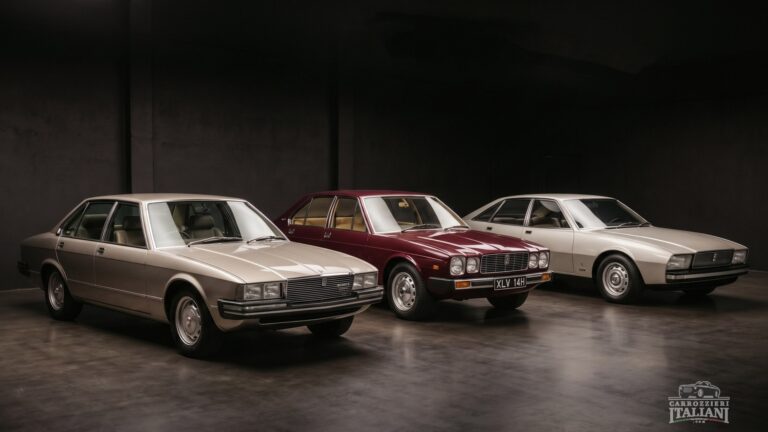
The Italian Battle for the Jaguar XJ40
Three Turin-area design organisations came into Jaguar’s orbit during this period: Bertone, where Marcello Gandini led the studio; Italdesign, founded by Giorgetto Giugiaro and Aldo Mantovani; and Pininfarina, which had already presented…
Read story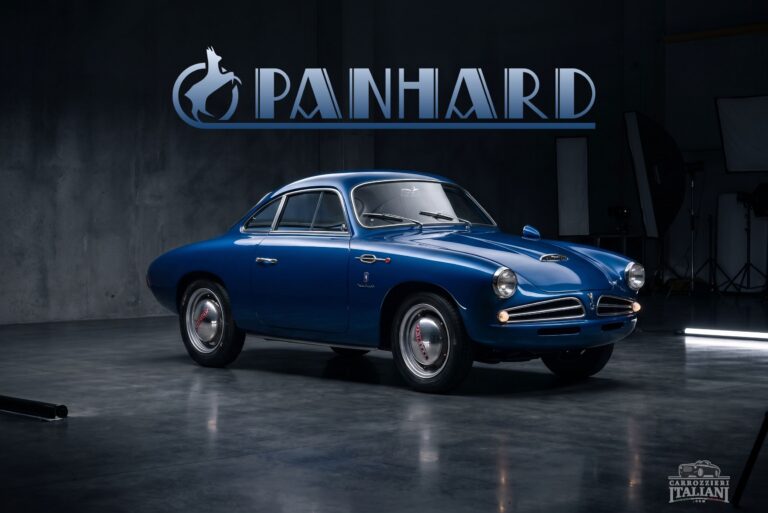
French Engines, Italian Bodies: The Panhards That Went to Turin
Gastone Crepaldi, Carrozzeria Allemano and the small French sports cars that raced through Italy in the 1950s. At the 1952 Mille Miglia, six Panhards associated with Gastone Crepaldi's Scuderia Ital-France appeared among…
Read story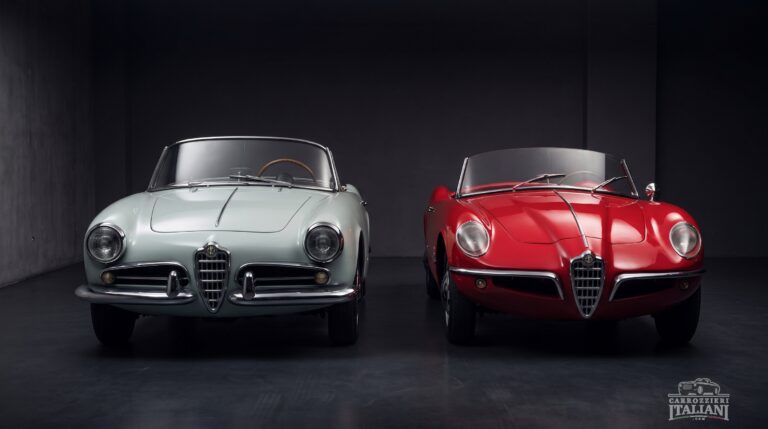
Alfa Romeo Giulietta Spider: The Bertone–Pininfarina Contest That Changed an Italian Icon
Before the familiar Pininfarina roadster, Alfa Romeo tested two very different ideas for its American future. The surviving prototypes tell a more complicated story than a simple victory and defeat.
Read story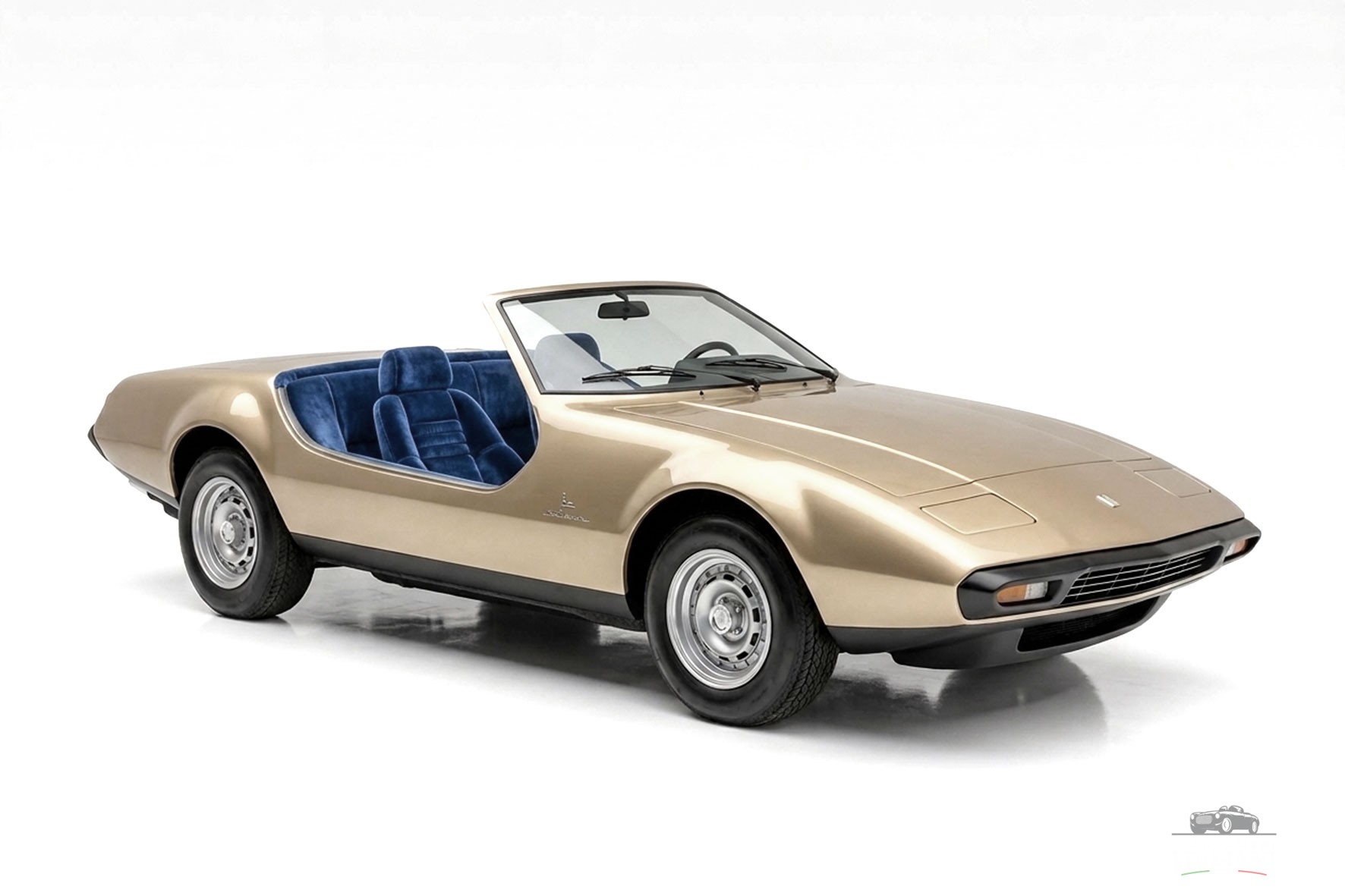
The Strangest Ferraris Ever Built
Eight Extraordinary Creations by Italian Coachbuilders From a racing Ferrari transformed into a bread van to a futuristic concept resembling a spacecraft, the history of the Prancing Horse includes some remarkable interpretations…
Read story
THE CONVERSATION
Comments 0
Share a memory, a period photograph or a documented detail about this story.