
French Engines, Italian Bodies: The Panhards That Went to Turin
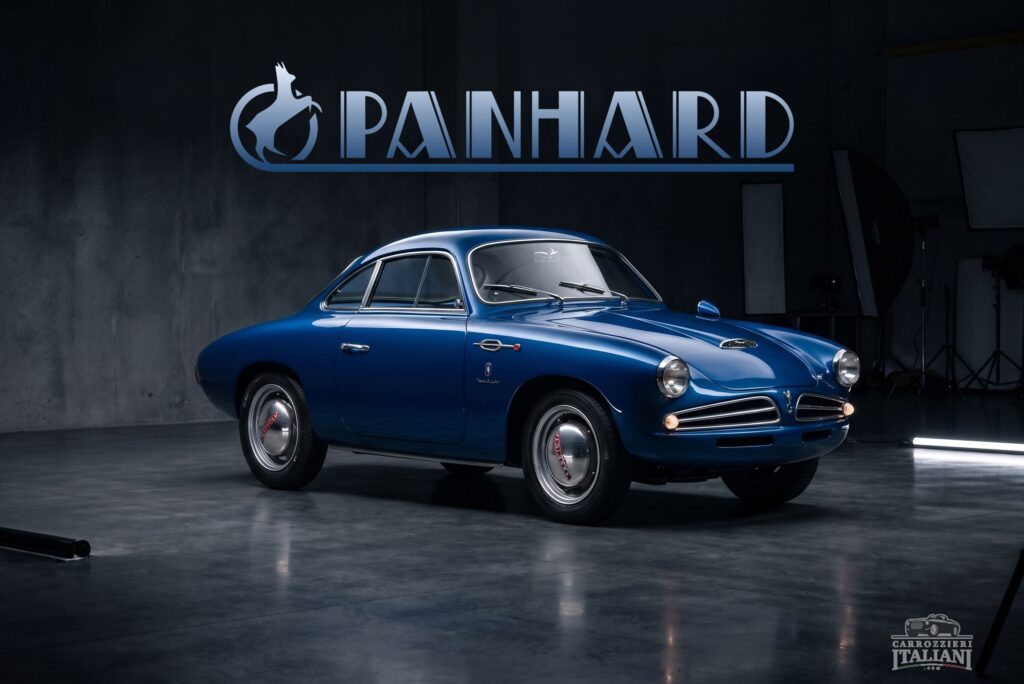
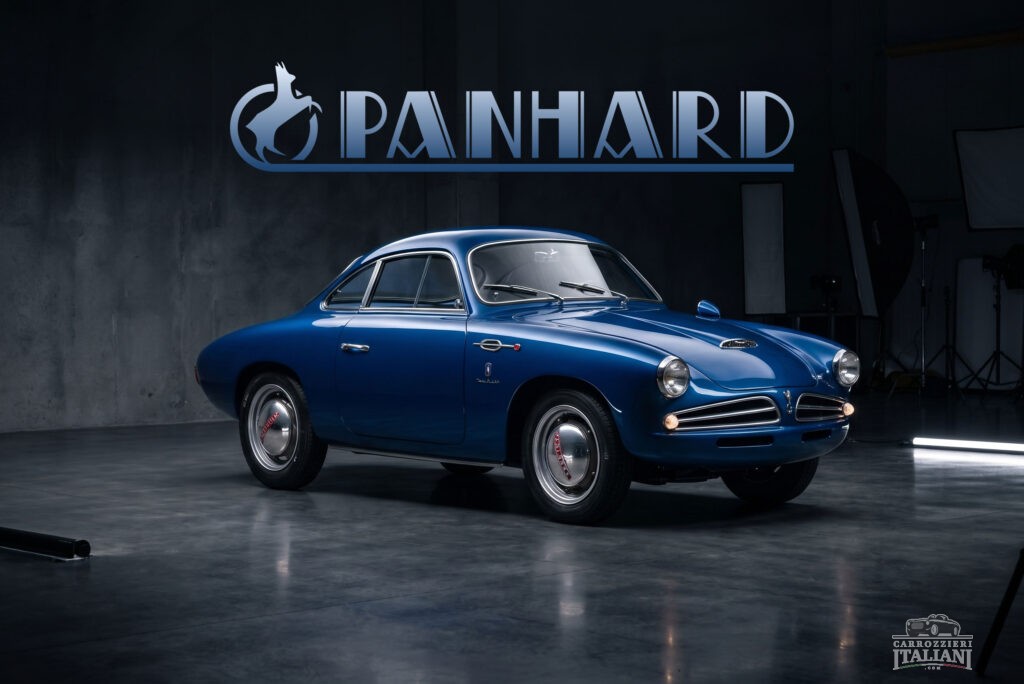
Gastone Crepaldi, Carrozzeria Allemano and the small French sports cars that raced through Italy in the 1950s.
At the 1952 Mille Miglia, six Panhards associated with Gastone Crepaldi’s Scuderia Ital-France appeared among the small-capacity entrants. Their numbers were 2250, 2252, 2300, 2301, 2302 and 2343. The cars belonged to the same broad racing programme, but their bodies, subsequent histories and even the precise identification of some chassis have proved difficult to disentangle.
The best result came from Giacinto Marchese and Ermes Palvarini. Starting with number 2343, they completed the course in 15 hours, 35 minutes and 17 seconds, finishing 67th overall and first in the 750 cc Sport class. In an event dominated by accounts of Mercedes, Ferrari, Lancia and other powerful machinery, a Panhard’s class victory was easily overlooked. For Crepaldi, however, it was exactly the kind of result that made the entire operation worthwhile.
The car was powered by a French air-cooled twin-cylinder engine of approximately 750 cc, yet its appearance and preparation had little in common with the ordinary Dyna X saloon. Its body belonged to a small programme organised in Italy with the involvement of Carrozzeria Allemano, Giovanni Michelotti and specialist racing preparers.
What began as a commercial initiative by an importer soon developed into a surprisingly varied collection of berlinettas, spiders and competition specials. Some cars later acquired completely different bodies. Others disappeared from view and returned decades later, when their chassis numbers provided the only reliable means of identifying them.
Crepaldi's Panhards
Gastone Crepaldi was the Italian importer of Panhard automobiles at a time when the French manufacturer’s products had limited appeal to buyers accustomed to the styling of Italian cars. The Dyna X was economical and technically advanced, but its unconventional body and front-wheel-drive arrangement made it an unlikely showroom attraction in a market where appearance mattered greatly.
Its mechanical characteristics were better suited to competition than its modest origins suggested. The Dyna’s horizontally opposed, air-cooled two-cylinder engine was compact and light. With suitable preparation and a lightweight body, it could compete effectively in the 750 cc classes without requiring the expensive components of a larger sports car.
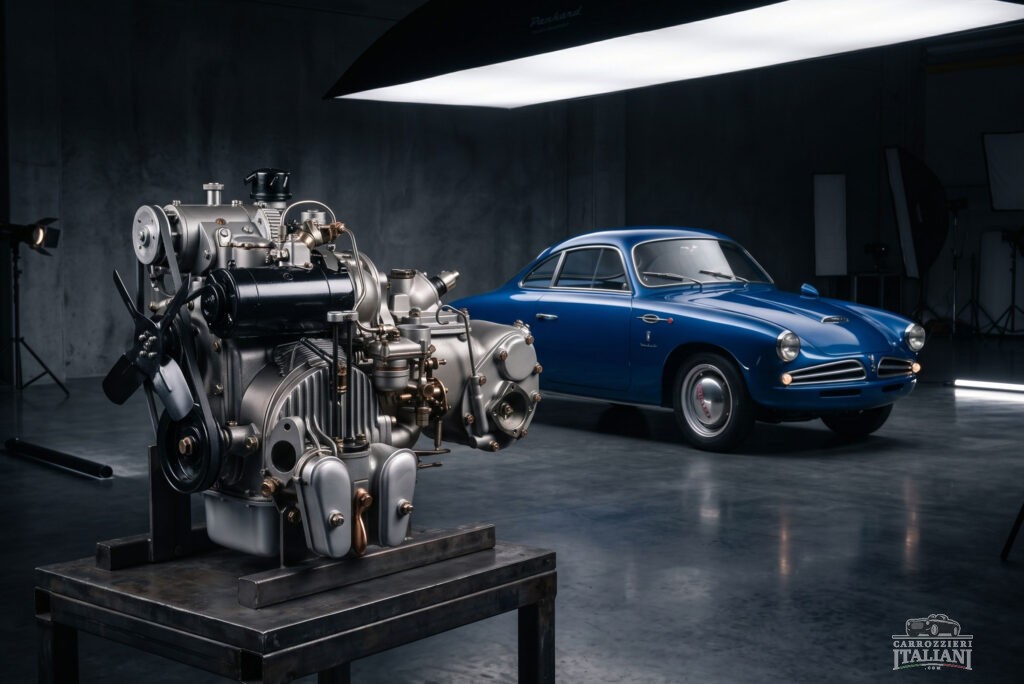
Crepaldi decided to exploit that possibility. Panhard mechanical chassis were supplied to Italy, where they could receive sporting bodies made by local specialists. The cars would compete under the Ital-France name, providing publicity for the importer while allowing drivers to enter events in a relatively affordable category.
The project was possible because of the network of independent coachbuilders and mechanical workshops active in northern Italy. Allemano was selected to produce the earliest sporting bodies. Giovanni Michelotti supplied designs, while specialist preparation was associated with Aldo, known as Tino, Bianchi. One later historical account gives his first name as Tito, an identification that requires reconciliation with the documentation referring to Aldo Bianchi.
Accounts of the programme mention 25 Panhard chassis supplied to Crepaldi between September 1951 and April 1953, including 23 X86 and two X87 chassis. This quantity has sometimes been repeated as though it represented the production total of a particular Allemano berlinetta. It does not. The deliveries served a programme involving different body styles and several successive series.
The distinction becomes apparent when the individual cars are examined.
Three series by Allemano
A detailed chassis-based reconstruction divides the Allemano berlinettas into three stylistic groups, each associated with Giovanni Michelotti’s work.
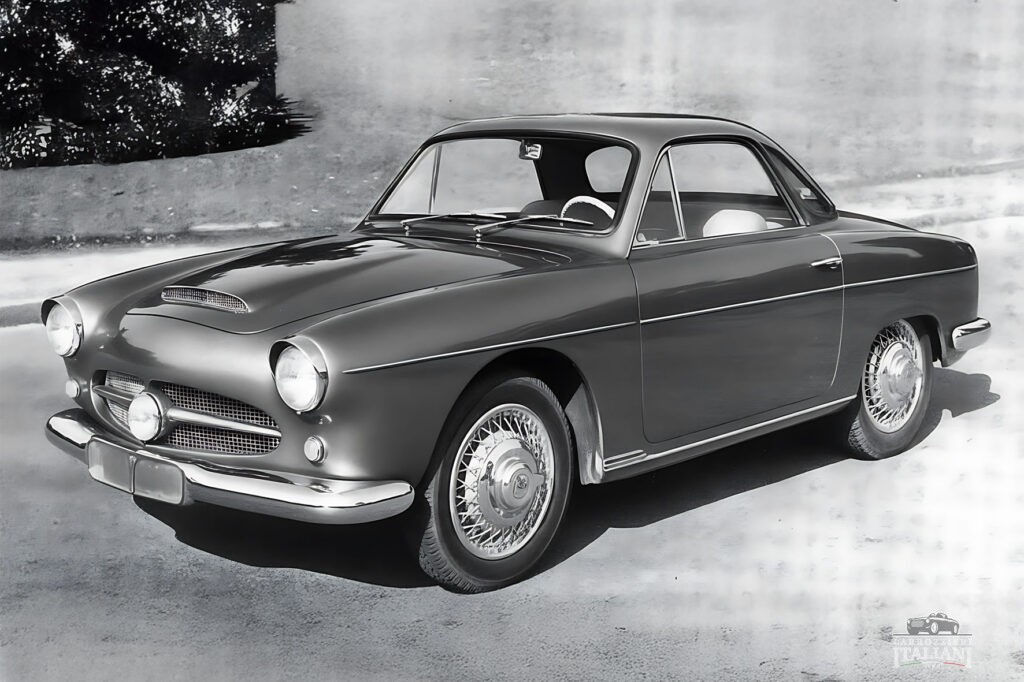
The first appeared in 1951. Its appearance was comparatively restrained, with a front-end treatment recalling the work of Stabilimenti Farina. The comparison refers to the styling, not to the identity of the coachbuilder: the bodies belonged to Allemano’s programme.
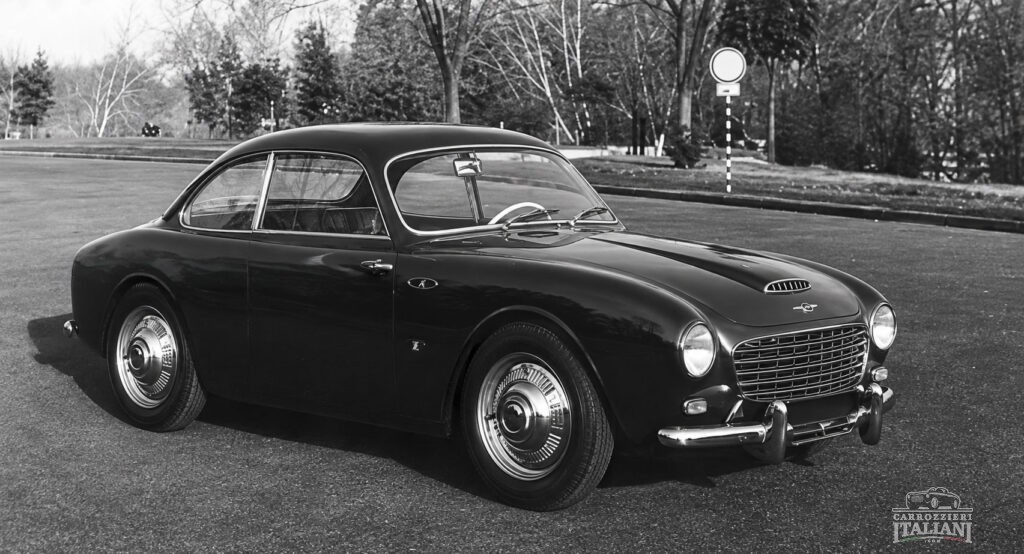
Alongside the berlinetta was an open spider, while a saloon version was also proposed. The surviving photographs indicate that the programme was intended to offer more than a single competition model.
At least one photograph shows a first-series berlinetta carrying Scuderia Ital-France insignia. That is evidence of its association with Crepaldi’s organisation, but not in itself proof that the photographed car started a particular race. No securely identified competition appearance has yet been established for the first-series cars in the reconstruction supplied.
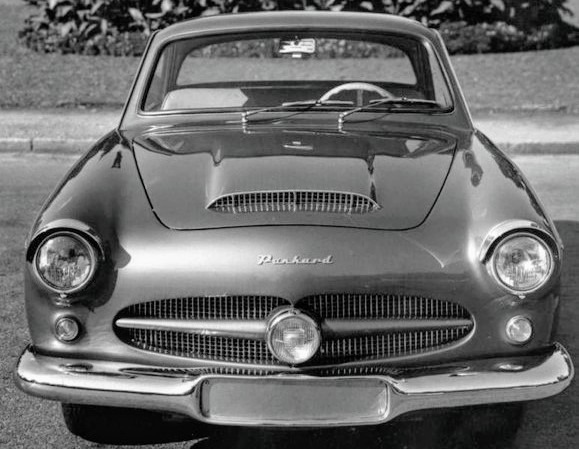
The second series, introduced in 1952, had a much more distinctive frontal arrangement. A central third headlamp made it immediately recognisable and separated it from the earlier berlinettas. These were the cars most closely associated with the Scuderia’s substantial participation in that year’s Mille Miglia.
The third series appeared from 1953 onwards. Its frontal styling took inspiration from contemporary Studebakers, giving the little Panhard a character quite different from its predecessors. The best-documented surviving example is chassis 481813, although chassis 481814 and 481815 are also identified in the reconstruction as belonging to this later group.
All three series should be studied separately. Their production periods overlap with the wider Crepaldi programme, but they cannot be reduced to one uniform model with a single production figure.
Nor can the body design of every example be established simply by citing Michelotti’s involvement. His official project record confirms Allemano Panhard work, including coupé and barchetta projects. It does not provide a complete chassis-by-chassis production ledger. Separate specialist compilations also contain an attribution to Aldo Bianchi for a Crepaldi coupé design, and the precise relationship between those descriptions remains to be settled.
Six Panhards at the 1952 Mille Miglia
The Scuderia Ital-France entry for 1952 can now be examined more closely. The six race numbers and crews are identifiable in historical competition records, while a more recent specialist reconstruction associates them with individual chassis.
The earliest starters in this group included Franco Girardi and Carlo Castelbarco, number 2250, and Nino Beninati with Gilberto Tocchio, number 2252. The proposed chassis identifications are respectively 475808 and 475809.
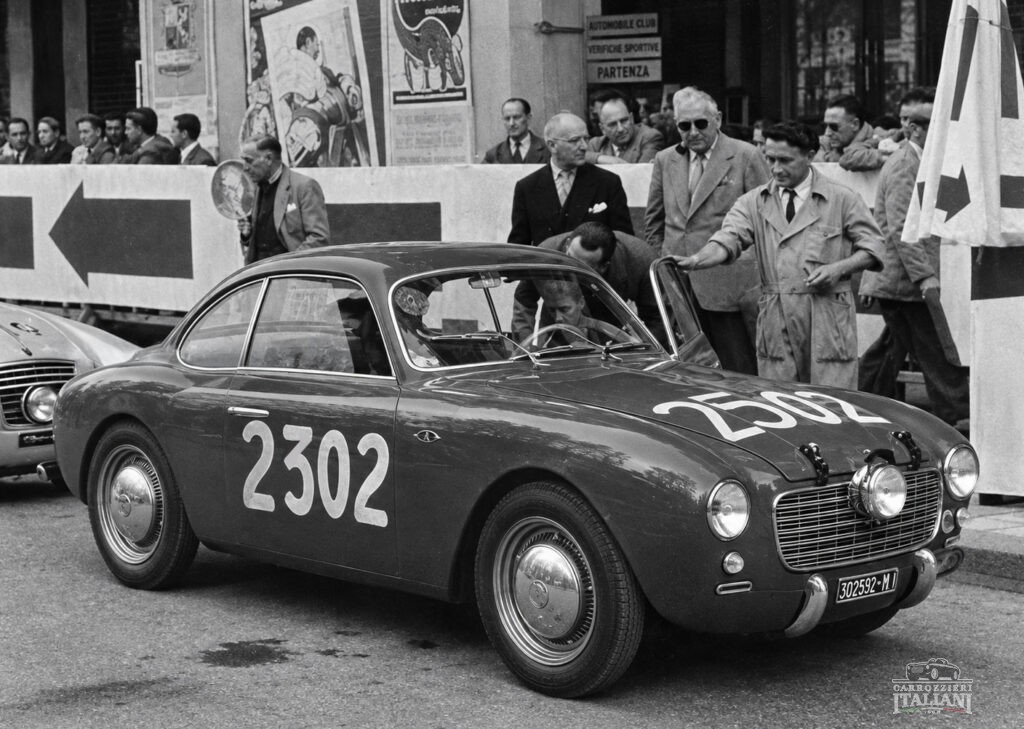
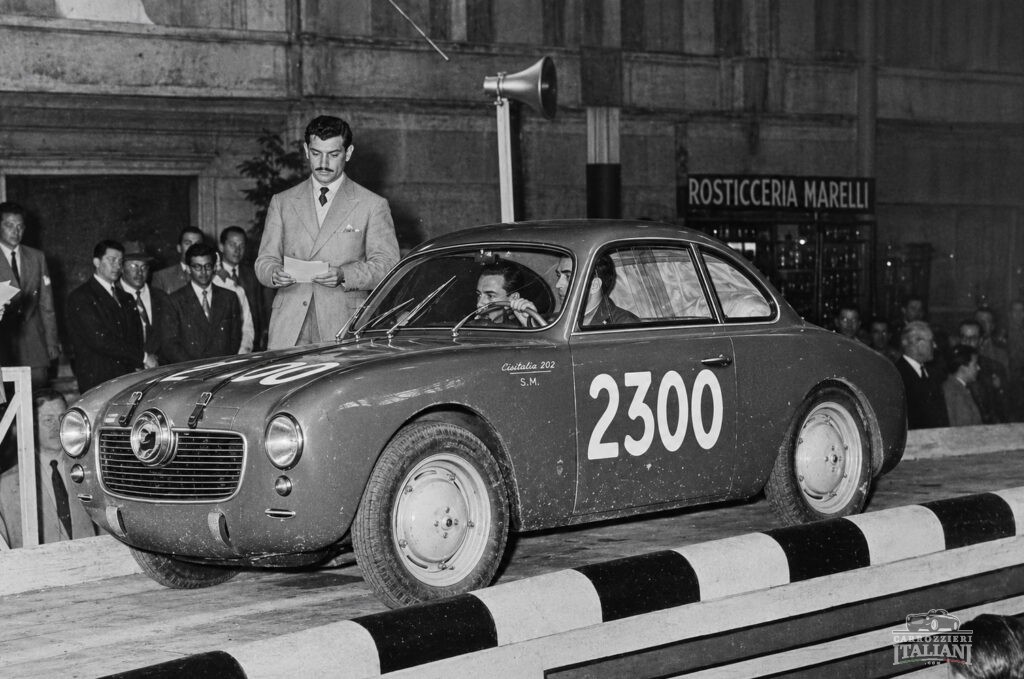
Later in the starting order came Mario Giacomelli and Vincenzo Nember, number 2300, identified in the reconstruction with chassis 475807; Adriano and Giuseppe Zerbini, number 2301, associated with chassis 475806; and Aldo Bertossi with Giuseppe Masseroni, number 2302, associated with chassis 475805.
The final car in the group was the successful number 2343 driven by Giacinto Marchese and Ermes Palvarini. The new reconstruction identifies its chassis as 475810.
That last number is important because a separate history has previously associated the same 1952 entry with chassis 008145, subsequently known as a Colli-bodied Panhard. The two identifications cannot both be accepted without additional explanation. The crew, race number and classification are well supported; the precise chassis attribution must be resolved through period registration records and photographs.
The body types also deserve care. The specialist reconstruction describes the group as five berlinettas and one sports barchetta, whereas some competition transcriptions classify number 2343 as an Allemano berlinetta. Such differences may reflect inconsistent contemporary terminology, later transcription or a genuine difference in body configuration. Photographs matched to the six chassis offer the best route to resolving the question.
What is certain is the scale of the participation. Six Panhards associated with one importer represented a serious commitment to a class that received comparatively little publicity. Crepaldi was not relying on a solitary show car to advertise his business. He had created a racing organisation capable of preparing and entering multiple vehicles in Italy’s most demanding road race.
The result of Marchese and Palvarini justified the investment. Their car finished ahead of numerous larger-engined competitors and won its class. Other Panhard entrants were less fortunate, but the sheer presence of the marque demonstrated what an effective competition programme could achieve for a relatively obscure import.
The third series and chassis 481813
By 1953, Allemano had produced another generation of berlinettas. Chassis 481813 is unusually well documented and provides a valuable reference point for identifying the later cars.
It belonged to a consignment of ten Panhard X86 chassis delivered to Crepaldi on 28 April 1953. Allemano completed its aluminium body on 30 September, and the car was registered the following day to Carlo Bonini of Milan. In October 1954 it passed to Gino Paladini.
The body was attributed to Michelotti, with a compact enclosed profile and a front-end treatment different from the earlier 1951 cars. Later descriptions suggest that approximately four berlinettas of this particular design were built, but this figure should not be extended to the entire Crepaldi programme.
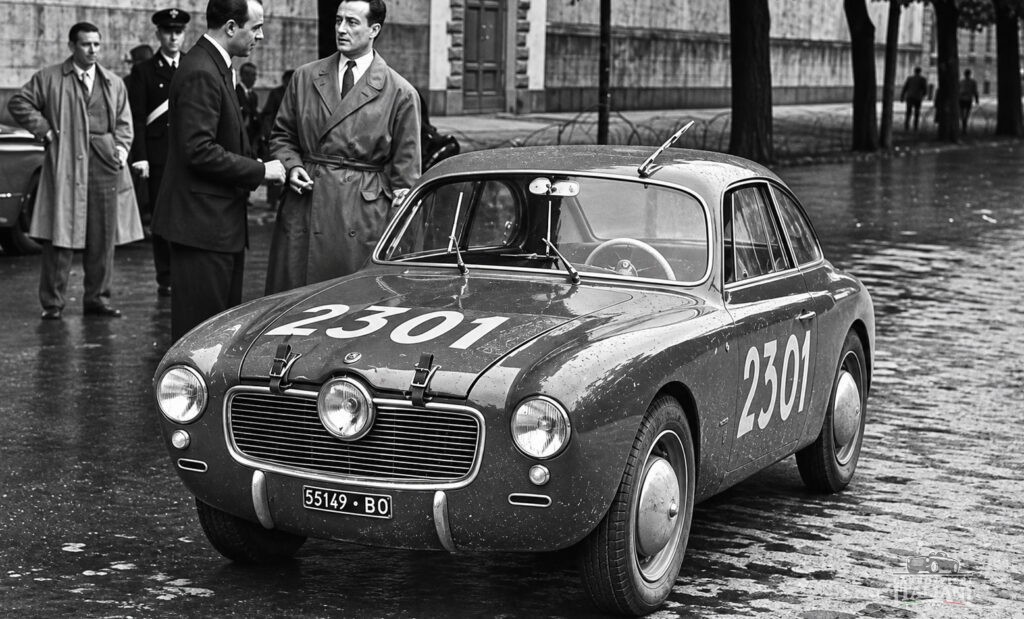
Two similar Allemano berlinettas entered the 1954 Mille Miglia. Number 2301, driven by Ferruccio Musitelli and Z. Rini, finished sixth in the 750 cc Sport class and has been associated with chassis 481814. Another car, number 2308, was driven by Lumir Velely and Antonio Cetenari. The precise chassis identity of the latter remains uncertain in the available auction documentation.
Chassis 481813 itself followed a different path. It remained in private hands and eventually disappeared from the recognised historical record. In 1979, a collector discovered it in a Milanese scrapyard, badly deteriorated but still recognisable as a rare Allemano-bodied Panhard.
The car was saved, although its rescuer died the following year. It then passed to Oswaldo Avalle, who undertook an extensive restoration. During this work the original 745 cc engine was replaced with a later Panhard M5 unit of 851 cc, while the body received a metallic-blue finish.
The restored car returned to historic motoring activities during the 1980s and attended the third gathering of Michelotti-designed automobiles in October 2001. When it was offered at auction in 2019, its documented identity and unusual coachwork provided a link back to a programme whose other cars were often known only from photographs.
Chassis 481815 is also listed among the third-series cars in the new reconstruction, but its individual ownership and competition history require further examination.
Colli and the Disco Volante influence
The Crepaldi operation did not remain dependent on Allemano. During the 1950s, the Scuderia also worked with Carrozzeria Colli, whose aerodynamic designs gave some Panhard specials a very different appearance.
The most recognisable Colli cars drew inspiration from the Alfa Romeo Disco Volante. Their rounded aluminium bodies were intended to improve aerodynamic performance, particularly important for cars with limited engine power.
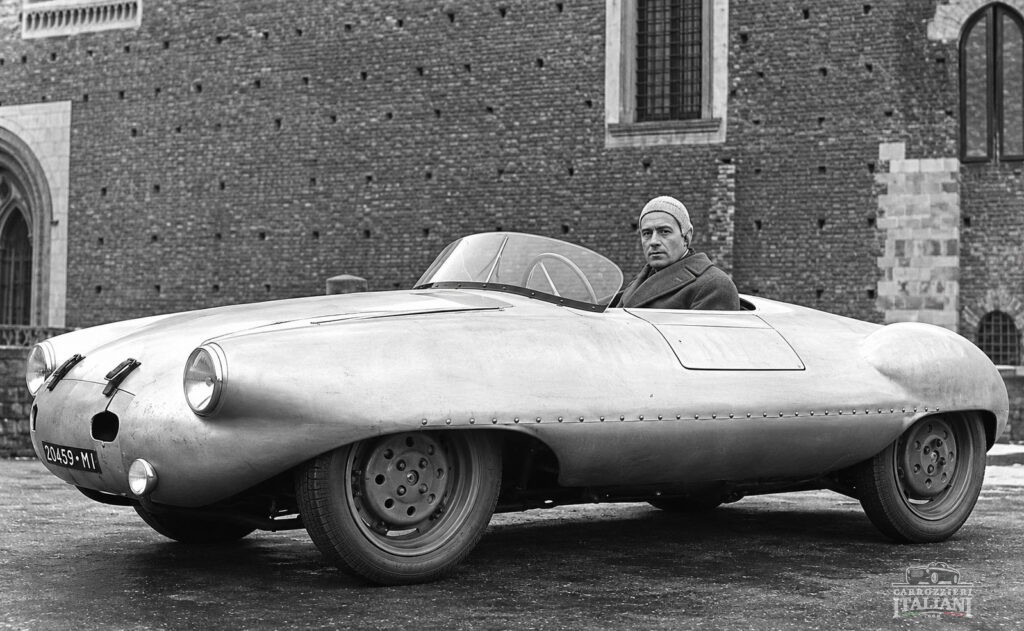
Two Panhards with Gilco chassis are associated with this programme: 306529 and 008145. Both have been described as Colli-bodied coupés intended for competition during the 1953 and 1954 seasons.
Their relationship with the earlier Allemano cars is not entirely settled. One account describes an Allemano second-series berlinetta that was subsequently transformed into a Colli-bodied spider and later received another body made by Fabbri. The chassis of that vehicle is not identified in the supplied reconstruction, so it should not automatically be equated with either of the two Gilco cars.
A separate sales history attributes an earlier Allemano barchetta body to chassis 008145, associating it with the 1952 Mille Miglia victory of Marchese and Palvarini before its transformation into a Colli coupé. This conflicts with the more recent attribution of the same race entry to chassis 475810.
The later Colli history of 008145 is better established than its proposed 1952 identity. It was entered in the 1953 Mille Miglia by Girardi and Marcani and returned to the event in 1954 with Bindi and Bruni. Contemporary photographs, registration numbers and the sequence of body changes are essential to determining whether the car had indeed begun life as the 1952-winning Allemano.
The second Gilco car, chassis 306529, has a particularly detailed competition history.
Chassis 306529: coupé, then spider
Chassis 306529 appeared at the 1953 Mille Miglia with Colli’s rounded coupé body. It carried competition number 2242 and registration CO 29213, with Carlo Castelbarco identified as the driver.
In 1954 the car returned with number 2346 and registration MI 213891. Giancarlo Rigamonti was accompanied by Luigi Della Giustina. The presence of both names resolves an apparent discrepancy between accounts that identify one or the other: they formed the same crew.
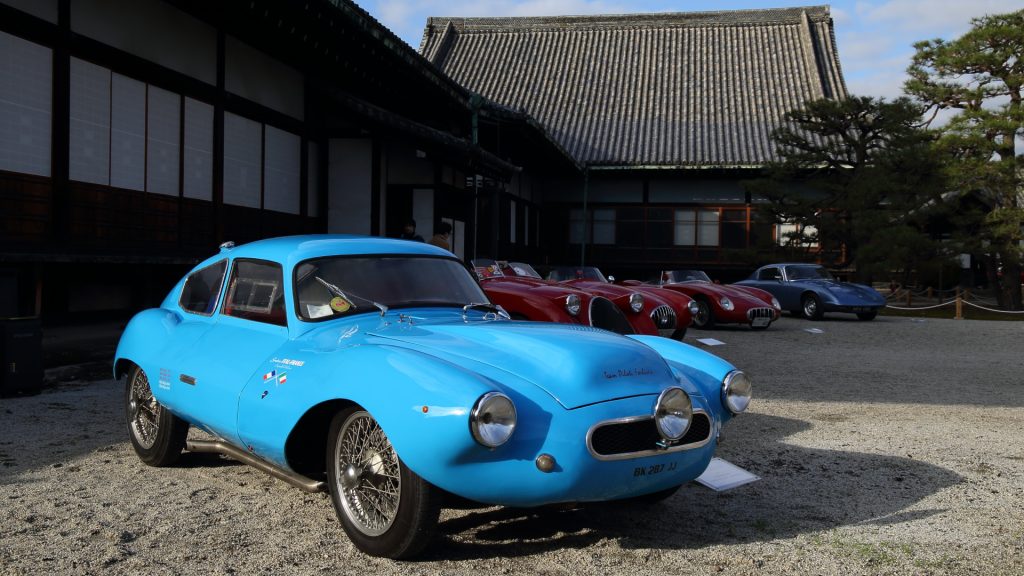
The car later underwent another substantial transformation. Colli replaced the enclosed aerodynamic body with an open spider, a configuration associated with the later Autocorse activities of Tino Bianchi.
In this form, chassis 306529 appeared in the 1955 Mille Miglia with number 029, retaining the Milan registration MI 213891. Its appearance was so different from that of the earlier coupé that the photographs could easily be mistaken for those of an unrelated car.
The sequence is a reminder that the identity of a competition special did not necessarily reside in its coachwork. A racing team could preserve the mechanical foundation while changing the entire body to meet new requirements. The bodybuilder might remain the same, as in the case of Colli, even when the visual result bore little resemblance to the original construction.
Chassis 306529’s history is especially useful because the succession of bodies can be matched to dated competition records. It is therefore a stronger reference for understanding Colli’s work than an unidentified photograph labelled only “Panhard Disco Volante”.
The other Gilco chassis: 306528
The chassis immediately preceding 306529 has an equally intriguing, though much less fully documented, history.
Chassis 306528 was reportedly another Panhard imported through Crepaldi. Unlike the better-known Colli special, it carried an artisanal body whose builder has not been securely identified.
At the 1955 Mille Miglia it was driven by Giuseppe Paccagnella and Luigi Della Giustina. The latter had already appeared in the 1954 event aboard chassis 306529.
This connection between the drivers is useful, but it should not lead to the assumption that the two cars shared bodywork or were assembled by the same coachbuilder. They were separate chassis, and the available evidence for 306528 does not establish Colli, Allemano or any other workshop as the maker of its body.
The car is a useful illustration of the limits of the surviving record. Its competition appearance can be investigated, but its physical identity requires the original photographs, registration documents and any surviving technical records to be matched before its coachbuilder can be named.
Adriano Zerbini's second Panhard
Adriano Zerbini provides another connection between the early Allemano berlinettas and the later independent Panhard sports cars.
Having competed in the 1952 Mille Miglia in an Allemano-bodied Panhard, he acquired another chassis through Crepaldi. This was chassis 481821, completed as an open two-seat sports car in 1954.
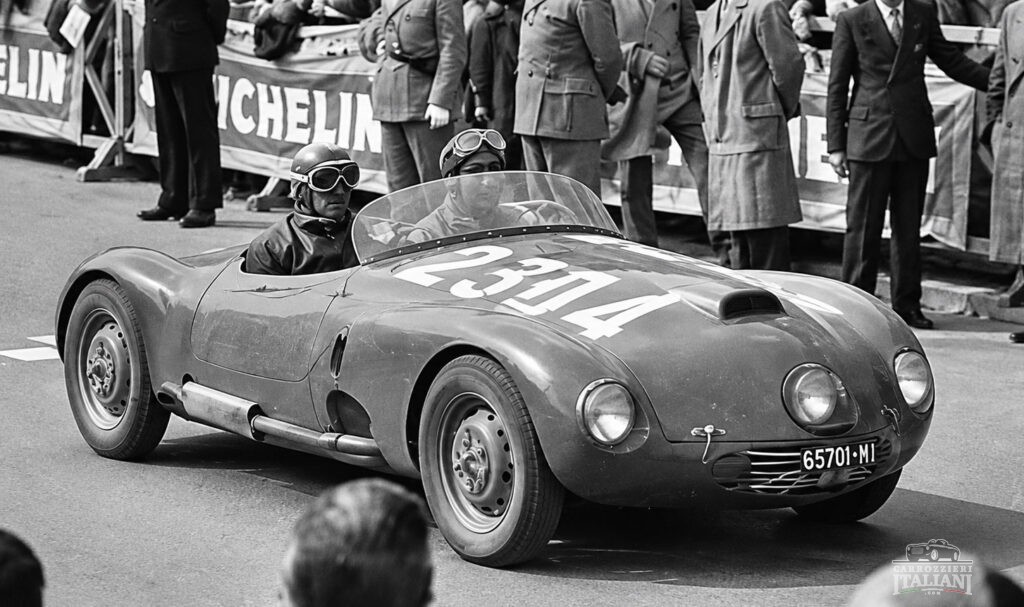
The identity of its coachbuilder requires care. One historical reconstruction attributes the body to Fabbri, but detailed auction documentation identifies the work as having been carried out in the Modena area by the Fratelli Rimondi, who produced the aluminium panels, with Zucchelli responsible for the lightweight tubular supporting structure.
The latter attribution is supported by a substantial history of the individual car, including its original registration and subsequent competition appearances. The Fabbri attribution should therefore remain recorded as a conflicting source claim rather than replacing the more specific Rimondi and Zucchelli documentation.
The original body had an unusual rounded nose with a third central headlamp, recalling the appearance of contemporary Panhard specials. After its first season, the car was modified. In 1955, the front received a larger air intake and a more conventional sporting appearance, with proportions that recalled the Italian sports cars of the period.
Zerbini entered chassis 481821 in the final four editions of the original Mille Miglia: 1954, 1955, 1956 and 1957. In 1954 it finished 125th overall and eighth in class. It also appeared in other Italian events, including hill climbs and the Trofeo Supercortemaggiore.
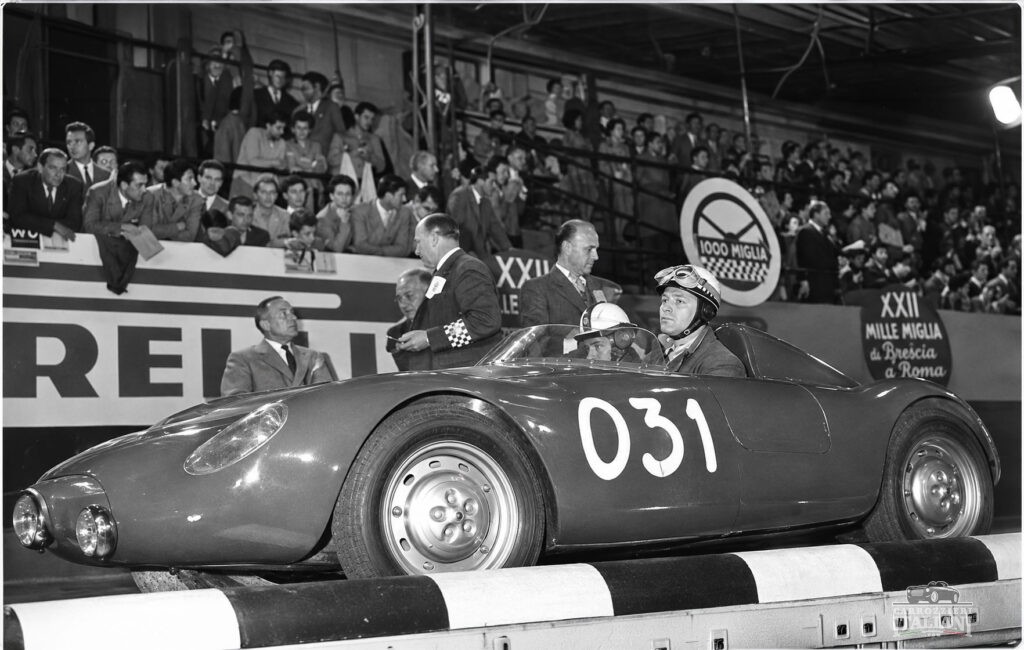
The car’s later survival is unusually well documented. It retained its original Bologna registration and passed through several owners before reaching a long-term custodian in 1982. Restored and returned to historic events, it was involved in an accident during the 1993 Mille Miglia retrospective, leading to further restoration work.
Its present condition therefore represents several phases of its history: the original 1954 construction, the 1955 modification, later mechanical changes and restoration after the 1993 accident.
As with the Allemano berlinettas, the chassis number remains the essential reference point. The original and modified versions of 481821 are not separate cars, even though their appearances differ considerably.
Other Italian interpretations of Panhard
Crepaldi’s competition programme was the most concentrated Italian effort involving Panhard mechanical components, but the marque also attracted other coachbuilders.
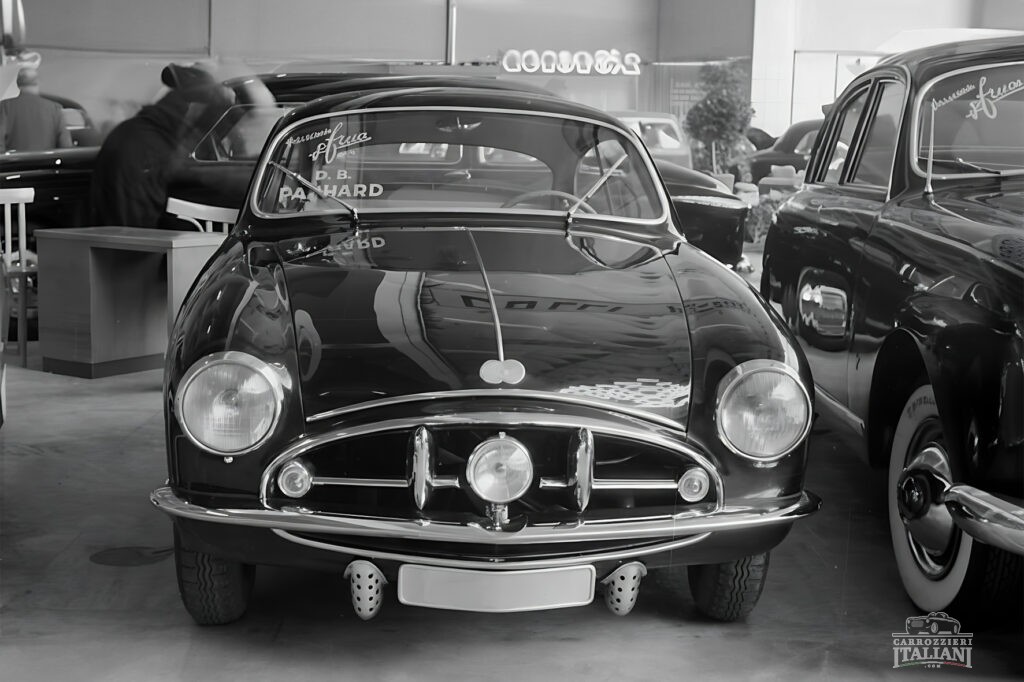
In 1952, Pietro Frua produced a coupé for Deutsch-Bonnet using Panhard mechanical components. It belonged to a separate French sporting programme and should not be counted among Crepaldi’s Allemano chassis. Frua’s work offered a more refined enclosed body for a lightweight sports car, showing how the same mechanical tradition could be adapted for a different market.
Frua also worked with Enrico Nardi on the Panhard-engined NarDyna. The open version appeared in 1951, followed by a 2+2 coupé shown at Turin in 1953. The NarDyna had a Nardi chassis and therefore represents another distinct category: an Italian special powered by Panhard, rather than a standard Panhard chassis rebodied by an Italian workshop.
Carrozzeria Ghia produced further Panhard-based one-offs for SAPCAR in the middle of the decade. The group included a Dyna coupé and cabriolet, together with a Renault 4CV Special and an MG TF Everest. The vehicles carried SAPCAR badges, and the designs have traditionally been associated with Michelotti. The Panhard coupé appeared in the context of the 1955 Enghien concours d’élégance.
These Ghia commissions were private coachbuilt projects, not extensions of the Crepaldi racing operation. Their purpose was closer to that of a concours automobile than a road-racing special, although the mechanical foundation belonged to the same French manufacturer.
A cabriolet attributed to Accossato is another Italian-bodied Panhard recorded in later compilations. Its individual chassis identity and period history are less securely established, and it should not be absorbed into either the Allemano or Ghia series without further evidence.
The variety of these projects explains why the term Italian-bodied Panhard cannot describe a single model family. Some were Panhard chassis supplied to a coachbuilder; others were independently constructed sports cars using Panhard engines. A few were intended for road use and exhibition, while others were modified repeatedly during demanding competition careers.
Following the chassis
The history of the Italian Panhards is unusually dependent on individual vehicle records. Their small production numbers, changing bodies and occasional use of different engines make photographs alone unreliable.
The 1952 Mille Miglia cars illustrate the problem particularly clearly. The six race numbers and crews can be identified, but the matching of every chassis to each entrant rests in part on later specialist research. The conflicting identification of the Marchese–Palvarini car is a warning against assuming that a published sales history resolves every question.
The Colli specials present a similar difficulty. Chassis 306529 is comparatively well documented because its registrations and race numbers can be followed through successive appearances. Chassis 008145 is known in its later aerodynamic form, but its proposed earlier identity remains contested.
Chassis 481821 shows how a car can acquire different coachbuilder attributions even when a substantial individual history survives. Chassis 481813, meanwhile, demonstrates how much information can disappear during years of private ownership and how valuable a rediscovered vehicle can become when its original identification remains intact.
The Italian Panhards were rarely preserved because they belonged to a prestigious model range. They survived, when they survived at all, because an owner recognised a useful competition car, an unusual body or a piece of individual history.
Their story is best reconstructed in the same way they were built: one chassis, one body and one documented change at a time.
Sources & Bibliography
-
Silli, Giuliano. Carrozzeria Allemano Torino. ASI Service, 2017.
-
Archivio Vetture Sport — Historical photographic archive.

ABOUT THE AUTHOR
Andreas Scheidl
Italian classic car enthusiast with German roots. Renowned as a respected figure in the classic car community, he serves as a jury member at various international concours d'elegance, including the Classic Gala Schwetzingen and Mantova. As a content creator, Andreas passionately shares his profound knowledge and appreciation for vintage automobiles. His heart beats for cars designed by Giovanni Michelotti, showcasing his discerning taste and dedication to preserving the timeless elegance of automotive history.
More stories by Andreas Scheidl ↗CONTINUE READING
Posts You Might Like
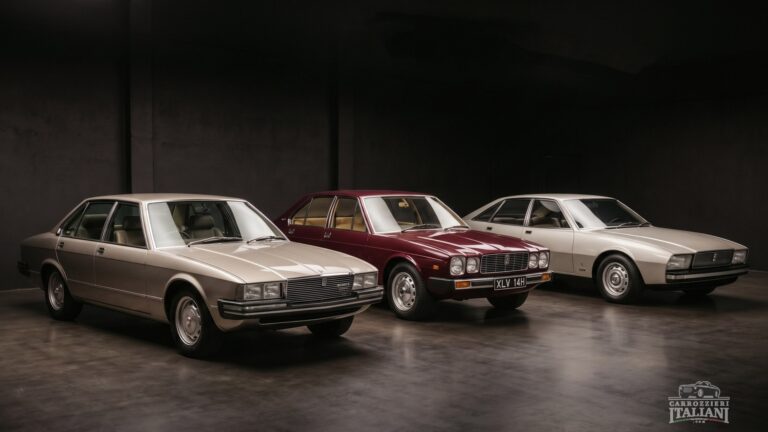
The Italian Battle for the Jaguar XJ40
Three Turin-area design organisations came into Jaguar’s orbit during this period: Bertone, where Marcello Gandini led the studio; Italdesign, founded by Giorgetto Giugiaro and Aldo Mantovani; and Pininfarina, which had already presented…
Read story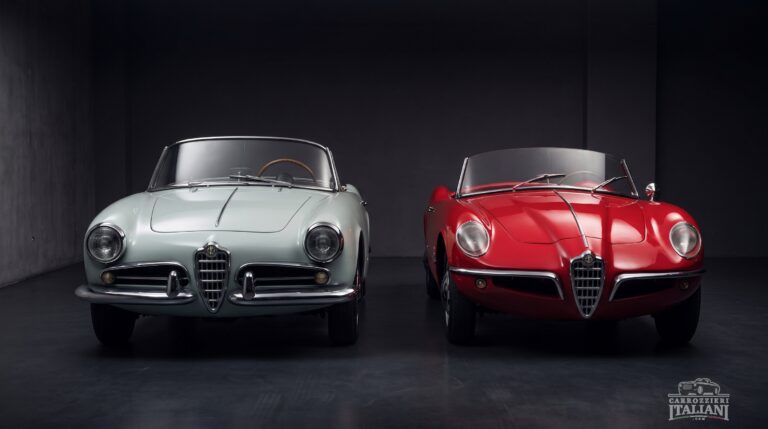
Alfa Romeo Giulietta Spider: The Bertone–Pininfarina Contest That Changed an Italian Icon
Before the familiar Pininfarina roadster, Alfa Romeo tested two very different ideas for its American future. The surviving prototypes tell a more complicated story than a simple victory and defeat.
Read story
The Strangest Ferraris Ever Built
Eight Extraordinary Creations by Italian Coachbuilders From a racing Ferrari transformed into a bread van to a futuristic concept resembling a spacecraft, the history of the Prancing Horse includes some remarkable interpretations…
Read story
Rome’s Forgotten Concours d’Elegance
Before the Pincio became a tradition On the terraces above Piazza del Popolo, Rome offered automobile elegance a setting unlike any exhibition…
Read story
THE CONVERSATION
Comments 0
Share a memory, a period photograph or a documented detail about this story.