
Alfa Romeo Giulietta Spider: The Bertone–Pininfarina Contest That Changed an Italian Icon
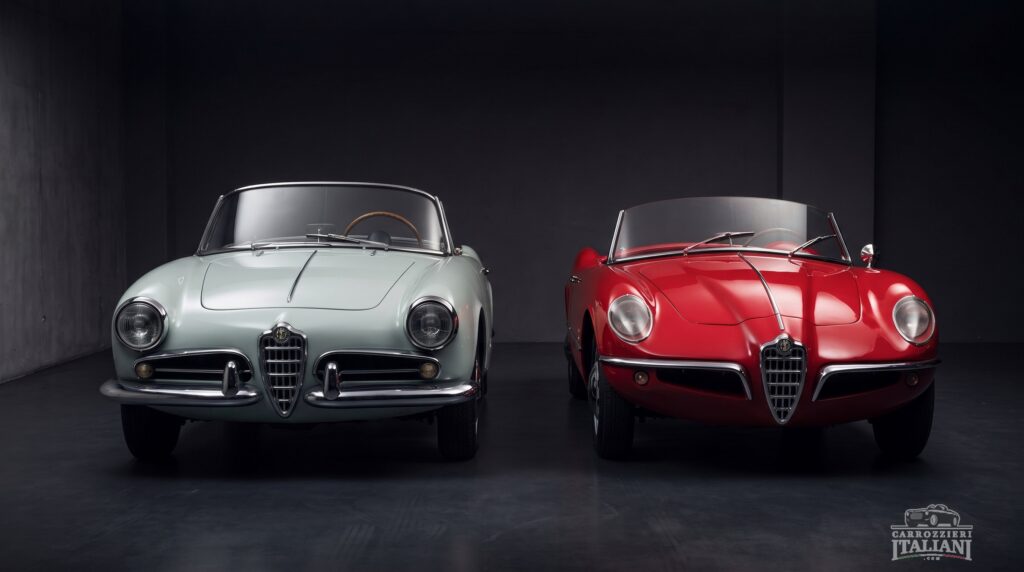
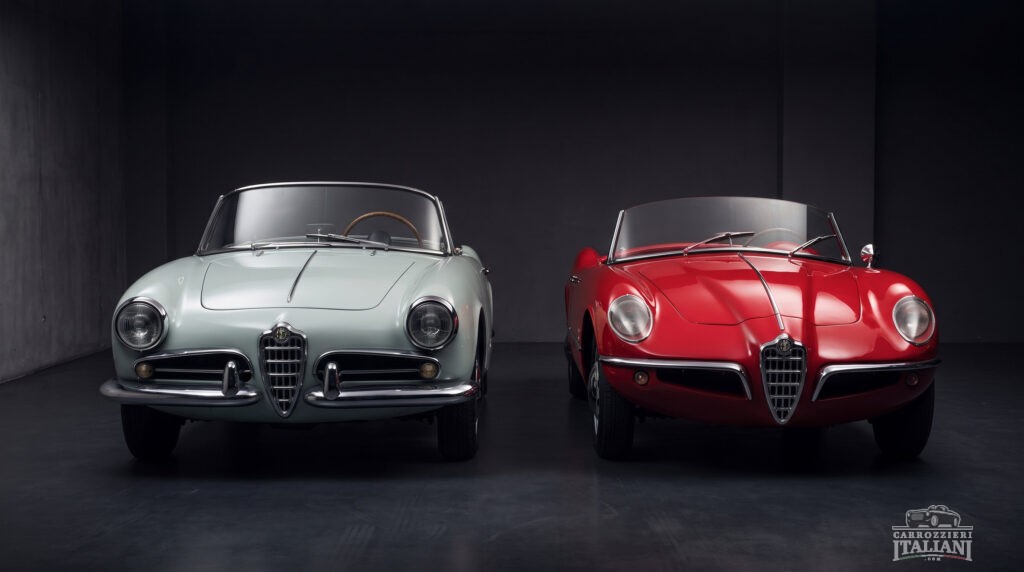
Before the familiar Pininfarina roadster, Alfa Romeo tested two very different ideas for its American future. The surviving prototypes tell a more complicated story than a simple victory and defeat.
In 1955, a buyer looking for a new Alfa Romeo Giulietta Spider could hardly have imagined the other car that might have occupied the showroom. The production roadster was low, elegant and reassuringly conventional: round headlamps, a clean nose, a small folding hood and a body that appeared to have been drawn in one uninterrupted gesture. Across Turin, however, Bertone had built a very different open Giulietta. Its headlamps disappeared beneath covers, the bonnet plunged towards the road, and the rear wings rose into carefully shaped fins. It looked less like a modest sports car for the Californian sunshine than a close relative of the experimental Alfa Romeos with which Franco Scaglione had been startling motor-show visitors.
The two designs belonged to the same commercial programme. Both were answers to an unusually influential customer, the New York importer Max Hoffman, who understood that Alfa Romeo needed an affordable open sports car if it wished to reach American buyers in meaningful numbers. The Giulietta Sprint had already demonstrated that the company’s new 1.3-litre mechanical package could support a handsome sporting derivative. What remained uncertain was who should draw, build and industrialise the open version. Alfa Romeo invited Bertone and Pinin Farina to compete. The result was not simply a choice between two attractive shapes; it was a decision about cost, manufacturing capacity, international taste and the future identity of the marque.
Four early chassis sit at the centre of the surviving story. Bertone’s two open prototypes are generally identified as AR 1495.00002 and AR 1495.00004; Pinin Farina’s early work is associated with AR 1495.00001 and AR 1495.00003. The records are not entirely harmonious, and later descriptions of who bought which Bertone prototype contradict one another. Yet the physical cars, the period photographs and a remarkable surviving Pinin Farina prototype allow the development programme to be followed much more closely than the familiar account of a styling contest won by the more conservative coachbuilder.
An American order in an Italian factory
The Giulietta was a pivotal automobile for Alfa Romeo. The firm had emerged from the war with an enviable engineering reputation but needed a broader production base than its expensive six-cylinder models could provide. The new 1,290 cc twin-cam four-cylinder was compact, lively and sophisticated; the saloon would make it a family-car proposition, while the Sprint translated it into a small grand tourer. The order in which these bodies appeared was itself unusual. With the saloon’s production preparations taking longer than expected, Alfa Romeo turned to specialist coachbuilding methods to bring the coupé to market. Bertone was consequently drawn into a manufacturing programme far larger than the occasional one-off commissions that had helped establish its reputation.
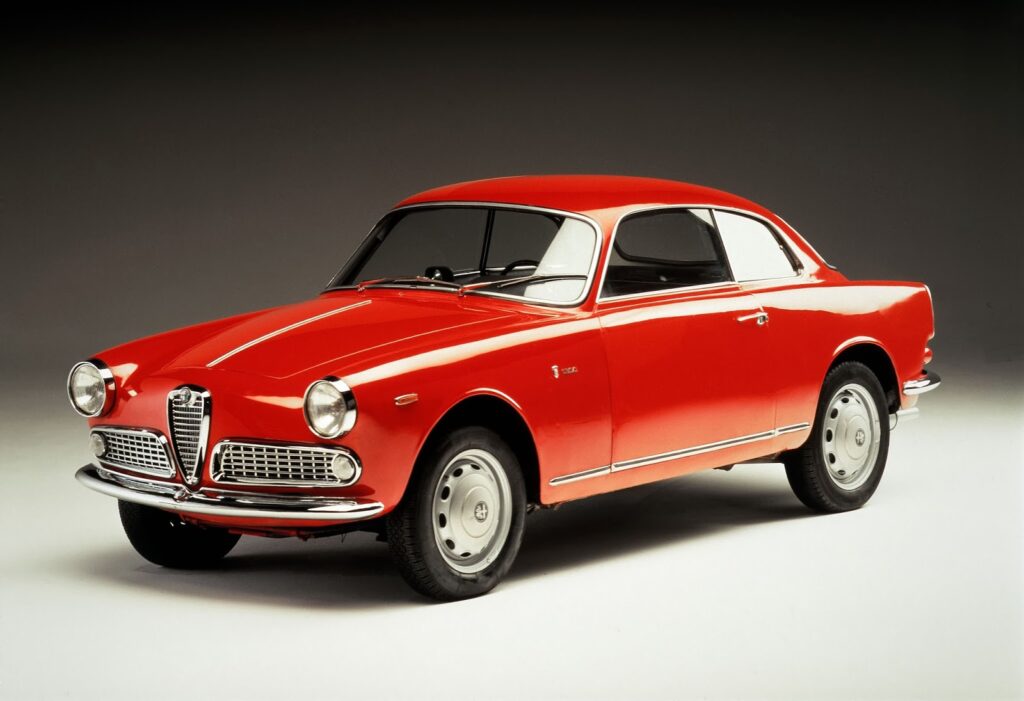
Rudolf Hruska was an essential figure in this transition. An engineer and organiser rather than the stylist of the finished bodies, he helped turn Alfa Romeo’s ambitions into a production reality. The Sprint’s appearance at the 1954 Turin Motor Show was followed by demand that outgrew the modest initial expectations. Nuccio Bertone had to expand from a specialist body shop into a serious series-production supplier. That success created both the commercial argument for a Spider and a complication for Bertone’s chances of receiving another substantial contract.
Hoffman was not an ordinary dealer placing orders from a catalogue. An Austrian émigré with a sharp sense of American sports-car fashion, he had helped European manufacturers understand the preferences of affluent buyers across the Atlantic. Small British roadsters had demonstrated the appetite for open cars, but Hoffman believed that an Alfa Romeo could offer a different combination of Italian style, lively engineering and greater refinement. In Alfa Romeo’s own retrospective account, his enthusiasm was strong enough to secure a commitment for several hundred cars before the design was finalised. The often-repeated figure of 2,500 belongs to other retellings of the arrangement; it should not be confused with the more modest initial commitment documented by the manufacturer and by former Alfa Romeo archivist Elvira Ruocco.
The importer persuaded Alfa Romeo management to treat the Spider as more than a decorative variation on the Sprint. Francesco Quaroni and Hruska appear in the manufacturer’s history of the project, representing the engineering and programme side of the decision. The coachbuilders, by contrast, were asked to solve the problem of the body. Each could show how the Giulietta might be adapted to American roads and American buyers, but neither could decide the contract on styling alone. The eventual winner would have to deliver cars in quantity, at a price and pace compatible with a growing export business.
Scaglione's alternative
For Franco Scaglione, the Giulietta Spider offered an opportunity to bring the aerodynamic experiments of the early 1950s closer to everyday motoring. His celebrated B.A.T. prototypes had explored the control of airflow through enveloping body surfaces, curved fins and carefully treated wheel openings. They were exercises in research and publicity, not practical plans for a small roadster. The Giulietta commission imposed an altogether different set of constraints, but the family resemblance remained clear. Scaglione’s bonnet dipped sharply between pronounced front wings, while the faired headlamps and tapered rear quarters gave the car a strikingly low, almost aircraft-like appearance.
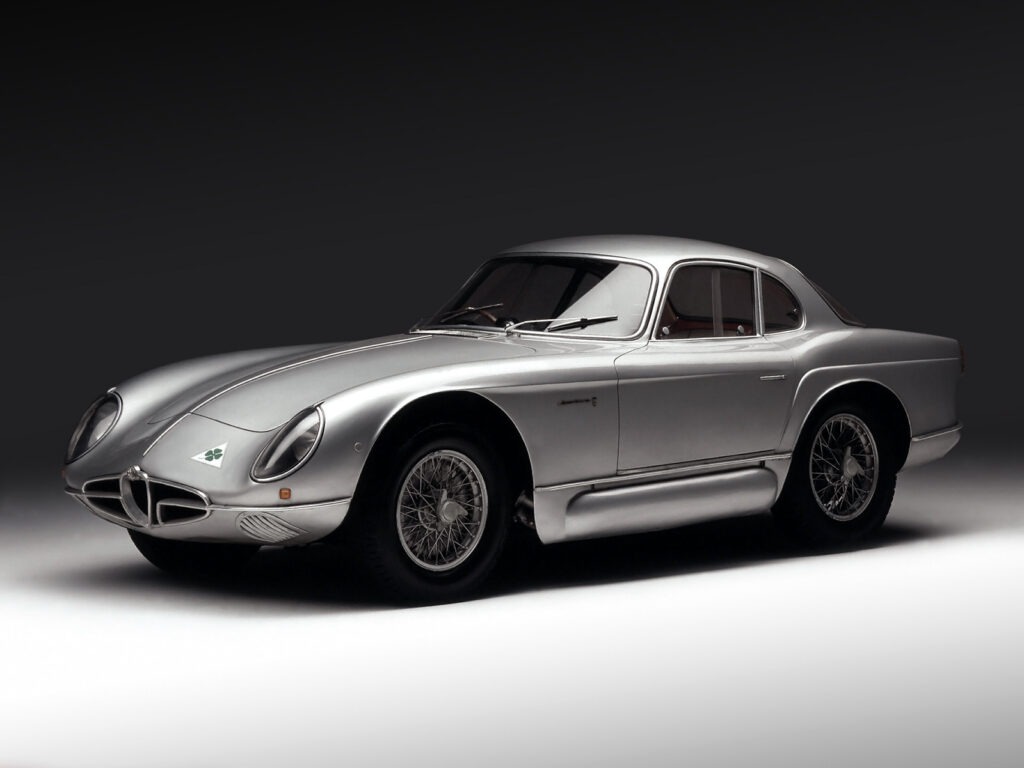
The Alfa Romeo 2000 Sportiva, another Bertone project associated with Scaglione, offered a more immediate reference. Its smooth nose and disciplined volumes showed how the designer could translate his experimental language into a compact sports car. On the Giulietta Spider the surfaces became more complicated around the front grille and the rear fins. They were handsome pieces of sculpture, but each demanded careful metal shaping and finishing. What could be justified on a prototype was not necessarily easy to reproduce on a production line with deadlines and an expanding order book.
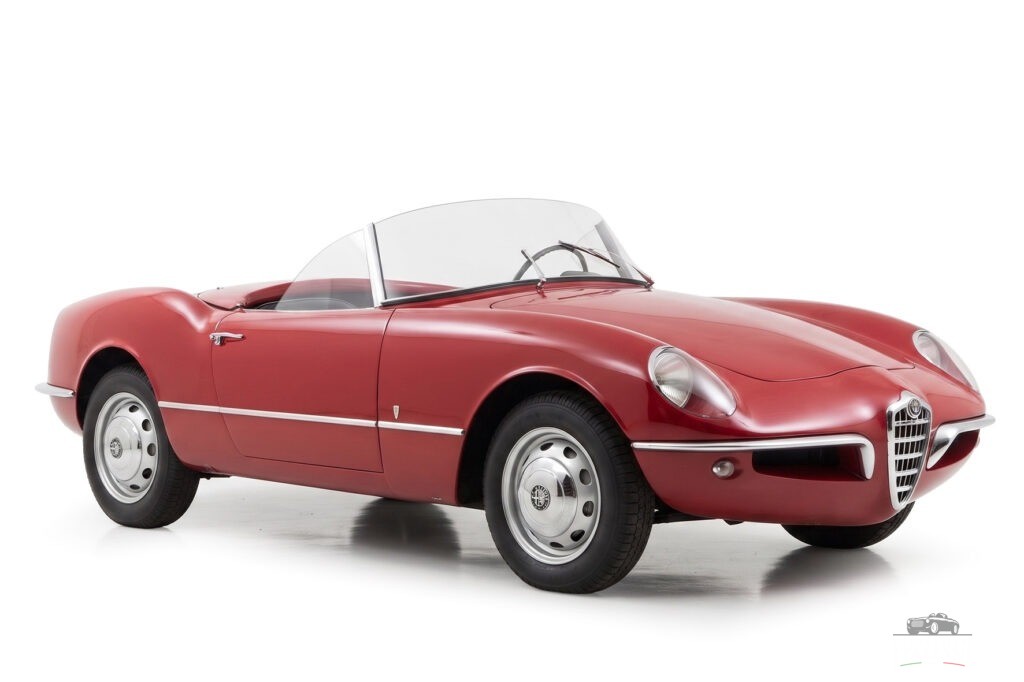
Bertone’s first prototype, generally recorded as chassis 1495.00002, was finished in red. Its narrow covered lamps and delicate tail treatment made it the more uncompromising of the two. The second, chassis 1495.00004, developed the theme with a different grille, more clearly integrated rear lamps and the celebrated two-tone gold-and-cream finish. The changes were not merely cosmetic. They suggest a studio working through the difficult transition from a show-car proposition towards a body that could be assembled, trimmed and sold. The second car remained unmistakably Scaglione’s work, but it had already begun to moderate some of the first proposal’s most extravagant details.
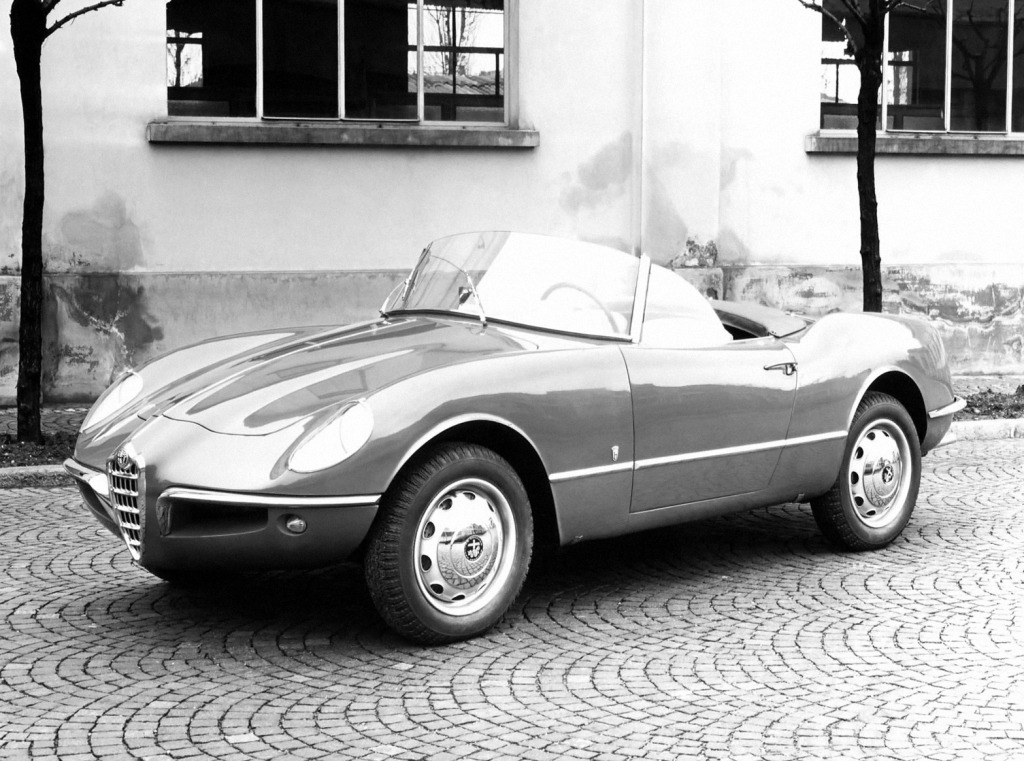
The distinction between design and execution is important. Scaglione was responsible for the styling language, while Nuccio Bertone supplied the commercial direction and the facilities in which the bodies were made. Skilled panel beaters, prototype technicians and trimmers translated drawings and models into aluminium automobiles. Their work can still be appreciated in the thin doors, shaped bonnet edges and carefully integrated brightwork. The cars were real, driveable experiments, not full-scale styling models incapable of leaving the exhibition hall. Their complexity, however, remained visible in every transition between one surface and the next.
The quiet answer from Pinin Farina
Pinin Farina approached the same brief from a different direction. Its designers had extensive experience with elegant open cars, including the Lancia Aurelia B24 Spider, and understood the distinction between an arresting prototype and a body intended to be built repeatedly. Franco Martinengo is credited by Alfa Romeo’s historical account with the Giulietta proposal, within a design organisation directed by Battista Farina. That authorship should not be reduced either to the company name alone or to the myth of a solitary stylist working without colleagues. Martinengo shaped the design; the firm’s studio and prototype departments developed it; Pinin Farina’s management had to turn the successful proposal into a viable manufacturing contract.
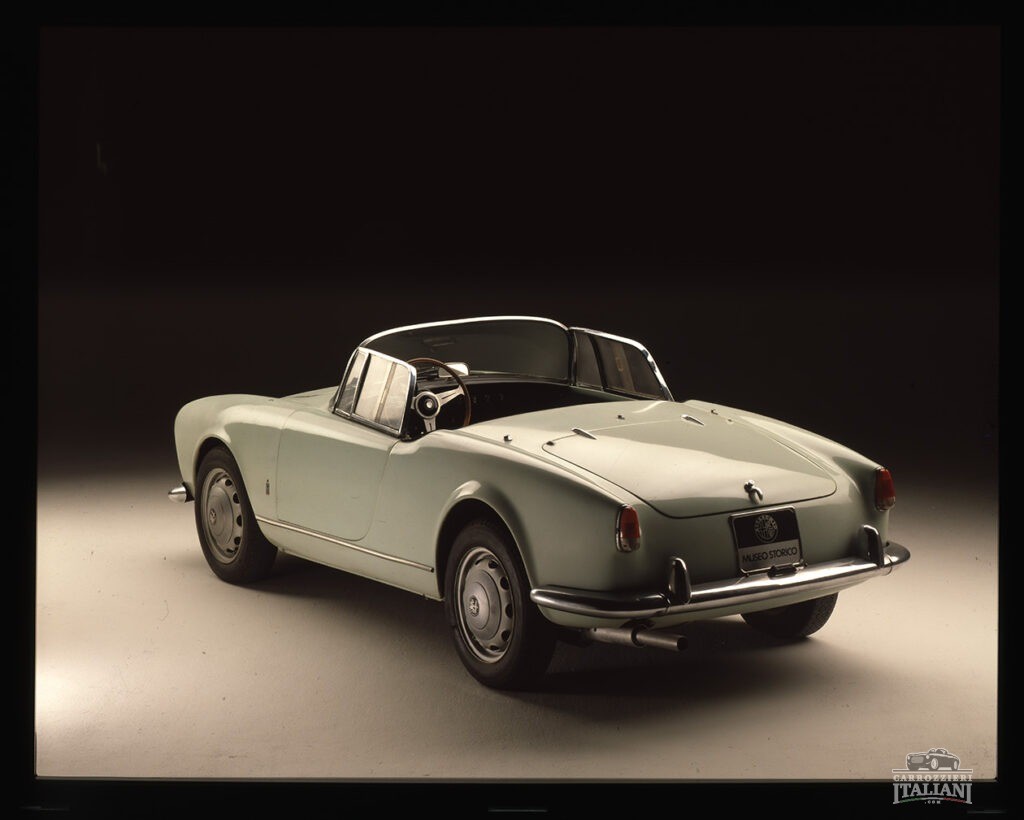
The early Pinin Farina Spider had a low waist, a broad, curved windscreen and a delicately pointed nose. It was far from a finished production car. Alfa Romeo’s own history recalls removable side screens, the absence of exterior door handles and a simple cable-operated door release. These details belonged to the atmosphere of an elegant Italian barchetta, but they would need revision for an American export car expected to function in daily use. Conventional wind-up windows, a proper folding hood, more substantial door trim and ordinary handles were not betrayals of the original design; they were part of the industrial development that made it saleable.
The contrast with Bertone is sometimes presented as an obvious case of restraint defeating extravagance. That explanation misses the work required on the winning design. The production Spider was neither an unchanged prototype nor a cheapened imitation. Its proportions had to accommodate the Giulietta’s mechanical layout, its wheelbase was shorter than the saloon’s, and the body needed structural strength despite the absence of a fixed roof. The designer’s task extended beyond drawing an attractive line from the bonnet to the tail. Door apertures, weather sealing, glass mechanisms and the fit of the hood all became production problems to be solved in metal and rubber.
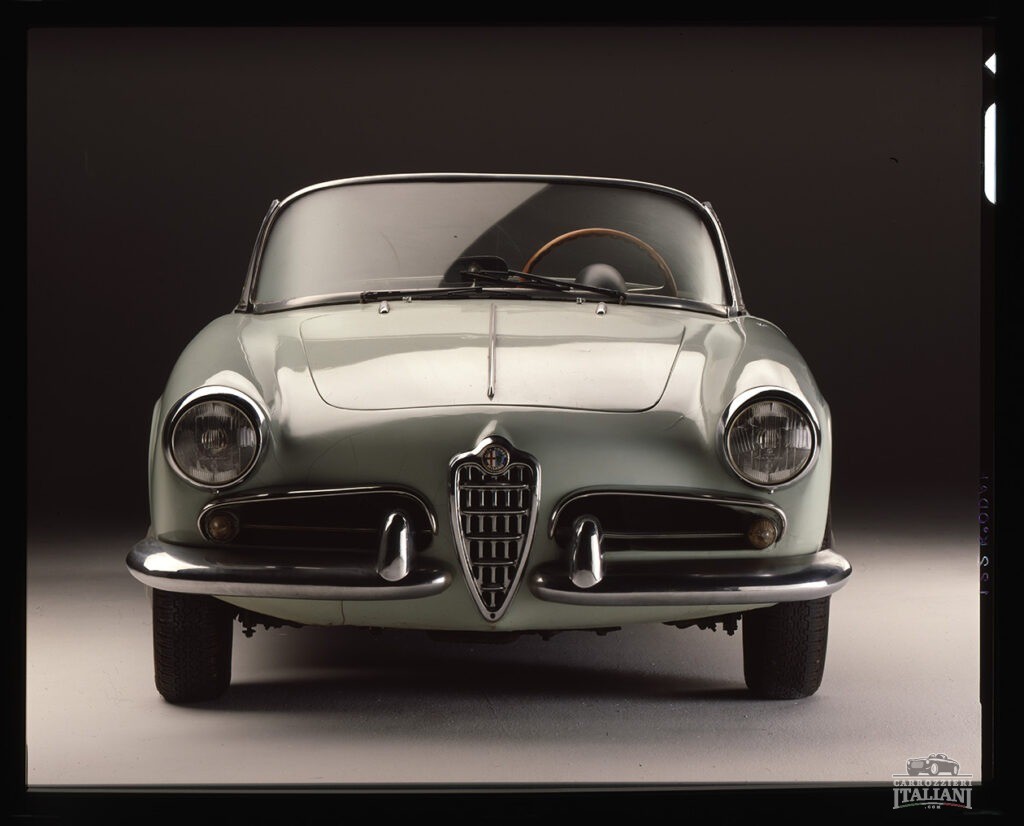
A particularly valuable witness to this process is the surviving Pinin Farina prototype associated with chassis AR 1495.00003. A 2024 Osenat auction catalogue described it as an early design study later re-bodied into a functional prototype and subjected to repeated journeys between Turin and New York for Hoffman’s approval. The catalogue cites a factory-book dispatch to Hoffman Motor Cars on 22 February 1955, together with an engine identified as AR 1493.00002. Those particulars offer an unusually precise picture of a design moving between Italian craftsmen and an American distributor. The catalogue’s broader account is not free from error—it assigns another early chassis to Pinin Farina that specialist research identifies with Bertone—but the identity and existence of 00003 are independently supported.
Four chassis, not one lost prototype
The earliest Giulietta Spider prototypes are unusually easy to confuse because they share the same project, the same type-number prefix and sometimes similar descriptions in later catalogues. Specialist research published in *Classic & Sports Car* identifies chassis 1495.00001 and 1495.00003 as the Pinin Farina cars, and 1495.00002 and 1495.00004 as the Bertone pair. It also notes that the first Pinin Farina example has disappeared from view, whereas 00003 survived. The first Bertone prototype is the red car; the second is the gold-and-cream Spider that later entered the Lopresto collection. These are four individual physical objects, not interchangeable labels for the same design.
The distinction is more than an exercise in numbering. Each prototype represents a different stage of a decision that was still open. Chassis 00002 and 00004 reveal Scaglione and Bertone testing variations on an ambitious shape. Chassis 00003 preserves a Pinin Farina interpretation that differs in detail from the eventual production car. The missing 00001 is a reminder that the evidence for such programmes is often incomplete, even when a model later becomes famous. Alfa Romeo was not choosing between two static sketches pinned to a board; it was assessing moving targets, with each workshop modifying its answer as the engineering and commercial brief evolved.
The surviving Pinin Farina car has its own later history. According to the 2024 auction documentation, it was shown in the United States, sold after Hoffman’s promotional use and passed through the hands of Henry Wessel, Bruce Beckwith and Tom Zat before entering a Swiss collection. The catalogue reports that Beckwith altered the windscreen and began work on the body in 1959, leaving the car partly disassembled for many years. It was subsequently restored in Italy. These are specific claims tied to the catalogue and its accompanying documentation, rather than a reason to assume that every early Pinin Farina Spider followed the same route.
The two Bertone cars present a separate difficulty. Contemporary magazine research and a later interview with Duccio Lopresto disagree over which chassis passed through Hoffman’s hands and which went to Switzerland. *Classic & Sports Car* associates the first car, 00002, with Hoffman and describes 00004 as remaining with the manufacturer for a time. In *Classic Driver*, Duccio Lopresto gave a different sequence. The safest historical account keeps the two chassis distinct while leaving the disputed early ownership transfers open until the original delivery documents can be compared. The attractive simplicity of a single story should never be allowed to erase the identity of a surviving prototype.
A second life in gold and cream
Of all the rejected proposals, the most visually memorable survivor is probably the second Bertone Spider, chassis 1495.00004. The car now associated with the Lopresto collection spent years away from the spotlight, and its later appearance gave little indication of the careful colour scheme in which it had first been completed. Duccio Lopresto has described how his father Corrado recognised an important prototype beneath an unsympathetic red repaint and an altered interior. The restoration became an investigation into the actual car rather than a recreation based on the most familiar publicity photograph.
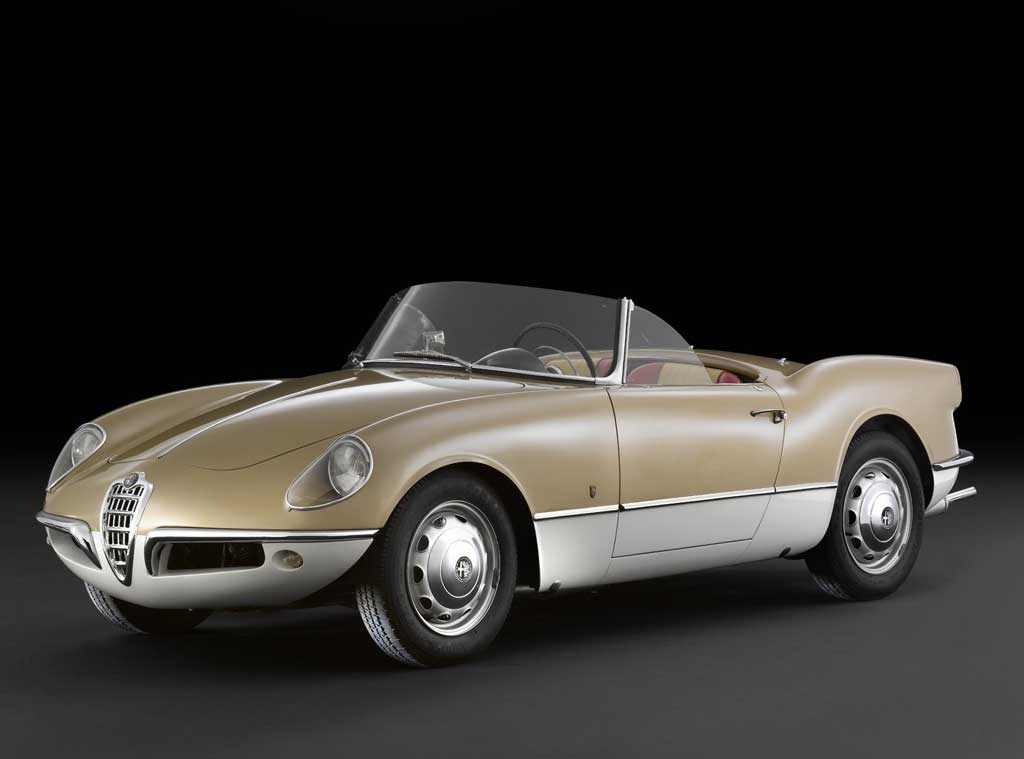
The evidence emerged from the material itself. Traces of the original gold finish were found beneath later paint, while historic photographs showed the car in its two-tone colours outside a Milan dealership in 1956. Beneath layers of replacement upholstery the restorers found the original cream-and-red seat trim. According to the Lopresto family’s account, much of the aluminium coachwork survived and could be retained. The resulting restoration returned the car to a condition in which the shape, trim and unusual detailing could once again be judged together, as they had been when Bertone was hoping for a production contract.
A restored prototype can sometimes look suspiciously perfect, particularly when its first life was short and its subsequent existence poorly documented. Here the evidence of the original materials matters. It establishes that the car was not simply assembled in recent decades to resemble a lost Scaglione sketch. It had a history in metal, paint and upholstery, even when that history had been obscured by later alterations. The little Alfa also illustrates why prototype preservation can be more demanding than restoring a production Giulietta. Replacement panels and fittings cannot be ordered from an ordinary parts catalogue; the surviving car is often the only reliable pattern for the work.
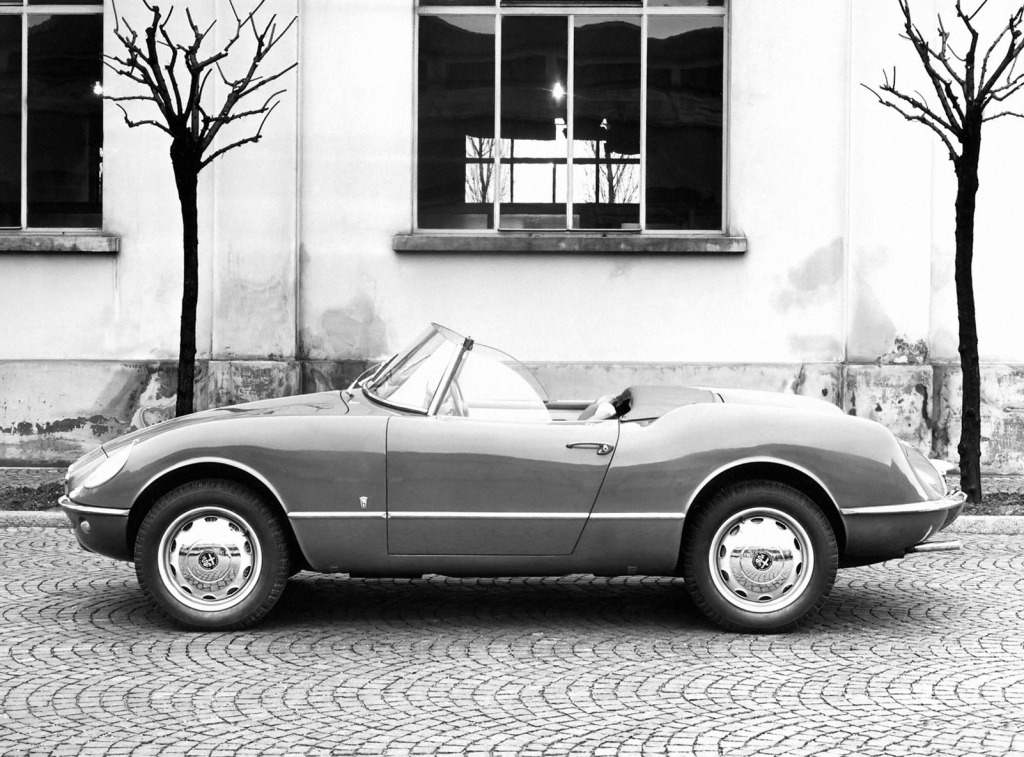
The earlier Bertone Spider, chassis 1495.00002, has a different character. Its red body and more pointed front treatment reveal Scaglione’s first instinct before the design was moderated. Specialist reporting describes a later replacement of its original engine with a higher-performance Giulietta Veloce unit, a reminder that surviving prototypes may have evolved mechanically as well as cosmetically. It is important not to transfer the engine specification or restoration details of one car to the other simply because both carry the same Giulietta Spider Bertone designation.
Why the quieter car won
Hoffman’s personal taste has sometimes been used to explain the decision, but even the accounts of his preference are inconsistent. One contemporary retrospective suggests that he liked the Bertone proposal, while other retellings present him as favouring the Pinin Farina car from the outset. The production decision belonged to Alfa Romeo and had to take account of manufacturing realities. Bertone was already working hard to increase Giulietta Sprint output. The Spider contract would have added another body programme, with new tooling, trim operations and quality-control demands, at precisely the moment the firm’s existing production was expanding.
The Scaglione body would also have been expensive to repeat. Its compound curves, enclosed lamps and intricate rear treatment were excellent ways to attract attention to a prototype. They were less convincing solutions for an export roadster that had to be repaired, weatherproofed and delivered in large numbers. Period road regulations and the practicalities of exterior lighting added another layer of difficulty. These considerations do not prove that Bertone was incapable of building the Spider, nor that the contract was awarded solely on price. They explain why a technically sound, visually sophisticated proposal could lose to one that offered a more manageable path from design studio to production line.
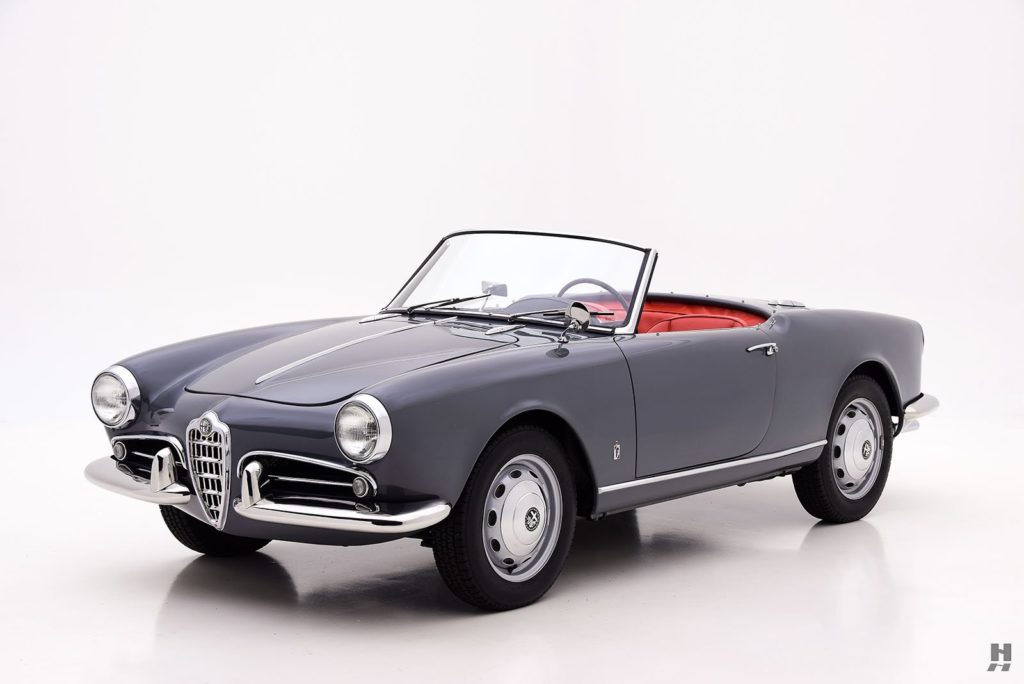
Pinin Farina’s winning car retained enough individuality to be unmistakable. Its front wings flowed into a small Alfa shield, the round headlamps gave the nose a friendly expression, and the tail was compact without resorting to fins. It looked Italian to American buyers but did not demand that they accept an unfamiliar design vocabulary. Its production form was refined through further prototypes and engineering changes. In that respect the Giulietta Spider belongs to the history of industrial coachbuilding as much as to the history of automotive styling: the shape survived because it could be made, sold and serviced.
The eventual arrangement also gave Alfa Romeo two strong coachbuilding partners rather than making the firm dependent on one. Bertone continued with the Sprint, while Pinin Farina developed a new production programme around the open car. Both benefited from Alfa Romeo’s expanding range. In the following years the division of work helped define the marque’s image: a crisp, lively coupé from Bertone and an elegant roadster from Pinin Farina. The apparent opposition between the two designs concealed a complementary industrial relationship.
The Spider that crossed the Atlantic
When the Giulietta Spider reached the international motor-show circuit in the autumn of 1955, it was already more than an experiment. It represented a calculated export strategy built around a technically advanced but attainable sports car. Giovanni Lurani, writing in *Auto Italiana* after seeing the new Pinin Farina-bodied Giulietta at the German show, praised the purity of its line and predicted that it would find buyers both in Italy and overseas. The early allocation to the United States made the commercial intention unmistakable. Elvira Ruocco, drawing on her years at Alfa Romeo’s historical documentation centre, recorded that the first 600 examples were initially destined for North America, with a contemporary American price of $3,230.
That priority produced some resentment at home. In May 1956 *Quattroruote* pointedly suggested that anyone wanting a Giulietta Spider should buy it in New York. The irony was clear: an Italian sports car built by an Italian coachbuilder was initially easier to obtain across the Atlantic than in its country of origin. Yet this was precisely the export demand that had justified the programme. Without Hoffman’s American order, the business case for a separate open body might have looked much less persuasive to Alfa Romeo’s management.
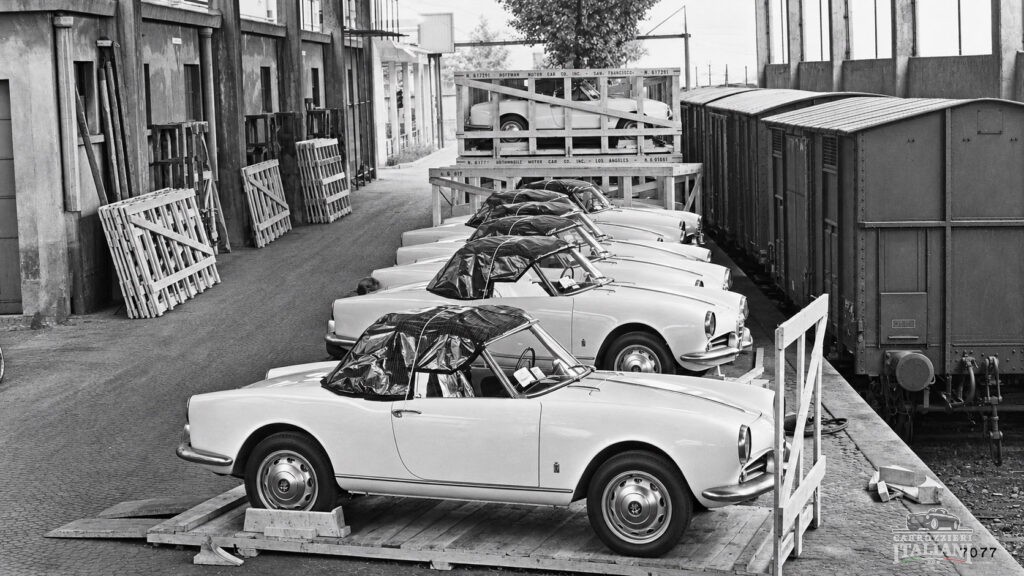
The production Spider combined the Giulietta’s 1,290 cc twin-cam engine with a four-speed gearbox, rear-wheel drive and a wheelbase of approximately 2.2 metres. Alfa Romeo’s historical account quotes 65 PS for the early version and 155 km/h as its top speed. The later Veloce raised performance with a more highly tuned engine, while continuing development brought changes in trim, equipment and eventually the larger-engined Giulia Spider. The body was attractive enough to make the car a social symbol, but the mechanical package remained a substantial part of its appeal. It was small, agile and more sophisticated than its modest displacement might suggest.
By the end of the Giulietta Spider’s career, production had reached roughly seventeen thousand cars, a figure that places the roadster in a completely different world from the four early design studies. It had become a recognisable part of Italian life and an export success in the United States. The car appeared in films, in advertising and in the imagination of buyers who might never have considered a more expensive Alfa Romeo. Its familiar shape also established a relationship between Pinin Farina and Alfa Romeo that would continue into the later Duetto, even though that subsequent Spider had its own separate design history.
The road not taken
Bertone did not stop thinking about an open Giulietta when the contract was lost. A further Giulietta Sprint Cabriolet appeared in 1956, closer in character to a Sprint coupé with its roof removed than to Scaglione’s dramatic first Spider proposals. The later Giulietta Sprint Speciale would show that Alfa Romeo still valued Bertone’s aerodynamic experimentation. Scaglione’s ability to develop advanced shapes had not been discredited; it simply had not produced the right manufacturing answer for the original Spider contract.
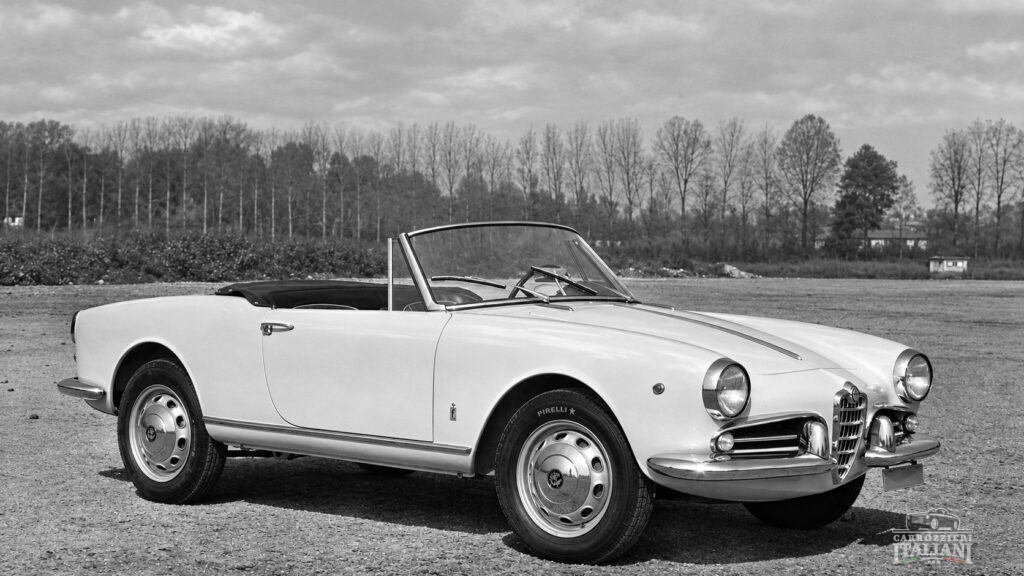
The two rejected Spiders are sometimes called direct ancestors of the later Alfa Romeo Duetto. The resemblance between certain Scaglione details and subsequent open Alfas can be intriguing, but the claim should not be stretched into an undocumented line of authorship. Pinin Farina’s later programme involved different people, new proportions and several intervening studies. A resemblance does not prove that one designer copied another, and a prototype can influence a company’s general thinking without becoming the hidden blueprint for a future production car. The Bertone Spiders are significant enough as independent designs, without being credited for work that belonged to later teams.
There is a final paradox in the surviving cars. The Pinin Farina design became familiar precisely because thousands of examples were built; the Bertone designs became fascinating because they remained unique. Today a gold-and-cream Scaglione prototype can draw a crowd that passes a production Spider without a second glance. In 1955 the calculation was reversed. Alfa Romeo needed a car that would appeal to thousands of buyers rather than a handful of connoisseurs, and Pinin Farina offered a shape that could carry the company’s badge across the Atlantic. The decision created one of Italy’s most recognisable roadsters while leaving behind a small group of extraordinary prototypes. To see the original Bertone and Pinin Farina cars together is to understand that the familiar Giulietta Spider was not inevitable. It was the outcome of a contest in which design, engineering and manufacturing all had a vote..

ABOUT THE AUTHOR
Andreas Scheidl
Italian classic car enthusiast with German roots. Renowned as a respected figure in the classic car community, he serves as a jury member at various international concours d'elegance, including the Classic Gala Schwetzingen and Mantova. As a content creator, Andreas passionately shares his profound knowledge and appreciation for vintage automobiles. His heart beats for cars designed by Giovanni Michelotti, showcasing his discerning taste and dedication to preserving the timeless elegance of automotive history.
More stories by Andreas Scheidl ↗CONTINUE READING
Posts You Might Like
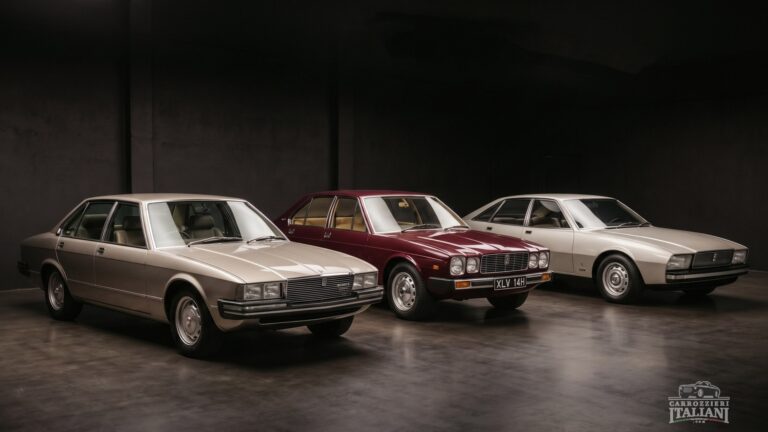
The Italian Battle for the Jaguar XJ40
Three Turin-area design organisations came into Jaguar’s orbit during this period: Bertone, where Marcello Gandini led the studio; Italdesign, founded by Giorgetto Giugiaro and Aldo Mantovani; and Pininfarina, which had already presented…
Read story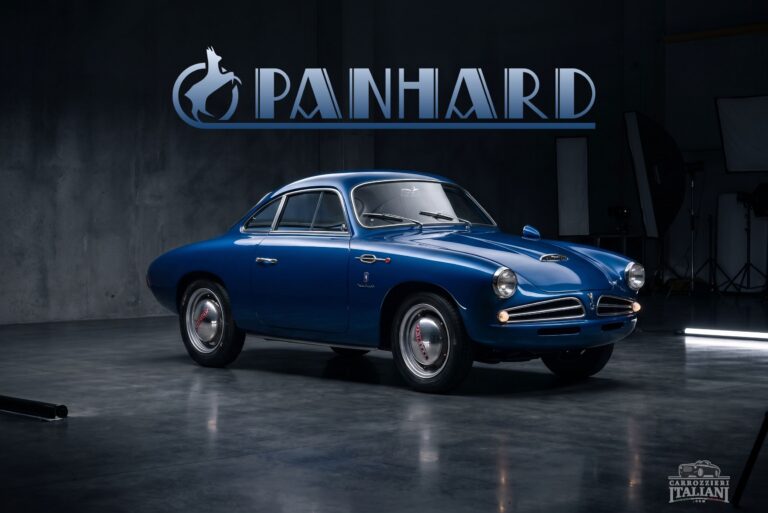
French Engines, Italian Bodies: The Panhards That Went to Turin
Gastone Crepaldi, Carrozzeria Allemano and the small French sports cars that raced through Italy in the 1950s. At the 1952 Mille Miglia, six Panhards associated with Gastone Crepaldi's Scuderia Ital-France appeared among…
Read story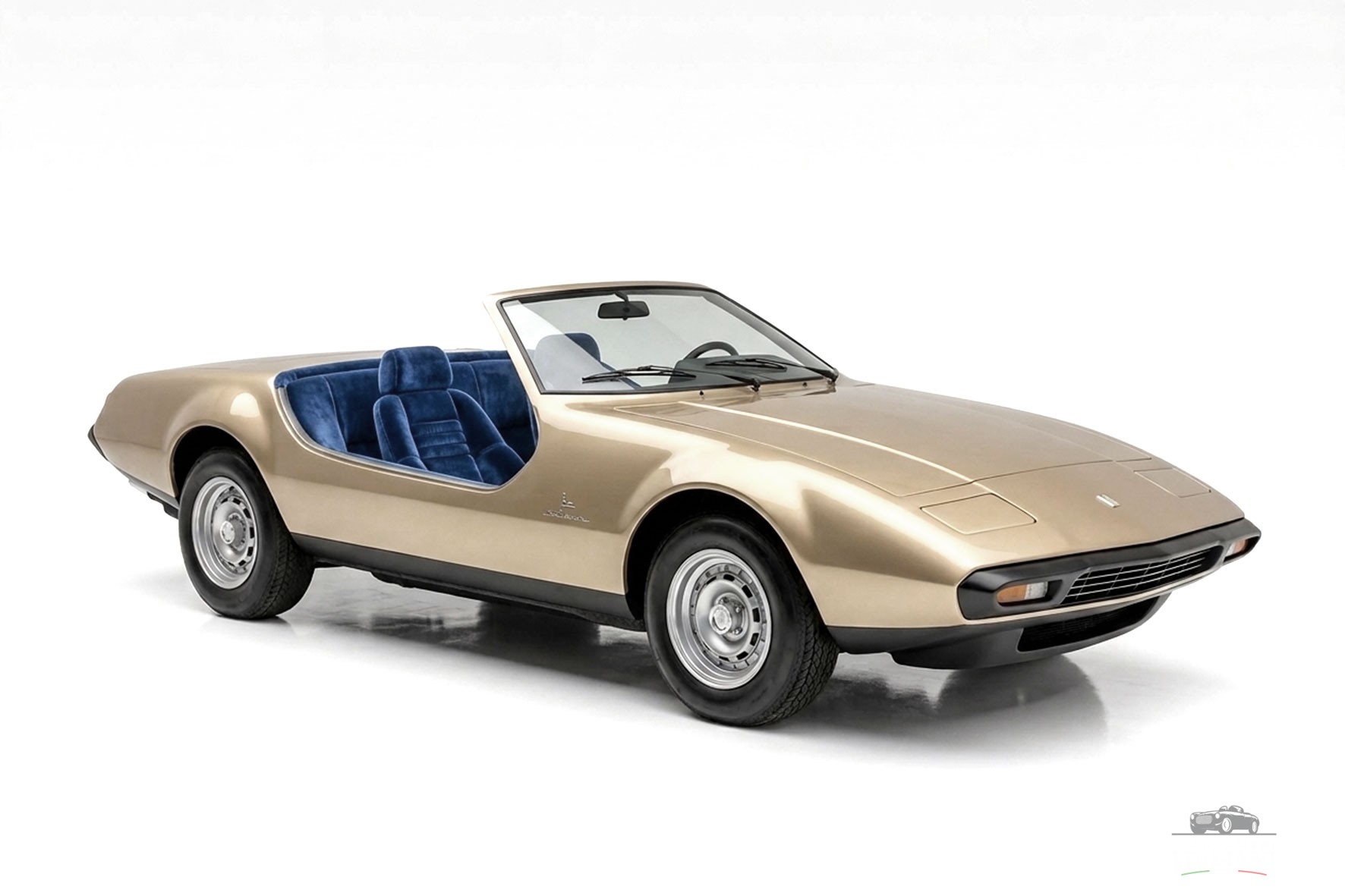
The Strangest Ferraris Ever Built
Eight Extraordinary Creations by Italian Coachbuilders From a racing Ferrari transformed into a bread van to a futuristic concept resembling a spacecraft, the history of the Prancing Horse includes some remarkable interpretations…
Read story
Rome’s Forgotten Concours d’Elegance
Before the Pincio became a tradition On the terraces above Piazza del Popolo, Rome offered automobile elegance a setting unlike any exhibition…
Read story
THE CONVERSATION
Comments 0
Share a memory, a period photograph or a documented detail about this story.