
The Strangest Ferraris Ever Built
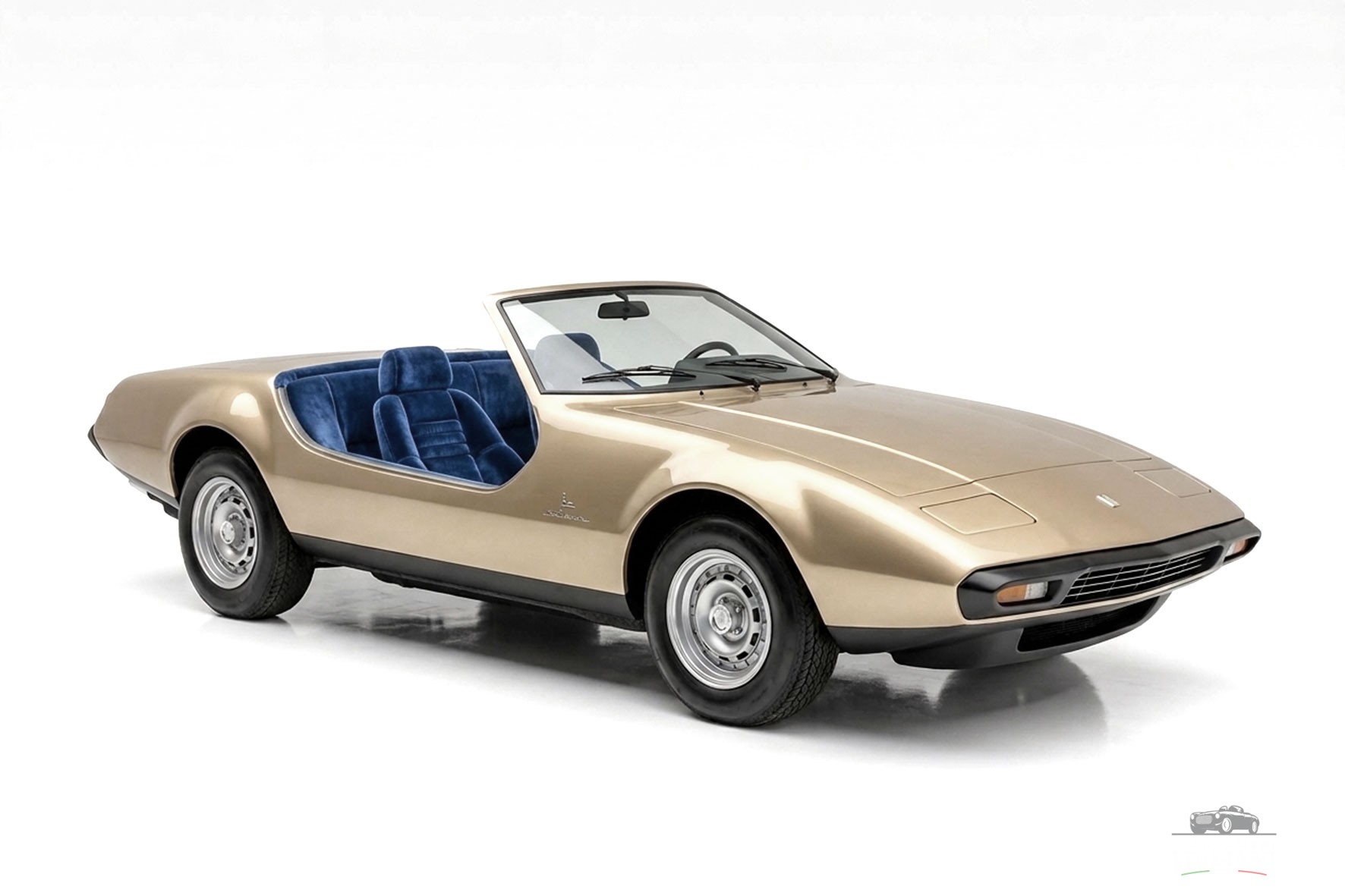

From a racing Ferrari transformed into a bread van to a futuristic concept resembling a spacecraft, the history of the Prancing Horse includes some remarkable interpretations by Italian coachbuilders.
When people think of Ferrari, certain images immediately come to mind: the graceful proportions of a 250 GT, the dramatic silhouette of a Testarossa, or the unmistakable curves of a 250 GTO. Yet beyond the celebrated production models lies another, considerably more eccentric chapter of the marque’s history.
During the golden age of Italian coachbuilding, a Ferrari chassis could become the foundation for an entirely individual automobile. Wealthy patrons commissioned exclusive bodies, designers experimented with unconventional proportions, and established carrozzerie occasionally challenged the very principles that made a Ferrari recognizable. The results ranged from exceptionally elegant grand tourers to unusual shooting brakes and futuristic prototypes that looked as though they belonged to another century.
Some were constructed for racing, others for private collectors, and a few existed primarily to demonstrate the creative possibilities of automotive design. What unites them is not simply their rarity, but the remarkable freedom with which Italian designers and coachbuilders interpreted the Ferrari identity.
1. Ferrari 250 GT SWB Breadvan (1962) — The Racing Ferrari That Looked Like a Delivery Van
Few Ferraris have acquired a nickname quite as irreverent as the Breadvan. Built in 1962 for Count Giovanni Volpi’s Scuderia Serenissima, the extraordinary machine emerged from an attempt to challenge Ferrari’s increasingly dominant 250 GTO.
Its origins were anything but ordinary. Volpi had acquired a Ferrari 250 GT SWB, chassis 2819 GT, and enlisted engineer Giotto Bizzarrini to develop a competitive alternative to the factory’s latest grand touring racer. The bodywork was constructed by Carrozzeria Sports Cars, the Modena workshop associated with Piero Drogo.

Bizzarrini’s aerodynamic approach produced a very low nose, an extended roofline and an abruptly truncated rear end. Rather than following the elegant, flowing proportions traditionally associated with Ferrari, the new body emphasized aerodynamic efficiency. Its unusual appearance soon earned it the nickname Breadvan, while French observers referred to it as La Camionnette.
At the 1962 24 Hours of Le Mans, the car demonstrated considerable speed before retiring with mechanical trouble. Its racing career was relatively brief, but the Breadvan became one of the most recognizable individual Ferraris ever constructed. What initially appeared to be an ungainly experiment is now regarded as a remarkable expression of competition-driven coachbuilding.
2. Ferrari 512 S Modulo by Pininfarina (1970) — A Ferrari From the Future
If the Breadvan represented aerodynamic pragmatism, the Ferrari Modulo belonged to an entirely different world. Presented by Pininfarina at the 1970 Geneva Motor Show, the experimental automobile seemed to eliminate almost every traditional feature of the sports-car silhouette.
Designed by Paolo Martin and developed using a Ferrari 512 S competition chassis, the Modulo was a radical exploration of what an automobile might look like in the future. Its extraordinarily low, almost lenticular body appeared to float above partially enclosed wheels, while the passenger compartment was accessed through a forward-sliding canopy rather than conventional doors.

The relationship between the Modulo and traditional Ferrari design was almost nonexistent. There was no long bonnet, no recognizable grand touring roofline, and scarcely any suggestion of the mechanical architecture beneath its sculptural exterior. Instead, Martin conceived an object that borrowed more from aerospace imagery than from established automotive forms.
The Modulo subsequently appeared at Expo 1970 in Osaka and became one of the defining examples of the experimental Italian design movement of the period. More than half a century later, its appearance remains astonishingly modern.
3. Ferrari 330 GT 2+2 Shooting Brake by Vignale (1968) — The Ferrari Estate Car
A Ferrari designed to carry four passengers and a substantial quantity of luggage might seem entirely reasonable today. In the 1960s, however, transforming one of Maranello’s elegant grand tourers into a shooting brake was a decidedly unconventional proposition.
The story began with a Ferrari 330 GT 2+2, chassis 07963, originally completed in 1965 with Pininfarina coachwork. After the car returned to the American Ferrari importer Luigi Chinetti Motors, Luigi Chinetti Jr. conceived an entirely new body in collaboration with American illustrator Bob Peak.

The construction was entrusted to Carrozzeria Vignale in Turin. Almost all the original exterior panels were replaced, creating an extraordinary four-seat grand tourer with an extended roof, sharply defined surfaces and a large luggage compartment.
The finished automobile was displayed by Vignale at the 1968 Turin Motor Show. Its combination of contrasting colours, distinctive proportions and exceptional practicality made it unlike almost any Ferrari of its generation. Believed to be the last Ferrari bodied by Vignale, the shooting brake was also an important reminder of the relationship between Italian craftsmanship and American automotive patronage.
4. Ferrari 166 MM/212 Export “Uovo” by Fontana (1951) — The Egg-Shaped Racing Ferrari
Among the most unconventional Ferraris of the early 1950s, the celebrated “Uovo” occupies a category of its own. Its rounded, high-roofed shape was not intended to make a fashionable grand tourer. It was conceived to reduce weight and improve aerodynamic efficiency for Giannino Marzotto, who wanted a competition Ferrari capable of challenging more conventional machines.
The car’s story began with chassis 024 MB, completed by Ferrari in February 1950 as a 166 MM with Touring barchetta coachwork. After an accident during that year’s Mille Miglia, the car was rebuilt and subsequently transformed for the 1951 racing season. The Marzotto family turned to Carrozzeria Fontana of Padua and the sculptor Franco Reggiani, who devised a radically streamlined enclosed body. The mechanical specification also evolved, giving rise to the familiar 166 MM/212 Export designation.

The result was extraordinary even by the experimental standards of postwar Italian racing. An elongated nose, curved roof and prominent oval radiator opening gave the machine its egg-like identity, while the unusual construction reflected a deliberate attempt to obtain a lighter and more efficient racing car. Where the established Ferrari berlinettas celebrated elongated bonnets and graceful proportions, the Uovo placed functional invention ahead of conventional beauty.
Its competition history included appearances in major Italian road races, among them the Mille Miglia. Although mechanical problems and tyre difficulties prevented its promise from being fully rewarded, the car became an unmistakable symbol of the creative independence of private entrants and specialist coachbuilders. It survives as a unique automobile whose significance lies as much in its adventurous engineering and design as in its results.
The Uovo is a reminder that Ferrari history was not written exclusively by the Maranello factory. In the workshops of Italian coachbuilders, private patrons and artists could transform established Ferrari machinery into extraordinary new interpretations.
5. Ferrari 250 GT SWB Berlinetta Speciale by Bertone (1962) — Giugiaro’s Sharknose Ferrari
In 1962, Nuccio Bertone presented one of the most striking interpretations of the Ferrari 250 GT SWB ever created. Based on chassis 3269 GT, the Berlinetta Speciale was designed by a young Giorgetto Giugiaro, who was then working for Bertone in Turin.
The car was commissioned for Nuccio Bertone’s personal use and served as a demonstration of the company’s design capabilities. Rather than imitate the familiar Pininfarina-bodied Ferrari berlinettas, Giugiaro developed an entirely different visual identity.

Its most recognizable characteristic was the sharply pointed front end, inspired by the sharknose treatment of contemporary Ferrari competition cars, particularly the 156 Formula One machine. The headlights were integrated into the frontal opening, while the carefully controlled side surfaces and compact cabin gave the car an unusually purposeful appearance.
The Berlinetta Speciale made its public debut at the 1962 Geneva Motor Show, attracting attention as a dramatic alternative to established Ferrari styling. Although the vehicle was unique, it was not the only Ferrari 250 GT SWB bodied by Bertone. The earlier example commissioned by Enrico Wax represented another important expression of the Turin coachbuilder’s relationship with Maranello.
The Sharknose Ferrari remains particularly significant because it captures Giugiaro’s emerging talent at a formative moment in his career.
6. Ferrari 365 GTC/4 Beach Car by Michelotti (1975–76) — A V12 Spiaggina for the Jet Set
A twelve-cylinder Ferrari built for leisurely motoring beside the sea might sound improbable, yet that was precisely the idea behind the spectacular 365 GTC/4 Beach Car. Created in the mid-1970s, this one-off replaced the familiar image of a luxurious Ferrari coupé with the open, informal character of an Italian spiaggina.
The basis was chassis 16017, originally completed in 1972 as a Pininfarina-bodied Ferrari 365 GTC/4. The special conversion is associated with Giovanni Michelotti’s design work and Swiss Ferrari dealer and coachbuilder Willy Felber. Period and historical accounts describe a Michelotti-designed beach-car body produced for a wealthy Middle Eastern customer, with the vehicle exhibited at the Geneva Motor Show in 1976.

The transformation was dramatic. The conventional roof and doors gave way to an open-sided passenger compartment, low sills and a light canopy, while wicker seating emphasized the car’s intended use in warm coastal surroundings. Yet beneath this relaxed beach-car presentation remained the sophistication of Ferrari’s front-engined V12 grand tourer. The contrast between mechanical performance and playful bodywork made the car particularly memorable.
Its history is made more intriguing by a subsequent transformation associated with the same chassis: contemporary reporting describes a Michelotti-designed shooting-brake interpretation shown at Geneva in 1977. Accounts differ on the precise sequence of later rebodies and the survival of each configuration, so the Beach Car is best understood through its documented chassis identity and its original appearance rather than through unverified claims about its final form.
The Michelotti Spiaggina reveals how far the Italian coachbuilding imagination could stretch the idea of a Ferrari. It was neither competition machine nor conventional grand tourer, but a deliberately extravagant expression of bespoke automotive culture.
7. Ferrari 365 P Berlinetta Speciale (1966) — The Three-Seater Ferrari That Predicted the Future
Long before the McLaren F1 became famous for its central driving position, Pininfarina had already explored the idea in one of the most unconventional Ferraris of the 1960s. Presented at the Paris Motor Show in October 1966, the Ferrari 365 P Berlinetta Speciale challenged established ideas about the relationship between competition machinery and road-going grand tourers.
Developed around the mechanical architecture of the Ferrari 365 P2 racing car, the Berlinetta Speciale introduced a remarkable interior arrangement: three seats positioned across a single row, with the driver occupying the centre and the two passengers seated slightly behind on either side. This configuration offered an entirely different driving experience from the conventional two-seat berlinettas associated with Ferrari.

The body was created by Pininfarina, combining the proportions of a mid-engined racing car with the flowing forms characteristic of the Turin design house. Its low nose, expansive windscreen, transparent roof panel and muscular rear section produced an automobile that appeared strikingly futuristic in 1966.
Two examples were constructed. The first, chassis 8971, was presented in white and subsequently exhibited internationally before entering the ownership of Luigi Chinetti. A second example, chassis 8815, was built for Gianni Agnelli, whose enthusiasm for unusual automobiles made him one of the most influential patrons of Italian coachbuilding.
The design’s precise individual authorship has been attributed differently in published accounts, including references to Sergio Pininfarina and Aldo Brovarone. The securely established attribution is to Pininfarina as the responsible design and coachbuilding house.
Beyond its extraordinary seating arrangement, the Berlinetta Speciale represented an important step towards the development of mid-engined road-going Ferraris. Its visual language also anticipated several elements of the Dino models that would appear in subsequent years.
8. Ferrari 456 GT Venice by Pininfarina (1990s) — The Ferrari for the Brunei Royal Family
By the 1990s, the traditional Italian coachbuilding industry had undergone considerable transformation. Large-scale automotive manufacturing, increasingly complex regulations and changing production methods had reduced the opportunities for independent bespoke body construction. Nevertheless, exceptionally wealthy clients could still commission extraordinary vehicles.
One of the most remarkable examples was the Ferrari 456 GT Venice programme, developed by Pininfarina for the Brunei royal family. Based on the front-engined V12 Ferrari 456 GT, the Venice family included several bespoke body configurations, most famously a five-door estate.

Unlike the earlier Vignale shooting brake, the Venice Estate incorporated additional passenger doors, creating a genuinely unusual Ferrari station wagon. The Pininfarina design retained several recognizable elements of the original coupé while completely reworking the passenger compartment and rear body.
The programme also included other body configurations, illustrating the extraordinary extent of the commission. Although seven Venice Estates are frequently reported, the available documentation concerning the total number of completed cars and their individual histories requires careful distinction.
The Venice programme represented a late expression of the great bespoke coachbuilding tradition: exclusive automobiles conceived for a particular patron, developed by an established Italian design house and produced in quantities far below those of ordinary production models.
The Ferraris That Refused to Be Ordinary
These eight extraordinary automobiles reveal a side of Ferrari history that is often overshadowed by racing victories, production milestones and record auction prices. They belong to a world in which a chassis was not always the final expression of an automobile, but sometimes the starting point for an entirely new creative undertaking.
Their differences are striking. The Breadvan was shaped by competition and aerodynamic necessity, the Modulo by radical experimentation, and Fontana’s Uovo by the Marzotto family’s pursuit of a lighter, more aerodynamic racing car. The Vignale shooting brake and Michelotti Beach Car emerged from private demands for extraordinary practicality or leisure, while the Bertone berlinetta and Pininfarina specials reflected equally distinctive visions of Italian automotive design.
Not all these cars were Ferrari factory design projects, and that distinction is fundamental. Some were independently rebodied, others originated as private commissions, while still others were experimental show cars. Their common significance lies in the broader history of Italian specialist coachbuilding and the remarkable influence that individual patrons, designers and craftsmen could exercise over the final form of an automobile.

ABOUT THE AUTHOR
Andreas Scheidl
Italian classic car enthusiast with German roots. Renowned as a respected figure in the classic car community, he serves as a jury member at various international concours d'elegance, including the Classic Gala Schwetzingen and Mantova. As a content creator, Andreas passionately shares his profound knowledge and appreciation for vintage automobiles. His heart beats for cars designed by Giovanni Michelotti, showcasing his discerning taste and dedication to preserving the timeless elegance of automotive history.
More stories by Andreas Scheidl ↗CONTINUE READING
Posts You Might Like
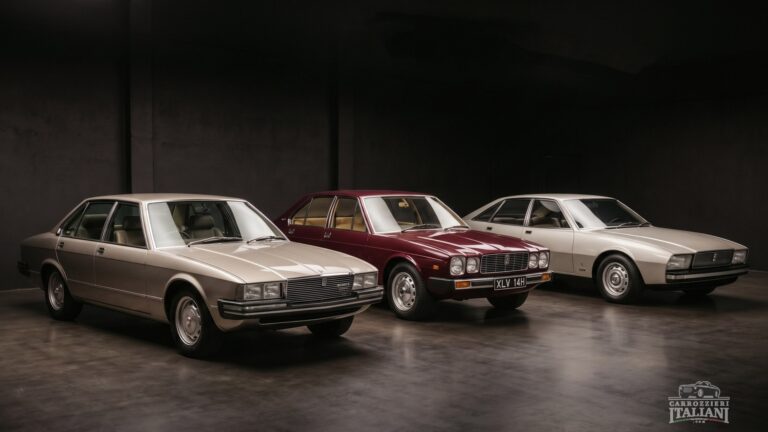
The Italian Battle for the Jaguar XJ40
Three Turin-area design organisations came into Jaguar’s orbit during this period: Bertone, where Marcello Gandini led the studio; Italdesign, founded by Giorgetto Giugiaro and Aldo Mantovani; and Pininfarina, which had already presented…
Read story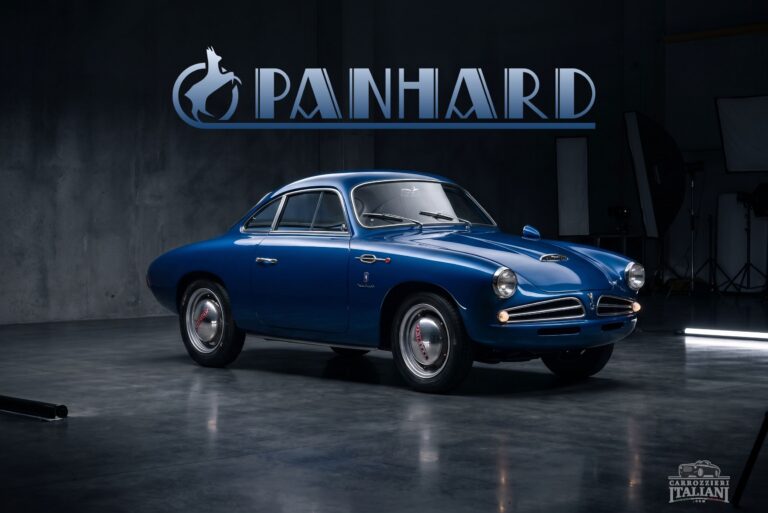
French Engines, Italian Bodies: The Panhards That Went to Turin
Gastone Crepaldi, Carrozzeria Allemano and the small French sports cars that raced through Italy in the 1950s. At the 1952 Mille Miglia, six Panhards associated with Gastone Crepaldi's Scuderia Ital-France appeared among…
Read story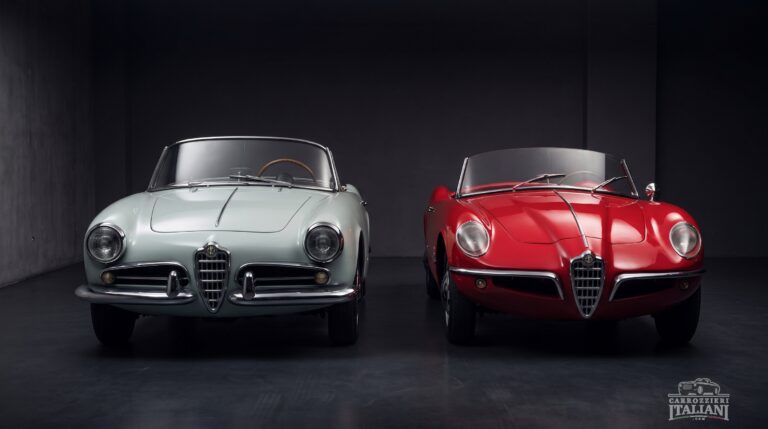
Alfa Romeo Giulietta Spider: The Bertone–Pininfarina Contest That Changed an Italian Icon
Before the familiar Pininfarina roadster, Alfa Romeo tested two very different ideas for its American future. The surviving prototypes tell a more complicated story than a simple victory and defeat.
Read story
Rome’s Forgotten Concours d’Elegance
Before the Pincio became a tradition On the terraces above Piazza del Popolo, Rome offered automobile elegance a setting unlike any exhibition…
Read story
THE CONVERSATION
Comments 0
Share a memory, a period photograph or a documented detail about this story.