
Pininfarina
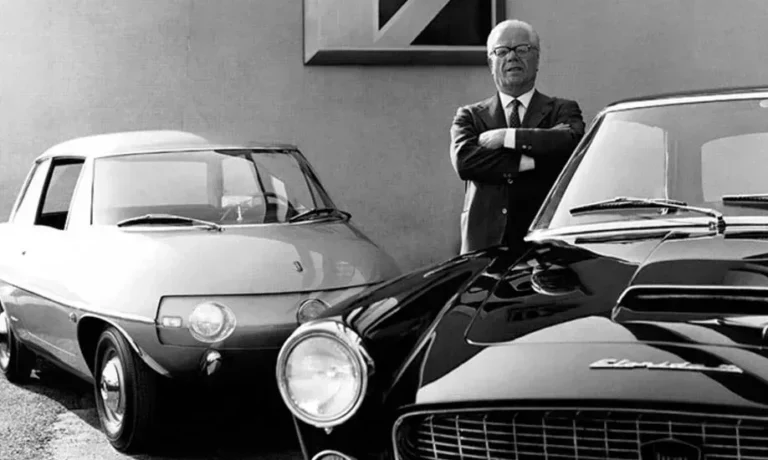
Founded by Battista Pinin Farina in Turin in 1930, Pininfarina became one of the most influential Italian styling and coachbuilding houses, particularly through its work for Ferrari and other international manufacturers.
Explore record ↗
1958Coachwork by Pininfarina
THE VEHICLE AT A GLANCE
THE PEOPLE BEHIND THE CAR
Founded by Battista Pinin Farina in Turin in 1930, Pininfarina became one of the most influential Italian styling and coachbuilding houses, particularly through its work for Ferrari and other international manufacturers.
Explore record ↗01 / THE STORY
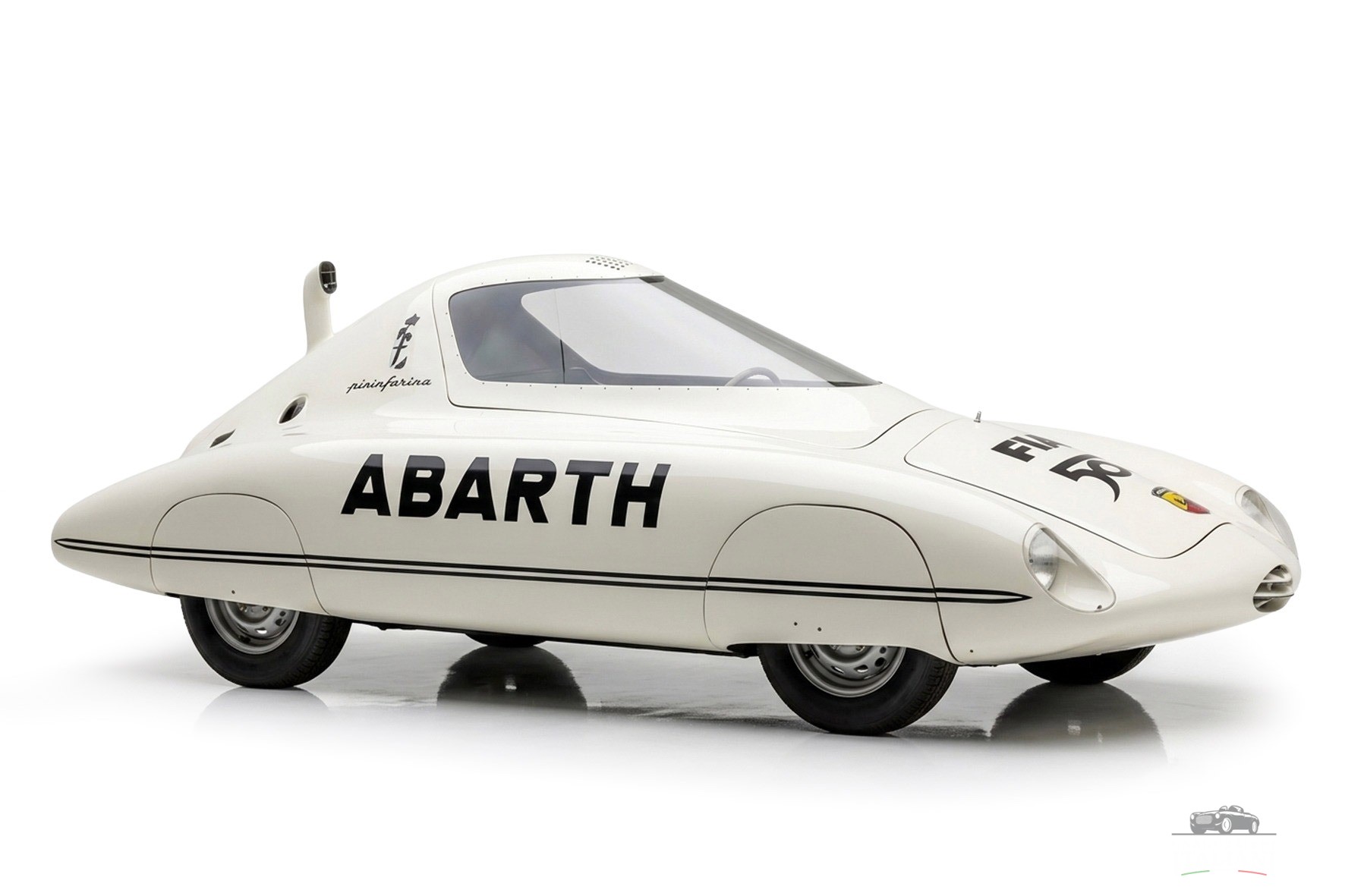
The 1958 Abarth 500 Pininfarina Record was an aerodynamic single-seater developed by Abarth and Pinin Farina for endurance and speed-record attempts at Monza. It used an uprated version of the Fiat Nuova 500’s small two-cylinder engine, demonstrating what careful mechanical preparation and a purpose-built lightweight body could achieve. This record monoposto was distinct from the modified production-bodied Fiat 500 that Abarth had tested earlier in 1958.
The Fiat Nuova 500, introduced in 1957, initially attracted a mixed reception. Carlo Abarth saw an opportunity to demonstrate the durability of its engine. In February 1958, a tuned Fiat 500 completed a week-long endurance exercise on Monza’s high-speed circuit and established six records. The achievement helped strengthen Abarth’s commercial relationship with Fiat. It did not, however, represent the later Pinin Farina single-seater: the February trials used an Abarth-prepared Fiat 500, whereas the subsequent record programme called for a special low-drag chassis and body.
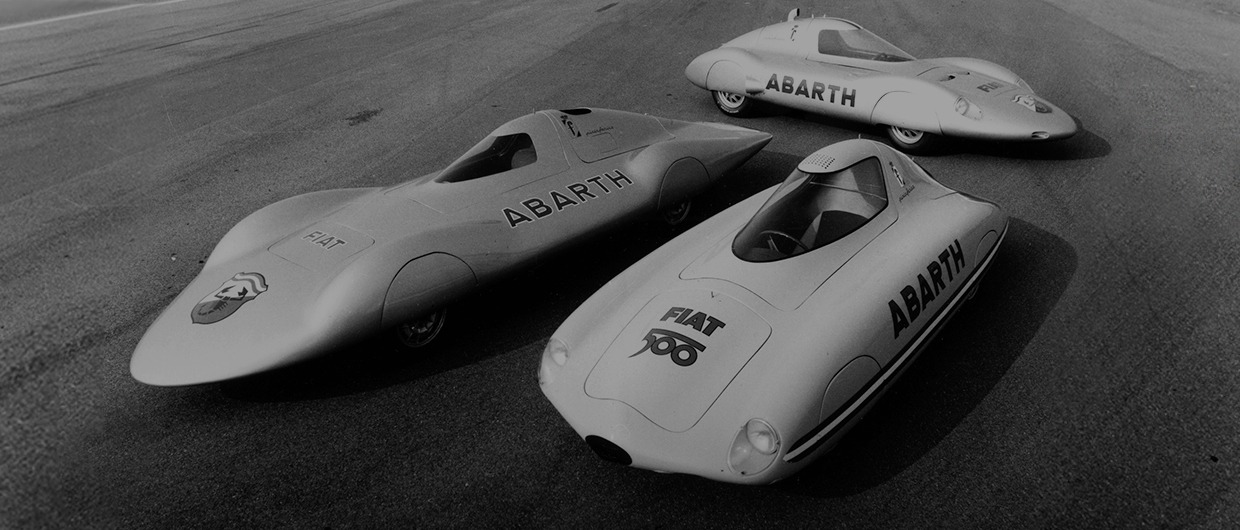
Abarth had already commissioned streamlined bodies for the 750 Monoposto da Record and related projects. For the 500-powered successor the companies developed a much more compact car, dispensing with the prominent tail fins used on some earlier designs. A tubular structure carried a narrow, aerodynamically enclosed single-seat body. The combination was intended to sustain high average speeds rather than simply reach a brief maximum. The coachwork was associated with Pinin Farina, while Abarth was responsible for the engine and mechanical preparation.
According to Stellantis Heritage, the purpose-built Fiat-Abarth 500 record monoposto weighed 368 kilograms and used a modified two-cylinder engine rated at 36 CV, allowing speeds in excess of 180 km/h. A specialist historical specification records a 479 cc displacement, a Weber 36 IMP carburettor and a 10.5:1 compression ratio, with a tubular frame supporting a compact body 4,130 mm long, 1,410 mm wide and 1,200 mm high. These figures describe the 1958 Pinin Farina single-seater, not the production-bodied Fiat Nuova 500 used in the February trials. The historical account does not establish a unique chassis number for the record car identified in this database entry, so technical information from other Abarth record monopostos must not be transferred to it.
The first attempt on 22 September 1958 was interrupted by a mechanical failure and collisions with animals on the circuit during the night. After repairs, a new endurance campaign began on 27 September. Nine drivers took part, establishing seventeen long-distance records before the run ended on 7 October amid deteriorating weather. A further session on 21 October added six short-distance records. Additional efforts the following summer raised the programme’s cumulative total to twenty-eight records, as reported by the manufacturer’s heritage archive.
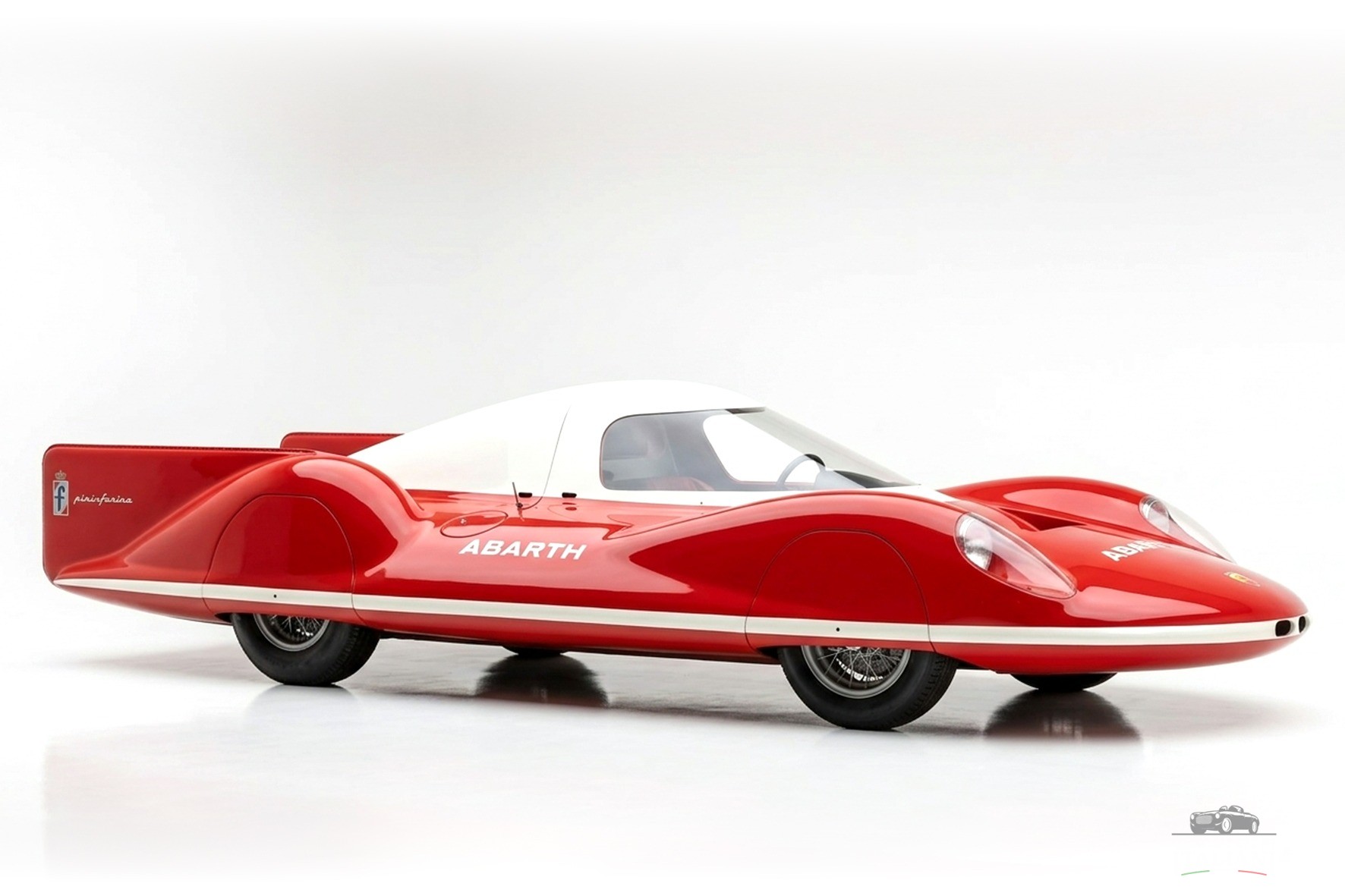
The 500-powered record car followed the development of the 750 Record and preceded the more powerful 1960 Abarth 1000 Bialbero Pininfarina Record. The latter surviving car is documented with chassis E1351 and a separate four-cylinder twin-cam engine. Its engine, awards and later ownership history should not be attributed to the earlier Fiat-Abarth 500.
The 1958–1959 campaign demonstrated the effectiveness of Abarth’s close cooperation with Pinin Farina in preparing highly specialised record cars. The technical and promotional context is discussed further in Abarth’s Legacy of Speed and the historical overview Pininfarina Through the Ages. Without independently documented chassis identification, auction transactions or later custodianship, the surviving history of this particular 500 remains primarily the record programme itself.
02 / TECHNICAL IDENTITY
Become a Pro member to see the full details in this section.
Membership is not available yet.
View membership options03 / DESIGN, BODY & SUPPLIERS
Coachbuilder / Design studio
Founded by Battista Pinin Farina in Turin in 1930, Pininfarina became one of the most influential Italian styling and coachbuilding houses, particularly through its work for Ferrari and other international manufacturers.
Explore record ↗04 / CHRONOLOGY
07 / GALLERY
CONTINUE EXPLORING
CONTINUE READING
Carlo Abarth's ambition to break speed records was not just about achieving victory in motorsport; it was a reflection of his relentless drive to prove the capabilities of his engineering innovations. His…
Read storyDiscover the fascinating journey of Pininfarina, a name synonymous with luxury automotive design and innovation. From its inception in 1930 to its status as a leader in the industry, this article explores…
Read story


THE CONVERSATION
Comments 0