
Pininfarina
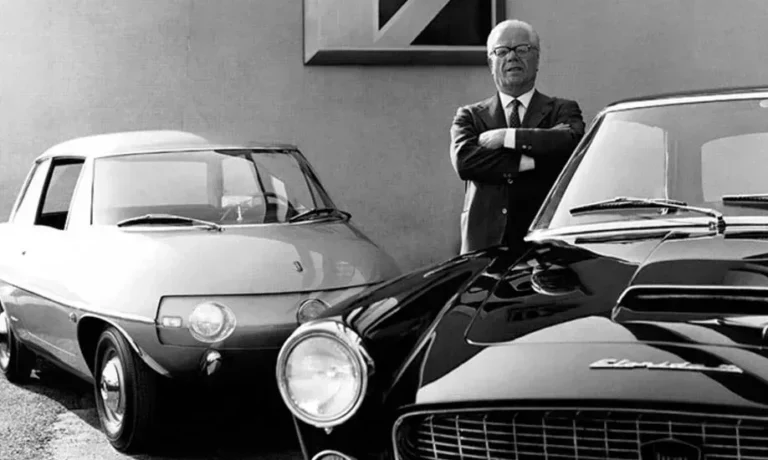
Founded by Battista Pinin Farina in Turin in 1930, Pininfarina became one of the most influential Italian styling and coachbuilding houses, particularly through its work for Ferrari and other international manufacturers.
Explore record ↗
1957Coachwork by Pininfarina
THE VEHICLE AT A GLANCE
THE PEOPLE BEHIND THE CAR
Founded by Battista Pinin Farina in Turin in 1930, Pininfarina became one of the most influential Italian styling and coachbuilding houses, particularly through its work for Ferrari and other international manufacturers.
Explore record ↗01 / THE STORY
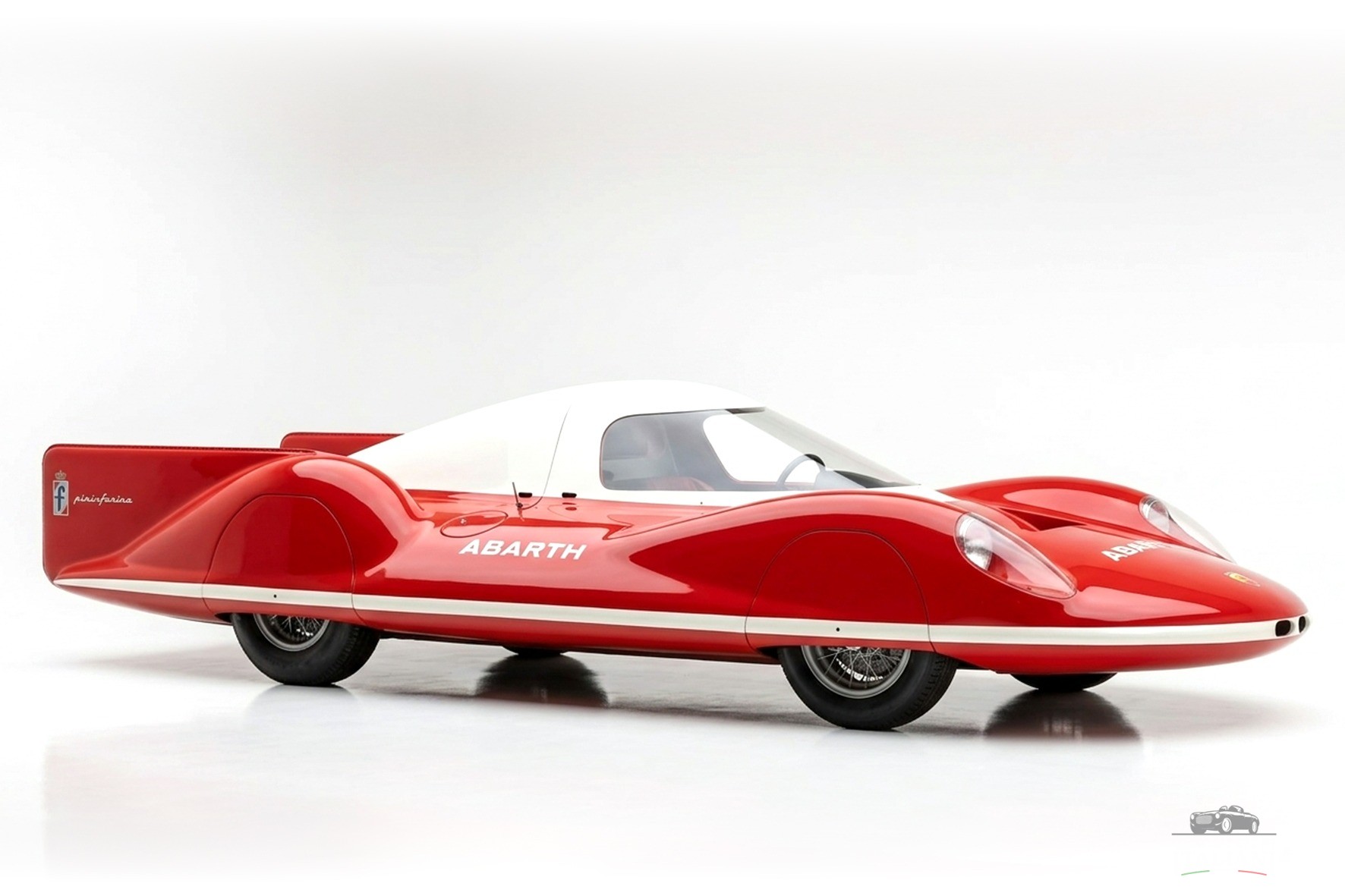
The 1957 Fiat-Abarth 750 Monoposto da Record was an experimental single-seat record car developed by Abarth with an aerodynamic body designed and built by Pinin Farina. It belonged to a programme of specialised cars intended for international speed and endurance record attempts. The Fiat-engined 750 was distinct from both the Alfa Romeo-Abarth 1100 developed in parallel and the earlier 1956 Abarth 750 Record bodied by Bertone.
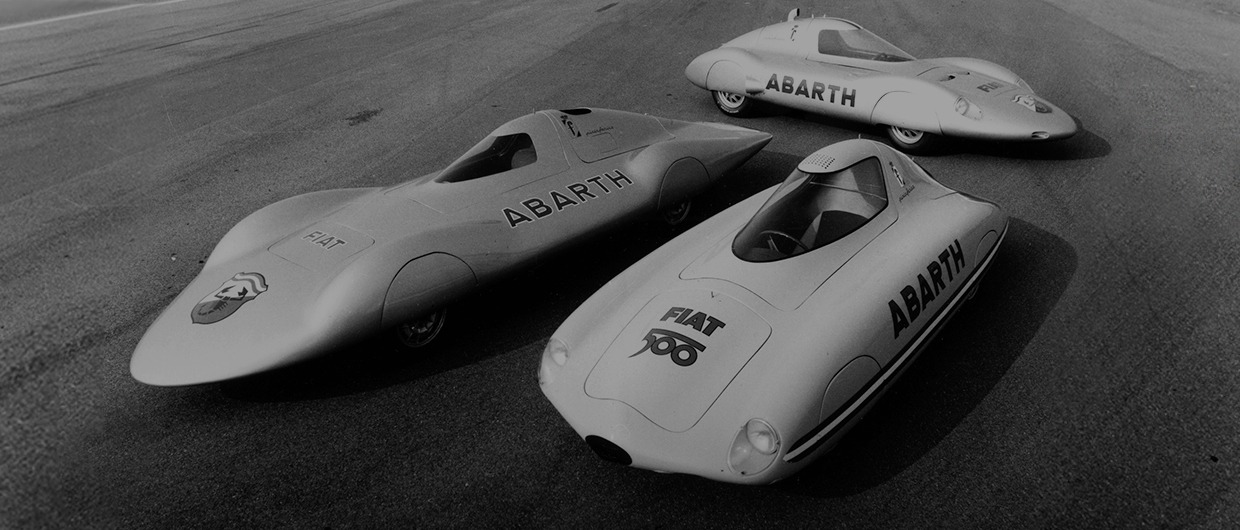
Abarth had already begun work on a record car using a modified Alfa Romeo Giulietta engine when Fiat requested a comparable machine using its own mechanical components. The resulting Fiat-Abarth 750 incorporated an Abarth-developed four-cylinder engine based on the Fiat 600 and elements derived from Fiat 1100 running gear. The two Pinin Farina-bodied cars were presented together at the Geneva Motor Show in March 1957. The Fiat and Alfa-engined cars shared a common aerodynamic concept but used different, specially developed chassis.
The Pinin Farina coachwork was a very low, elongated single-seat form with broad front and rear overhangs, a tapered nose, a glazed canopy over the driver and prominent rear fins. The fins and tapering rear wheel fairings were intended to improve directional stability on Monza’s banked high-speed circuit. According to AISA’s historical documentation, Pinin Farina prepared two one-fifth-scale models for testing in the Politecnico di Torino wind tunnel before finalising the design. Stellantis Heritage records that the 1957 single-seaters used braking arrangements designed primarily for pit stops rather than repeated braking on a conventional road circuit.
The Fiat-Abarth 750 initially used a 747 cc inline-four developed by Abarth. AISA’s documentation of the 1957 record car gives 45 CV at 6,000 rpm. This specification must not be confused with the 47 CV, 385 kg and June 1956 Monza results of the preceding Bertone-bodied 750 Record. The latter’s 24-hour distance of 3,743.642 km was not established by the Pinin Farina monoposto.
At Monza from 24 to 27 July 1957, the Pinin Farina-bodied Fiat-Abarth 750 established fifteen international long-distance records in Class H. Stellantis Heritage also records three short-distance records on 28 October. Specialist AISA material documents the July drivers and confirms that the project was subsequently developed with a twin-camshaft engine; the exact engine specification must therefore be tied to the relevant phase of the record programme rather than treated as constant for every appearance.
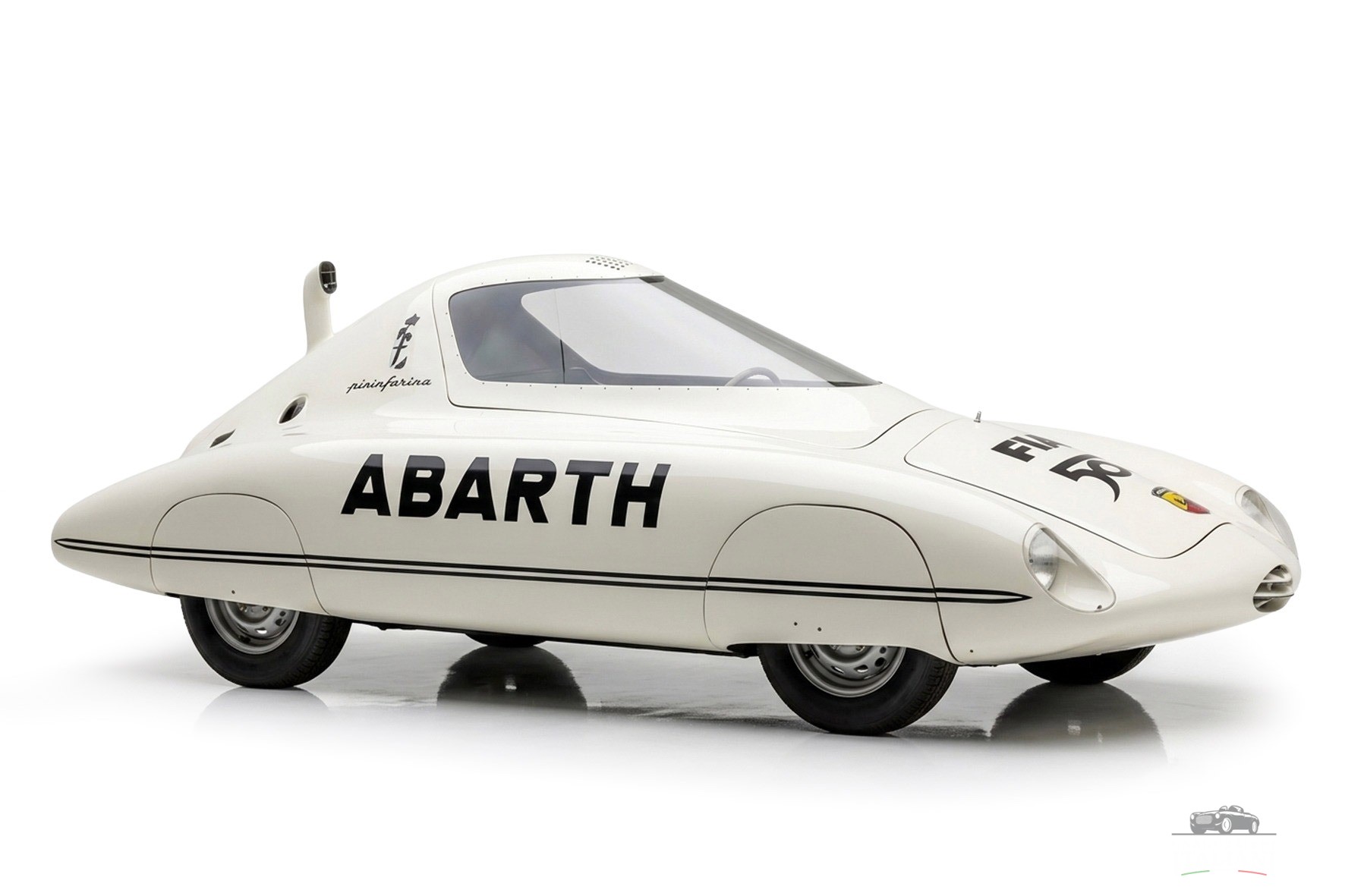
A 1961 Abarth factory-museum caption independently identifies a Fiat-Abarth 750 record car with Pinin Farina coachwork, distinguishing the programme from the company’s other streamlined record vehicles. No authenticated chassis serial or separate body number has yet been established for this database entry. Later developments included the 1958 Abarth 500 Pinin Farina Record and the 1960 Abarth 1000 Bialbero Record; their chassis, dimensions and record results cannot be transferred to the 1957 car. The broader Abarth record-car history provides additional context for this series.
02 / TECHNICAL IDENTITY
03 / DESIGN, BODY & SUPPLIERS
Coachbuilder / Design studio
Founded by Battista Pinin Farina in Turin in 1930, Pininfarina became one of the most influential Italian styling and coachbuilding houses, particularly through its work for Ferrari and other international manufacturers.
Explore record ↗05 / PEOPLE, COLLECTIONS & MUSEUMS
08 / GALLERY
CONTINUE EXPLORING
CONTINUE READING
Carlo Abarth's ambition to break speed records was not just about achieving victory in motorsport; it was a reflection of his relentless drive to prove the capabilities of his engineering innovations. His…
Read storyDiscover the fascinating journey of Pininfarina, a name synonymous with luxury automotive design and innovation. From its inception in 1930 to its status as a leader in the industry, this article explores…
Read story


THE CONVERSATION
Comments 0