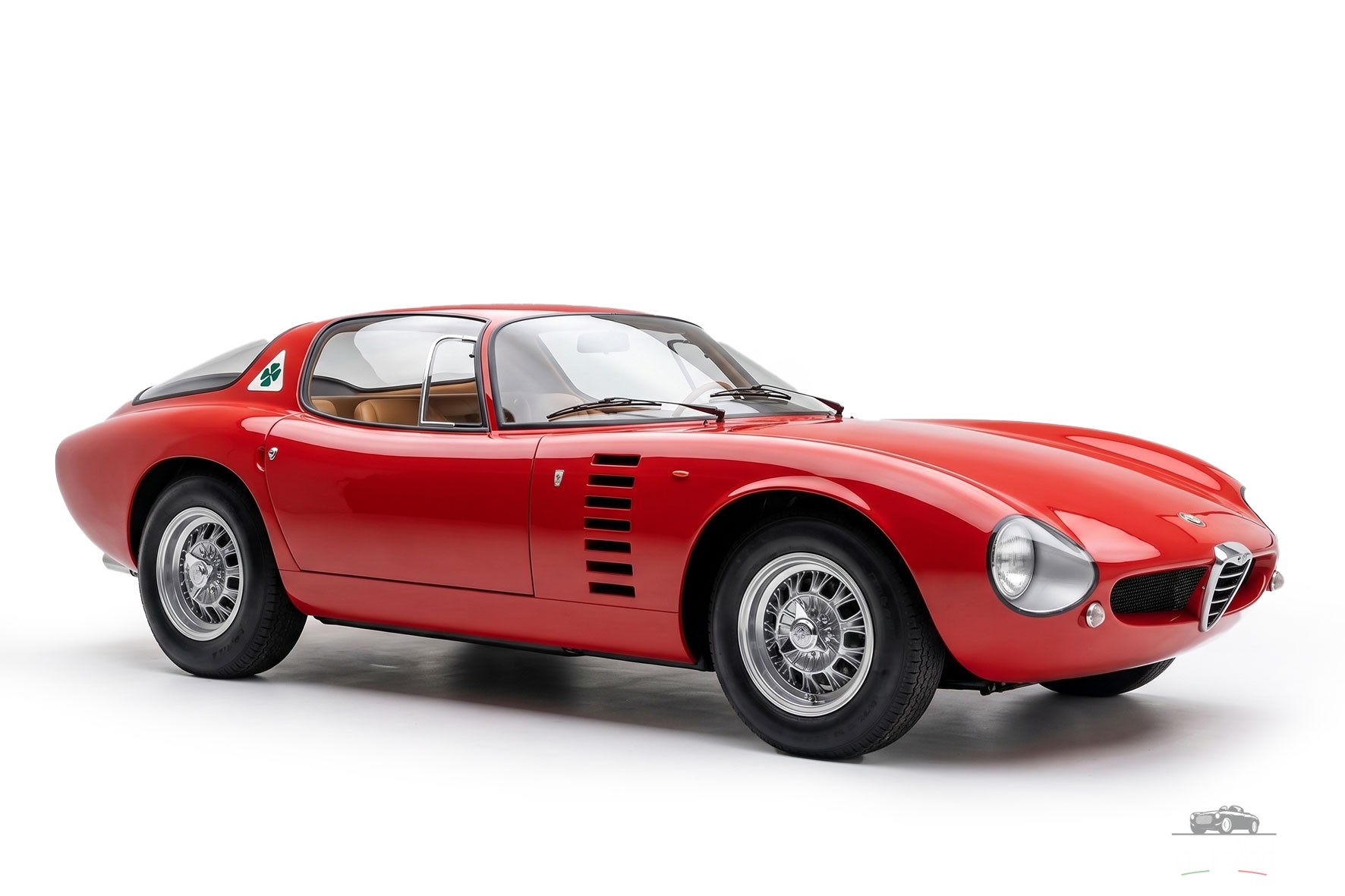
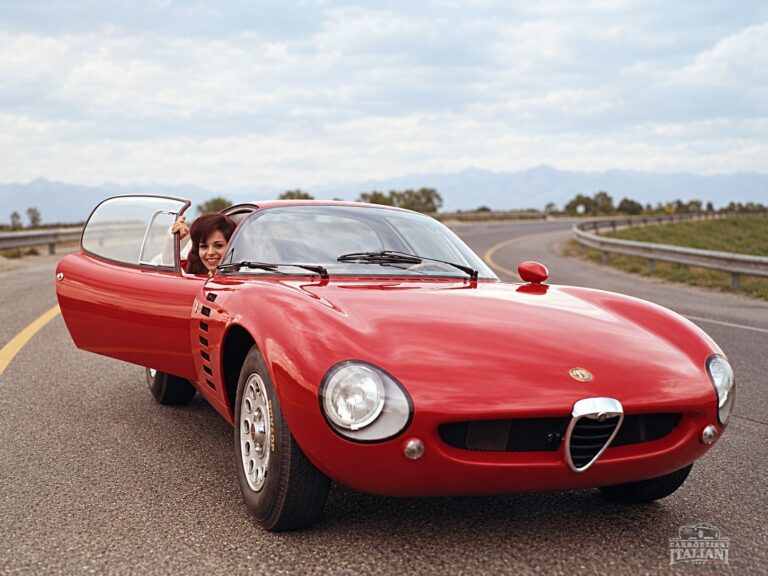
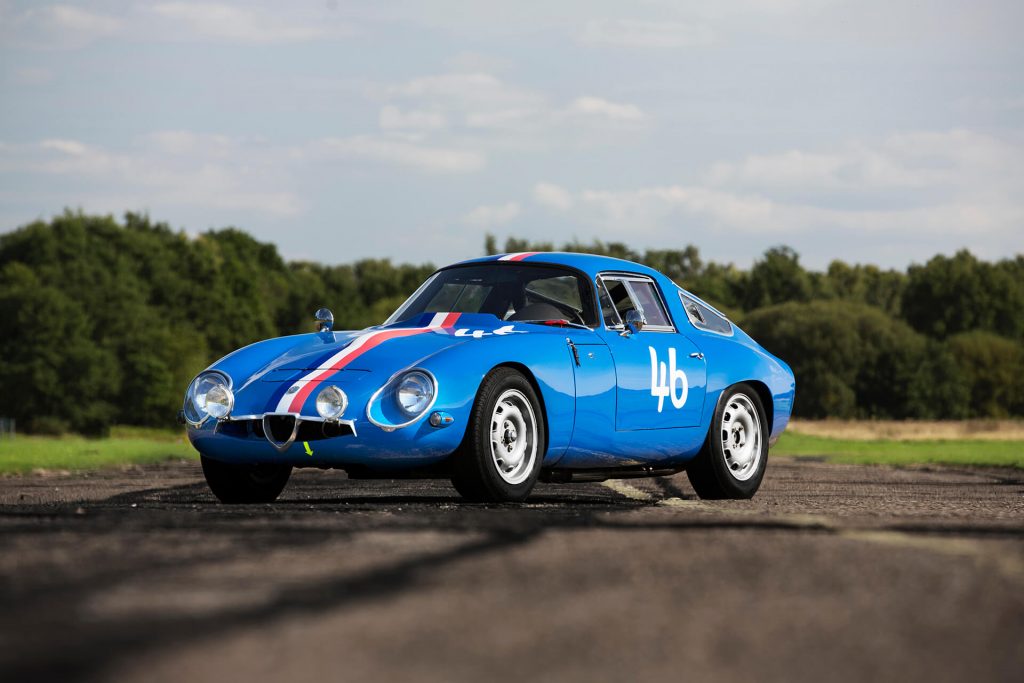
The 1964 Alfa Romeo Canguro is a one-off sports coupé designed by Giorgetto Giugiaro and constructed by Carrozzeria Bertone on an Alfa Romeo Giulia TZ racing chassis. Conceived as a study for a possible road-going interpretation of the TZ, it was unveiled at the Paris Motor Show in 1964. The surviving car is associated with chassis AR 105.11 750101, rather than with the production history of any other Giulia TZ. It remained an individual styling prototype and was not developed into a series-produced model.
Development and design
Alfa Romeo provided racing-derived TZ mechanical foundations for experimental coachwork studies. Bertone’s proposal was distinct from the contemporary Giulia 1600 Sport study by Pininfarina, which used another chassis. Giugiaro exploited the low tubular structure to give the Canguro a long, gently rounded bonnet, pronounced wheel arches, a compact passenger compartment and a short, smoothly tapered tail. The front incorporated covered headlamps and an Alfa Romeo shield within a low intake; horizontal vents behind the front wheels became one of the design’s identifying elements.
The roof and doors were shaped as an integrated surface rather than a conventional three-box arrangement. A broad, curved windscreen and wraparound rear glazing reduced the visual distinction between cabin and body. The glass was bonded directly to its surrounding frames, an unusually advanced solution for a 1964 show car. Giugiaro’s historical project description quotes an overall height of approximately 1,050 mm. Published accounts disagree on the material used for the original body panels, variously describing aluminium and glass-fibre construction; the discrepancy should not be treated as resolved without further construction evidence.
Chassis and mechanical configuration
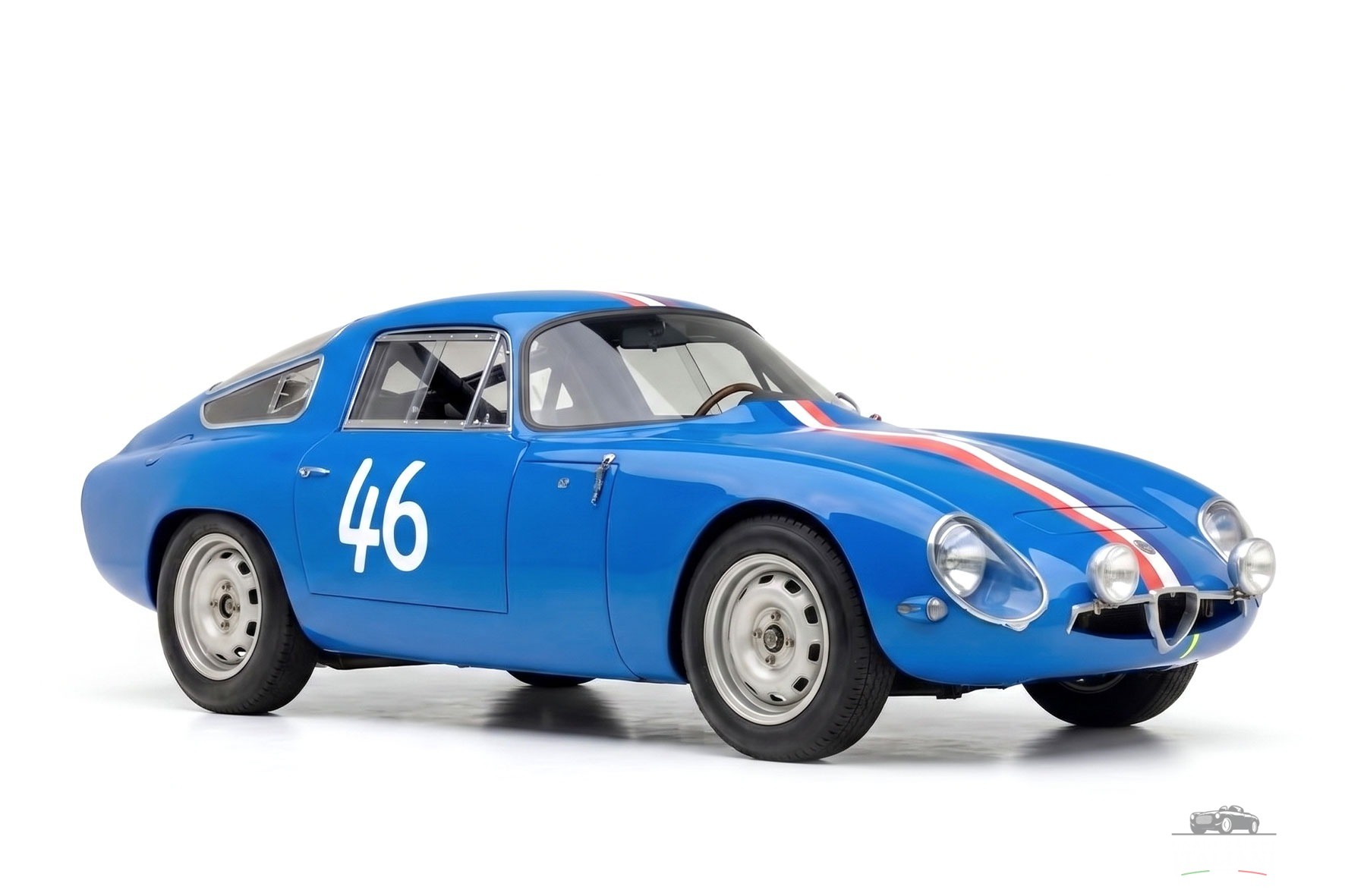
The Canguro used the tubular-frame architecture of the Alfa Romeo Giulia TZ rather than a conventional saloon platform. The documented layout included a longitudinal front-mounted four-cylinder engine, rear-wheel drive and a five-speed manual transmission. Historical Alfa Romeo and Giugiaro accounts quote approximately 170 CV for the concept, with Alfa Romeo specifying 7,500 rpm. These figures belong to the Canguro’s published specification and should not automatically be transferred to every TZ or interpreted as proof of a particular engine serial number.
A contemporary Bertone presentation cited a weight of 660 kg, but this is a period published figure rather than a verified measurement of the vehicle after restoration. No original engine number or independently established modern kerb weight has been confirmed for chassis 750101. The unusually low body and closely integrated glazing were central to the car’s engineering and design proposition.
Accident and restoration
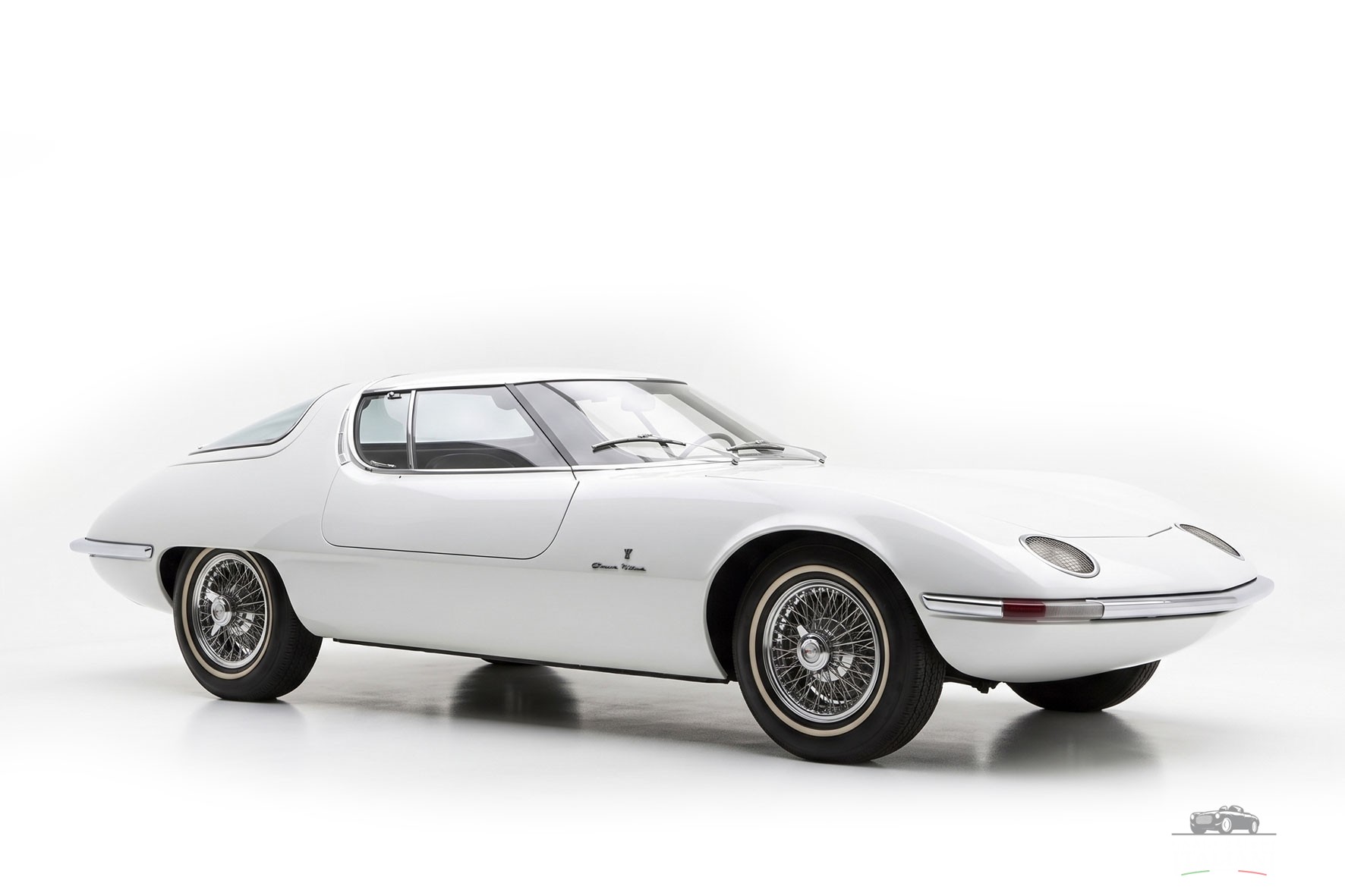
After its Paris presentation, the Canguro suffered substantial frontal damage at the Monza circuit during promotional filming. Later accounts describe a collision involving Bertone’s Chevrolet Testudo, another Giugiaro-designed prototype. The exact date and sequence of the impact are not consistently reported. Bertone did not undertake a full restoration at the time, and the damaged Canguro subsequently spent years out of public view. Parts of its history passed through European collectors before the incomplete automobile was brought to Japan, where its reconstruction was completed with support associated with the Alfa Romeo museum.
The rebuilt Canguro appeared at the 2005 Concorso d’Eleganza Villa d’Este, entered by Shiro Kosaka. It received the Trofeo BMW Group for Best in Show by the Jury and the Trofeo Corrado Millanta press award. These distinctions must not be confused with the separate Coppa d’Oro public-vote award, which went to a different car that year. The restored vehicle retained the historical identity of the original Canguro project and chassis, although detailed documentation is required to distinguish surviving components from those reconstructed during restoration.
Historical context
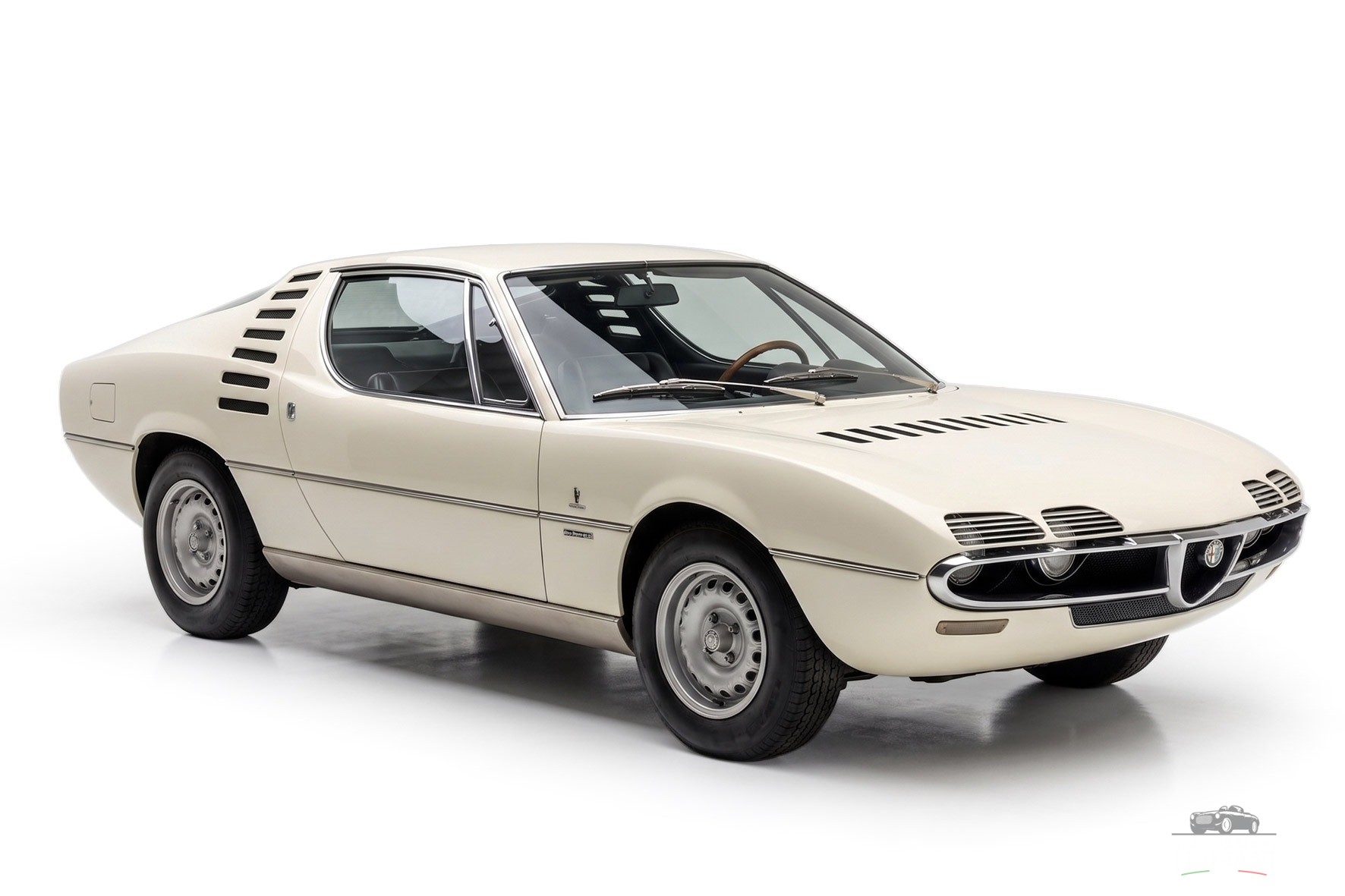
The Canguro forms part of Bertone’s sequence of experimental Alfa Romeo designs, preceding the development of the Montreal concept programme. Its significance lies principally in the treatment of glass, exterior volumes and the relationship between a racing-derived structure and a refined road-car silhouette. The car’s accident, long period in damaged condition and eventual return also make its documented chassis identity important to understanding its provenance. A separate historical study of the Canguro discusses the extended restoration history.




THE CONVERSATION
Comments 0