
Stola
Founded in Turin in 1919, Stola became an Italian specialist in automotive prototypes, design studies and low-volume body production for international manufacturers.
Explore record ↗
1991Coachwork by Stola
THE VEHICLE AT A GLANCE
THE PEOPLE BEHIND THE CAR
Founded in Turin in 1919, Stola became an Italian specialist in automotive prototypes, design studies and low-volume body production for international manufacturers.
Explore record ↗Walter de Silva is an Italian automotive designer who held senior design roles at Alfa Romeo, SEAT, Audi and Volkswagen Group.
Explore record ↗01 / THE STORY
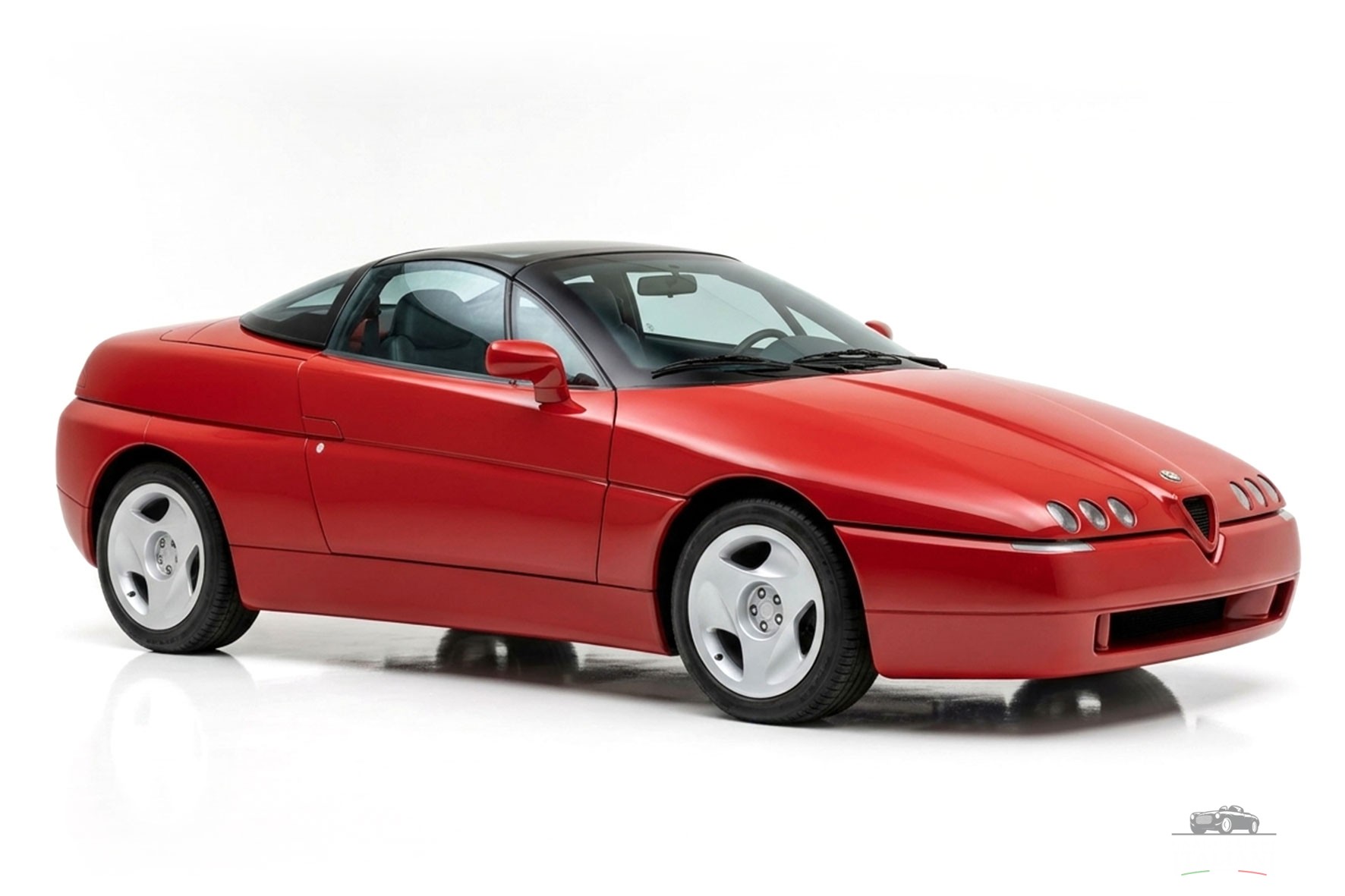
The Alfa Romeo Proteo concept car, unveiled by Stola at the 1991 Geneva Motor Show, is a striking example of early 1990s automotive innovation and Italian design flair. This 2-door coupé cabriolet, featuring a folding roof, was not just an exercise in aesthetics but also a showcase of advanced engineering and performance capabilities. At its heart lies a powerful 3.0-liter quad-cam 24-valve V6 engine, producing an impressive 260 PS (191 kW; 256 hp). This engine, paired with a 5-speed manual transmission, enabled the Proteo to reach a top speed of 250 km/h (155 mph), marking it as a serious performance machine. The Proteo was built on a modified, shortened version of the Alfa Romeo 164’s floorpan, and it introduced advanced features like four-wheel drive and four-wheel steering—technology that was ahead of its time and designed to enhance handling, stability, and driver engagement. These mechanical innovations made the Proteo not just a stylish concept, but also a technological showcase that hinted at Alfa Romeo’s ambitions for the future. Visually, the Proteo set the stage for design elements that would later appear in the Alfa Romeo 916 series GTV and Spider, which were penned in July 1988. The Proteo’s sleek lines, aggressive stance, and distinctive front end—with its trademark Alfa grille and sharp, angular headlights—foreshadowed the aesthetics of these later production models. The cabriolet’s dynamic silhouette, characterized by a low, wide body and smooth curves, was a harmonious blend of sportiness and elegance, embodying the Alfa Romeo spirit. The Proteo’s design also emphasized functionality; the folding roof allowed for a seamless transition from coupé to cabriolet, offering versatility that was rare in sports cars of the era. Its interior combined advanced technology with typical Italian craftsmanship, providing a luxurious yet driver-focused environment. Though the Proteo never reached production, it remains an iconic concept that encapsulated Alfa Romeo’s design and engineering prowess. Its influence on subsequent models, especially the GTV and Spider, is a testament to its lasting legacy. The Proteo represents a bold vision of Alfa Romeo’s future in the early ’90s, blending cutting-edge technology, distinctive design, and high performance into a concept that still captivates car enthusiasts today.
02 / TECHNICAL IDENTITY
03 / DESIGN, BODY & SUPPLIERS
Coachbuilder / Design studio
Founded in Turin in 1919, Stola became an Italian specialist in automotive prototypes, design studies and low-volume body production for international manufacturers.
Explore record ↗Attributed designer
Walter de Silva is an Italian automotive designer who held senior design roles at Alfa Romeo, SEAT, Audi and Volkswagen Group.
Explore record ↗Prototype builder
Founded in Turin in 1919, Stola became an Italian specialist in automotive prototypes, design studies and low-volume body production for international manufacturers.
Explore record ↗04 / CHRONOLOGY
07 / GALLERY
THE CONVERSATION
Comments 0