
Ghia
Founded in Turin in 1916, Carrozzeria Ghia became a major Italian design and coachbuilding house, creating bespoke automobiles, prototypes and international collaborations across the twentieth century.
Explore record ↗
1971Coachwork by Ghia
THE VEHICLE AT A GLANCE
THE PEOPLE BEHIND THE CAR
Founded in Turin in 1916, Carrozzeria Ghia became a major Italian design and coachbuilding house, creating bespoke automobiles, prototypes and international collaborations across the twentieth century.
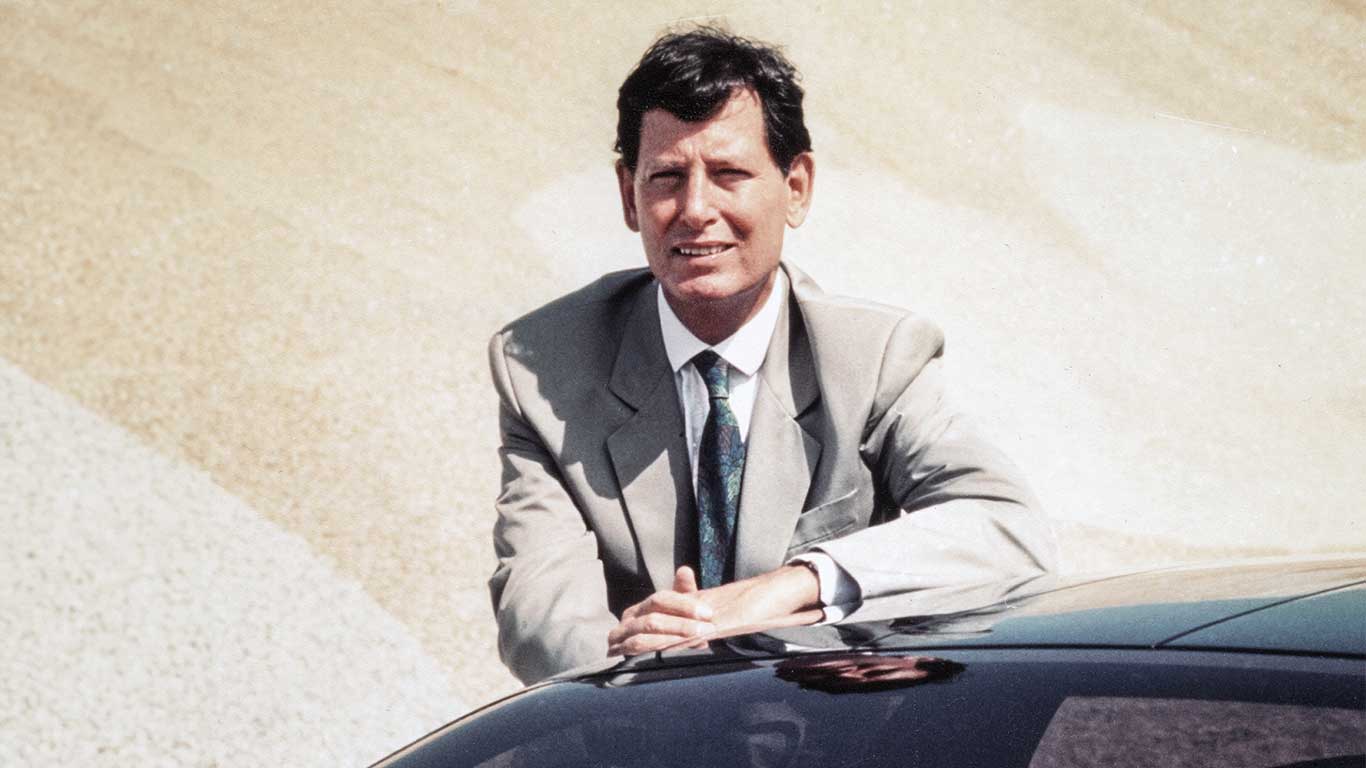
Explore record ↗Tom Tjaarda \(1934–2017\) was an American-born designer who built his career in Turin. At Pininfarina he designed the Ferrari 330 GT 2+2 and Fiat 124 Spider\; his later work at Ghia included the De Tomaso Pantera. He also created the Chevrolet Corvette Rondine concept.
Explore record ↗01 / THE STORY
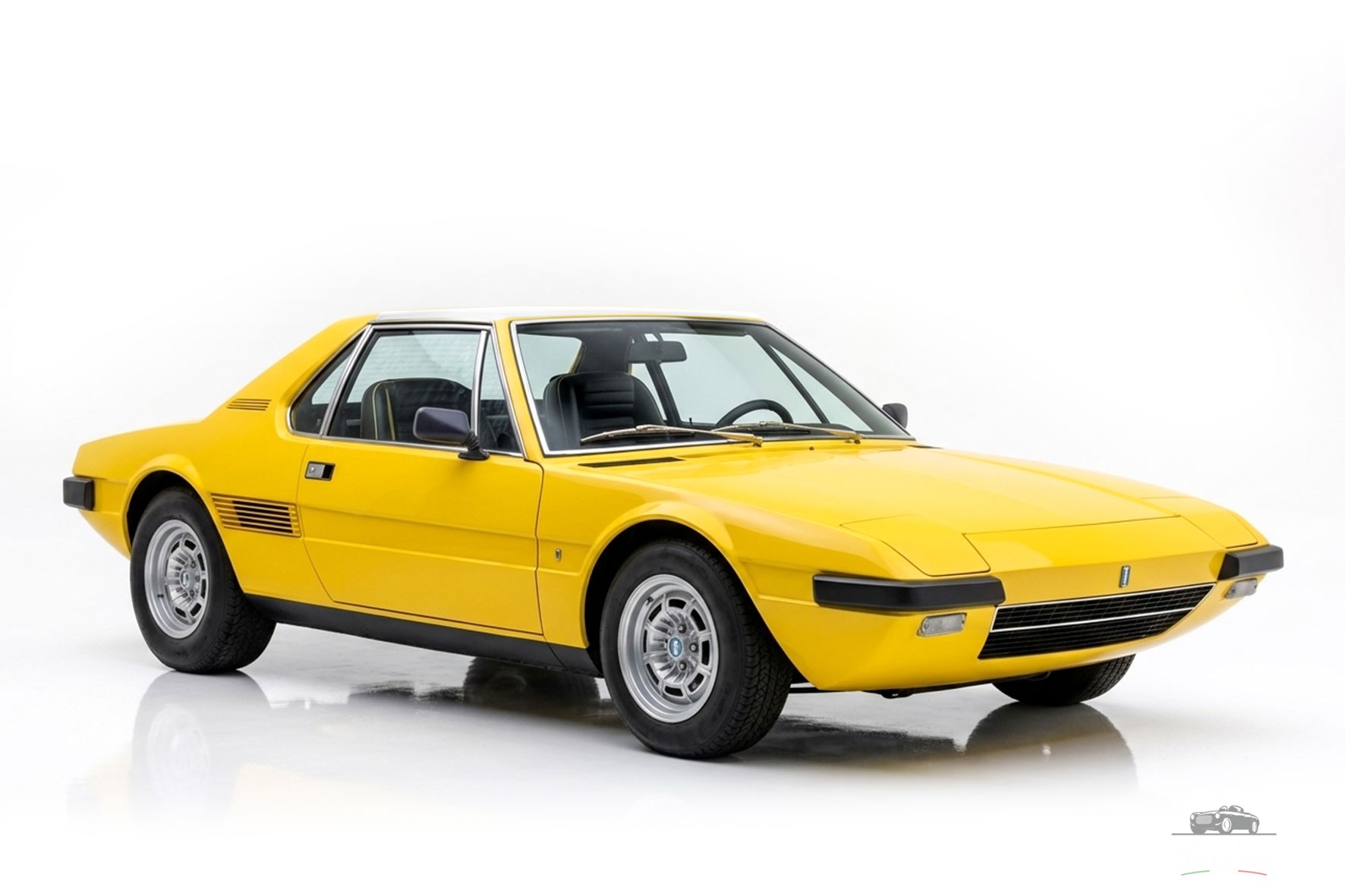
The 1971 De Tomaso 1600 Spider was a one-off, mid-engined sports-car prototype presented by De Tomaso at the Turin Motor Show and constructed by Carrozzeria Ghia. The compact two-seater combined a Ford four-cylinder engine with a low, angular body and a removable-roof configuration. Tom Tjaarda, then working at Ghia, was involved in preparing the design under the direction of Alejandro de Tomaso. The car remained an experimental show vehicle rather than entering series manufacture.
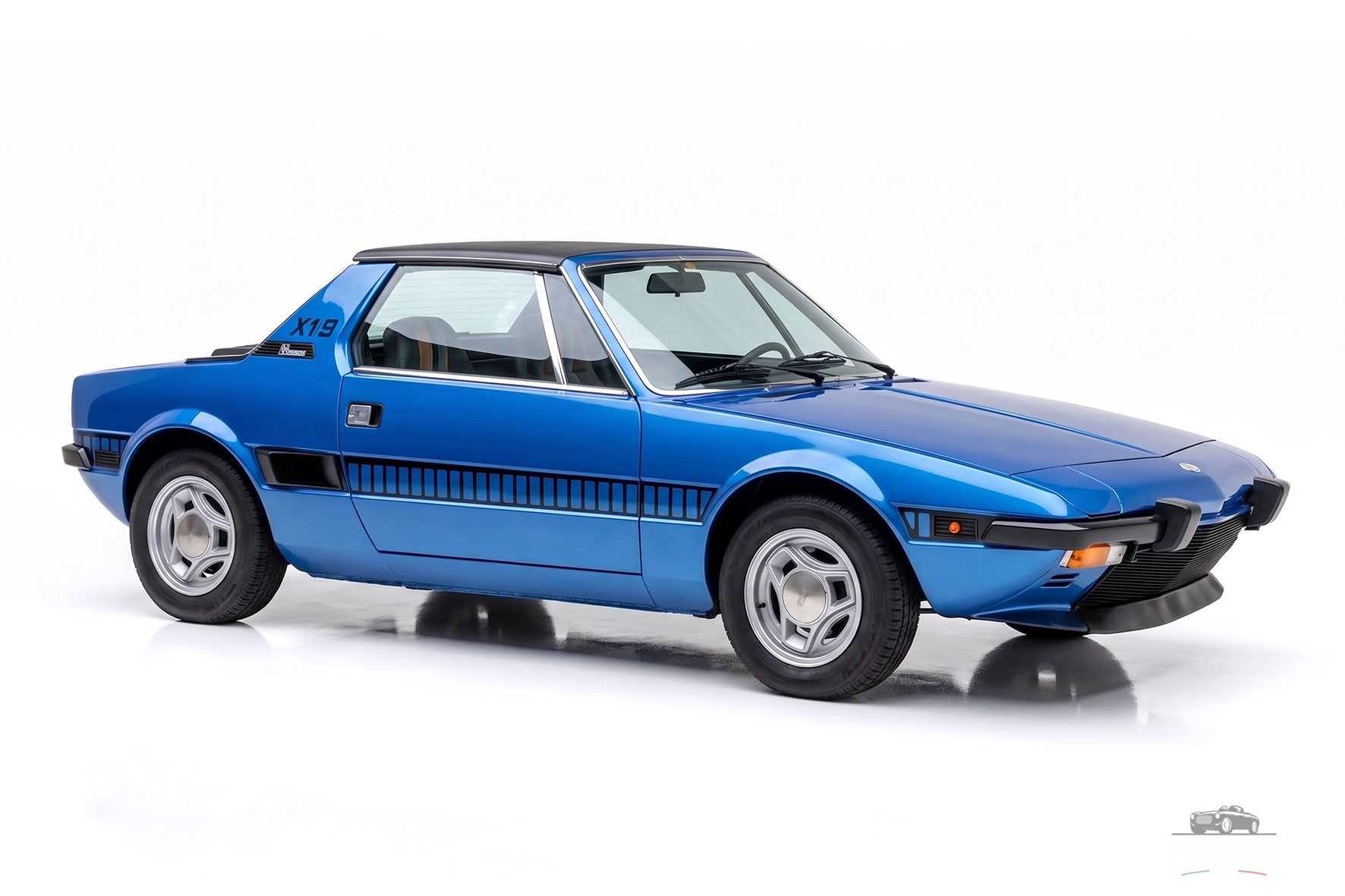
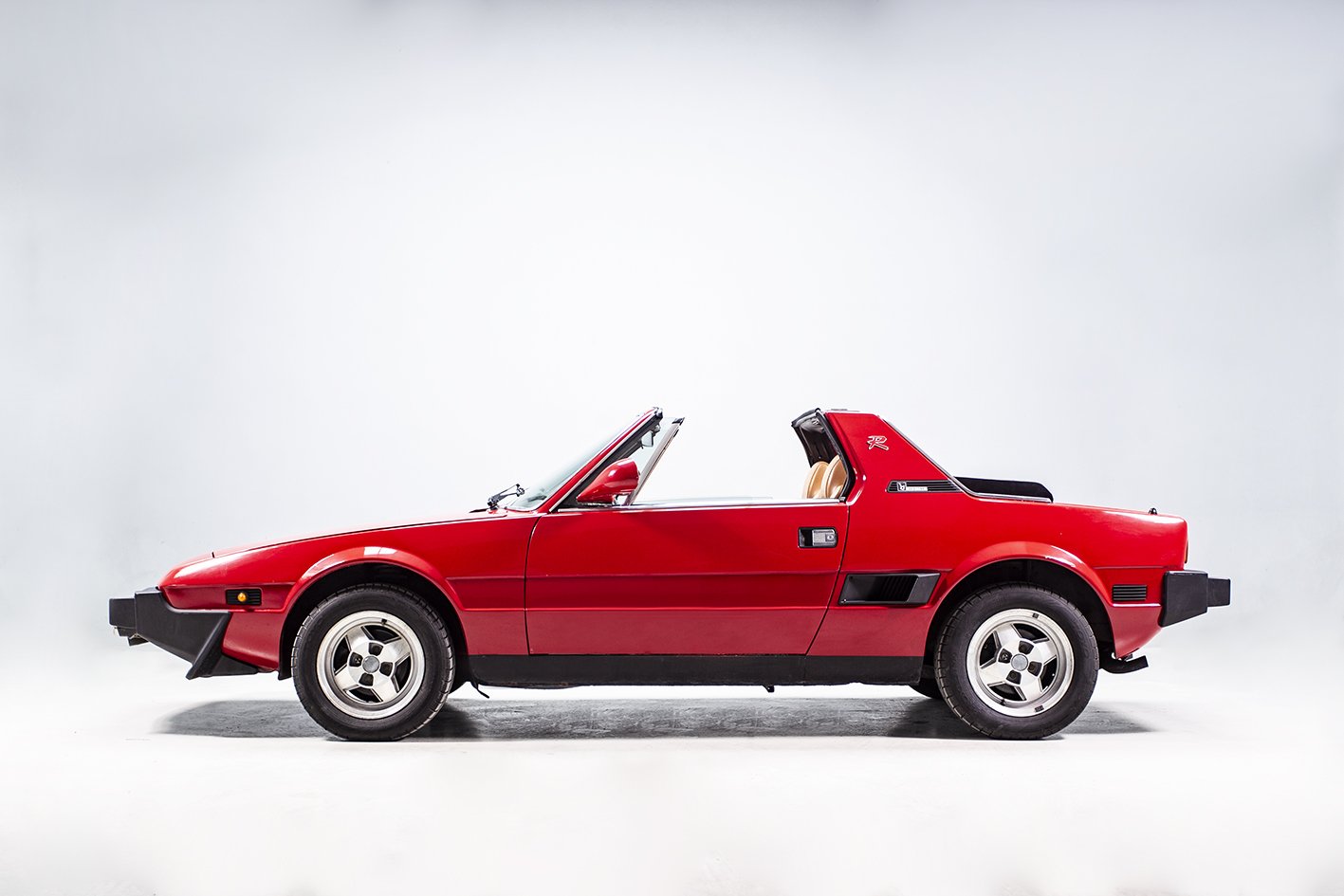
The 1600 Spider is closely connected with the development of the Fiat X1/9, which Bertone was preparing for Fiat at the time. The production X1/9 was not presented until 1972, whereas De Tomaso exhibited its visually similar prototype in November 1971. Both cars had a compact, wedge-shaped silhouette, a transverse mid-engine layout, recessed headlamps and a fixed rear structure associated with a removable roof panel. The Fiat design had developed from the 1969 Autobianchi Runabout, a Bertone project attributed to Marcello Gandini.
Accounts based on Tjaarda’s recollections describe Alejandro de Tomaso arranging for the designer to examine an unfinished Fiat-Bertone prototype at a workshop in the Turin area and then instructing him to prepare a closely similar vehicle for the motor show. This account differs from a simpler version in which De Tomaso showed Tjaarda published drawings. The recollections therefore document a contested episode of industrial design rather than an independently established sequence of every meeting and drawing. Although Tjaarda is associated with the De Tomaso prototype, the underlying X1/9 form should not be attributed to him: its original design belongs to Bertone and Gandini.
Ghia’s prototype used a compact two-seat body with a pronounced central roof structure, retractable headlamps, angular front surfaces and side openings serving the engine compartment. Its proportions were deliberately close to those of Fiat’s forthcoming sports car, while the treatment of the rear deck and the side air intakes differed in detail. The name Spider was used for a car whose roof arrangement also placed it within the broader family of targa-style coupés.
Published De Tomaso marque histories identify a transversely installed, mid-mounted Ford BDA inline-four of approximately 1.6 litres, with a sixteen-valve cylinder head and rear-wheel drive. The precise engine serial, displacement in cubic centimetres, tested output, gearbox specification and chassis identification have not been established for this individual prototype. Figures quoted for Ford BDA engines in other applications should not be treated as measured specifications for the 1600 Spider.
The vehicle appeared at the 53rd Turin Motor Show in 1971, before the official presentation of the Fiat X1/9. Reports of the exhibition describe a strong reaction from the Bertone delegation to the visual similarity between the two cars. The episode has subsequently been discussed in the historical literature as an unusually direct instance of one manufacturer’s design programme becoming visible through another company’s concept car.
There is no documented production run of the De Tomaso 1600 Spider beyond the show prototype, and no verified individual chassis serial or subsequent public auction transaction has been identified. Claims that its appearance directly caused Fiat or Bertone to resume or accelerate the X1/9 programme remain interpretations rather than established production decisions. The car’s principal historical significance lies in its 1971 exhibition, the involvement of Ghia and Tjaarda, and its relationship to an independently designed Fiat model that entered production the following year. The circumstances are examined separately in the historical account of the De Tomaso and Fiat X1/9 episode.
02 / TECHNICAL IDENTITY
03 / DESIGN, BODY & SUPPLIERS
Coachbuilder / Design studio
Founded in Turin in 1916, Carrozzeria Ghia became a major Italian design and coachbuilding house, creating bespoke automobiles, prototypes and international collaborations across the twentieth century.
Explore record ↗Designer
Tom Tjaarda \(1934–2017\) was an American-born designer who built his career in Turin. At Pininfarina he designed the Ferrari 330 GT 2+2 and Fiat 124 Spider\; his later work at Ghia included the De Tomaso Pantera. He also created the Chevrolet Corvette Rondine concept.
Explore record ↗Become a Pro member to see the full details in this section.
Membership is not available yet.
View membership options04 / CHRONOLOGY
07 / GALLERY
CONTINUE EXPLORING
CONTINUE READING
Discover the true story behind the De Tomaso 1600 Spider—an unauthorized copy of the Fiat X1/9 revealed at the 1971 Turin Motor Show. A forgotten scandal involving Alejandro De Tomaso, Ghia, Bertone,…
Read storyDiscover the fascinating origins of the Fiat X1/9, from Gandini's daring design at Bertone to rally dreams, industry drama, and its mysterious successor, the X1/10. A compact icon with a supercar soul.
Read storyTom Tjaarda shaped icons like the Fiat 124 Spider and De Tomaso Pantera. Discover the American who became Italy’s quiet design legend
Read story


THE CONVERSATION
Comments 0