

Ghia
Founded in Turin in 1916, Carrozzeria Ghia became a major Italian design and coachbuilding house, creating bespoke automobiles, prototypes and international collaborations across the twentieth century.
Explore record ↗
1954Coachwork by Ghia
THE VEHICLE AT A GLANCE
THE PEOPLE BEHIND THE CAR
Founded in Turin in 1916, Carrozzeria Ghia became a major Italian design and coachbuilding house, creating bespoke automobiles, prototypes and international collaborations across the twentieth century.
Explore record ↗Giovanni Savonuzzi was an Italian engineer and automotive designer associated with Cisitalia and Ghia, contributing to influential aerodynamic prototypes and bespoke sports cars.
Explore record ↗PRICE & SALES RECORD
01 / THE STORY
The 1954 DeSoto Adventurer II was a unique two-seat grand touring coupé built by Carrozzeria Ghia in Turin on an American DeSoto chassis. Its documented vehicle identification number is 14093762. The car belongs to the group of Chrysler-associated Italian show cars developed during the early 1950s, but it is distinct in design, dimensions and construction from the earlier four-seat DeSoto Adventurer I. The designation also predates the series-production DeSoto Adventurer models introduced from 1956.
The body applied the aerodynamic vocabulary of Ghia’s Supersonic designs to the proportions of a large American chassis. Its long bonnet, relatively compact passenger compartment, tapering rear deck and rounded rear lighting pods gave it a form unlike contemporary production DeSotos. A broad front grille sat between headlamps integrated into the fenders; the lateral surfaces were largely uninterrupted, with modest fins and restrained trim. It was constructed as a fully functioning experimental coupé rather than a proposal for immediate series production.
The project was developed within Ghia’s collaboration with Chrysler. Its visual ancestry is associated with Giovanni Savonuzzi and the Supersonic body family, while contemporary auction documentation describes adaptation of the design by Chrysler stylist Virgil Exner. Published histories differ in assigning responsibility for the final full-size body. The stylistic roles should therefore be distinguished from Ghia’s established function as the coachbuilder. The Chrysler–Ghia partnership provided the industrial context for its construction.
A particularly unusual feature was the movable rear glazing. The curved backlight could retract into the rear bodywork, leaving an open area behind the seats while retaining the fixed roof structure above the occupants. Period descriptions also identify tailored luggage, an elaborate interior and a low, elongated two-door profile. The vehicle was originally described in a dark metallic finish; it later appeared in red, the colour shown in the 2012 auction catalogue.
The chassis carried a front-mounted DeSoto FireDome hemispherical-head V8 of approximately 276.1 cubic inches (4.52 litres), driving the rear wheels through a two-speed PowerFlite automatic transmission. Contemporary DeSoto specifications and specialist accounts associate this engine type with a nominal rating of 170 horsepower. Published measurements for the Adventurer II give a wheelbase of 125.5 inches (3,188 mm), length of 214.2 inches (5,441 mm), width of 77.9 inches (1,979 mm) and height of 55.5 inches (1,410 mm). The figures describe this car or its reported configuration and should not be substituted with figures from the later production Adventurer.
Accounts of the car’s original exhibition itinerary are not entirely consistent. Some histories place its United States presentation at Chrysler’s Chelsea Proving Grounds in June 1954, while other accounts describe subsequent appearances in Turin and Brussels without securely identifying each event edition. In particular, an identification with the Turin motor show held in April–May 1954 conflicts with the reported later Chelsea debut and should not be treated as a verified participation for this chassis.
Its reported Moroccan provenance also requires qualification. Barrett-Jackson’s later auction catalogue states that King Mohammed V of Morocco was its first owner. A separate historical account citing a 1959 report in Automobile Topics says that the king considered the car but did not buy it, and that it remained with a Casablanca dealer before its transfer to an American buyer. The royal ownership claim is therefore an attributed statement rather than a settled link in the chain of title. Later accounts describe preservation in the United States, extended storage, recommissioning in the 1980s and restoration before concours appearances. The individual names and dates in this chain require separate documentary corroboration.
The surviving coupé was offered by Barrett-Jackson at Scottsdale in January 2012 as lot 5002.1, identified by VIN 14093762. Its auction listing documents the distinctive sliding backlight, Ghia coachwork and red exterior. The car’s survival and exact-chassis auction identity are secure; reported awards, undated exhibition appearances and specific stages of ownership should be linked only after checking the appropriate archival records. The established differences between the Adventurer I and II remain essential to any future reconciliation of their event histories.
02 / TECHNICAL IDENTITY
Become a Pro member to see the full details in this section.
Membership is not available yet.
View membership optionsBecome a Pro member to see the full details in this section.
Membership is not available yet.
View membership options03 / DESIGN, BODY & SUPPLIERS
Coachbuilder / Design studio
Founded in Turin in 1916, Carrozzeria Ghia became a major Italian design and coachbuilding house, creating bespoke automobiles, prototypes and international collaborations across the twentieth century.
Explore record ↗Designer
Giovanni Savonuzzi was an Italian engineer and automotive designer associated with Cisitalia and Ghia, contributing to influential aerodynamic prototypes and bespoke sports cars.
Explore record ↗04 / CHRONOLOGY
05 / PEOPLE, COLLECTIONS & MUSEUMS
06 / MARKET & PRICE HISTORY
USD · 1 recorded sale
RECORDED SALES
USD
Each point is a completed sale with its own date, in chronological order. Dates are positioned by calendar time, with approximate placement when only a year or month is documented. The connecting line shows observed sales prices in this currency, not an appreciation index: transactions may concern different chassis and specifications. Factory prices and unsold estimates are excluded.
Sign in to see the details of each sale on the chart.
Become a Pro member to explore the full price and sale history.
Membership is not available yet.
View membership optionsMarket observations describe documented transactions, estimates or offers. They are not themselves a current valuation of the vehicle.
07 / CHASSIS REGISTER
1 recorded sale · 2012
View full chassis history · Pro membership
08 / GALLERY
09 / PERIOD ARCHIVE
Become a Pro member to see the full details in this section.
Membership is not available yet.
View membership optionsCONTINUE EXPLORING
CONTINUE READING
There are in the history of companies, just as in the history of nations, certain fateful episodes, which have an influence on the course of events well in excess of their actual…
Read storyVirgil Exner transformed American car design with bold artistry, aerodynamic vision, and Italian collaboration that redefined Detroit’s style.
Read story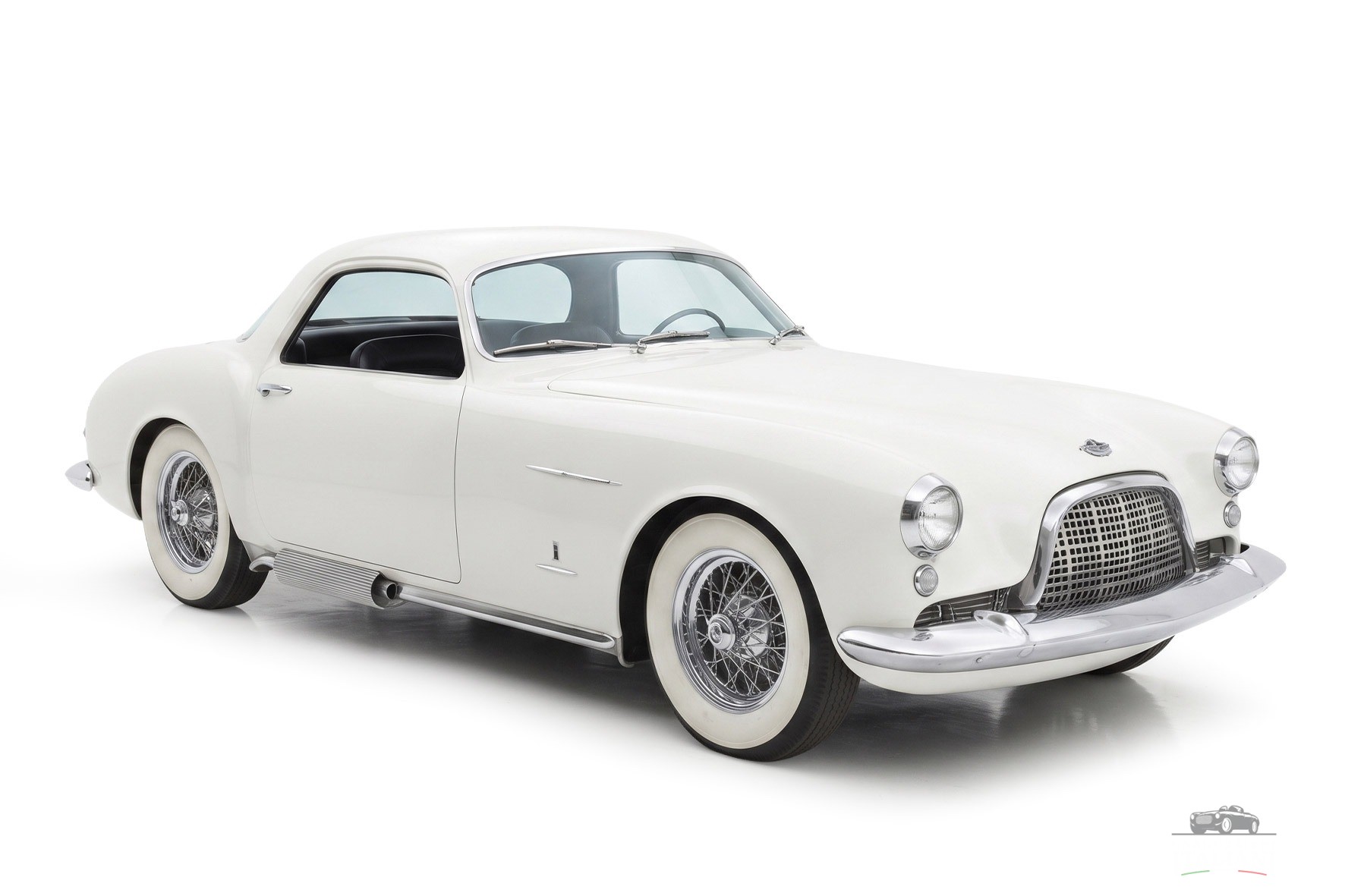

THE CONVERSATION
Comments 0