
Pininfarina
Founded by Battista Pinin Farina in Turin in 1930, Pininfarina became one of the most influential Italian styling and coachbuilding houses, particularly through its work for Ferrari and other international manufacturers.
Explore record ↗
1995
THE VEHICLE AT A GLANCE
THE PEOPLE BEHIND THE CAR
Founded by Battista Pinin Farina in Turin in 1930, Pininfarina became one of the most influential Italian styling and coachbuilding houses, particularly through its work for Ferrari and other international manufacturers.
Explore record ↗Pietro Camardella is an Italian automotive designer known for his work at Pininfarina, including his contribution to the Ferrari F40.
Explore record ↗PRICE & SALES RECORD
01 / THE STORY
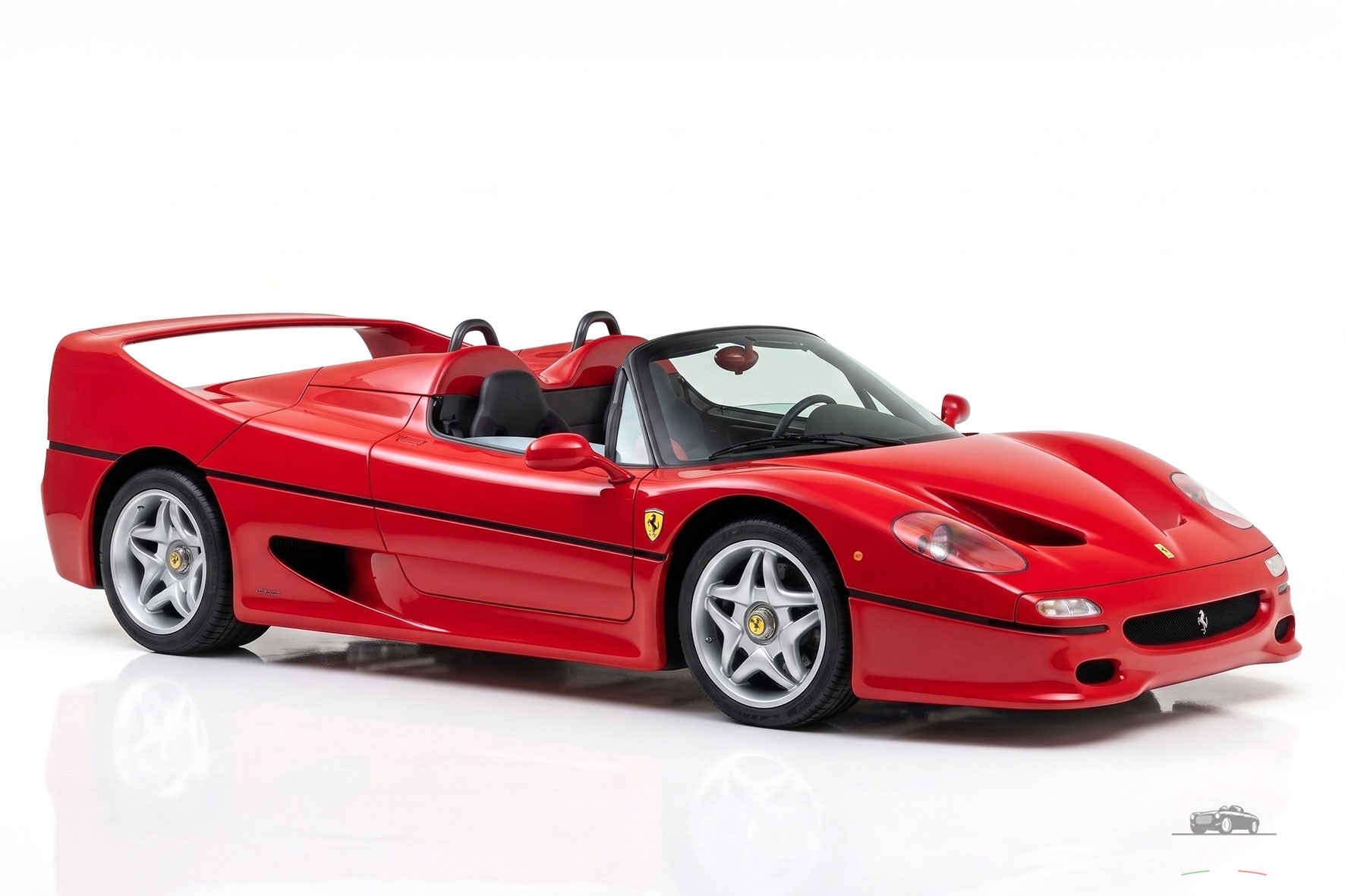
The Ferrari F50 was born from an idea by Piero Ferrari to create a “road-going Formula 1” vehicle. The engine is a narrow V12 derived from the powerplant that equipped Mansell’s Ferrari 640 F in the 1989 season. In this configuration, with its displacement increased to 4.7 liters, the engine had already been installed the previous year on the Ferrari 333SP for the IMSA championship. It was designed by Pietro Camardella, known for his work on Ferrari Mythos, 456 (see our video documentary), and F40 models. The design of the F50 was completely transformed, although Camardella was leaving Pininfarina during the design phase, the design is credited to him. For the first time in a Ferrari road car, the chassis was entirely made from composite carbon materials, as in Formula 1, and linked to the engine-transmission assembly through an auxiliary chassis, aimed at achieving extremely high structural rigidity while maintaining a very low weight of 102 kg for the core structure. The body, with its particularly captivating lines in both spider and coupe versions, required over 2,000 hours of wind tunnel testing to achieve the expected downforce values at high speeds. The braking system, specially designed by Brembo, deliberately lacked ABS. The number of units produced was decided through a marketing study, which predicted 350 potential customers worldwide willing to purchase such a vehicle. The number was then reduced to 349, in accordance with the teachings of Enzo Ferrari, who believed that the perfect production number should be one less than the total demand from the market. The car was put on sale for 852.8 million lire, and the 349 units were sold in a very short time, long before their production. To avoid the speculative phenomena that had occurred with previous special series cars like the F40, Ferrari limited reservations to one unit per customer (including dealerships) and imposed a ban on selling the car before two years had passed since delivery. Marketing predictions turned out to be significantly underestimated, and Ferrari’s decision to maintain the production number unchanged caused a fierce struggle among wealthy users and collectors, often marked by legally relevant incidents. Many cases involved F50s being stolen from highly secure garages, believed to be thefts commissioned by buyers. It would not be possible, due to the rarity of the units, to re-enter the car market with impunity. The most spectacular theft occurred in 2003 at the Ferrari dealership in Philadelphia, where a supposed customer arrived with a driver and bodyguards, then disappeared aboard the F50 after listening to the engine roar. The first F50 was delivered to American boxer Mike Tyson. Another was sold to Diego Armando Maradona. The last unit rolled off the assembly line in July 1997.
02 / TECHNICAL IDENTITY
Become a Pro member to see the full details in this section.
Membership is not available yet.
View membership options03 / DESIGN, BODY & SUPPLIERS
Coachbuilder / Design studio
Founded by Battista Pinin Farina in Turin in 1930, Pininfarina became one of the most influential Italian styling and coachbuilding houses, particularly through its work for Ferrari and other international manufacturers.
Explore record ↗Attributed designer
Pietro Camardella is an Italian automotive designer known for his work at Pininfarina, including his contribution to the Ferrari F40.
Explore record ↗Become a Pro member to see the full details in this section.
Membership is not available yet.
View membership options04 / CHRONOLOGY
05 / PEOPLE, COLLECTIONS & MUSEUMS
06 / MARKET & PRICE HISTORY
EUR · 4 recorded sales
RECORDED SALES
EUR
Each point is a completed sale with its own date, in chronological order. Dates are positioned by calendar time, with approximate placement when only a year or month is documented. The connecting line shows observed sales prices in this currency, not an appreciation index: transactions may concern different chassis and specifications. Factory prices and unsold estimates are excluded.
USD · 1 recorded sale
RECORDED SALES
USD
Each point is a completed sale with its own date, in chronological order. Dates are positioned by calendar time, with approximate placement when only a year or month is documented. The connecting line shows observed sales prices in this currency, not an appreciation index: transactions may concern different chassis and specifications. Factory prices and unsold estimates are excluded.
Sign in to see the details of each sale on the chart.
Become a Pro member to explore the full price and sale history.
Membership is not available yet.
View membership optionsMarket observations describe documented transactions, estimates or offers. They are not themselves a current valuation of the vehicle.
07 / CHASSIS REGISTER
5 chassis numbers in the register
1 recorded sale · 2026
1 recorded sale · 2016
1 recorded sale · 2014
1 recorded sale · 2013
View full chassis register · Pro membership
08 / GALLERY
CONTINUE READING
The untold design story of the Ferrari F50, told through Pietro Camardella’s memories of Pininfarina, Formula One inspiration and CAD development.
Read story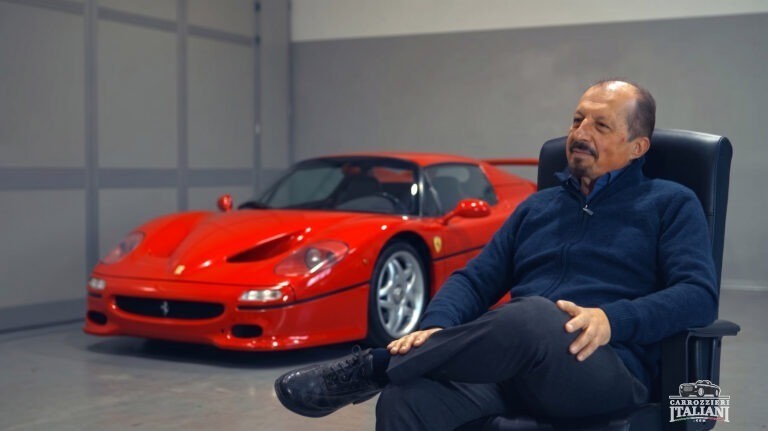
THE CONVERSATION
Comments 0