Aldo Brovarone
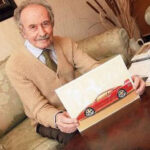
Aldo Brovarone was an Italian automotive stylist associated with Pininfarina, contributing to the Turin firm's post-war tradition of refined sports cars and experimental design.
Explore record ↗
1970Coachwork by Pininfarina
THE VEHICLE AT A GLANCE
THE PEOPLE BEHIND THE CAR
Aldo Brovarone was an Italian automotive stylist associated with Pininfarina, contributing to the Turin firm's post-war tradition of refined sports cars and experimental design.
Explore record ↗Founded by Battista Pinin Farina in Turin in 1930, Pininfarina became one of the most influential Italian styling and coachbuilding houses, particularly through its work for Ferrari and other international manufacturers.
Explore record ↗01 / THE STORY
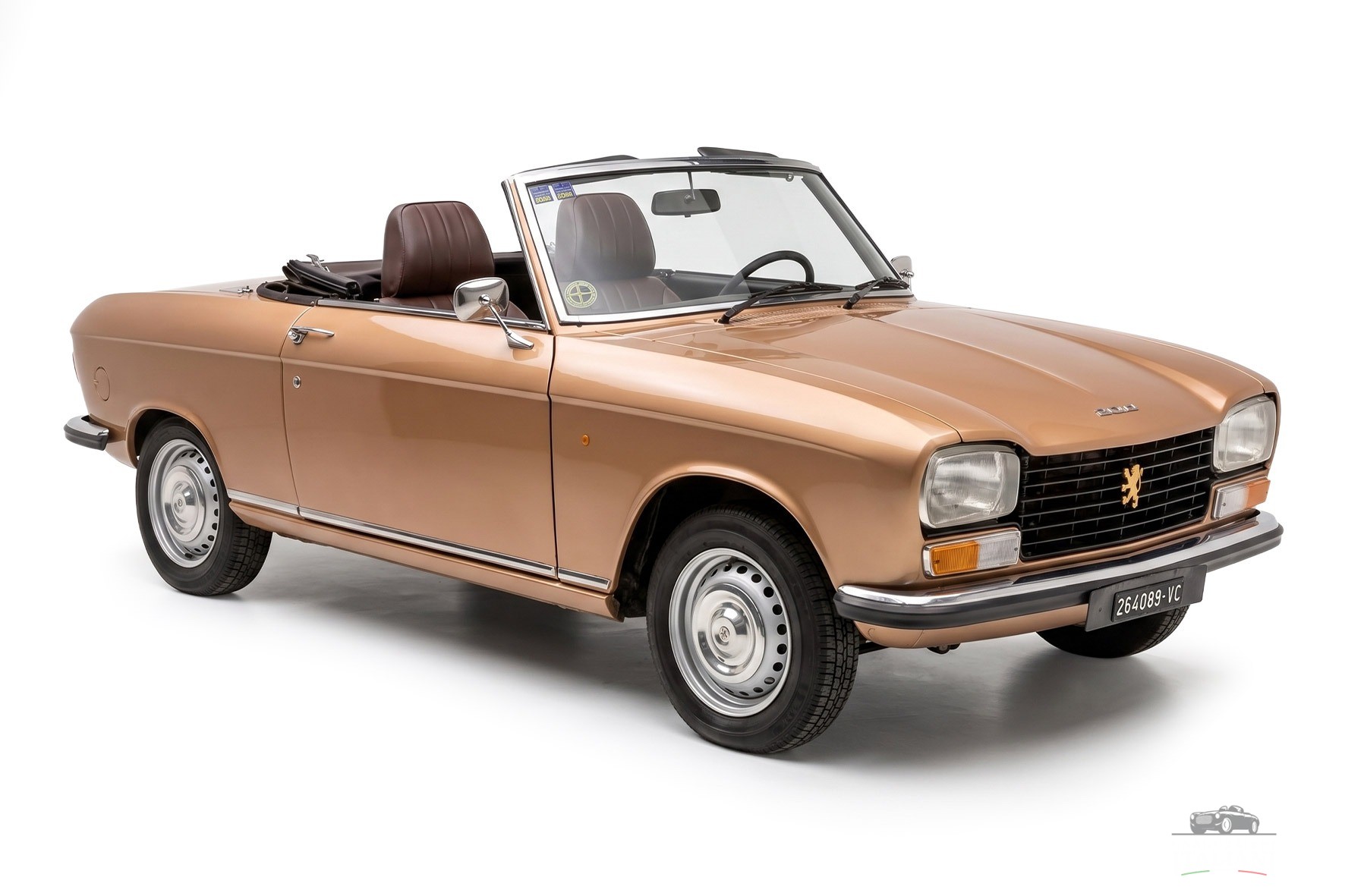
The Peugeot 304 Cabriolet was a two-seater open-top automobile produced by Peugeot between 1970 and 1975. It formed part of the broader 304 model range, which was introduced in 1969 as a mid-size passenger car intended to bridge the segment between the smaller 204 and the larger 504. The cabriolet variant was developed concurrently with the coupé version and was styled by Pininfarina, under the direction of Aldo Brovarone. The vehicle was constructed on a monocoque chassis and employed a front-engine, front-wheel-drive layout. The engine was a four-cylinder, water-cooled unit mounted transversely. Initial models were equipped with a 1,288 cc overhead-valve inline-four (engine code XL3), producing approximately 65 horsepower. In 1972, the 304 S Cabriolet was introduced, fitted with the XL3S engine featuring a twin-choke carburettor and increased compression, raising output to approximately 75 horsepower. Power was transmitted through a four-speed manual gearbox. The suspension system comprised independent components on all four wheels, and disc brakes were fitted at both front and rear. The cabriolet bodywork was fabricated at Pininfarina and assembled at Peugeot’s Sochaux plant. It featured a manually operated folding fabric roof, frameless doors, and a shortened rear deck. The design was marked by minimal ornamentation and emphasized clean lines and proportion. The cabin was configured for two occupants and shared many components with the coupé and saloon variants. Production of the Peugeot 304 Cabriolet totaled 18,647 units over five years. Of these, a small number were manufactured in right-hand-drive configuration for export to the United Kingdom and other markets. No separate chassis numbering sequence was employed for the cabriolet; all vehicles were integrated into the main 304 serial number system. Ownership records were not centrally maintained, and examples were sold through Peugeot’s standard retail distribution network. The Peugeot 304 Cabriolet represents a period in which European manufacturers offered open-top variants of family saloons for limited-volume production. It combined Peugeot’s existing mechanical platform with exterior design by Pininfarina, reflecting a longstanding collaboration between the two firms. The model is regarded as a modest but refined example of mass-produced convertible automobiles from the early 1970s.
02 / TECHNICAL IDENTITY
03 / DESIGN, BODY & SUPPLIERS
Coachbuilder / Design studio
Founded by Battista Pinin Farina in Turin in 1930, Pininfarina became one of the most influential Italian styling and coachbuilding houses, particularly through its work for Ferrari and other international manufacturers.
Explore record ↗Attributed designer
Aldo Brovarone was an Italian automotive stylist associated with Pininfarina, contributing to the Turin firm's post-war tradition of refined sports cars and experimental design.
Explore record ↗07 / GALLERY

THE CONVERSATION
Comments 0