Aldo Brovarone
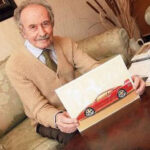
Aldo Brovarone was an Italian automotive stylist associated with Pininfarina, contributing to the Turin firm's post-war tradition of refined sports cars and experimental design.
Explore record ↗
1969Coachwork by Pininfarina
THE VEHICLE AT A GLANCE
THE PEOPLE BEHIND THE CAR
Aldo Brovarone was an Italian automotive stylist associated with Pininfarina, contributing to the Turin firm's post-war tradition of refined sports cars and experimental design.
Explore record ↗Founded by Battista Pinin Farina in Turin in 1930, Pininfarina became one of the most influential Italian styling and coachbuilding houses, particularly through its work for Ferrari and other international manufacturers.
Explore record ↗01 / THE STORY
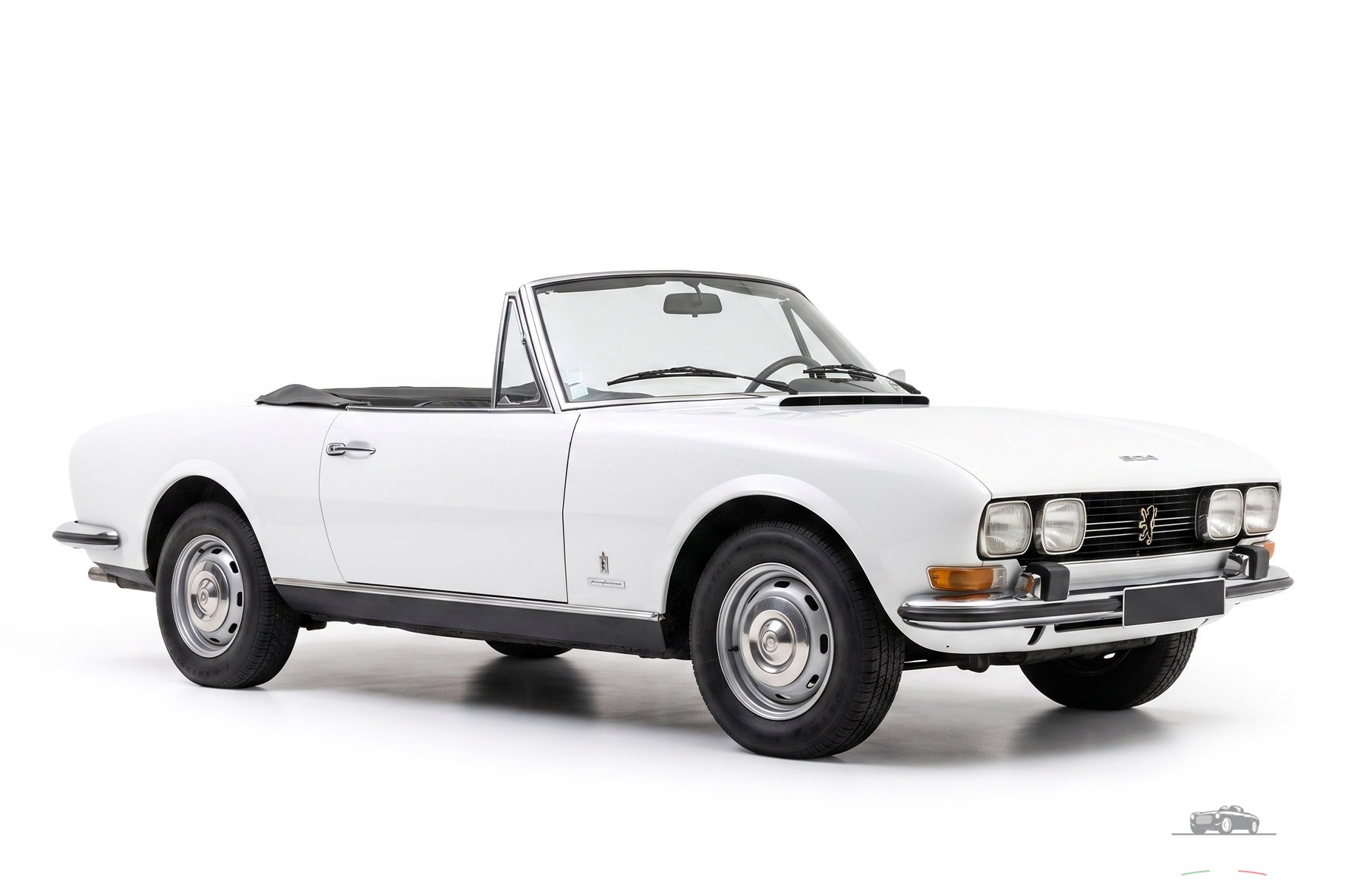
The Peugeot 504 Cabriolet was introduced in 1969 alongside the Coupé and was designed and built by Pininfarina. Rather than adapting the standard 504 saloon into a two-door model, Pininfarina created an entirely new body with proportions and styling conceived specifically for the grand touring market. The design combined balanced geometry with refined simplicity, resulting in one of the most elegant open-top models of its era. Both the Coupé and Cabriolet were built on a modified version of the 504 sedan platform, featuring a wheelbase shortened by 190 mm, from 2,740 mm to 2,550 mm, to achieve sportier handling and improved proportions. The Cabriolet shared most mechanical components with the Coupé, including the front-engine, rear-wheel-drive layout and fully independent suspension. The body was assembled at Pininfarina’s Turin facility and then shipped to Peugeot’s Sochaux plant for final completion. The front end was characterized by a low, sloping bonnet, a divided grille with three fine horizontal slats, and dual rectangular headlamp clusters integrated into the fenders. The wraparound windshield and clean side panels contributed to a fluid silhouette. At the rear, a large trunk lid and vertically arranged taillights gave the design a distinctive and timeless balance. The Cabriolet replaced the hard roof and rear window with a soft folding top that maintained the car’s graceful proportions whether open or closed. At launch, the 504 Cabriolet was powered by a 1,796 cc inline-four with Kugelfischer mechanical fuel injection, producing 97 hp. In 1970, the engine was enlarged to 1,971 cc with 106 hp, and in 1974, the PRV 2,664 cc V6 became available, developing 136 hp. Gearbox options included four- and five-speed manuals and a three-speed automatic. The 504 Cabriolet remained in production until 1983, with approximately 31,000 combined Coupé and Cabriolet units built, representing the peak of Peugeot’s collaboration with Pininfarina.
02 / TECHNICAL IDENTITY
03 / DESIGN, BODY & SUPPLIERS
Coachbuilder / Design studio
Founded by Battista Pinin Farina in Turin in 1930, Pininfarina became one of the most influential Italian styling and coachbuilding houses, particularly through its work for Ferrari and other international manufacturers.
Explore record ↗Attributed designer
Aldo Brovarone was an Italian automotive stylist associated with Pininfarina, contributing to the Turin firm's post-war tradition of refined sports cars and experimental design.
Explore record ↗04 / CHRONOLOGY
07 / GALLERY

THE CONVERSATION
Comments 0