Aldo Brovarone
Aldo Brovarone was an Italian automotive stylist associated with Pininfarina, contributing to the Turin firm's post-war tradition of refined sports cars and experimental design.
Explore record ↗
1968
THE VEHICLE AT A GLANCE
THE PEOPLE BEHIND THE CAR
Aldo Brovarone was an Italian automotive stylist associated with Pininfarina, contributing to the Turin firm's post-war tradition of refined sports cars and experimental design.
Explore record ↗Founded by Battista Pinin Farina in Turin in 1930, Pininfarina became one of the most influential Italian styling and coachbuilding houses, particularly through its work for Ferrari and other international manufacturers.
Explore record ↗01 / THE STORY
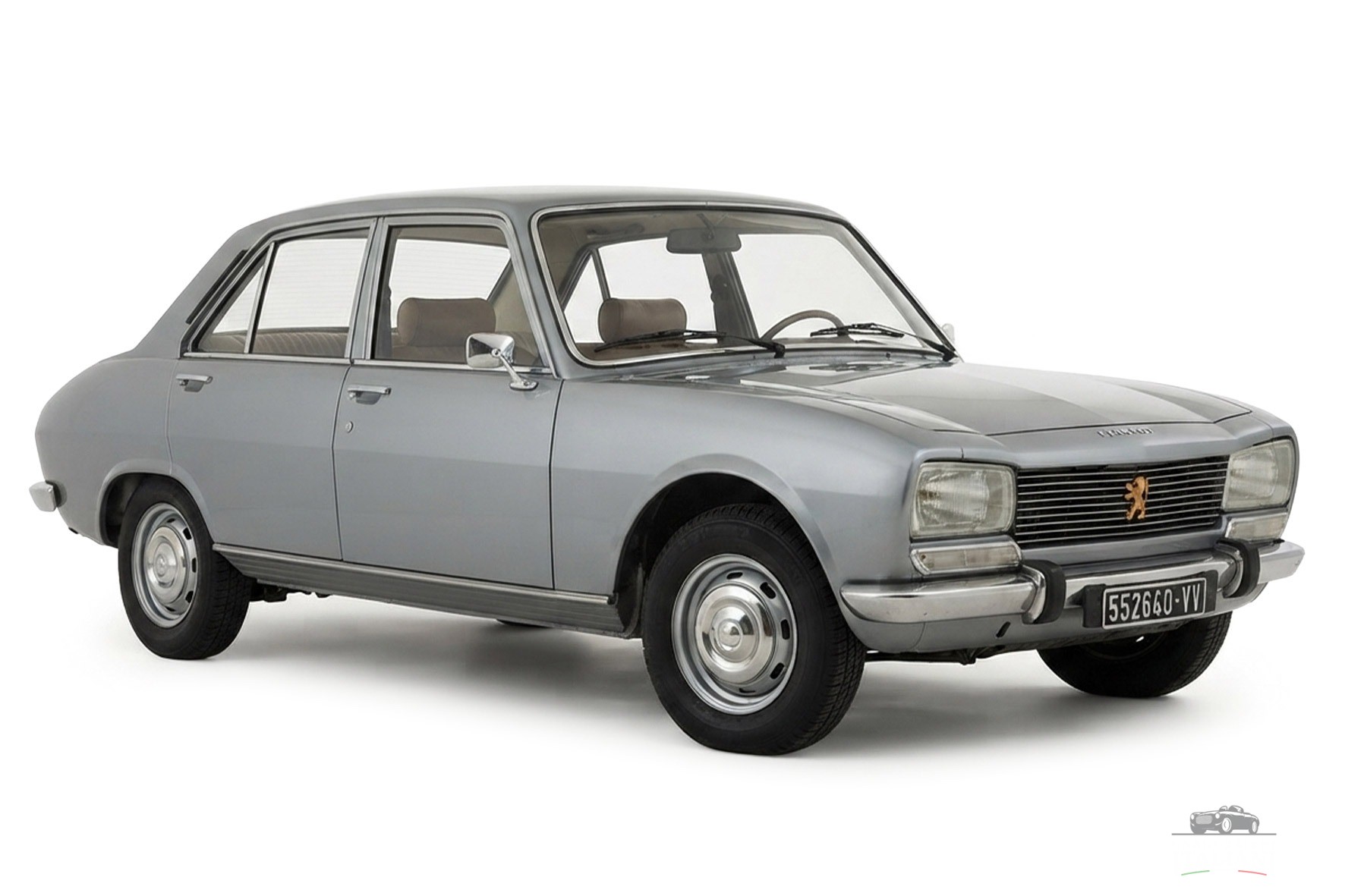
The Peugeot 504 sedan, unveiled in 1968, remains one of the most enduring expressions of mid-century automotive elegance and restraint. Styled by Aldo Brovarone at Pininfarina, the 504 marked a shift in Peugeot’s design language—an evolution from the formal lines of the 404 to a more modern and understated silhouette that captured the essence of practical sophistication. It was not merely a new car, but a clear statement of the brand’s aspirations in design and engineering. At a glance, the 504’s proportions reflect quiet confidence. The subtle arc of the roofline, the elongated bonnet, and the signature notch at the base of the C-pillar give the sedan its character—distinctly European yet universally composed. Its trapezoidal headlamps and thin, horizontal grille lent it a sense of visual width and presence without being ostentatious. This was a car drawn with precision, not flourish. The interior followed suit with a rational and uncluttered approach. Ergonomics and comfort were guiding principles. The cabin was designed to accommodate passengers with ample legroom and visibility, a rare priority in its time. Textures and materials were chosen for durability and a certain tactile honesty, in keeping with the car’s unpretentious nature. Technically, the 504 introduced innovations that enhanced both ride quality and durability. Its fully independent rear suspension—an advanced feature for a family sedan of the era—was paired with front disc brakes and a robust drivetrain. The result was a car that rode with composure over broken surfaces and proved its reliability across continents. It was as suited to the autobahn as it was to the rugged roads of Africa or South America, where it would later earn legendary status. The 504 was awarded European Car of the Year in 1969, a recognition of its all-around excellence. And while Peugeot would go on to produce many other successful models, the 504 remains singular: a car that wears its elegance modestly, endures with grace, and reminds us that great design often speaks softly. Its collaboration with Pininfarina produced not just a car, but a benchmark—timeless, durable, and deeply considered.
02 / TECHNICAL IDENTITY
03 / DESIGN, BODY & SUPPLIERS
Coachbuilder / Design studio
Founded by Battista Pinin Farina in Turin in 1930, Pininfarina became one of the most influential Italian styling and coachbuilding houses, particularly through its work for Ferrari and other international manufacturers.
Explore record ↗Attributed designer
Aldo Brovarone was an Italian automotive stylist associated with Pininfarina, contributing to the Turin firm's post-war tradition of refined sports cars and experimental design.
Explore record ↗04 / CHRONOLOGY
07 / GALLERY
08 / PERIOD ARCHIVE
Become a Pro member to see the full details in this section.
Membership is not available yet.
View membership options
THE CONVERSATION
Comments 0