

Castagna
The Castagna coachbuilding tradition dates to nineteenth-century Milan, when Carlo Castagna took over an established carriage business. Carrozzeria Castagna later became renowned for luxury bespoke automotive bodies.
Explore record ↗
2003Coachwork by Castagna
THE VEHICLE AT A GLANCE
THE PEOPLE BEHIND THE CAR
The Castagna coachbuilding tradition dates to nineteenth-century Milan, when Carlo Castagna took over an established carriage business. Carrozzeria Castagna later became renowned for luxury bespoke automotive bodies.
Explore record ↗Gioacchino Acampora was an Italian architect and automotive designer based in Milan.
Explore record ↗01 / THE STORY
The Ferrari Rossellini was developed in 2003 as a barchetta styling project by Carrozzeria Castagna Milano, with the design attributed to Gioacchino Acampora. It belonged to a programme of individually styled concepts created by the revived Milanese coachbuilder around the beginning of the twenty-first century. Rather than a Ferrari factory production model, the Rossellini was conceived as an independent coachbuilding proposal drawing on the marque’s grand touring and competition traditions.
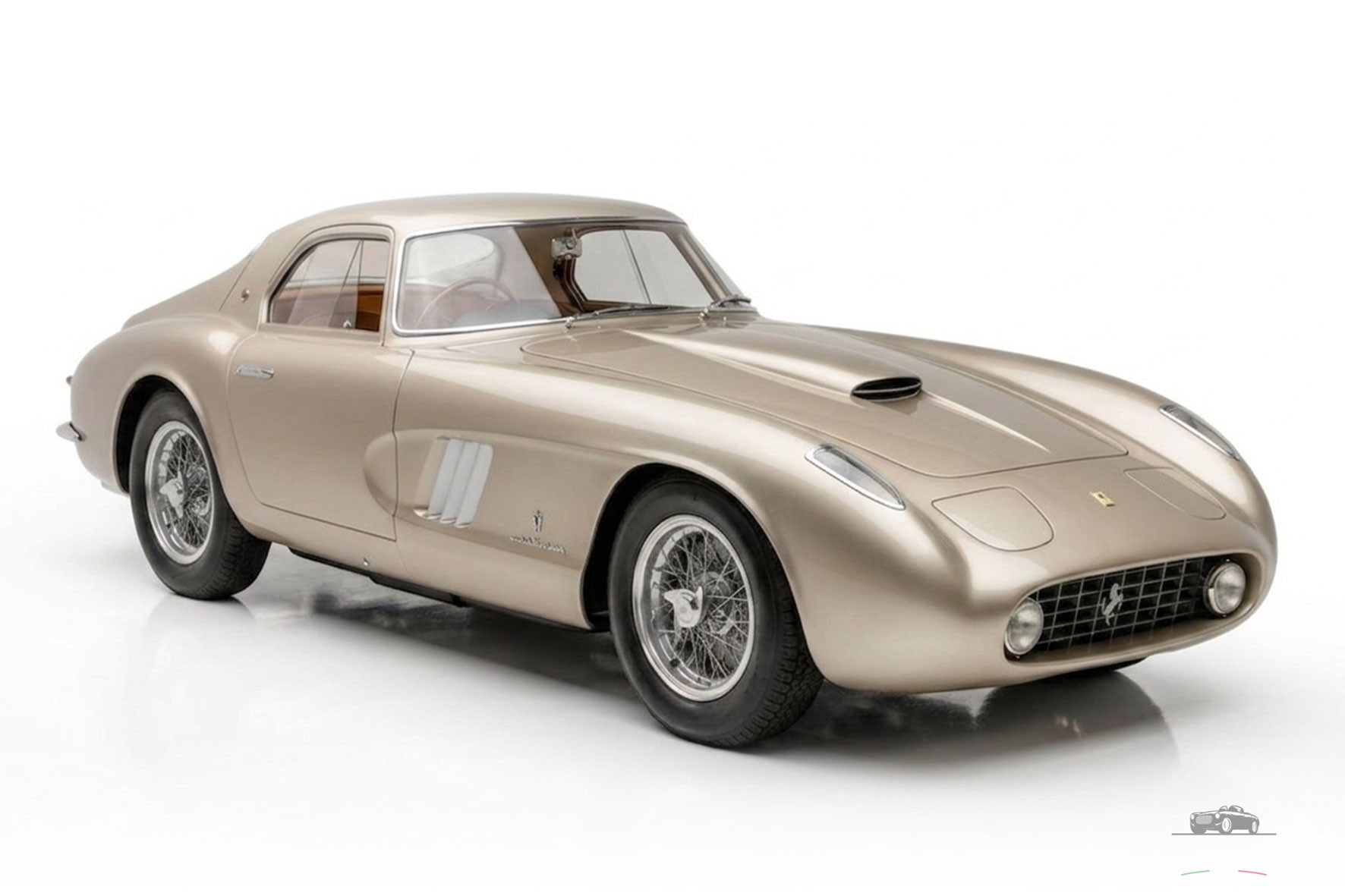
The name honoured Italian film director Roberto Rossellini, an enthusiast of individually bodied Ferraris. The brief drew on the history of the special Ferrari 375 MM associated with Ingrid Bergman. This 1950s car provided a historical reference for the Rossellini project, but the two are separate automobiles and share neither an identified chassis nor a body.
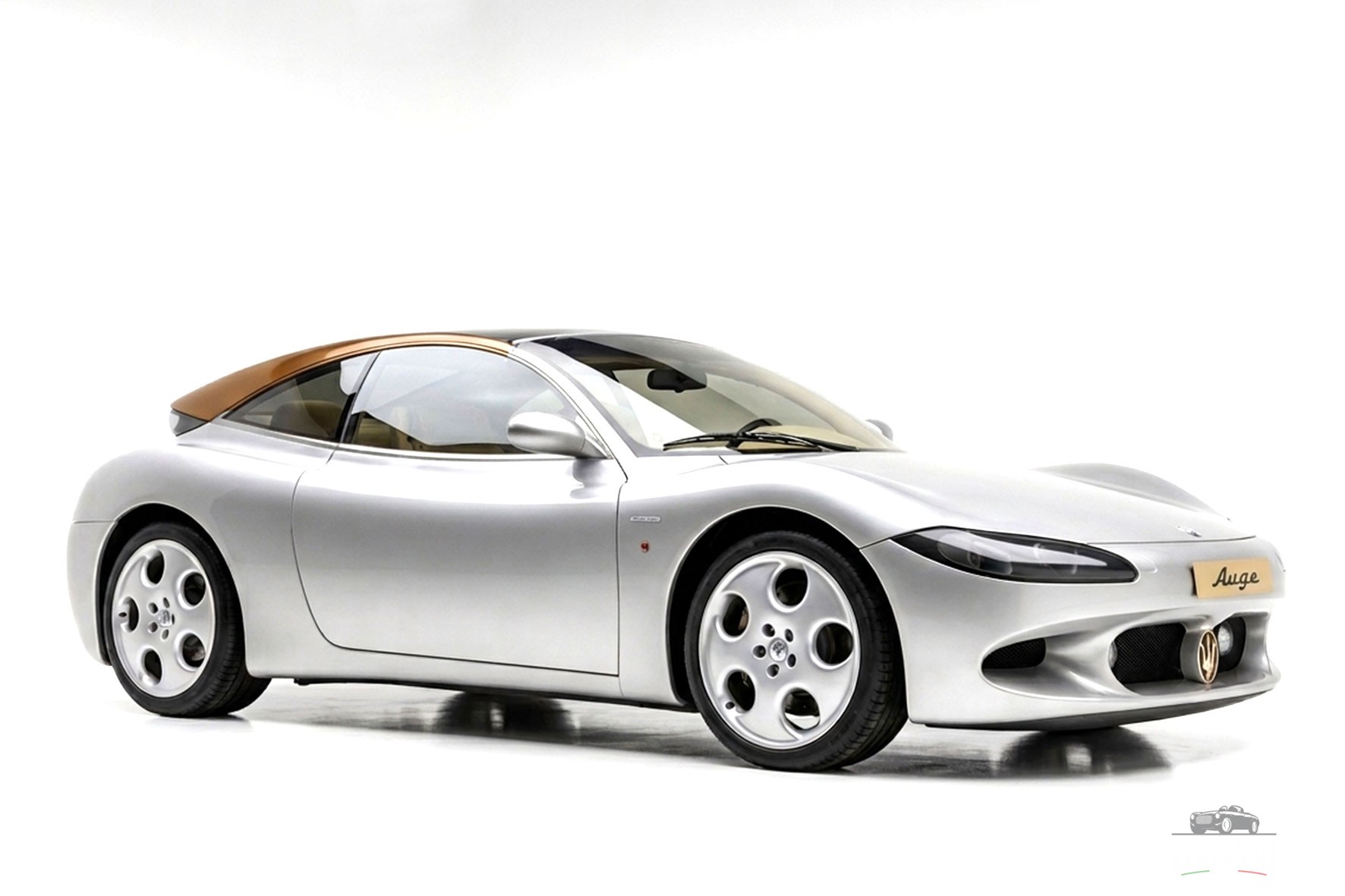
Acampora’s professional biography names the Castagna Rossellini among his principal works of 2003. Castagna’s presentation programme also included the Maserati Auge and the Alfa Romeo G.C., which were distinct designs rather than alternative bodies on a shared chassis.
The Rossellini took the form of a low, two-seat barchetta, with an elongated bonnet, broad side intakes, integrated lighting and a pronounced flowing line toward the rear. A removable roof assembly with glass and carbon-fibre elements was described as part of the design. The roof glazing was reportedly developed specifically for this project. These descriptions concern the styling proposal and should not be taken as proof that every component was manufactured in the material originally specified.
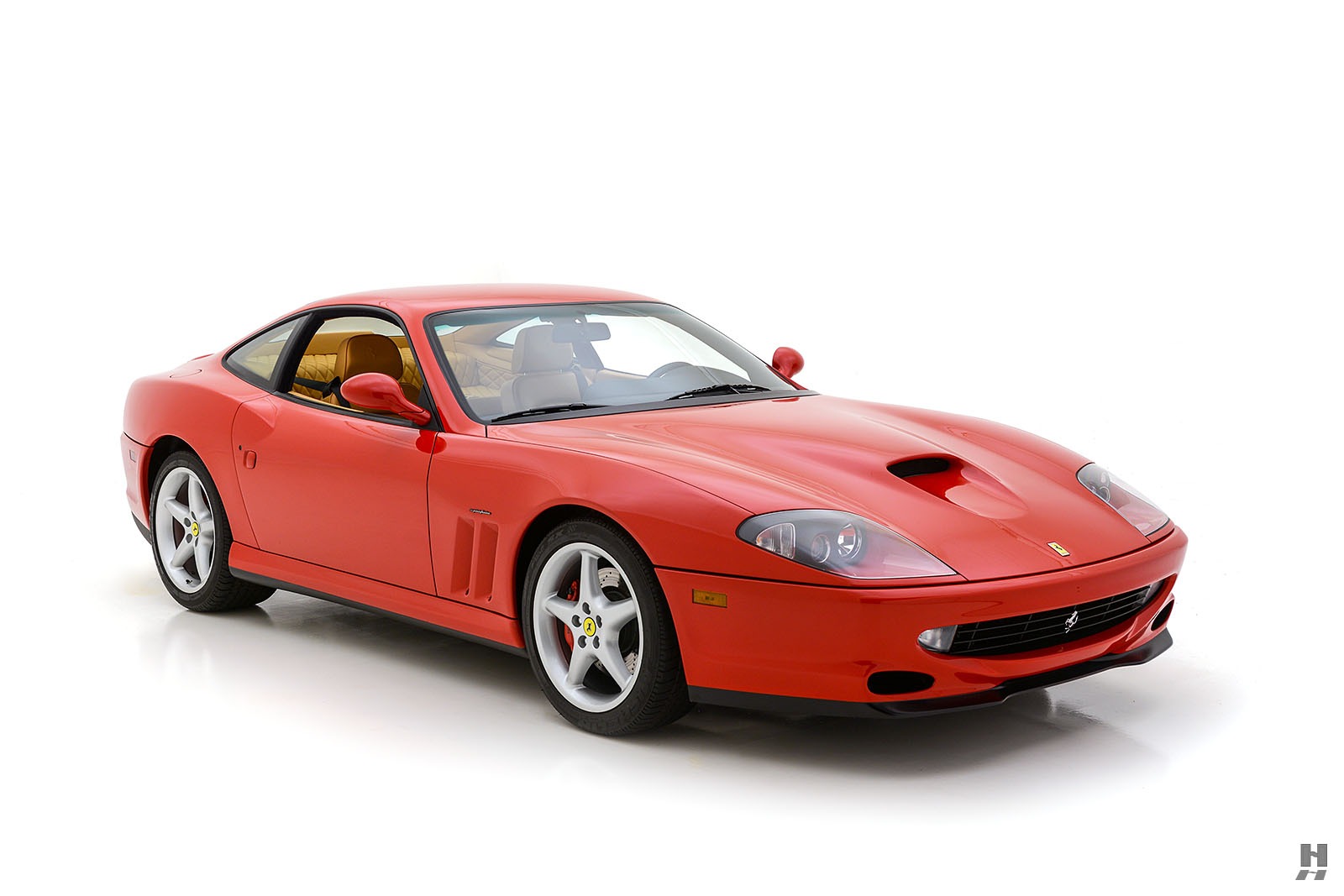
Period project descriptions envisaged adapting mechanical components from a Ferrari 550 Maranello associated with contemporary GT competition. They cited a 6.0-litre V12 and a projected output around 720 CV. That figure was part of the intended engineering brief. It is not an authenticated power measurement for the physical Rossellini styling model. No engine, gearbox or running 550 Maranello chassis has been independently established as fitted to that model.
The distinction between a design mock-up and a functioning completed sports car is fundamental to the Rossellini’s technical record. Specifications of a proposed Ferrari donor vehicle cannot automatically be copied into the fields for an individual Castagna-built exhibit. Similarly, descriptions of the proposed carbon-fibre and glass roof do not establish the materials used in every panel of the physical model.
The Rossellini’s world premiere was announced for the Concorso d’Eleganza Villa d’Este at Cernobbio on 26–27 April 2003. A contemporary-event entry register identifies the Ferrari Rossellini Barchetta as prototype entry C08, exhibited by Castagna, without recording an award. Castagna’s wider presentation programme that year also included the Maserati Auge and the Alfa Romeo G.C.. The register’s stated V12 specification concerns the concept entry and does not establish an installed engine in the surviving styling model.
The Rossellini’s proportions were intentionally evocative of Italian coachbuilding from the mid-twentieth century. Its front grille, integrated headlights and deep lateral openings combined that historical design reference with the forms of contemporary sports-car concept studies.
In November 2019 a Castagna Rossellini dated 2003 appeared in an auction catalogue in Turin. It was explicitly identified as a full-scale 1:1 styling model, made from various materials and showing minor defects. The documented object was therefore a physical design model rather than a verified running Ferrari. The auction description provides a precise identification of the exhibit, but supplies no authenticated Ferrari chassis number, engine serial or complete construction specification.
No independent evidence establishes that the proposed 720-CV mechanical installation was completed for this model. Its documented significance lies in the physical styling exercise, its Castagna and Acampora attribution and its relationship to the early-2000s programme of Italian coachbuilt concept designs.
02 / TECHNICAL IDENTITY
03 / DESIGN, BODY & SUPPLIERS
Coachbuilder / Design studio
The Castagna coachbuilding tradition dates to nineteenth-century Milan, when Carlo Castagna took over an established carriage business. Carrozzeria Castagna later became renowned for luxury bespoke automotive bodies.
Explore record ↗Attributed designer
Gioacchino Acampora was an Italian architect and automotive designer based in Milan.
Explore record ↗04 / CHRONOLOGY
05 / MARKET & PRICE HISTORY
Become a Pro member to explore the full price and sale history.
Membership is not available yet.
View membership optionsMarket observations describe documented transactions, estimates or offers. They are not themselves a current valuation of the vehicle.
07 / GALLERY
CONTINUE EXPLORING


THE CONVERSATION
Comments 0