
Pininfarina
Founded by Battista Pinin Farina in Turin in 1930, Pininfarina became one of the most influential Italian styling and coachbuilding houses, particularly through its work for Ferrari and other international manufacturers.
Explore record ↗
1996Coachwork by Pininfarina
THE VEHICLE AT A GLANCE
THE PEOPLE BEHIND THE CAR
Founded by Battista Pinin Farina in Turin in 1930, Pininfarina became one of the most influential Italian styling and coachbuilding houses, particularly through its work for Ferrari and other international manufacturers.
Explore record ↗Giuseppe Randazzo was an Italian automotive designer whose career included work at Pininfarina.
Explore record ↗01 / THE STORY
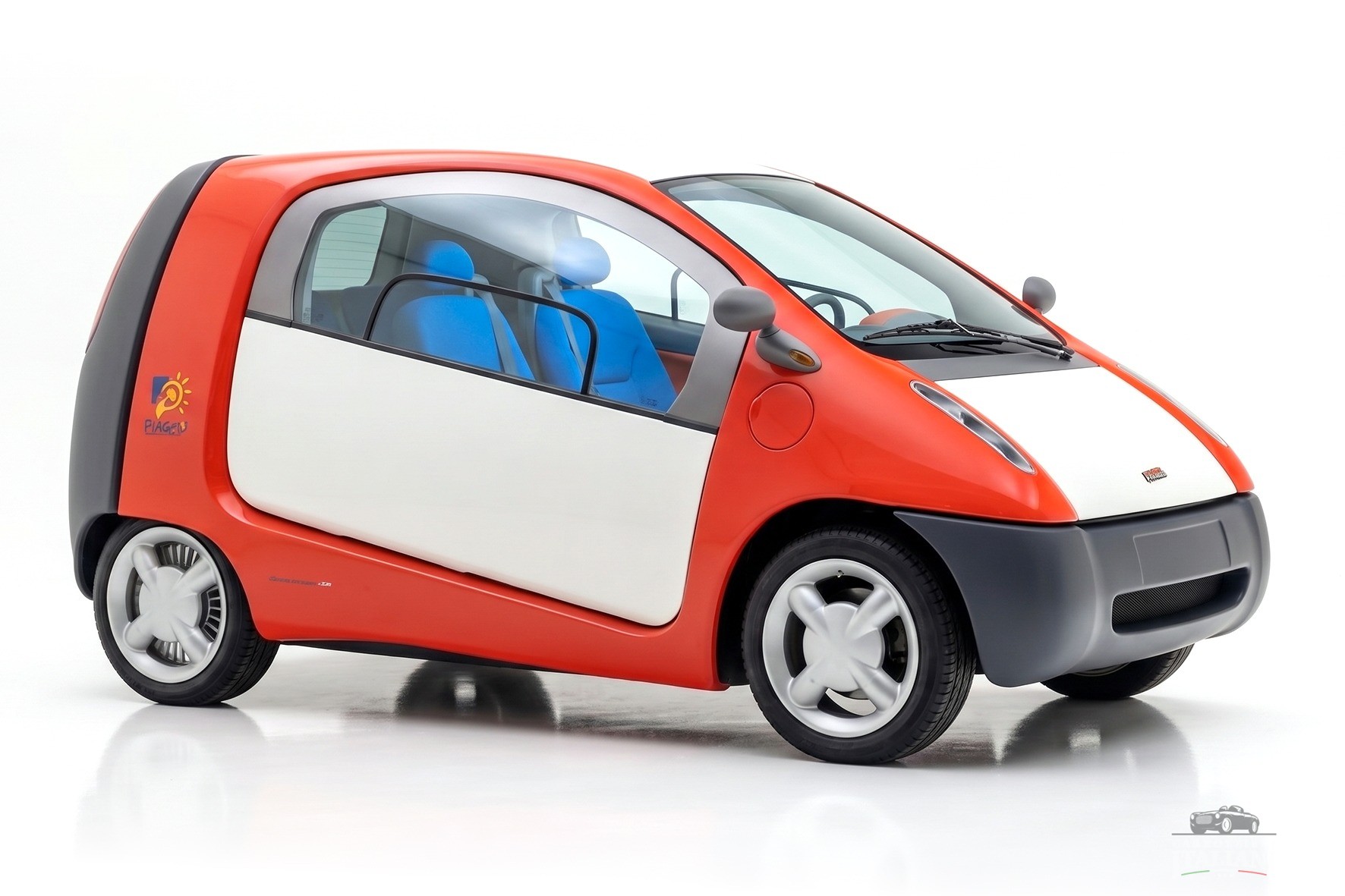
The Pininfarina Eta Beta is the culmination of a research project undertaken by Pininfarina and the Italian National Research Council (CNR). This prototype was designed to feature a modulated interior, a low-emissions dual-power plant, and was constructed from entirely recyclable lightweight materials. Ideally suited for urban environments as well as medium-range out-of-city travel, the Eta Beta embodies innovative ecological design principles. The Eta Beta, an eco-friendly mini-MPV with hybrid propulsion, is the third project developed by Pininfarina in collaboration with the CNR. This partnership spans two decades and has previously produced significant advancements, such as the 1978 theoretical and experimental study for an “Ideal Aerodynamic Shape” (Cx 0.21) and the 1980 CNR E2 prototype, a medium-sized car based on the Fiat Tipo with an impressive drag coefficient of 0.193. The CNR T2, presented in 1996 and artistically named Eta Beta, is the result of a five-year program called Progetto Finalizzato Trasporti 2, now in its fourth year. The research began in July 1992 with a focus on determining the vehicle type to be developed, involving comprehensive studies and surveys across Europe. Initially, the Eta Beta’s length was intended not to exceed 3 meters. However, to address user concerns about the perceived service limitations of two-seat vehicles, a few centimeters were added. As a result, the Eta Beta measures 3.12 meters in length, which can extend to 3.32 meters with its telescopic rear overhang, accommodating four passengers comfortably or two passengers with additional luggage space. The chassis continues the technological exploration begun with the Ethos model. It features aluminum extrusions with cast joints, a design previously used in the Argento Vivo, and includes folded sheet metal parts. In the following year, feasibility studies continued, focusing on developing the hybrid propulsion system. The internal combustion engine, mounted at the front, is a Fiat Fire 1108 cm³ four-cylinder, with optimized performance and fuel consumption by Scuderia Bizzarrini. The electric propulsion system was developed by the University of Rome, which created a pair of axial flux permanent magnet electric motors housed within the rear wheel hubs. This design eliminates the need for a transmission system, offering significant weight and space-saving benefits. The third year of the project was dedicated to finalizing the vehicle’s details, and the Eta Beta was constructed and made operational the following year, ready for its debut at the 1996 Turin Motor Show. The program is set to conclude in the coming months, with the finalization of the experimental electric propulsion system.
02 / TECHNICAL IDENTITY
03 / DESIGN, BODY & SUPPLIERS
Coachbuilder / Design studio
Founded by Battista Pinin Farina in Turin in 1930, Pininfarina became one of the most influential Italian styling and coachbuilding houses, particularly through its work for Ferrari and other international manufacturers.
Explore record ↗Attributed designer
Giuseppe Randazzo was an Italian automotive designer whose career included work at Pininfarina.
Explore record ↗04 / CHRONOLOGY
07 / GALLERY
THE CONVERSATION
Comments 0